
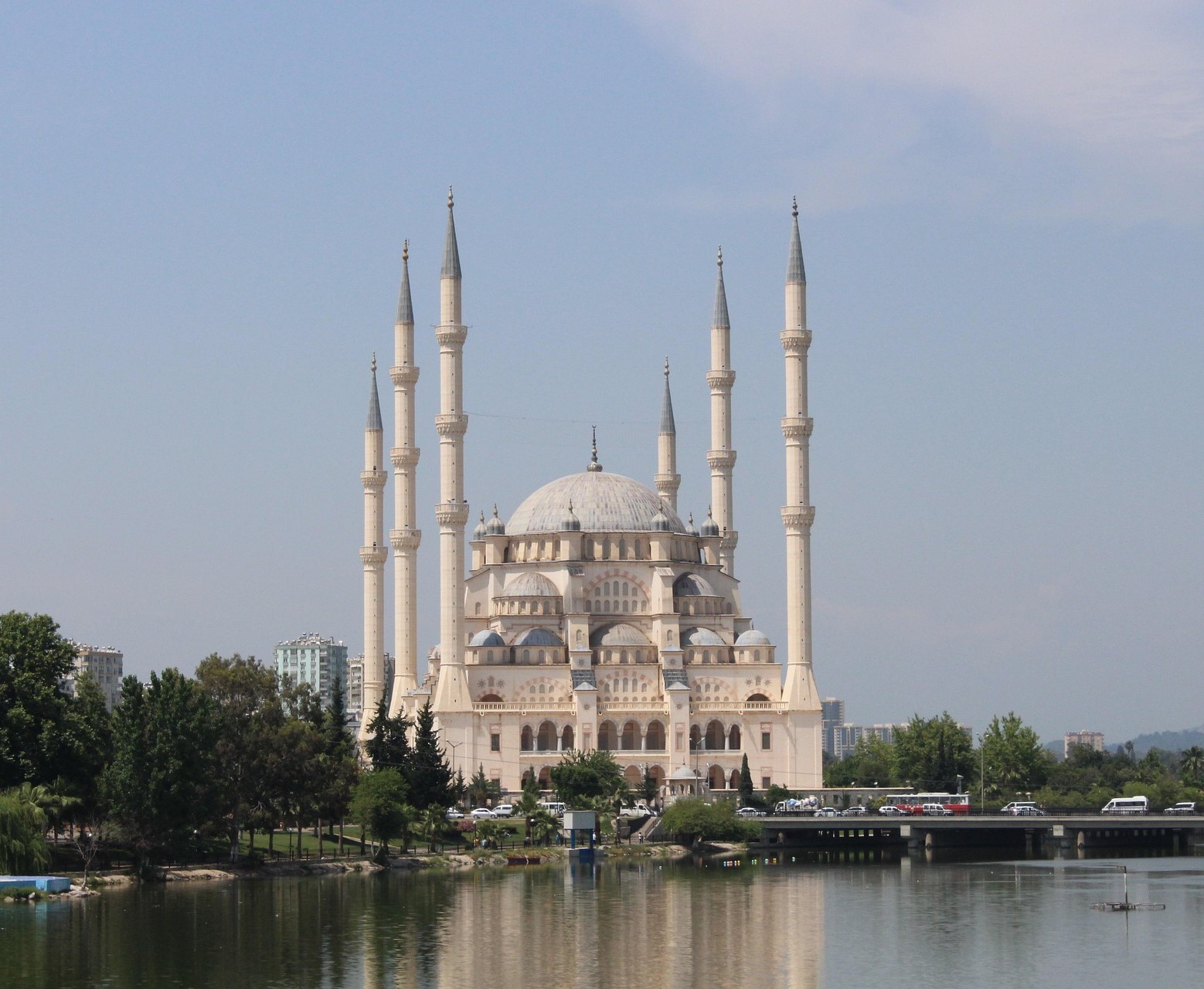
City view of Adana, Turkey

Adana

Adana sprawls across the fertile Seyhan River plain in southern Turkey, its broad avenues shaded by plane trees and punctuated by architectural landmarks reflecting millennia of civilization. The 16th-century Tasköprü, one of the world’s oldest stone bridges still in use, arches across the Seyhan’s swift currents, linking the historic city center to modern districts. Dominating the skyline, the Sabanci Central Mosque’s six minarets and vast prayer hall evoke Ottoman grandeur on a monumental scale. In the shadow of the mosque, bustling markets brim with spicy lahmacun, towering kebap skewers and trays of künefe—a sweet cheese pastry drenched in syrup. Local farmers unload pomegranates, okra and citrus at the vibrant weekly bazaar, while narrow alleyways lead to the 19th-century Büyük Saat clock tower standing sentinel over the old town. Each June, the Altin Koza Film Festival transforms cinemas and open-air venues, drawing Turkish and international talent. As dusk settles, riverside cafés hum with conversation over çay and nargile, the scent of grilled Adana kebap wafting through the warm evening air like an open invitation—one that no visitor can resist.

Top attractions & things to do in Adana

If you’re searching for the best things to do in Adana, this guide brings together the top attractions and must-see places to visit in Adana. The top picks below highlight the most visited sights for first-time visitors, plus a few local favorites worth adding.

Adana Archaeological Museum in Adana, Turkey

Adana Archaeological Museum

Founded in 1924 shortly after the Turkish Republic's establishment, the Adana Archaeological Museum is one of the oldest regional museums in the country. Its vast collection chronicles civilizations that flourished in the Cilicia region—from Hittites and Assyrians to Romans and Byzantines. Highlights include exquisite mosaics, funerary steles, and a rare set of Urartian bronzes. The museum is also home to inscriptions in Luwian hieroglyphs and marble sarcophagi from the late Imperial period. Of particular note are artifacts unearthed from the ancient city of Anavarza, revealing life in a metropolis that once rivaled Antioch. A recent wing was added to house a chronological exhibition that includes prehistoric finds from Tepebag. Whether examining votive offerings, amphorae, or gold jewelry, visitors walk through a layered narrative of the Mediterranean world that shaped Adana's history.
Ads place
Ads place
Ads place
Ads place
Ads place
Ataturk Park in Adana, Turkey

Ataturk Park

Located in the heart of the city, Ataturk Park offers a peaceful escape with its landscaped paths, shaded benches, and fountains surrounded by fragrant orange trees. Established in the early 20th century and named after Mustafa Kemal Ataturk, the founder of modern Turkey, the park has served as a focal point for civic gatherings and public celebrations. Its bronze statue of Ataturk remains a popular meeting point and symbol of national pride. Seasonal blooms, ornamental plants, and classical sculptures blend harmoniously across its carefully maintained grounds. The park's historic tea garden, open since the 1940s, is a cherished place for afternoon conversation. Nearby cultural institutions such as the Adana State Theater and Municipal Art Gallery anchor its role as a hub of civic life. Whether for a morning walk or evening respite, Ataturk Park invites reflection, leisure, and community in equal measure.
Ads place
Ads place
Ads place
Ads place
Ads place
Sabanci Central Mosque in Adana, Turkey

Sabanci Central Mosque

Standing as a modern architectural beacon on the banks of the Seyhan River, the Sabanci Central Mosque is among the largest mosques in Turkey. Completed in 1998, its design draws inspiration from Ottoman classics like the Blue Mosque, with six minarets and a vast main dome that rises impressively over Adana's skyline. The mosque was commissioned by the influential Sabanci family and built with detailed craftsmanship including Iznik-style tiles, hand-carved woodwork, and intricate calligraphy. The prayer hall accommodates more than 28,000 worshippers and features an acoustically tuned interior that complements its visual beauty. Positioned near the city's cultural core, it also includes educational facilities, a library, and religious lecture halls that foster learning and intergenerational exchange. The mosque grounds are immaculately landscaped, offering reflective spaces for prayer and rest. Visitors admire not only its scale but the way it seamlessly blends tradition and contemporary design in one of Adana's most prominent landmarks.
Ads place
Ads place
Ads place
Ads place
Ads place
Stone Bridge (Tas Kopru) in Adana, Turkey

Stone Bridge (Tas Kopru)

The Stone Bridge—or Tas Kopru—spans the Seyhan River and is one of the oldest functioning bridges in the world, built during the 2nd century AD under the Roman Emperor Hadrian. Originally composed of 21 arches (17 remain today), it served as a crucial link on ancient trade routes connecting the Mediterranean to the heart of Anatolia. Constructed from robust limestone blocks, the bridge showcases the engineering mastery of Roman architects and has withstood numerous floods and conflicts. It was later restored by the Ottomans, reflecting its enduring civic importance. The bridge also served ceremonial and military functions throughout the Byzantine and Seljuk periods. Today, it remains pedestrian-only, offering serene views of the river and nearby cultural centers, including the city's museum quarter. Locals and visitors alike stroll its length, pausing at scenic overlooks or photographing its reflection in the calm waters below—testimony to both function and beauty enduring across millennia.
Ads place
Ads place
Ads place
Ads place
Ads place
Yilankale Castle in Adana, Turkey

Yilankale Castle

Yilankale, or "Snake Castle," rises dramatically above the Ceyhan River plain and dates to the 12th century, when it was constructed by the Armenian Kingdom of Cilicia. Its strategic position allowed it to control trade and military routes stretching toward the Taurus Mountains. Legends tell of snakes guarding hidden treasures within its stone walls, lending the site its enduring name. The castle complex features fortified towers, a chapel, storerooms, and cisterns carved into the rock, designed for long-term siege defense. Architectural elements reflect a fusion of Armenian, Byzantine, and Crusader influences, particularly in the masonry and vaulted passages. In recent years, preservation efforts have stabilized walkways and added interpretive signage for visitors. Though remote, Yilankale rewards those who ascend its rugged approach with breathtaking views across the fertile Cilician plain and insight into the medieval geopolitics of the region.
Ads place
Ads place
Ads place
Ads place
Ads place