
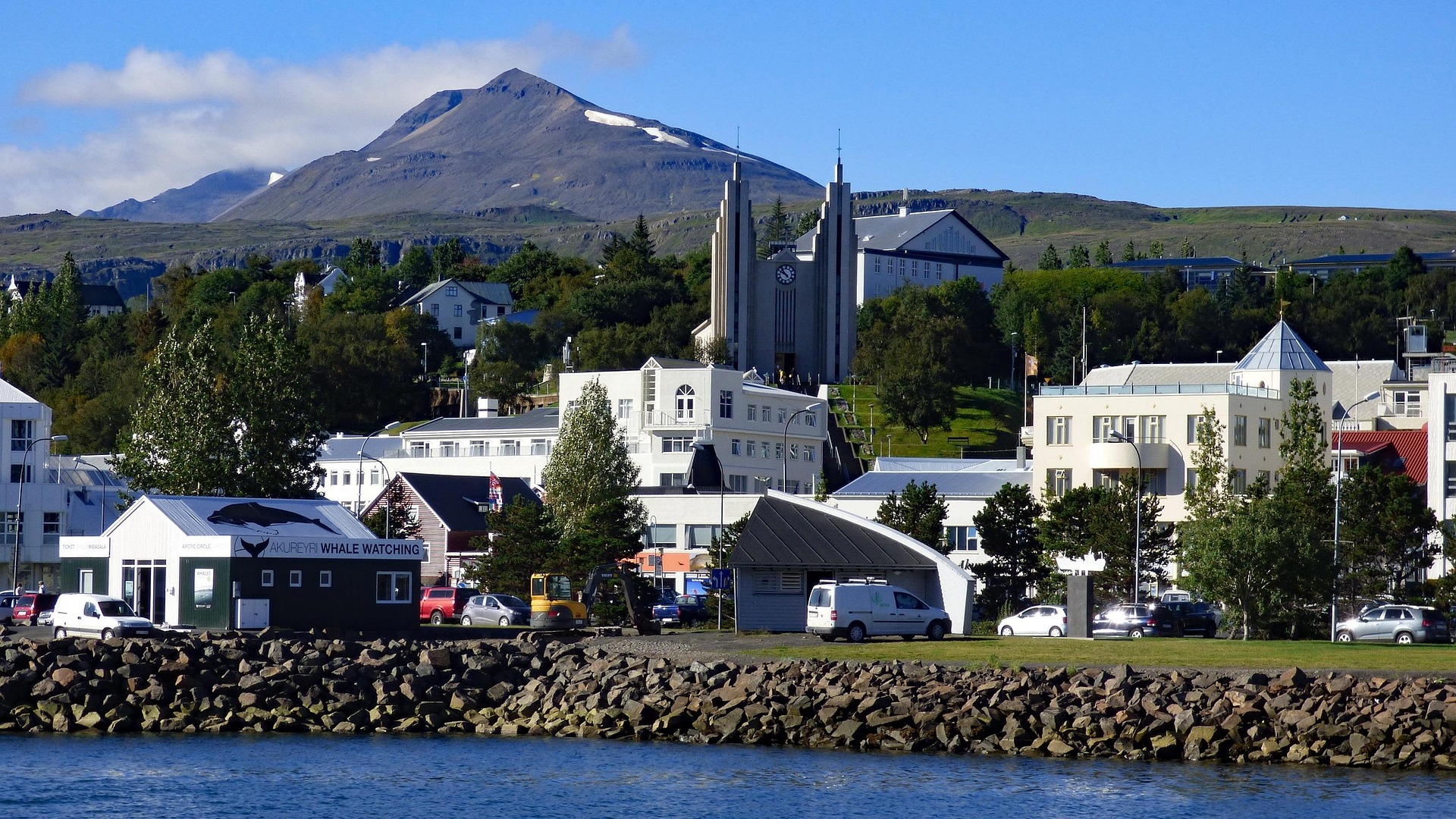
City view of Akureyri, Iceland

Akureyri

Akureyri, often called Iceland’s “Capital of the North,” nestles at the head of Eyjafjördur fjord, surrounded by snow-dusted mountains and lush summer gardens. The striking Akureyrarkirkja church, designed by Gudjon Samuelsson, dominates the skyline, while the town’s compact center bursts with cozy cafés, bookshops, and vibrant street art. Stroll the Botanical Gardens, home to Arctic and exotic plants, or unwind at the steaming geothermal pools. Akureyri is the gateway to the volcanic wonders of Lake Mývatn, Dettifoss waterfall, and whale-watching tours that reveal humpbacks and orcas. Each winter, ski slopes on nearby Hlidarfjall light up under the northern lights. In summer, the town comes alive during the “Akureyri Art Summer” festival, with music, dance, and open-air performances along flower-lined streets. The Christmas House just outside town delights visitors year-round with festive magic, and the town’s cafes serve local specialties like smoked Arctic char and Icelandic pastries. Akureyri’s mild climate—by Icelandic standards—makes it one of the greenest, most welcoming spots in the country.

Top attractions & things to do in Akureyri

If you’re searching for the best things to do in Akureyri, this guide brings together the top attractions and must-see places to visit in Akureyri. The top picks below highlight the most visited sights for first-time visitors, plus a few local favorites worth adding.

Akureyri Art Museum in Akureyri, Iceland

Akureyri Art Museum

Akureyri Art Museum is the cultural heart of northern Iceland, presenting cutting-edge exhibitions by Icelandic and international artists. Housed in a striking modernist building, the museum opened its doors in 1993 and quickly became a hub for creative innovation. Its galleries feature contemporary paintings, sculptures, and multimedia installations, often focusing on themes related to nature, identity, and the Arctic. Special attention is given to women artists and emerging local talent. The museum’s annual Listasumar Art Festival brings performances and pop-up events to every corner of Akureyri. Visitors are encouraged to participate in workshops, artist talks, and hands-on family activities. An interesting fact: the building once served as a dairy and still retains some original architectural details. The museum’s shop offers unique Icelandic designs and art books. Akureyri Art Museum is essential for anyone interested in the city’s vibrant contemporary art scene.
Ads place
Ads place
Ads place
Ads place
Ads place
Akureyri Botanical Garden in Akureyri, Iceland

Akureyri Botanical Garden

Akureyri Botanical Garden is one of the world's northernmost botanical gardens, boasting over 7,000 plant species from around the globe. Established in 1912, the garden has flourished thanks to Akureyri’s unique microclimate, which allows even delicate Arctic and alpine flowers to thrive. Among its highlights are rare Icelandic flora, medicinal herbs, and vibrant rose gardens that bloom under the midnight sun. The garden is also a living laboratory, supporting botanical research and conservation projects. Pathways meander through serene ponds, sculptures, and shaded benches, making it a favorite spot for locals and visitors alike. Children delight in the butterfly-friendly meadows, while artists find endless inspiration here. The elegant teahouse serves homemade pastries and offers a tranquil retreat. Scientists are continually surprised by how many species survive so close to the Arctic Circle, making Akureyri’s garden a beacon of biodiversity and resilience.
Ads place
Ads place
Ads place
Ads place
Ads place
Akureyri Church in Akureyri, Iceland

Akureyri Church

Akureyri Church stands majestically on a hill overlooking the town, an iconic symbol designed by architect Gudjon Samuelsson and completed in 1940. The church’s striking twin towers are visible from almost anywhere in Akureyri, while its interior dazzles with stained glass windows imported from England. Notably, the massive pipe organ features over 3,200 pipes and is used for both classical concerts and local celebrations. Visitors are often drawn to the unique ship model hanging from the ceiling, a traditional Icelandic offering for safe voyages. The church’s steps provide panoramic views of Eyjafjordur and the colorful rooftops below. A little-known detail is the crypt beneath the sanctuary, which occasionally hosts special exhibitions. Each year, the church plays a central role during Iceland’s national day festivities, filling the air with music and community spirit. Its architecture is considered one of the finest examples of modernist style in northern Iceland.
Ads place
Ads place
Ads place
Ads place
Ads place
Godafoss Waterfall in Akureyri, Iceland

Godafoss Waterfall

Godafoss Waterfall, the “Waterfall of the Gods,” is one of Iceland’s most dramatic natural wonders, located just east of Akureyri along the Skjalfandafljot river. The falls span 30 meters across and plunge 12 meters into a wide, misty basin. According to legend, chieftain Thorgeir Ljosvetningagodi threw his pagan idols into the waterfall in 1000 AD after converting Iceland to Christianity, giving the site its name. The powerful cascade is especially breathtaking during spring melt, when glacial waters turn an electric blue. Photographers flock to Godafoss for the stunning play of light and spray. Winter visits offer views of the frozen falls under the northern lights, creating an unforgettable scene. The surrounding trails allow for easy hikes and multiple vantage points. Geologists study the area’s basalt formations, shaped by ancient volcanic eruptions. Godafoss’s spiritual and natural significance has inspired countless works of Icelandic literature and art.
Ads place
Ads place
Ads place
Ads place
Ads place
The Old Town in Akureyri, Iceland

The Old Town

Akureyri’s Old Town is a charming district where history comes alive along cobbled lanes and colorful timber houses from the 19th century. Many of these buildings were constructed from driftwood brought across the sea, reflecting Icelandic resourcefulness and tradition. The oldest house, built in 1795, is now a museum that showcases artifacts from the town’s early fishing days and stories of pioneering families. Local cafes and boutiques operate out of restored homes, offering guests a taste of authentic Nordic culture. The area’s cultural calendar includes summer art walks, jazz evenings, and holiday markets, keeping old customs vibrant. Visitors can spot traditional turf-roofed outbuildings and a preserved schoolroom where Icelandic poetry was once taught. It’s said that the Old Town’s lantern-lit streets inspired several Icelandic authors and artists. Exploring this district feels like stepping into a living storybook set against the fjord.
Ads place
Ads place
Ads place
Ads place
Ads place