
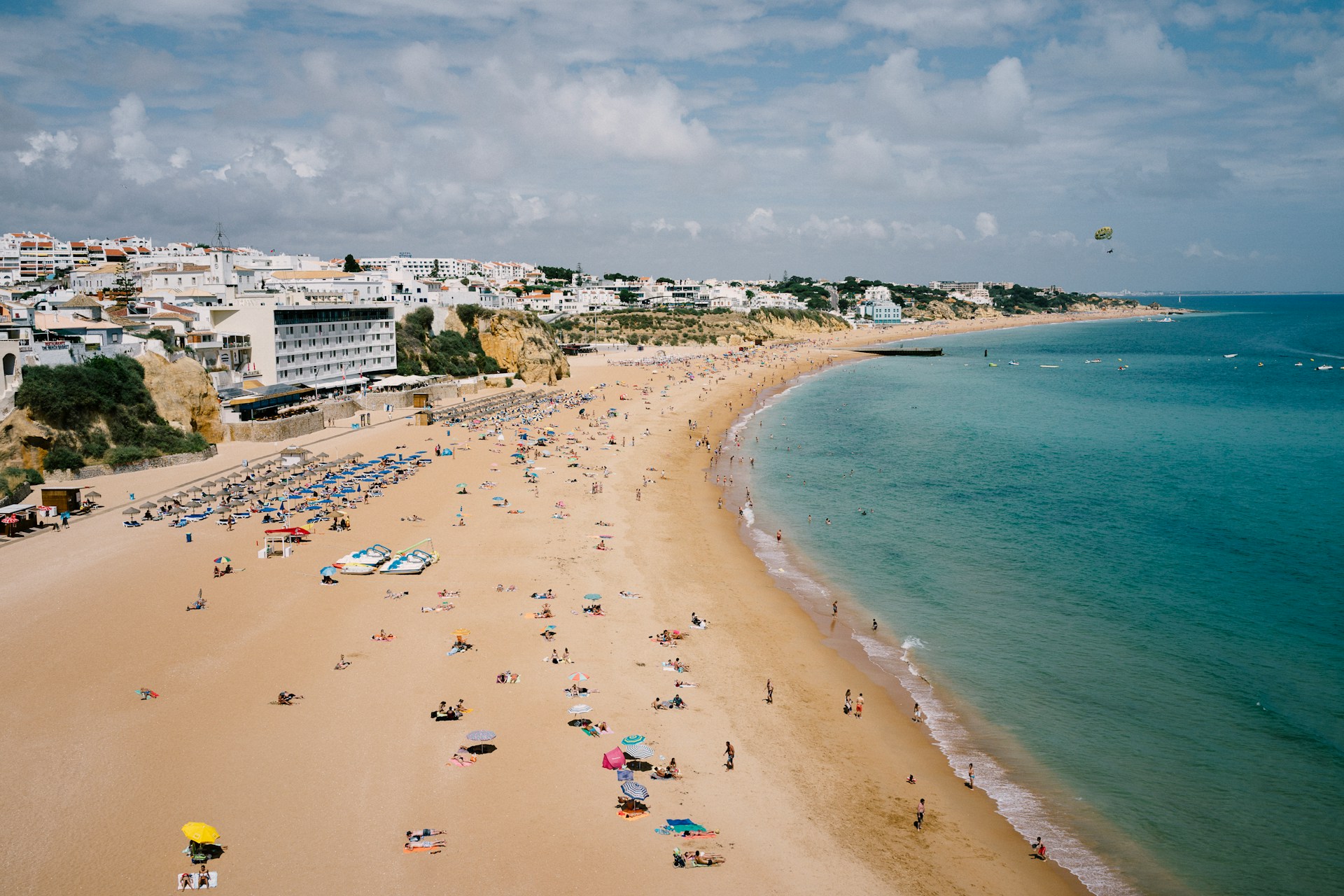
City view of Albufeira, Portugal

Albufeira

Albufeira shifts from sandy mornings to late playlists with little time for yawning, yet the old alleys keep anchors in place. Fishermen once hauled hulls onto the beach in front of white cubes; now you watch parasails sketch loops while grills handle sea bass with restraint. Cliffs carry ochre tones that cameras cannot ignore, and coves offer shelter when wind gets ideas. Off menu, cataplana for two solves most decisions, followed by almond cake that tastes like a sunny afternoon. Street artists thread color through stairways, and you can still find a quiet bar where fado surprises the chatter into silence. Here is a sideways fact: a modest archaeological display preserves amphora shards from Roman salting tanks, proof that the bay has been packaging flavor for two millennia. Take the cliff path at dawn and the sea sounds like steady breathing, a tempo the city follows the rest of the day.

Top attractions & things to do in Albufeira

If you’re searching for the best things to do in Albufeira, this guide brings together the top attractions and must-see places to visit in Albufeira. The top picks below highlight the most visited sights for first-time visitors, plus a few local favorites worth adding.

Albufeira Old Town in Albufeira, Portugal

Albufeira Old Town

Whitewashed lanes tilt toward the sea, and doorways framed by stone lintels tell you this quarter learned to bend without breaking. The plan owes much to Moorish street craft—short alleys, sudden courtyards—later patched after the 1755 earthquake realigned roofs and tempers. You will pass the Clock Tower, a 19th century iron crown that once timed markets and processions, then slip into the tiny church of Sant'Ana, where blue azulejos calm the chatter of the day. Stairs tunnel to the beach, and the smell of sardines insists you are close to the reason Albufeira prospered. Cafes stack tables in the shade as local musicians tune up for evening fado that leans more toward salt air than sorrow. At sunset, limestone walls drink color and return it as a softer glow. Stay long enough and you will notice how the old town edits noise into murmur, the city's preferred tempo when the tide decides the schedule.
Ads place
Ads place
Ads place
Ads place
Ads place
Marina de Albufeira in Albufeira, Portugal

Marina de Albufeira

Color-blocked apartments step around the docks like toy pieces, a playful prelude to the serious business of weather and tide. Opened in 2003, the marina sits behind a broad breakwater that tames the bar and gives shelter to yachts, catamaran cruises, and fishing boats that still leave before dawn. In summer, crews point bows toward sea caves west of town, while winter brings Atlantic swells that rewrite plans with a shrug. The Blue Flag status—Blue Flag is posted each season—signals clean water and decent manners on shore. Restaurants riff on clams and razor shells; gelato shops practice the art of walking slowly. From the viewpoint above, lines of masts sketch a forest that sighs when the wind turns. Even landlubbers learn to read forecasts after a day here. The best moment might be late evening, when rigging whispers and the harbor lights draw a second city on the water. Catch the yard at work and travel lifts swing hulls like patient cranes.
Ads place
Ads place
Ads place
Ads place
Ads place
Paderne Castle in Albufeira, Portugal

Paderne Castle

Rammed-earth walls glow warm at sunset, their texture revealing how earth, lime, and patience can harden into strategy. Raised by the Almohad Berbers in the 12th century, the fortress guarded a bend of the Quarteira stream and the road inland. The technique—rammed earth or taipa—left courses you can still read like fingerprints, a rare survival in the Algarve. Chronicles note that forces loyal to Afonso III seized the stronghold around 1248 during the Reconquista, shifting the frontier and the stories told in nearby villages. Today, a short trail leads to broken towers, a gate with a dogleg turn, and views that explain why watchmen never dozed. In spring, wildflowers lace the battlements and swallows write fast cursive beneath the parapet. Stand quietly and the place returns to function: a small castle, well sited, designed to buy time. It still does, only now the time it buys is yours. Look down to the ruined watermill by the stream and you complete the old ecosystem of defense, bread, and river-crossing.
Ads place
Ads place
Ads place
Ads place
Ads place
Praia da Falesia in Albufeira, Portugal

Praia da Falesia

Cliffs rise in bands of rust, cream, and apricot, a textbook in sediment written by wind and time. The escarpment's color comes from iron oxides baked into ancient sands, and a fringe of pine forest perfumes the top path. Boardwalks lead to viewpoints where you grasp the beach's improbable reach—nearly 6 kilometers from Vilamoura toward Olhos de Agua. Down on the flats, the Atlantic works through its moods while runners leave temporary hieroglyphs that the tide edits clean. In places the cliff face drapes into natural amphitheaters, sheltering pockets of still air; elsewhere, narrow gullies act like wind flutes. Locals suggest arriving for the slant light of late afternoon, when shadows carve ribs across the bluff and the sea holds a soft metallic sheen. Take the stairs up after sunset and the pines release cool resin, sealing the day with an aroma that says you chose the right direction. Morning often arrives glassy, and footprints outnumber voices until the first umbrellas bloom.
Ads place
Ads place
Ads place
Ads place
Ads place
Praia dos Pescadores in Albufeira, Portugal

Praia dos Pescadores

Sand meets stairs here, and the sea feels like a front porch rather than a boundary. Long before loungers arrived, fishermen dragged hulls across these shallows and mended nets under the cliff, a routine that lasted well into the 1970s. Today escalators and a cliff lift ease the descent, but the curve of the bay still reads the same, guarded by limestone cliffs that break the northerlies. On holidays, New Year fireworks spill over the water and the whole amphitheater answers with cheers. Mornings belong to walkers and runners; afternoons to families rising and falling with the pulse of the Atlantic. Cafes at the back of the sand grill sardines with the confidence of people who have nothing to prove. If the tide is low, you can trace the old channels where boats once rested between trips. And when the sun slides behind the roofs, the beach keeps a last band of warmth like a politely held door.
Ads place
Ads place
Ads place
Ads place
Ads place