
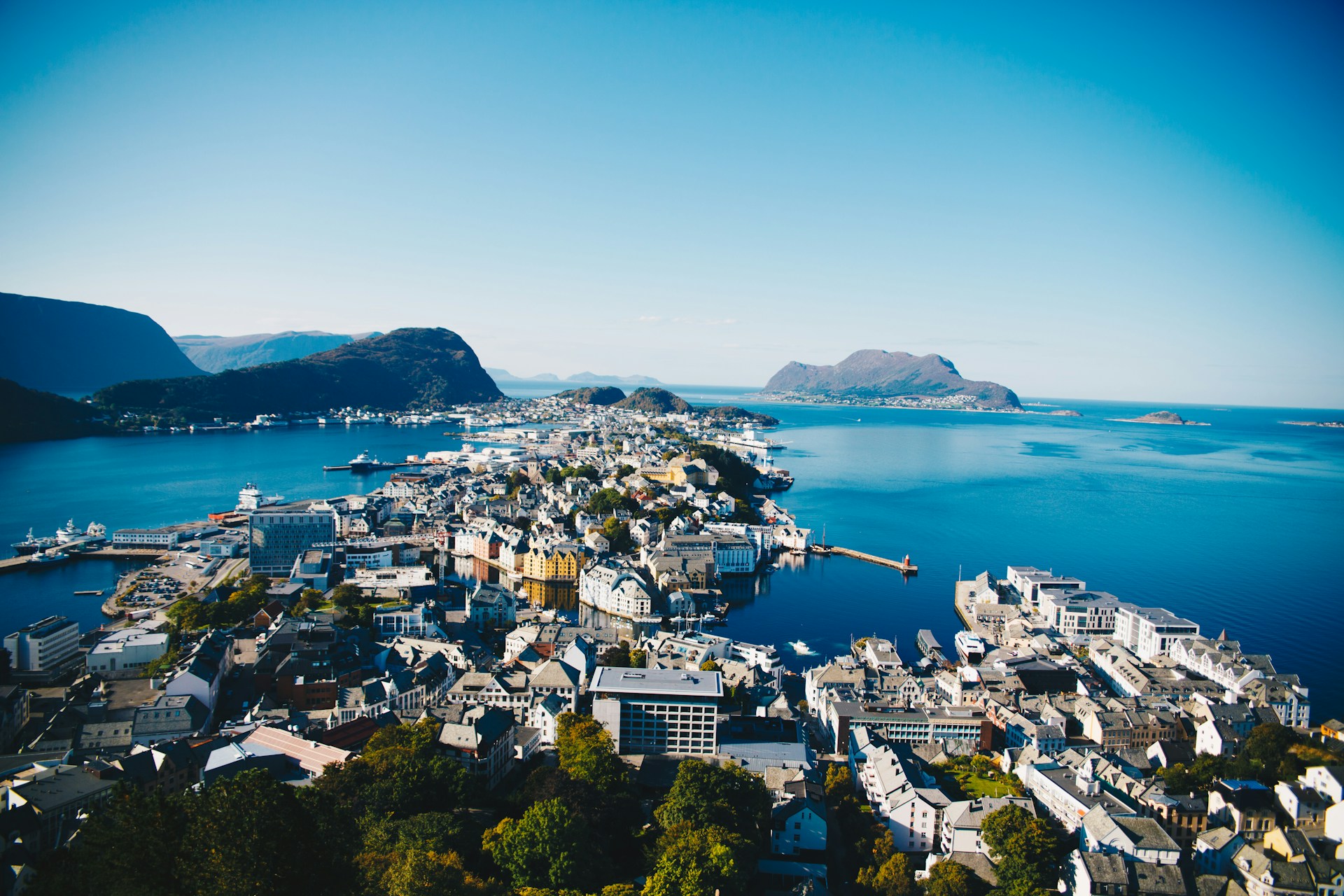
City view of Alesund, Norway

Alesund

Alesund is instantly recognizable for its Art Nouveau architecture, a result of a massive rebuild after a devastating fire in 1904. The uniform style, with ornate facades and turrets, sets it apart from other Norwegian towns. Built on several islands, it offers constantly shifting perspectives of sea and mountains, best appreciated from the viewpoint atop Mount Aksla. Fishing remains central to its identity, with cod exports sustaining the local economy for generations. Cafes and bakeries here take pride in recipes passed down quietly through families. Less publicized is Alesund’s reputation among divers, who explore shipwrecks resting in nearby waters. The combination of architectural elegance, maritime grit, and surrounding natural drama makes Alesund both distinct and deeply rooted in its setting, rewarding those who linger beyond a quick photograph.

Top attractions & things to do in Alesund

If you’re searching for the best things to do in Alesund, this guide brings together the top attractions and must-see places to visit in Alesund. The top picks below highlight the most visited sights for first-time visitors, plus a few local favorites worth adding.

Aksla Viewpoint in Alesund, Norway

Aksla Viewpoint

The Aksla Viewpoint offers the most celebrated panorama of Alesund, reached by climbing 418 steps from the city park or by a short drive. From here, visitors see the archipelago spread like a fan, with the Sunnmore Alps rising jagged in the background. The view is particularly mesmerizing at sunset, when the pastel tones of the Art Nouveau buildings below glow against the sea. The viewpoint has been a gathering spot since the early 20th century, when locals began ascending for picnics and civic events. Today, the Fjellstua restaurant at the summit offers a vantage point with both meals and memories. A fascinating detail is that the German occupation forces used the viewpoint as an observation post during World War II, leaving behind remnants of bunkers that still dot the hillside. Standing here, one senses Alesund’s unique blend of resilience and beauty, where history and landscape combine into an unforgettable perspective.
Ads place
Ads place
Ads place
Ads place
Ads place
Alnes Lighthouse in Alesund, Norway

Alnes Lighthouse

Standing tall on the island of Godoy, Alnes Lighthouse has guided sailors safely since 1876. Its red-and-white striped tower rises above rugged cliffs, a beacon against storms and fog rolling in from the Norwegian Sea. Originally manned by local families, the lighthouse became automated in the 1980s, but the keeper’s house remains open as a cultural venue. Exhibitions inside recount the lives of lighthouse keepers who braved isolation and relentless weather to maintain the light. A fascinating fact is that the tower still uses a Fresnel lens, an invention from the 19th century that revolutionized maritime navigation worldwide. Visitors who climb to the top are rewarded with sweeping views of the Sunnmore Alps and the vast Atlantic horizon. The site has become both a historical landmark and a beloved excursion for locals, who pair the climb with coffee and homemade cakes in the adjoining café, blending endurance with hospitality.
Ads place
Ads place
Ads place
Ads place
Ads place
Atlantic Sea Park in Alesund, Norway

Atlantic Sea Park

The Atlantic Sea Park is one of northern Europe’s largest saltwater aquariums, uniquely built directly into the shoreline to blend with the surrounding landscape. Opened in 1998, it showcases marine life from the Norwegian coast, the North Atlantic, and even the Arctic Ocean. Massive tanks hold cod, halibut, and wolffish, while outdoor pools house seals and penguins in naturalistic habitats. A highlight is the daily diving show, where aquarists feed fish in a giant ocean tank holding more than 4 million liters of seawater. The aquarium also emphasizes sustainability, with exhibits on climate change and overfishing. One fascinating detail is that seawater is continuously pumped in from the fjord outside, ensuring a living connection between displays and the wild. Children delight in touch pools, while adults are drawn to the panoramic windows framing the open sea. The park is both educational and immersive, offering a deeper understanding of life beneath Norway’s waves.
Ads place
Ads place
Ads place
Ads place
Ads place
Jugendstilsenteret (Art Nouveau Centre) in Alesund, Norway

Jugendstilsenteret (Art Nouveau Centre)

Housed in a former pharmacy built in 1907, the Art Nouveau Centre tells the story of how Alesund rose from ashes after the devastating 1904 fire. The blaze destroyed almost the entire town, but rebuilding efforts led to a rare concentration of Jugendstil architecture that today defines its identity. Inside, interactive exhibits explain the motifs of dragons, vines, and mythological creatures that embellish the city’s pastel-colored facades. The center also highlights the role of young architects educated in Germany, who brought continental styles northward. A surprising fact is that German Emperor Kaiser Wilhelm II sent aid and architects after the fire, leaving a lasting imprint on Alesund’s cityscape. Visitors often marvel at how resilience was transformed into art, with tragedy becoming an opportunity for innovation. Walking through the exhibitions, one appreciates not only aesthetics but also the civic spirit that turned disaster into one of Europe’s most distinctive urban renaissances.
Ads place
Ads place
Ads place
Ads place
Ads place
Sunnmore Museum in Alesund, Norway

Sunnmore Museum

The Sunnmore Museum is an open-air folk museum established in 1931 to preserve the cultural heritage of coastal Norway. Its grounds display more than 50 historic buildings, from boathouses to farmsteads, each relocated to illustrate life along fjords and islands. The highlight is the boat collection, including replicas of Viking ships that visitors can board to imagine voyages across open seas. Exhibits inside the main building explore fishing traditions, handicrafts, and regional costumes that shaped daily life. A remarkable aspect is the museum’s commitment to maritime history, with original vessels dating back to the 10th century preserved alongside modern interpretations. Seasonal events bring the site alive with storytelling, craft demonstrations, and music, creating an atmosphere where history feels lived rather than displayed. For many, the museum underscores how survival in Sunnmore relied on both land and sea, weaving together a cultural fabric as resilient as the people who created it.
Ads place
Ads place
Ads place
Ads place
Ads place