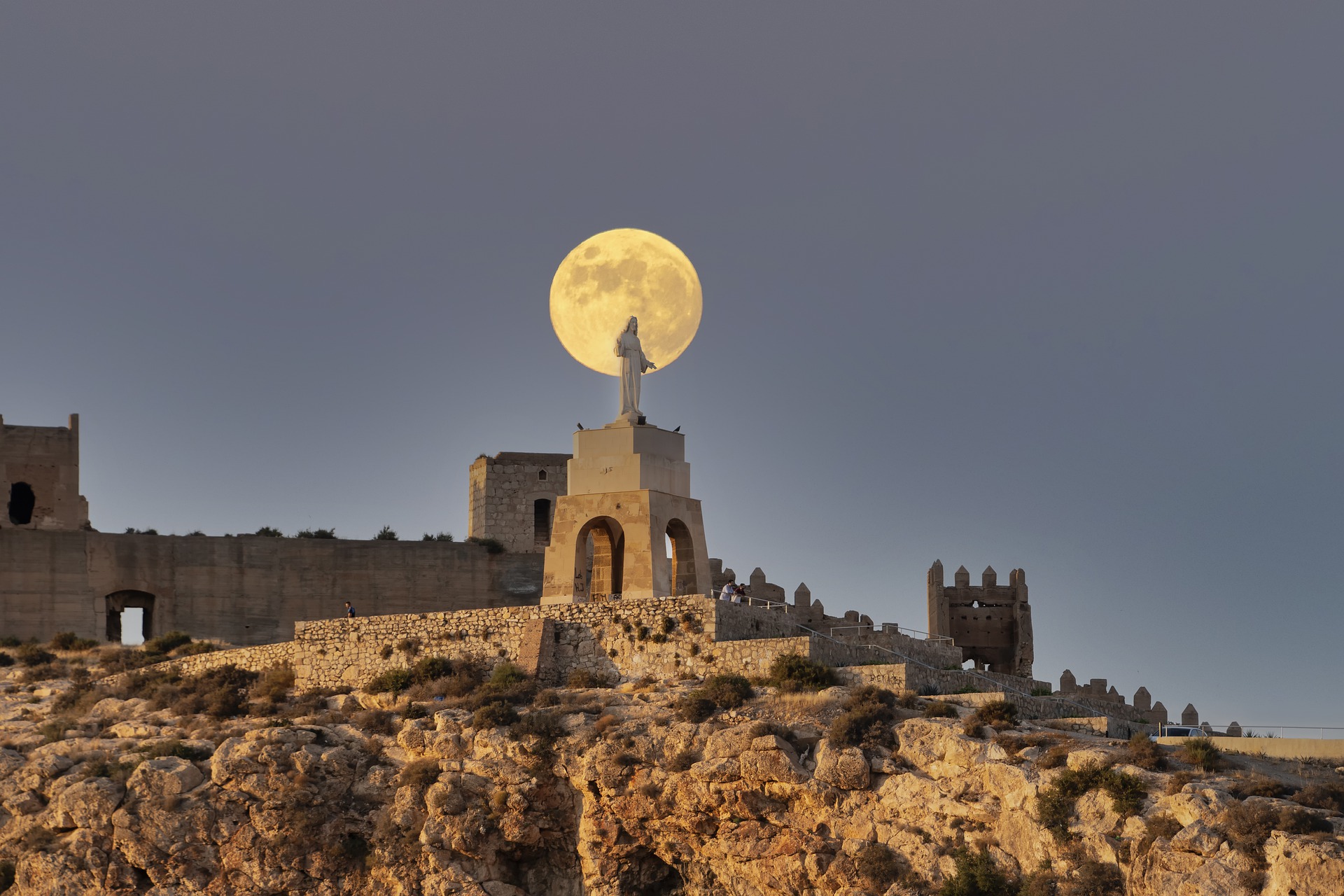

City view of Almería, Spain

Almería

Almería, located in southeastern Spain, is a city known for its stunning desert landscapes, historic sites, and Mediterranean coastline. One of its most iconic landmarks is the Alcazaba, a sprawling Moorish fortress offering panoramic views of the city and sea. Nearby, the Cathedral of Almería combines Gothic and Renaissance architectural styles and features defensive elements due to past pirate attacks. Almería is also famous for its beaches, including Playa de los Muertos and Cabo de Gata Natural Park, a protected area with unique rock formations, pristine waters, and rare wildlife. The region's desert scenery has served as a backdrop for numerous films, including classic spaghetti Westerns, earning it the nickname “Hollywood of Europe.” Visitors can also explore traditional Andalusian cuisine in Almería, particularly tapas culture, where small dishes are often served free with drinks. Almería's mix of natural beauty and historical richness makes it a fascinating destination for travelers.

Top attractions & things to do in Almería

If you’re searching for the best things to do in Almería, this guide brings together the top attractions and must-see places to visit in Almería. The top picks below highlight the most visited sights for first-time visitors, plus a few local favorites worth adding.

Alcazaba of Almería in Almería, Spain

Alcazaba of Almería

The Alcazaba of Almería is one of the largest Moorish fortresses in Spain, built in 955 by the Caliph of Córdoba. This imposing structure has witnessed centuries of battles, sieges, and royal intrigues. What many visitors don't realize is that its massive walls were once connected to the now-ruined Castillo de San Cristóbal on the opposite hill, forming a vast defensive system. The palace gardens still contain original irrigation channels from the Islamic period, which were a technological marvel at the time. Hidden within the fortress is a secret underground reservoir, used to provide water during long sieges. Another fascinating fact is that the Alcazaba has served as a filming location for Hollywood movies, including scenes from Game of Thrones and classic spaghetti westerns.
Ads place
Ads place
Ads place
Ads place
Ads place
Cabo de Gata-Níjar Natural Park in Almería, Spain

Cabo de Gata-Níjar Natural Park

The Cabo de Gata-Níjar Natural Park is a stunning volcanic landscape with crystal-clear coves, dramatic cliffs, and rare wildlife. What makes this park truly unique is that it's home to Spain's only warm desert, where some plants exist nowhere else in Europe. The park also contains prehistoric cave paintings, hidden in remote rock shelters, providing evidence of human life dating back 6,000 years. Many visitors don't know that pirates once used these isolated beaches as secret hideouts, and some legends claim that buried treasure still lies undiscovered in the caves. The most unusual spot is the Arrecife de las Sirenas, a jagged reef where local myths speak of mermaids luring sailors to their doom.
Ads place
Ads place
Ads place
Ads place
Ads place
Cathedral of Almería in Almería, Spain

Cathedral of Almería

Unlike most cathedrals in Spain, the Cathedral of Almería is also a fortress, built in the 16th century to protect the city from pirate attacks. Its thick walls, defensive towers, and even cannon placements make it one of the most unusual religious buildings in the country. Inside, the ceiling still bears scars from cannonball impacts, a silent reminder of past battles. The cathedral's crypt holds the tombs of bishops and nobles, but legend has it that one chamber remains sealed because it contains a long-lost royal treasure. Another mystery is its hidden underground escape tunnel, which supposedly led to the Alcazaba during times of crisis.
Ads place
Ads place
Ads place
Ads place
Ads place
Playa de los Muertos in Almería, Spain

Playa de los Muertos

Despite its name, which translates to Beach of the Dead, the Playa de los Muertos is one of the most breathtaking beaches in Spain. The name comes from old shipwrecks, as strong currents historically caused many unfortunate accidents along this coastline. However, what makes this beach unique is its perfectly smooth pebbles, which are naturally polished by the waves, creating a surreal, glass-like effect. The water here is so clear that visibility can reach up to 30 meters, making it a hidden gem for divers. Few people know that just beyond the cliffs lies an abandoned 19th-century mine, where rare minerals were once extracted and exported across Europe.
Ads place
Ads place
Ads place
Ads place
Ads place
Refugios de la Guerra Civil in Almería, Spain

Refugios de la Guerra Civil

Beneath the streets of Almería lies one of the largest air-raid shelter networks in Spain, built during the Spanish Civil War to protect civilians from bombings. The Refugios de la Guerra Civil stretch for over 4 kilometers, with some tunnels large enough to hold hospitals, kitchens, and sleeping areas. One of the most chilling artifacts inside is a child's toy, left behind in the chaos of an attack. Many visitors don't realize that some of the tunnels remain unmapped, and local historians believe that secret passages may still be hidden beneath modern buildings. The shelter system was designed by Guillermo Langle, an architect whose brilliant engineering kept thousands of residents safe during one of Spain's darkest periods.
Ads place
Ads place
Ads place
Ads place
Ads place