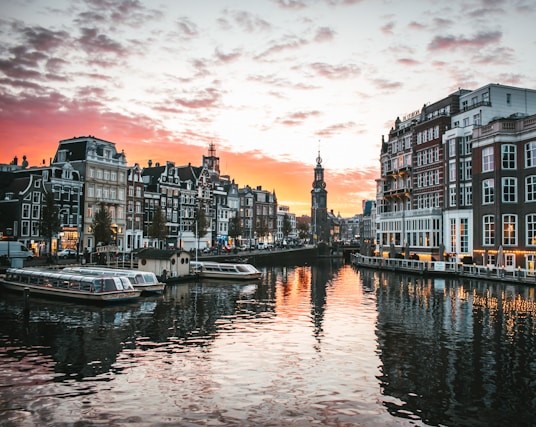
City view of Amsterdam, Netherlands

Amsterdam

Amsterdam is that friend who bikes everywhere, recycles religiously, and hosts dinner parties where everyone ends up talking about art. This city’s storybook canals, 17th-century gabled houses, and symphony of ringing bicycles are just the opening act. Dive into a world of Rembrandt and Van Gogh, then swap clogs for sneakers and lose yourself in the vintage shops of De Negen Straatjes or the multicultural spice markets of De Pijp. Hungry? The Dutch pancake, golden and as wide as your head, is reason enough to book a ticket. Locals are famously direct, but don’t mistake their honesty for rudeness—it’s just part of the city’s playful, pragmatic charm. Whether you’re toasting with a local brew in a brown café or marveling at tulips in spring, Amsterdam has a mischievous twinkle that makes you want to stay out just a little longer. There’s nowhere quite like it. Did you know Amsterdam has more bridges than Venice—over 1,200 in total?

Top attractions & things to do in Amsterdam

If you’re searching for the best things to do in Amsterdam, this guide brings together the top attractions and must-see places to visit in Amsterdam. The top picks below highlight the most visited sights for first-time visitors, plus a few local favorites worth adding.

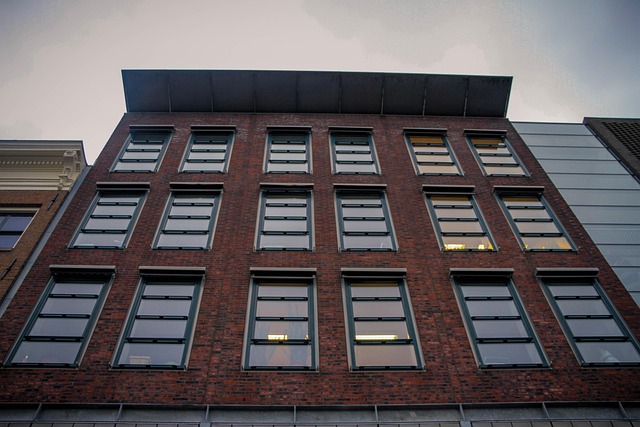
Anne Frank House in Amsterdam, Netherlands

Anne Frank House

Along Prinsengracht, a modest canal house turns narrow rooms into a powerful sequence of memory and testimony. Behind a bookcase, the secret annex was sealed in 1942 as the Frank family went into hiding during World War II, guided by the resolve of Otto Frank and a small circle of helpers. The diaries kept by Anne Frank trace ordinary hopes against extraordinary pressure, ending when the annex was discovered in 1944. Exhibits weave surviving pages with photographs and spoken accounts, restoring context without intruding on the intimacy of the writing. The museum, opened in 1960, preserves stairs, wallpaper, and views over the canal that anchor a visitor's sense of place. Translations first appeared in 1947, widening the audience without softening the voice. Audio guides layer survivor testimony with neighborhood sounds recorded from the canal, keeping the story local as well as universal. Lines form early, but the interior remains quiet, paced to the size of the rooms. The view across the water seems careful, folding traffic into a muted backdrop.
Ads place
Ads place
Ads place
Ads place
Ads place
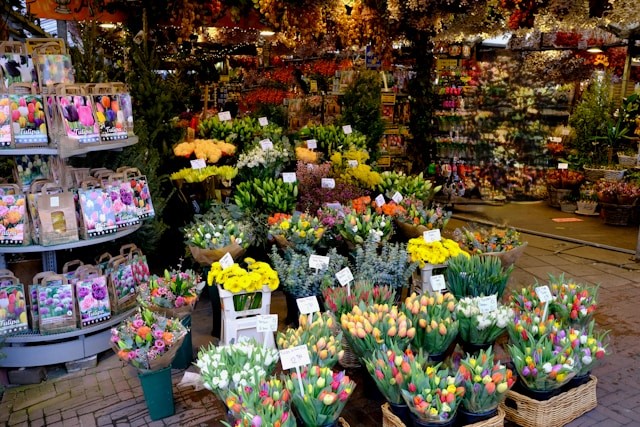
Bloemenmarkt in Amsterdam, Netherlands

Bloemenmarkt

Floating along the Singel canal, this market has sold flowers since 1862, its stalls built on barges moored to the quay. Once the city’s supply point for tulip bulbs, it now blends tradition with tourist curiosity, offering blooms and seeds year-round. The market’s location reflects the city’s long history in the flower trade, a story that peaked during the 17th century tulip mania. Wooden stalls display seasonal arrangements, while shelves hold packets bound for export. The scent of fresh blooms mixes with the hum of bikes passing along the canal. In December, fir trees line the walkway, linking winter rituals to the same market rhythm. The barges still rock gently, a reminder that the Singel once marked the city’s defensive boundary in the 15th century.
Ads place
Ads place
Ads place
Ads place
Ads place
Dam Square in Amsterdam, Netherlands

Dam Square

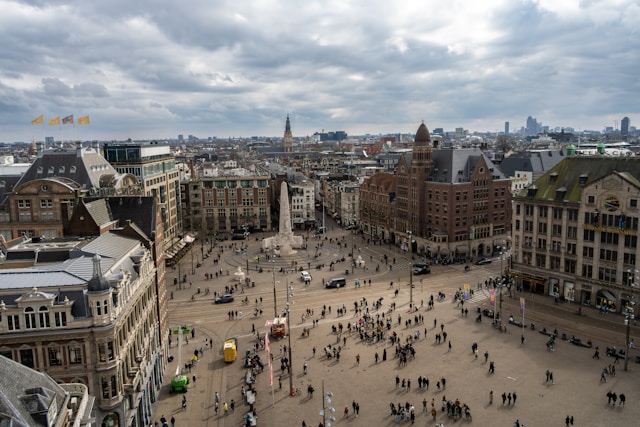
Trams curve and crowds gather in a wide urban room where palaces, churches, and pigeons share the same daily stage. The square traces its origin to a river barrier raised in the 13th century, later formalized as the city's marketplace in the 17th century. At its center stands the National Monument unveiled in 1956, a place of remembrance tied to the losses of World War II. One side is held by the royal palace, the other by a great church whose ceremonies spill occasionally onto the stones. Seasonal fairs, rallies, and vigils have kept the site a barometer of civic mood for generations, and it remains the city's default meeting point. On Remembrance Day the nation falls silent at eight o'clock, and the plaza tightens into a single breath. The square's outline still follows the old dam that once held back the Amstel's tide. Street musicians test the acoustics between stone and tram bell.
Ads place
Ads place
Ads place
Ads place
Ads place
Damrak in Amsterdam, Netherlands

Damrak

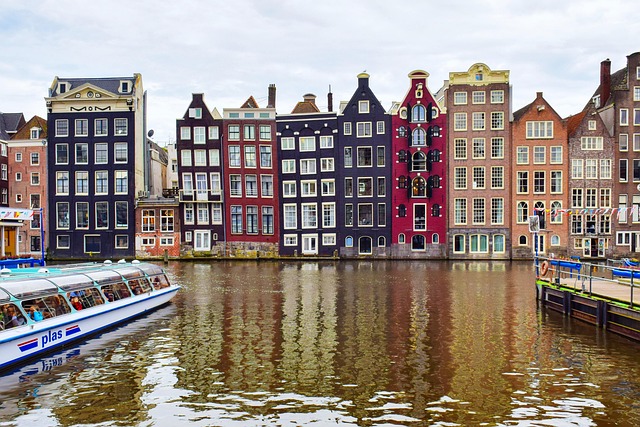
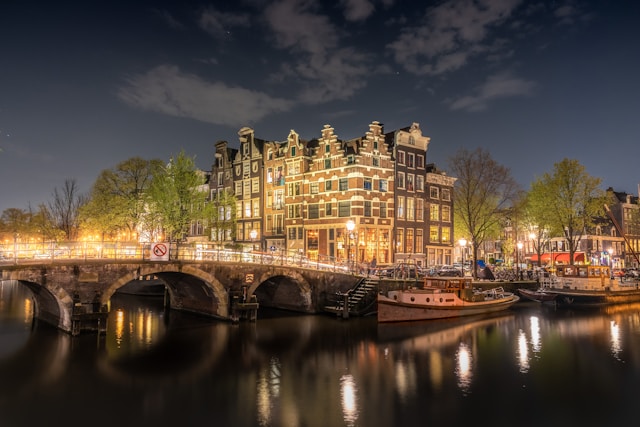
Stretching from Amsterdam Centraal Station to Dam Square, Damrak offers one of the city's most iconic first impressions. Along its eastern side, visitors can admire the so-called 'Dancing Houses,' a row of narrow canal houses leaning at slight angles due to centuries of settling on Amsterdam's marshy ground. Many of these buildings date back to the 17th century, the height of the Dutch Golden Age, when merchants and shipowners built ornate facades as a symbol of wealth. The waterfront along Damrak was historically a bustling harbor basin, welcoming ships from as far as the East Indies during the era of the Dutch East India Company. Today, its vibrant mix of shops, cafés, and hotels stands alongside preserved architecture in Gothic and Renaissance Revival styles. From here, you can easily spot the tower of the Beurs van Berlage, built in 1903, a landmark of early 20th-century Dutch architecture. Whether day or night, the reflections of these colorful facades in the canal make Damrak an unforgettable urban sight.
Ads place
Ads place
Ads place
Ads place
Ads place
NEMO Science Museum in Amsterdam, Netherlands

NEMO Science Museum

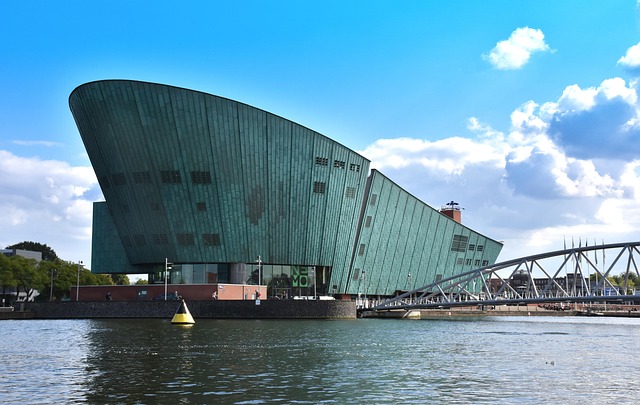
Shaped like a giant green ship rising from the water, this interactive museum invites visitors to experiment, build, and question. Designed by architect Renzo Piano and opened in 1997, it sits on top of the IJ Tunnel, linking it physically and metaphorically to the city. Exhibits cover physics, chemistry, and engineering, with hands-on installations that echo the curiosity of the 17th century scientific revolution. The rooftop terrace, one of the largest in the Netherlands, offers panoramic views of the harbor and skyline. Below, workshops introduce children to mechanics and programming, while older visitors can explore the history of scientific thought. The building’s copper-clad facade references shipbuilding traditions, anchoring it in the port’s industrial past. Seasonal outdoor experiments turn the roof into a summer lab under the open sky.
Ads place
Ads place
Ads place
Ads place
Ads place
Rijksmuseum in Amsterdam, Netherlands

Rijksmuseum

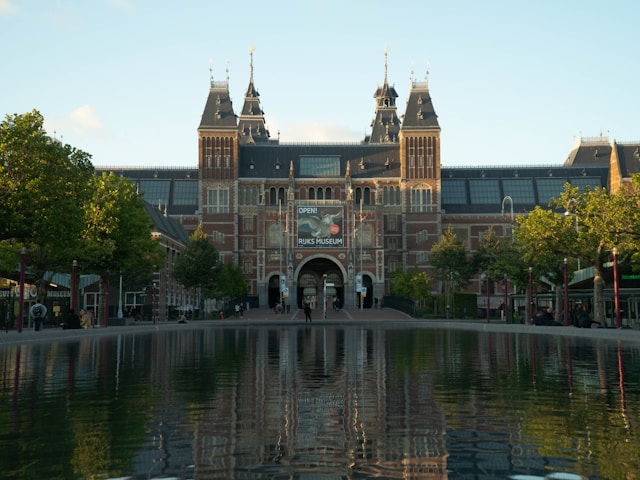
Set at the head of Museumplein, the national museum opens like a long corridor of light, where paintings, ship models, and Delftware meet in measured calm. After years of planning, the new building opened in 1885 under architect Pierre Cuypers, whose arches and courtyards mingle tradition with a modern museum plan. The collection brings the 17th century into sharp relief, culminating in Rembrandt’s celebrated The Night Watch from 1642—widely regarded as one of the largest and most consequential historical canvases of its era. In the Gallery of Honour, you step from intimate domestic scenes to grand narratives, encountering jewels by Johannes Vermeer such as The Milkmaid, alongside swaggering portraits and city pride rendered in oil. Recent restorations returned long views and natural light to Cuypers’s original axis, so the museum reads as a cathedral of images rather than a maze of rooms. You leave to the hum of bicycles on the square, carrying a sense that Dutch art still argues—quietly and brilliantly—about light, character, and the city that shaped them.
Ads place
Ads place
Ads place
Ads place
Ads place
Royal Palace Amsterdam in Amsterdam, Netherlands

Royal Palace Amsterdam

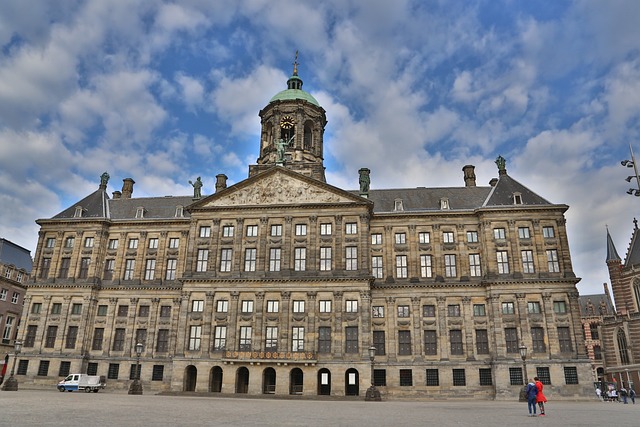
Facing Dam Square, the city's former town hall presents a calm stone grid that balances ceremony with the work of governance. Designed by Jacob van Campen and begun in 1648, the building rose during the high 17th century in a disciplined language of Dutch Classicism. The civic palace became a royal residence in 1808 when Louis Napoleon entered Amsterdam, and state rooms soon adapted to courtly protocol. Inside, the Burgemeesterzaal and the marble-floored Citizens' Hall turn maps and allegories into architecture, a reminder that trade and law once set the city's tempo. Restorations over the centuries preserved sculptural programs and returned daylight to its intended routes, so ceremonies still feel anchored in the original plan. The Atlas above the hall, cast in the 17th century, still shoulders the globe while ships carved below plot distant routes. Public tours move quietly from stone to velvet, then spill back into the noise of trams.
Ads place
Ads place
Ads place
Ads place
Ads place
The Jordaan in Amsterdam, Netherlands

The Jordaan

Woven from narrow lanes, canal views, and gabled houses, this neighborhood evolved from a working-class quarter in the early 17th century into one of the city's most distinctive districts. Originally built to house artisans and immigrants after 1612, its courtyards, known as hofjes, still carry traces of charity housing from the Dutch Golden Age. Streets like Westerstraat and Rozengracht lead to small galleries, cafés, and independent shops, where conversations still happen across stoops. The area's name may link to the French “jardin,” a nod to the many gardens that once filled the blocks. Today, restored facades keep the rhythm of 17th century brickwork, while new residents layer in design studios and bookshops. Weekly markets on Lindengracht and Noordermarkt preserve trading traditions that stretch back centuries. Musicians play in hidden courtyards during festivals, and every turn seems to promise another bridge framed by window boxes. The Jordaan remains as much a lived-in neighborhood as it is a postcard subject.
Ads place
Ads place
Ads place
Ads place
Ads place
Van Gogh Museum in Amsterdam, Netherlands

Van Gogh Museum

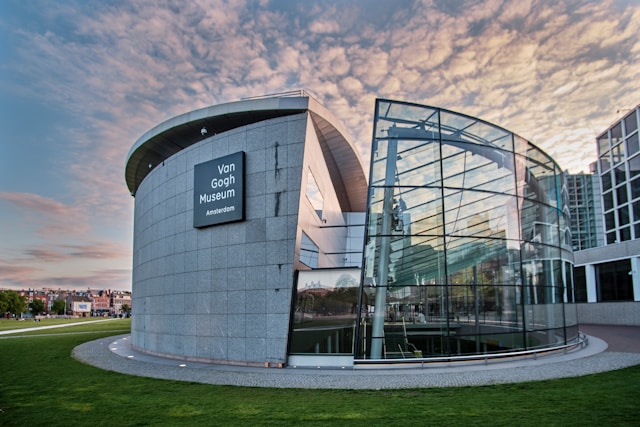
On the edge of Museumplein, a low pavilion and an oval exhibition wing guide you through a life told in color, letters, and restless experiments. The museum opened in 1973 in a building designed by Gerrit Rietveld, later expanded in 1999 with a wing by Kisho Kurokawa. Rooms follow the artist from early studies to the blazing final years of the 19th century, placing canvases beside sketches and the words that wrestled with them. Chronologies show how Arles and Saint-Remy frame breakthroughs around 1889, and how friends, family, and dealers shaped reception from the start. Conservation notes explain pigments and grounds with a clarity that makes technique visible without stealing the poetry. The foundation's archives preserve letters dated 1888 that map friendships and working methods in real time. By the time you reach the last rooms, the sequence of yellows, blues, and cypress lines feels like a diary kept in paint, and the plaza outside offers a breath before another visit.
Ads place
Ads place
Ads place
Ads place
Ads place
Vondelpark in Amsterdam, Netherlands

Vondelpark

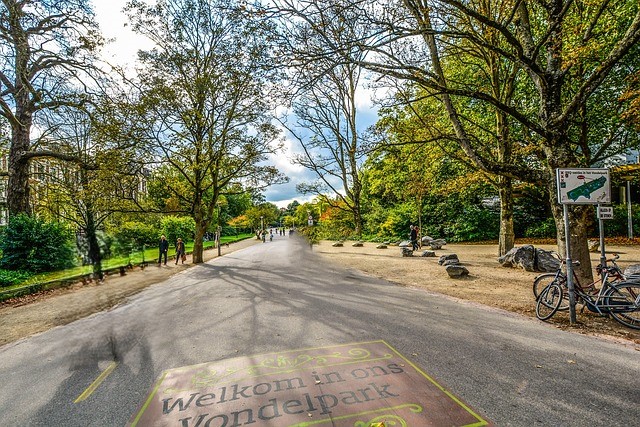
This green sweep in the city’s heart offers lakeside paths, open lawns, and a shifting calendar of outdoor performances. Opened in 1865 as Nieuwe Park, it was renamed in 1867 to honor poet and playwright Joost van den Vondel. Landscaped in the English landscape style by Jan David Zocher and his son, the park’s curving paths and water features still follow their original design. Summer brings open-air theatre dating back to 1974, where music and drama play to picnicking audiences. Sculptures by artists such as Picasso join rose gardens and century-old trees, making it both a cultural and natural retreat. Cyclists and skaters share the outer loop, while quieter paths wind past ponds reflecting the clouds. Early mornings reveal joggers and dog walkers tracing the same routes locals have used for generations. The park feels like an extended living room for the city, where the line between leisure and performance blurs.
Ads place
Ads place
Ads place
Ads place
Ads place