
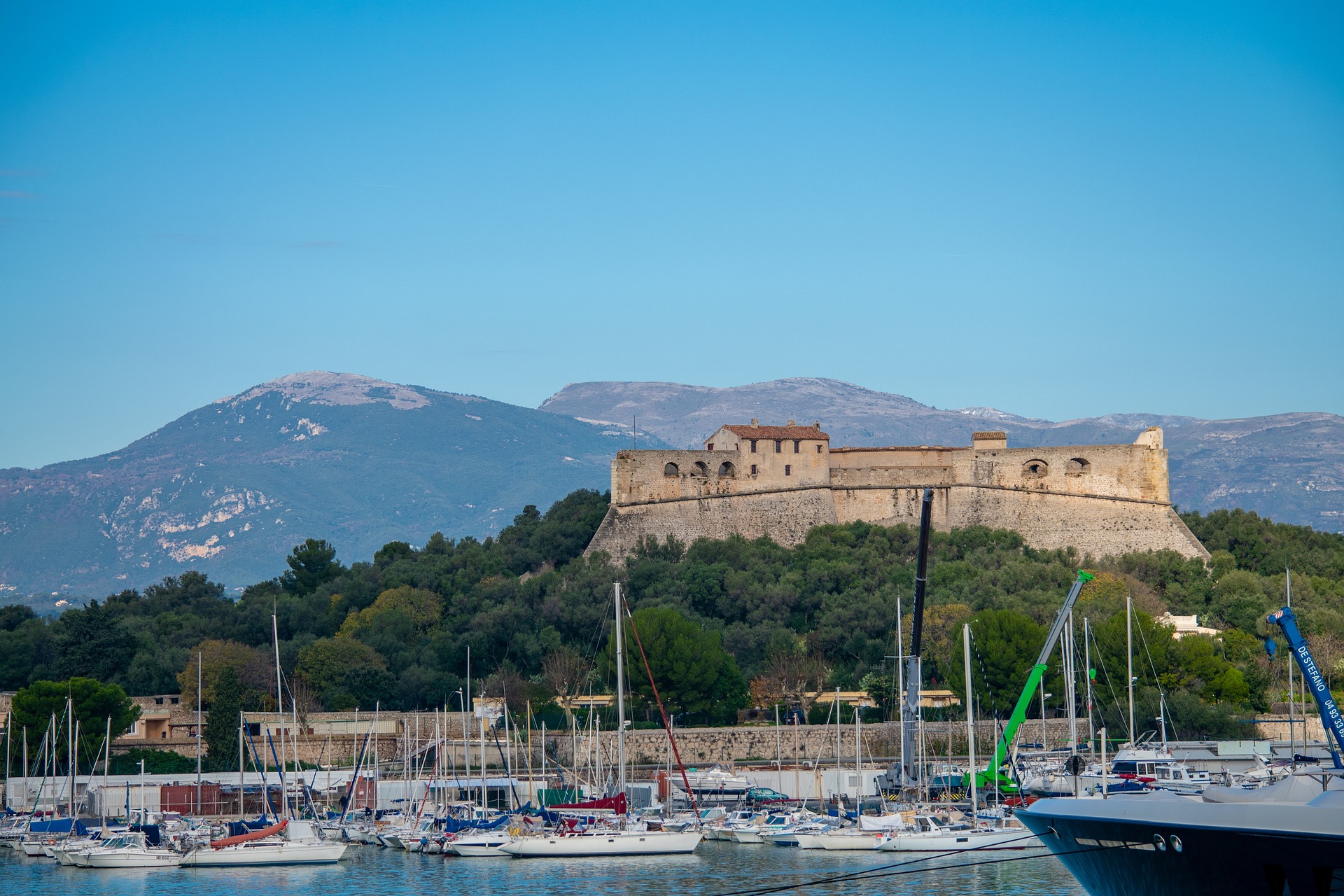
City view of Antibes, France

Antibes

Antibes, located on the French Riviera between Cannes and Nice, is known for its beautiful beaches, historic Old Town, and vibrant markets. The city's Old Town, known as Vieil Antibes, features narrow streets, lively squares, and historic buildings. The Musée Picasso, housed in the Château Grimaldi, displays a collection of artworks by the famous artist. Antibes is also home to the Port Vauban, one of the largest marinas in Europe, where luxury yachts and fishing boats are moored. The city's beaches, such as Plage de la Salis and Plage du Ponteil, are popular with visitors seeking sun and sea. Antibes' culinary scene is renowned, offering Mediterranean dishes like bouillabaisse and ratatouille. With its blend of history, culture, and coastal beauty, Antibes is a captivating destination on the French Riviera.

Top attractions & things to do in Antibes

If you’re searching for the best things to do in Antibes, this guide brings together the top attractions and must-see places to visit in Antibes. The top picks below highlight the most visited sights for first-time visitors, plus a few local favorites worth adding.

Antibes Old Town in Antibes, France

Antibes Old Town

Antibes Old Town is a labyrinth of 16th-century cobblestone streets and pastel-hued buildings, offering a vivid immersion into Provençal history. The area's Vauban-designed ramparts, built to repel pirate raids, now provide panoramic views of the Baie des Anges. At its heart lies the Marché Provençal, a bustling market where vendors have sold lavender honey and socca (chickpea pancakes) since 1898. Hidden gems include the Saint-Esprit Chapel, with 17th-century frescoes rediscovered during 2022 renovations, and the Absinthe Museum in a former distillery. Every August, the streets transform into an open-air gallery during the "Peintres dans la Rue" festival, where artists recreate scenes from Picasso's Antibes period. Beneath Place Nationale, archaeologists recently uncovered a 4th-century Roman mosaic depicting Neptune—now visible through glass floor panels. Whether sipping rosé at a café or hunting for antique linens, the Old Town blends timeless charm with modern vibrance. Few know that the cobblestones near Rue de la Tourraque conceal a medieval ossuary filled with bones relocated during the 17th-century plague. The 2021 restoration of Maison du Sel revealed original salt trading ledgers from 1563, displayed in the building's vaulted cellar.
Ads place
Ads place
Ads place
Ads place
Ads place
Cap d'Antibes in Antibes, France

Cap d'Antibes

Cap d'Antibes, the French Riviera's most exclusive peninsula, dazzles with Belle Époque villas and cliffside sentier trails. The Sentier du Littoral hiking path winds past billionaire estates like Villa Eilenroc, whose gardens inspired F. Scott Fitzgerald's *Tender Is the Night*. Hidden coves such as Plage de la Garoupe reveal crystal waters perfect for snorkeling among seahorses and octopuses. Beneath the Hôtel du Cap-Eden-Roc lies a secret seawater pool carved into the cliffs in 1914 for Coco Chanel's midnight swims. The cape's Phare de la Garoupe lighthouse contains a chapel with ex-votos left by sailors since Roman times. At sunset, the Batterie du Graillon—a WWII artillery bunker turned art space—hosts avant-garde installations against a backdrop of fiery skies. The Villa Thuret Gardens shelter a 400-year-old olive tree grafted from a cutting brought by Greek settlers in 600 BC. In 2022, marine biologists identified a unique bioluminescent plankton species in the cape's waters, visible during summer night swims.
Ads place
Ads place
Ads place
Ads place
Ads place
Fort Carré in Antibes, France

Fort Carré

Fort Carré, a 16th-century star-shaped fortress, crowns Antibes' peninsula with unmatched views of the Lérins Islands and Alpes-Maritimes. Designed by Henri de Mandon for King Francis I, its revolutionary bastioned walls thwarted countless invasions. Napoleon Bonaparte was briefly imprisoned here in 1794, his cell now part of guided tours. In 2023, restorers discovered hidden gunpowder stores containing 18th-century cannonballs stamped with the Bourbon fleur-de-lis. The fort's dry moat doubles as an open-air theater for summer Shakespeare performances. Visitors traverse vaulted passageways to reach the rooftop artillery platform, where interactive displays simulate 17th-century naval battles. The surrounding Parc de la Garoupe blooms with rare succulents and offers picnic spots overlooking superyachts in Port Vauban—Europe's largest marina. Recent excavations exposed a Roman signal tower beneath the fort's northeast bastion, its stones reused in the 1500s construction. Every September, the fort hosts "Siege Nights," where actors reenact the 1746 Battle of Antibes using pyrotechnics choreographed to Vivaldi's "Four Seasons."
Ads place
Ads place
Ads place
Ads place
Ads place
Musee de la Mer in Antibes, France

Musee de la Mer

The Musée de la Mer, housed in Fort Vauban (1681), chronicles Antibes' 2,600-year maritime saga. Star exhibits include the Roman shipwreck *La Tradelière*, sunk in 50 AD with its cargo of Garum fish sauce amphorae, and Napoleon's imperial diving suit from 1810. Interactive screens reconstruct the 17th-century Tour du Graillon whale-hunting station that once processed 500 cetaceans annually. In 2021, marine archaeologists added a recovered WWII Messerschmitt Bf 109 fighter plane from the bay's depths. The tower's 360-degree viewing platform reveals why Vauban called this "the Mediterranean's most strategic lookout." Families love the touch tank with local starfish and sea cucumbers, while history buffs study models of Greek triremes that patrolled these waters in 340 BC. The museum's latest acquisition is a Viking navigation stone found off Cap d'Antibes, proving Norse traders reached the Riviera centuries earlier than thought. Every October, freedivers demonstrate ancient sponge harvesting techniques in the fort's moat, reviving a tradition dating to Phoenician times.
Ads place
Ads place
Ads place
Ads place
Ads place
Picasso Museum in Antibes, France

Picasso Museum

The Picasso Museum in Antibes, housed within the historic Château Grimaldi, offers a deeply personal glimpse into Pablo Picasso's creative explosion during his 1946 residency. Unlike its Malaga counterpart, this museum focuses on works created in situ while Picasso lived and worked in the castle, including the iconic La Joie de Vivre, a vibrant 5.5-meter mural celebrating post-war optimism. The collection features 245 pieces donated by Picasso himself—paintings, ceramics, and whimsical sketches inspired by Antibes' Mediterranean light and mythology. The castle itself is a work of art: its 12th-century Romanesque foundations blend with Picasso's modernist frescoes, while the rooftop terrace overlooks the sea that inspired his marine-themed ceramics. Visitors can explore the artist's studio, preserved as it was during his stay, complete with paint-splattered floors. A lesser-known treasure: the museum displays archaeological finds from the castle's grounds, including Roman amphorae, connecting Picasso's art to the region's ancient past. Temporary exhibitions showcase artists like Nicolas de Staël, who also drew inspiration from Antibes. The museum's courtyard garden, dotted with Picasso's playful bronze sculptures, offers a serene contrast to the bold works indoors. Don't miss the archival footage of Picasso painting on the castle's sunlit terraces, a rare window into his creative process. In 2023, conservators discovered hidden sketches beneath Picasso's "The Goat" sculpture, revealing his initial plans for a larger mythological series. The museum also hosts a yearly "Night of Fired Clay" where visitors can create ceramics in workshops lit by the same moonlight that inspired Picasso.
Ads place
Ads place
Ads place
Ads place
Ads place