
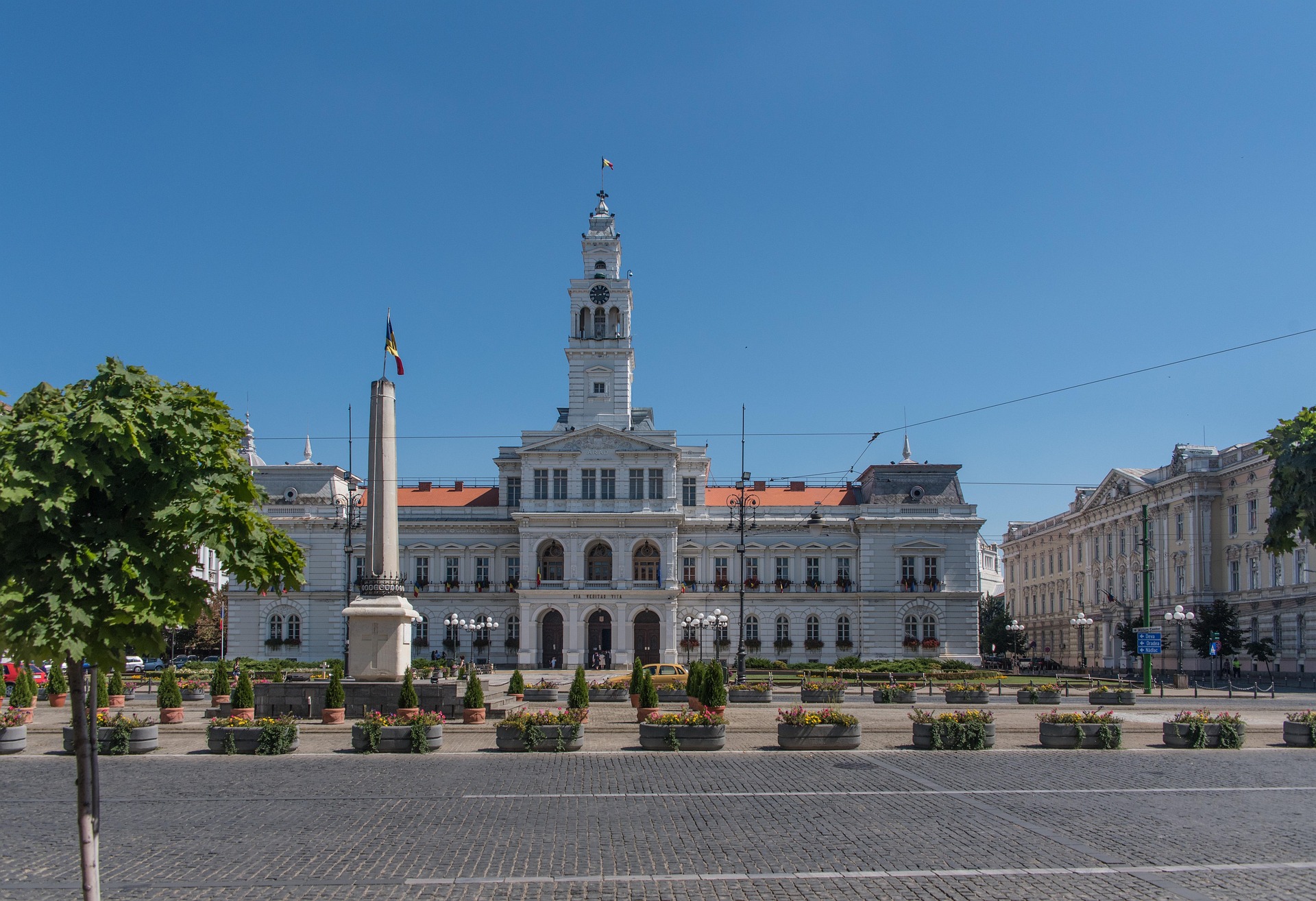
City view of Arad, Romania

Arad

Arad stretches along the Mures River with boulevards that reveal its Habsburg blueprint. Secessionist facades and sober classicist lines trade compliments as trams ring their way across town. The fortress, still under military use, guards its geometry with quiet persistence, while the State Theater stages evenings of drama that locals take seriously. Restaurants weave Hungarian and Romanian recipes together, so goulash may arrive beside papanasi without contradiction. Summers call for long walks in the riverside parks, shaded by chestnut trees planted generations ago. Museums explain the city's role in the 1848 revolutions, when Arad became a page in Europe's broader upheaval. Today, art students fill studios in refurbished warehouses, sketching among the ghosts of industry. A charming aside: the City Hall tower plays a short musical motif at noon, a civic habit that reminds everyone of rhythm. Arad is disciplined yet generous, a frontier city comfortable with its crossroads identity.

Top attractions & things to do in Arad

If you’re searching for the best things to do in Arad, this guide brings together the top attractions and must-see places to visit in Arad. The top picks below highlight the most visited sights for first-time visitors, plus a few local favorites worth adding.

Arad City Hall Palace in Arad, Romania

Arad City Hall Palace

A clock tower presides over a facade that mixes civic pride with a talent for symmetry, the sort of building that makes paperwork feel like ceremony. Completed in the late 19th century, the palace reflects the municipal optimism that followed integration into the Habsburg administrative network, when boulevards straightened and parks were planted with purpose. Inside, staircases sweep upward beneath stained glass where local emblems flank allegories of labor and learning. The council chamber holds portraits of figures who shaped the city’s modern era, including reformers active after 1918 when borders were redrawn. Look closely and you will see the careful craft of stone carvers who treated cornices as signatures rather than parts. The square outside hosts parades, protests, and winter markets, so the building’s balcony has learned to address crowds in many moods. Stand across the street at dusk and the clock’s face becomes a small moon that keeps punctual watch over the river plain.
Ads place
Ads place
Ads place
Ads place
Ads place
Arad Fortress (Cetatea Aradului) in Arad, Romania

Arad Fortress (Cetatea Aradului)

Star points hide behind trees and barracks, yet the outline still reads like a lesson in fortified geometry. Raised under Empress Maria Theresa in the late 18th century, the stronghold follows the Vauban system, a careful choreography of moats, ravelins, and angled walls meant to turn artillery into guesswork. For much of the 19th century it served as a garrison that could watch river traffic and the road east, and its parade grounds once drilled units destined for changing flags. The site later continued in military use, which is why so much survives with workmanlike honesty rather than decorative nostalgia. Walk the perimeter paths and you will notice how the earthworks still command the flat plain, a quiet dominance inherited from engineers who trusted mathematics. Local guides like to connect the fortress to the region’s 1848 revolution, not as a stage for glory but as a witness that outlived every speech.
Ads place
Ads place
Ads place
Ads place
Ads place
Cultural Palace and Arad Museum Complex in Arad, Romania

Cultural Palace and Arad Museum Complex

A concert hall and a museum share the same grand address, proving that sound and memory can live under one roof without competing. The Cultural Palace opened in the early 20th century with ambitions shaped by Habsburg taste, and its acoustics still flatter orchestras and choirs. Next door, the museum arranges archaeology, fine art, and local industry into a narrative that runs from Roman coins to factory blueprints. Visitors pause at portraits by artists tied to the Transylvanian schools, then drift into a gallery that unpacks the city’s role during the 1848–1849 upheavals. Archives explain how civic elites funded culture between wars, and how curators kept collections safe during difficult decades. The building itself wears stone garlands and sober columns, a language of confidence that has aged well. Step outside after a recital and the night air feels tuned, as if the facade were an instrument that continues to vibrate long after applause ends.
Ads place
Ads place
Ads place
Ads place
Ads place
Neolog Synagogue Arad in Arad, Romania

Neolog Synagogue Arad

Red brick and round-arched windows tell a story of confidence from a community that helped build the city’s modern economy. Erected in the 19th century, the synagogue followed the Neolog current that balanced tradition with a thoughtful embrace of contemporary architecture. Inside, a gallery rings the sanctuary and a handsome ark anchors services that once drew merchants, doctors, and teachers from nearby streets. The building later weathered war and emigration, and recent restorations in the 21st century turned it into a space for remembrance and concerts where acoustics treat every note kindly. Exhibits recount local contributions to banking, printing, and philanthropy, and a modest memorial speaks frankly about the Holocaust. Walk out into the neighborhood and the facades still hint at former workshops and bookstores that gave the quarter its quick pulse. The synagogue feels both delicate and durable, a house that keeps faith with memory while welcoming new forms of gathering.
Ads place
Ads place
Ads place
Ads place
Ads place
Reconciliation Park and Liberty Statue in Arad, Romania

Reconciliation Park and Liberty Statue

On a quiet green near the old center stands a sculpture group that remembers a difficult century with composure rather than heat. The restored Liberty Statue, linked to the Hungarian events of 1848–1849, returned to public view in 2004 as part of a broader effort to balance narratives within a shared city. Nearby plaques explain why the monument mattered, why it vanished, and how dialogue brought it back. The park itself encourages that dialogue with benches tucked among trees and paths that lead past the Roman Catholic cathedral’s outline and toward civic buildings that shaped the new 20th century. School groups visit for history lessons that feel gentler outdoors, while older residents treat the lawns like a memory book. The most striking detail may be the calm, where language and lineage sit side by side without choreography. Arad uses this space to practice the everyday work of living together, which is the hardest victory to sustain.
Ads place
Ads place
Ads place
Ads place
Ads place