
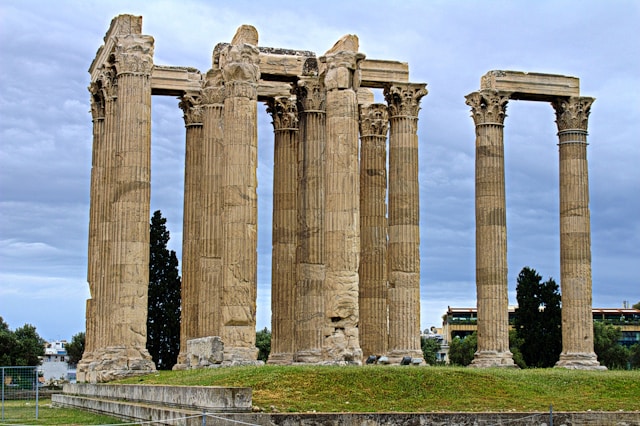
Temple of Olympian Zeus
In Athens, Greece .
More places to visit in Athens
Discover more attractions and things to do in Athens.
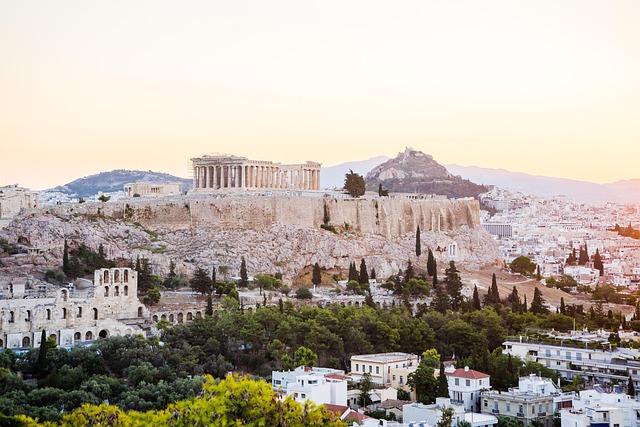
Acropolis & Parthenon
Dominating Athens’s skyline, the Acropolis crowns a rocky plateau with the Parthenon, built between 447–432 BC under the statesman Pericles . Fashioned entirely from Pentelic marble , its 46 outer and 23 inner Doric columns employ subtle entasis and stylobate curvature to correct optical illusions. The sculpted metopes depict the battle of Centaurs and Lapiths, while the inner frieze celebrates the Panathenaic procession . Adjacent, the Erechtheion’s Caryatid Porch supports its entablature on six draped maiden figures. The Propylaea gateway, combining Doric and Ionic elements, marks the sacred entrance. Nearby, the Theater of Herodes Atticus (161 AD) and the Odeon of Pericles recall ancient performances. Centuries of Ottoman occupation and Venetian bombardments left traces of a medieval mosque and cannon damage, yet modern restorations since 1975 have revived missing marble from original quarries. The on-site visitor center displays pedimental sculptures, votive offerings, and architectural fragments. UNESCO designated the Acropolis a World Heritage Site in 1987, and the annual Athens Epidaurus Festival stages performances on its slopes. At dawn, the marble glows rose-gold, offering panoramic views of modern Athens and the Aegean—a timeless journey through ancient art, religion, and democracy.
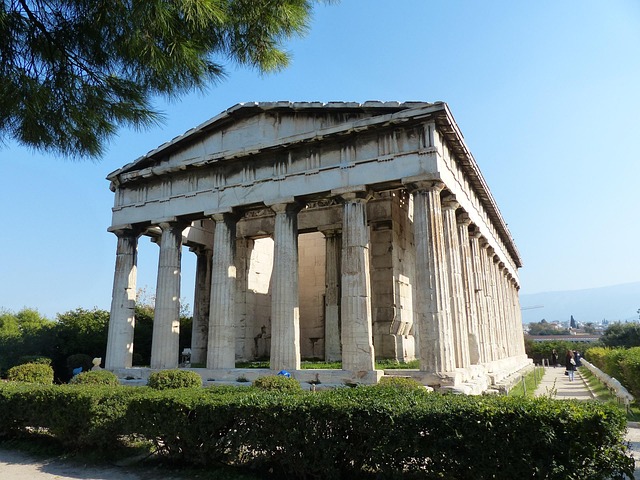
Ancient Agora
Nestled beneath the Acropolis, the Ancient Agora served as Athens’s civic and commercial hub from the 6th century BC through Roman times. The reconstructed Stoa of Attalos —rebuilt in 1953 —houses a museum of coinage, vote tokens , and everyday ceramics. The nearby Temple of Hephaestus (449 BC) stands as one of Greece’s best-preserved Doric temples. Here, Socrates and his contemporaries once debated ethics beneath ancient olive trees. Excavations since 1931 have unearthed the bouleuterion (council chamber), public fountains, and the Altar of the Twelve Gods. Scattered ruins of shops and magistrates’ offices illustrate daily life in the birthplace of democracy. Seasonal reenactments of classical dramas enliven the site, while underground galleries reveal mosaic floors and roof tiles. The Agora, inscribed with the Acropolis UNESCO designation in 1987, offers an immersive panorama of political assembly, philosophical inquiry, and marketplace exchange that defined Western civilization.
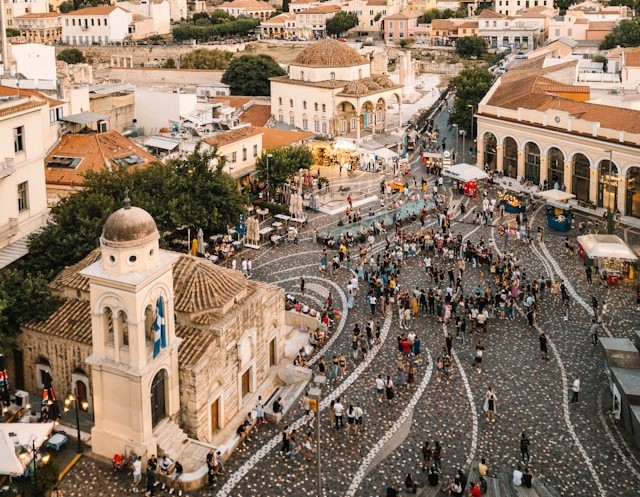
Monastiraki Square
Monastiraki Square sits at the crossroads of Athens’s vibrant center, named after the 10th-century Church of Pantanassa . Flanked by Hadrian’s Library (AD 132) and the 1759 Tzistarakis Mosque , now home to folk art ceramics, it blends Byzantine, Ottoman, and modern Greek threads. The sprawling Monastiraki Flea Market offers antiques, leather wares, and vintage textiles in a labyrinth of alleys. Archaeological excavations uncovered 4th-century BC baths beneath the paving stones, visible through glass-covered platforms. On weekends, rebetiko musicians and street performers animate the square, while rooftop cafés provide sweeping views of the Acropolis . Metro access and pedestrianized lanes enhance its role as a cultural hub. Monastiraki Square captures Athens’s layered history and bustling urban spirit in one dynamic open-air plaza.
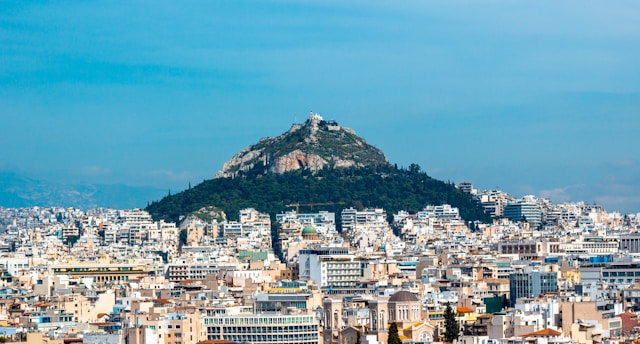
Mount Lycabettus
Rising 277 m above sea level, Mount Lycabettus offers Athens’s most breathtaking panoramas. Legend says the goddess Athena dropped a limestone outcrop here, giving the hill its name. A funicular railway built in 1965 whisks visitors from Kolonaki through pine forests to the 19th-century Chapel of St. George , renowned for its frescoed interior. Winding trails reveal Ottoman aqueduct arches and WWI gun emplacements. At sunset, the summit café fills with locals and tourists savoring frappé as the Acropolis and Saronic Gulf glow below. Seasonal concerts and Easter vigils leverage Lycabettus’s natural amphitheater. Birdwatchers spot migrating raptors overhead, while star-gazers admire clear night skies. Mount Lycabettus remains a serene escape where myth, nature, and urban vistas converge.
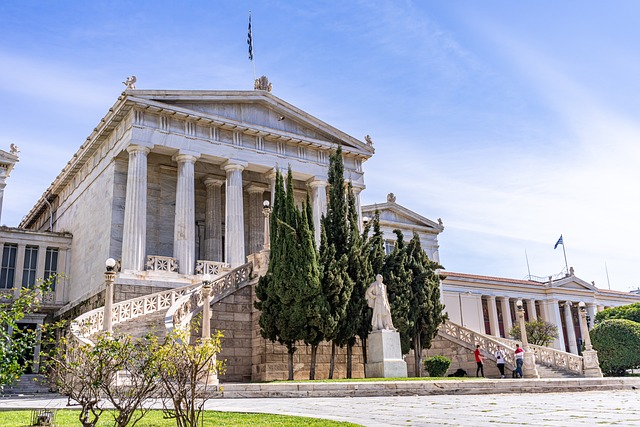
National Library of Greece
The National Library of Greece, commissioned by King George I in 1888 , anchors the neoclassical “trilogy” on Panepistimiou Avenue alongside the University and Academy. Designed by Theophil Hansen , its grand Ionic portico and Pentelic marble columns evoke ancient sanctuaries. The central pediment, sculpted by Leonidas Drosis , depicts Apollo and the Muses, symbolizing arts and learning. Inside, oak-lined reading rooms house over one million volumes, including 15th-century manuscripts , Byzantine codices, and Ottoman archival documents. Major benefactors like Evangelis Zappas and Georgios Averoff endowed its collections. A devastating 1904 fire destroyed part of the archives, but meticulous restoration and modern climate-controlled facilities now safeguard rare editions and papyrus scrolls. The library’s rooftop offers rare vistas of the Acropolis. Hosting academic conferences and public exhibitions, the National Library of Greece stands as a monument to Hellenic scholarship and 19th-century architectural revival.
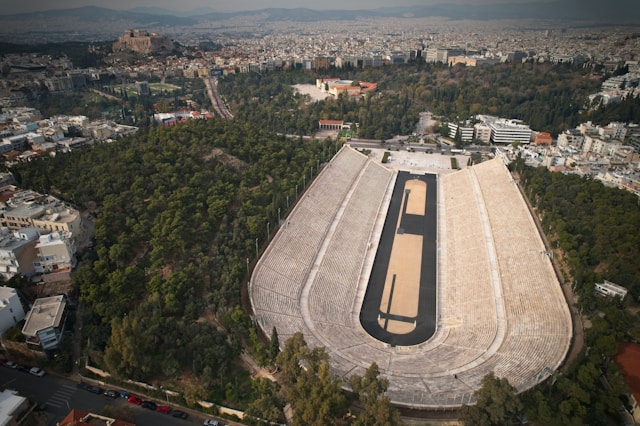
Panathenaic Stadium
Carved into the slope of Ardettos Hill, the Panathenaic Stadium—also called Kallimarmaro—originated in the 4th century BC to host chariot races during the Panathenaic Games. Completely restored in gleaming Pentelic marble for the first modern Olympics of 1896 by architect Ernst Ziller , it seats up to 50,000 spectators. The horseshoe design preserves ancient turning posts and starting gates. Each spring, the Olympic flame handover retraces the Marathon route to this historic arena, where ceremony meets continuity. Under midday sun, the marble radiates brilliance; by night, floodlights cast dramatic shadows across the stands. The stadium’s underground museum displays early athletic equipment and Olympic memorabilia. With views to Lycabettus Hill and the Acropolis, the Panathenaic Stadium unites two millennia of athletic tradition, making it an enduring symbol of global sporting spirit and national pride.
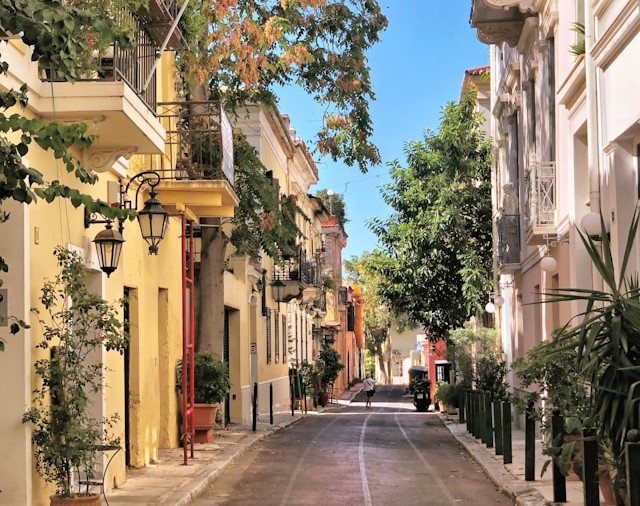
Plaka District
Known as the “Neighborhood of the Gods,” Plaka is Athens’s oldest quarter, spreading beneath the Acropolis with winding lanes of Ottoman-era houses , neoclassical mansions , and hidden Byzantine chapels . The Roman Agora gateway and the 11th-century Kapnikarea Church speak to medieval and Classical layers. Since its pedestrianization in 2016 , restoration projects have revealed ancient cisterns and mosaic floors beneath flagstones. Quaint tavernas serve bougatsa and ouzo on rooftop terraces overlooking archaeological ruins. Artisans in family-run shops craft leather sandals, ceramics, and shadow puppets, preserving traditional crafts. Seasonal folk festivals animate hidden courtyards, while live rebetiko music drifts through fragrant orange blossoms. UNESCO inscribed Plaka as part of the Acropolis ensemble in 1987, recognizing its cultural tapestry. Strolling Plaka offers an immersive encounter with layers of urban history, myth, and enduring Athenian charm.
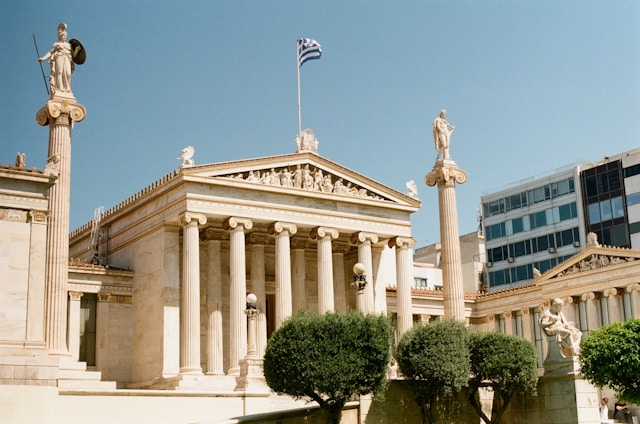
The Academy of Athens
Founded in 1859 , the Academy of Athens was conceived as Greece’s first modern scholarly institution. Commissioned by King Otto and designed by Theophil Hansen , its grand Ionic colonnade is guarded by marble statues of Athena and Apollo sculpted by Leonidas Drosis . Bronze figures of Plato and Aristotle flank the entrance, symbolizing philosophical continuity. Funded by philanthropists Evangelis Zappas and Georgios Sinas , the Academy completes a neoclassical “trilogy” with the University and National Library. Inside, frescoed ceilings illustrate the transmission of Greek knowledge from antiquity to Enlightenment. Oak-paneled halls host public lectures, exhibitions, and international symposia. Each January, the courtyard gathers diplomats and scholars to commemorate the 1837 founding of the modern Greek state. The Academy stands as a living monument to Hellenic intellectual heritage and 19th-century architectural revival.
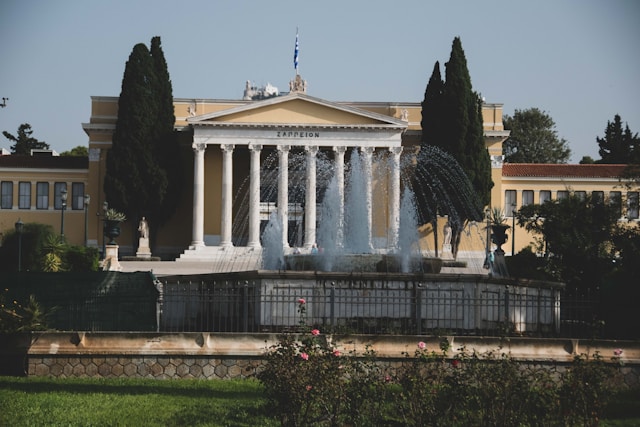
Zappeion
Commissioned in 1859 by philanthropist Evangelis Zappas , the Zappeion Hall stands at the heart of Athens’s National Gardens. Completed in 1888 by architect Theophil Hansen, its neoclassical colonnade and marble rotunda echo ancient Greek sanctuaries. The Grand Hall has hosted events from the 1896 Olympic Congress to modern European summits and cultural exhibitions. Surrounding arcades originally displayed statues of Athena and Zeus , and today serve as venues for art fairs and state banquets. Steps from Syntagma, the Zappeion remains a serene retreat amid urban bustle, its landscaped courtyards and ornamental pools offering a shaded oasis. Visiting Zappeion provides a unique encounter with Olympic revival history, architectural elegance, and Athens’s civic life.