
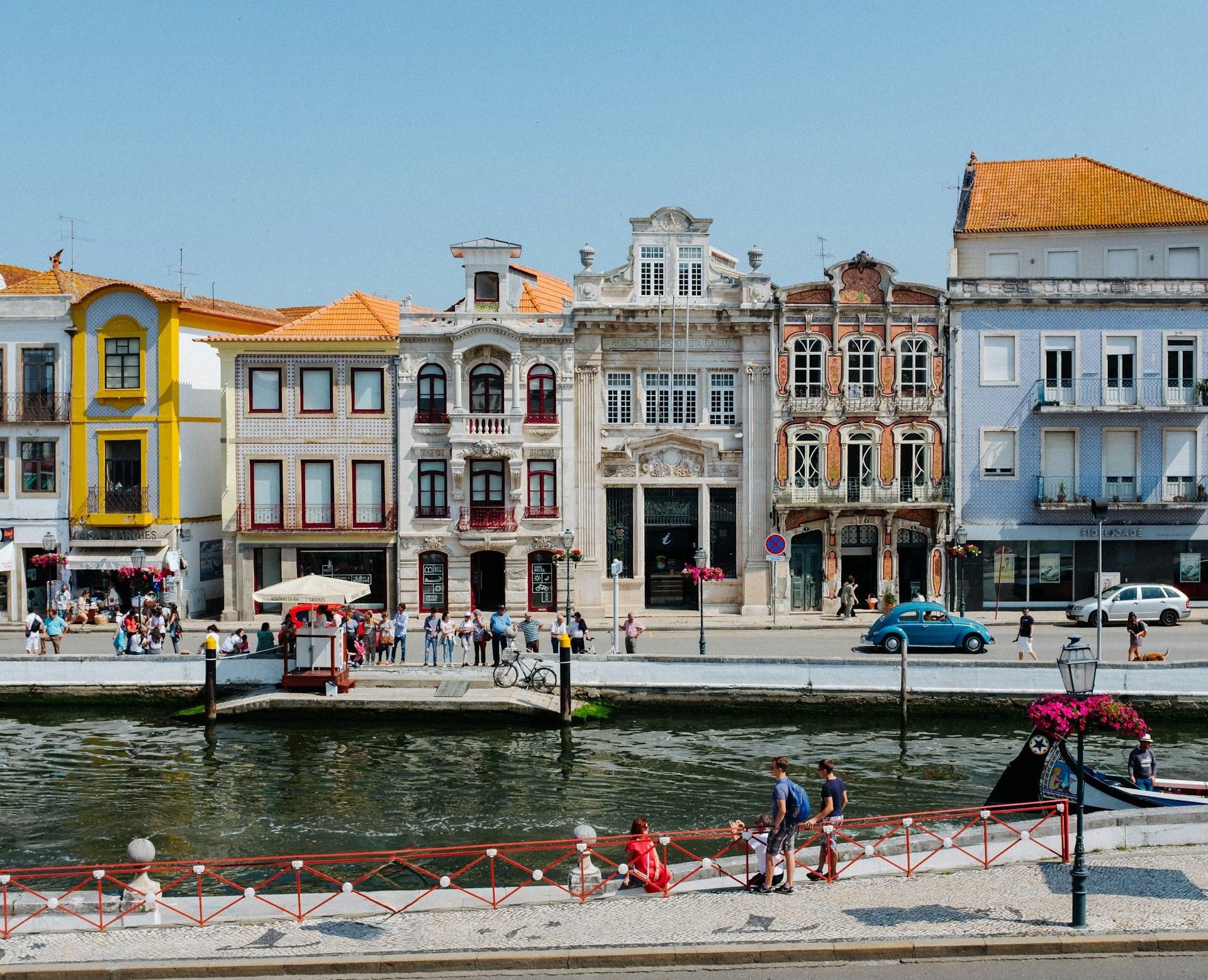
City view of Aveiro, Portugal

Aveiro

Aveiro sails canals more than streets, with moliceiro boats painted in cheeky panels gliding past Art Nouveau facades. Salt pans on the outskirts shine like mirrors, and the town's sweet tooth fixates on ovos moles, egg rich sweets wrapped in rice paper shells. Fishermen once raked seaweed for fields, a thrifty practice that fertilized both crops and folklore. The train station greets newcomers with blue and white tiles that read like postcards from another century. Afternoons taste of grilled eels, and evenings drift toward the lagoon where flamingos sometimes stage rehearsals. You can rent a bike on the flat boardwalk and pedal to Costa Nova for striped beach houses that look like someone stacked candy with a ruler. A playful detail: locals argue about the perfect filling for ovos moles with the intensity usually reserved for football finals, proof that dessert can carry civic pride.

Top attractions & things to do in Aveiro

If you’re searching for the best things to do in Aveiro, this guide brings together the top attractions and must-see places to visit in Aveiro. The top picks below highlight the most visited sights for first-time visitors, plus a few local favorites worth adding.

Costa Nova Palheiros in Aveiro, Portugal

Costa Nova Palheiros

Stripes march along the promenade like a cheerful regiment, wooden houses once used to guard nets and gear from Atlantic moods. Fisher families raised these palheiros on stilts in the 19th century, painting boards in bold bands so each clan could spot home from the shore. The breeze brings iodine from the Atlantic, and the sand holds stories about storms negotiated rather than defeated. Signs recall the era of fishing co-ops and communal boat pulls, when Sundays meant laundry boiling in kettles beside hulls. Today, porches pour coffee and conversation, yet the bones of work remain: narrow lots, deep plans, and shutters that close like firm decisions. Guides mention how color once doubled as color code, a practical mnemonic in fog and twilight. Walk the pier at low sun and the facades glow like stacked flags. It is not nostalgia; it is continuity painted bright enough to read from a distance.
Ads place
Ads place
Ads place
Ads place
Ads place
Moliceiro Canal Cruise in Aveiro, Portugal

Moliceiro Canal Cruise

Waterways lace the town like a quiet grid, and long boats glide past facades where balconies trade gossip with gulls. Once built to harvest seaweed for fields, the moliceiro now tells a gentler story, its painted panels mixing satire and saints with equal mischief. Channels connect the Ria de Aveiro, a tidal lagoon that edits the shoreline twice a day, and pilots read currents like sentences. Many hulls date their lineage to the 19th century, when the salt trade and agriculture kept families in rhythm with tides. As you pass under low bridges, art students sketch reflections while cafes lean chairs toward the sun. The route slips by townhouses touched by Art Nouveau, proof that prosperity once arrived by water before it arrived by rail. Dusk turns the surface into smoked glass, and the wake writes calligraphy behind you. The city feels calmer at shoulder height to the water, as if conversation had found its natural register.
Ads place
Ads place
Ads place
Ads place
Ads place
Museu de Arte Nova in Aveiro, Portugal

Museu de Arte Nova

A townhouse with a sinuous grin welcomes you into a period when craft behaved like ambition. The museum occupies Casa Major Pessoa, a 1907 residence whose facade teaches Art Nouveau grammar in iron, glass, and curve. Inside, rooms recover a world of Belle Epoque optimism: stained light on stair treads, marquetry that feels drawn rather than cut, and tilework that treats walls as gardens. Exhibits explain how the local bourgeoisie adopted European fashions while keeping Portuguese habits—tea sets beside azulejos, wrought balconies beside canal views. Photographs show construction crews in hats and waistcoats, a reminder that elegance starts with sweat. A café in the winter garden invites you to sit where residents once rehearsed arrivals and farewells. Step back outside and you notice other facades suddenly speaking the same language, as if the entire block were a choir. The museum’s trick is simple: tune your eye, and the street writes the rest.
Ads place
Ads place
Ads place
Ads place
Ads place
Museu de Aveiro (Convento de Jesus) in Aveiro, Portugal

Museu de Aveiro (Convento de Jesus)

Silence gathers in corridors where a princess chose prayer over palace. The convent began in the 15th century and became home to Princess Saint Joana, whose tomb, dressed in pink stone and gold, anchors the museum’s narrative. Chapels weave Manueline ribs with later Baroque exuberance, while cloisters cool the air with patterned stone. Galleries step from reliquary sparkle to sober portraits, and a carved polyptych condenses theology into wood that looks almost soft. Curators argue gently for the daily life of the nuns—kitchens, rules, letters—so the place does not float away on piety alone. Outside, traffic speaks in low modern syllables; inside, time chooses a slower meter. The building remembers sieges, reforms, and restorations, yet the azulejos keep telling their blue stories as if nothing ever changed. Before leaving, look up: ceilings surprise with painted gardens that refuse to wilt, a quiet defiance practiced here for centuries.
Ads place
Ads place
Ads place
Ads place
Ads place
Salinas de Aveiro (Salt Pans) in Aveiro, Portugal

Salinas de Aveiro (Salt Pans)

Flat mirrors stretch toward the horizon, and men with wooden rakes choreograph crystals into tidy pyramids. Salt has seasoned this lagoon since Roman days, but the craft you see follows techniques refined by guilds and families using the tides of the Ria de Aveiro. In summer heat, brine concentrates and the delicate Flor de Sal blooms on the surface, skimmed before it sinks. The work, called the traditional monda, demands patience measured not in hours but in weather windows. Informal museums explain how storage barns breathe, how footpaths keep mud out of pans, and why wooden rakes matter more than steel. Birds treat the evaporation ponds as rest stops, adding wings to an already geometric landscape. At dusk, the piles blush pink and the air tastes faintly of ozone. Take a pinch on your tongue and you will learn more chemistry than any label can teach in a paragraph.
Ads place
Ads place
Ads place
Ads place
Ads place