
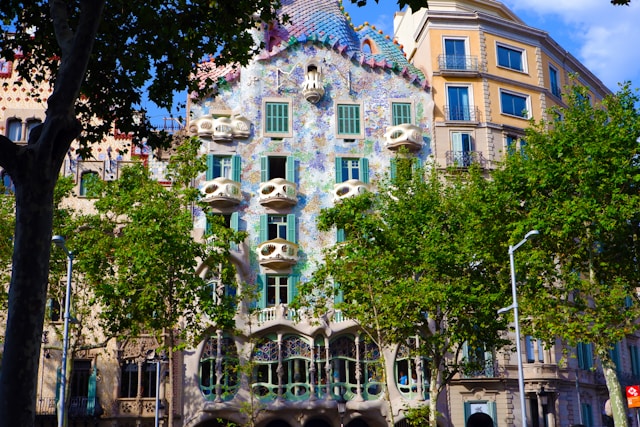
Casa Batlló
In Barcelona, Spain .
More places to visit in Barcelona
Discover more attractions and things to do in Barcelona.
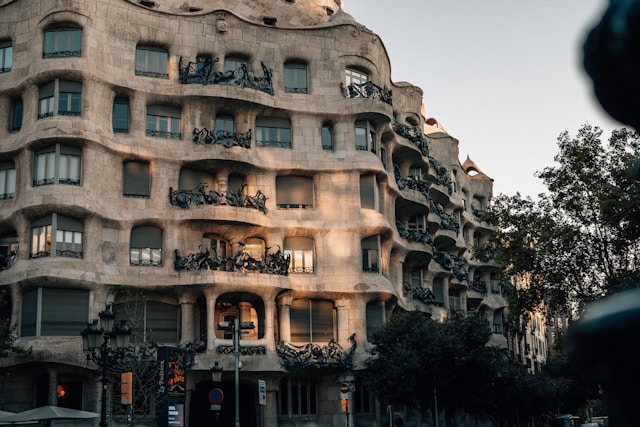
Casa Milà (La Pedrera)
Casa Milà , also known as La Pedrera (The Stone Quarry), is one of Antoni Gaudí's most iconic architectural masterpieces. Located on Passeig de Gràcia, this residential building is renowned for its undulating stone facade, which resembles waves, and its wrought-iron balconies that twist like seaweed. Gaudí's design was inspired by nature, with no straight lines or sharp corners, creating a fluid and organic structure. The rooftop terrace is a highlight, featuring surreal chimneys and ventilation towers that look like medieval knights, offering panoramic views of Barcelona. Inside, the Espai Gaudí museum provides fascinating insights into Gaudí's life, work, and innovative techniques. Casa Milà was commissioned by Pere Milà and his wife Roser Segimon, who wanted a unique home that would stand out on Barcelona's most prestigious avenue. Interestingly, the building's unconventional design initially faced criticism, but it is now celebrated as a UNESCO World Heritage Site. The attic, with its parabolic arches, houses an exhibition on Gaudí's architectural philosophy.
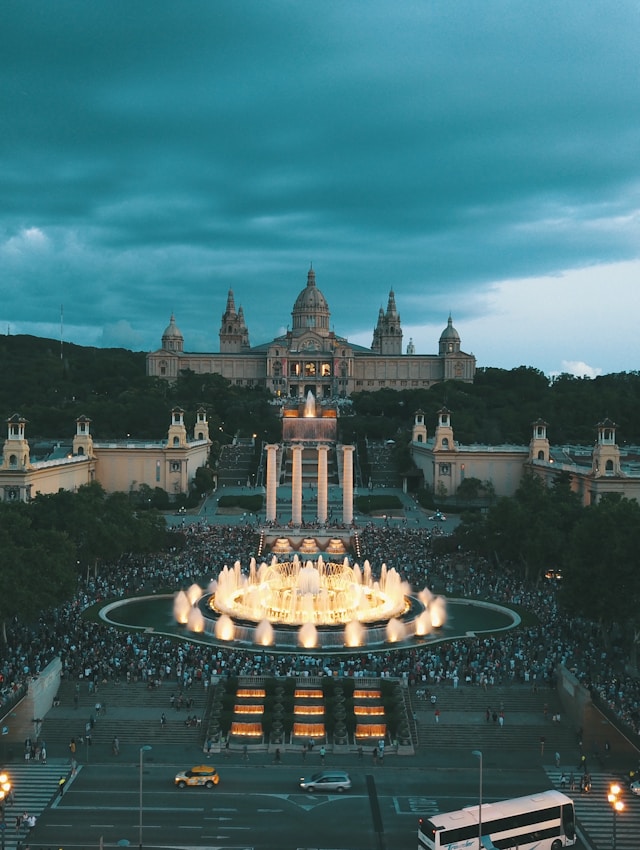
Magic Fountain of Montjuïc
The Magic Fountain of Montjuïc is a spectacular display of light, water, and music that captivates visitors of all ages. Built for the 1929 International Exposition, the fountain is located at the base of Montjuïc Hill, near the Plaça d'Espanya. The fountain's shows, which take place in the evenings, feature synchronized water jets that dance to music ranging from classical to contemporary, accompanied by colorful lights. The fountain's design was inspired by the fountains of the World's Fair in Chicago and is one of the largest of its kind in Europe. Interestingly, the fountain was restored in 1992 for the Barcelona Olympics and has since become a symbol of the city's vibrant nightlife. The shows are free to the public and attract thousands of visitors each year.
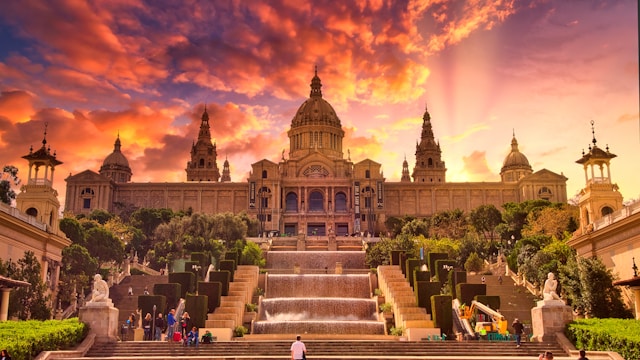
Museu Nacional d'Art de Catalunya
The Museu Nacional d'Art de Catalunya (MNAC) is one of Barcelona's most important cultural institutions, housed in the stunning Palau Nacional on Montjuïc Hill. The museum's collection spans over a thousand years of Catalan art, from the Romanesque and Gothic periods to modern and contemporary works. The Romanesque collection is particularly renowned, featuring frescoes salvaged from rural churches across Catalonia, such as the famous Pantocrator of Sant Climent de Taüll . The Gothic section showcases altarpieces, sculptures, and paintings that reflect the region's medieval heritage. The museum also boasts an impressive collection of Baroque and Renaissance art, as well as works by Catalan modernists like Ramon Casas and Santiago Rusiñol. The Olot Room , dedicated to landscape painting, highlights Catalonia's natural beauty. The Palau Nacional itself is a masterpiece, built for the 1929 International Exposition and later renovated to house the museum. MNAC also hosts temporary exhibitions, educational programs, and cultural events, making it a dynamic hub for art and history.
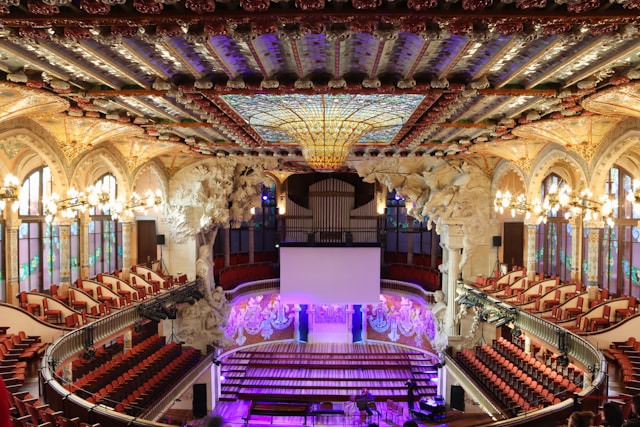
Palau de la Música Catalana
The Palau de la Música Catalana is a breathtaking concert hall and a UNESCO World Heritage Site, celebrated as one of the finest examples of Catalan Modernism. Designed by the architect Lluís Domènech i Montaner, the building is a visual masterpiece, adorned with intricate mosaics, stained glass windows, and ornate sculptures. The concert hall's centerpiece is its stunning skylight, designed to resemble a giant inverted dome, flooding the space with natural light. The Palau is renowned for its exceptional acoustics, making it one of the world's premier venues for classical and contemporary music performances. The stage is framed by a grand organ and surrounded by sculpted muses, creating a magical atmosphere for both performers and audiences. The building's facade is equally impressive, featuring colorful mosaics and floral motifs that reflect the natural world. Guided tours of the Palau de la Música Catalana offer visitors a chance to explore its architectural details and learn about its history as a symbol of Catalan cultural identity.
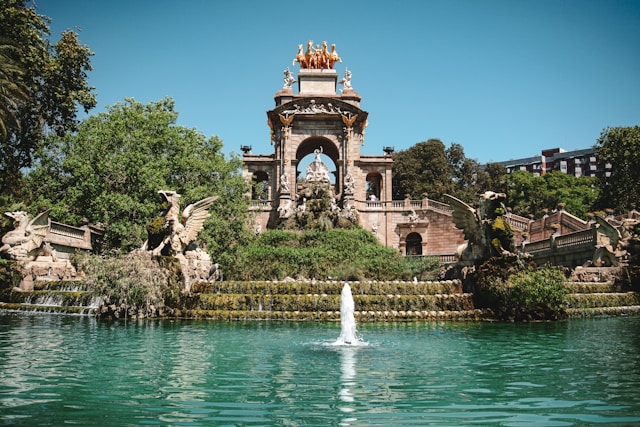
Parc de la Ciutadella
Parc de la Ciutadella is Barcelona's most central park and a green oasis in the heart of the city. Originally built on the site of a former military fortress, the park was created for the 1888 Universal Exposition and has since become a beloved public space. The park is home to the Barcelona Zoo , which houses over 4,000 animals, including the famous albino gorilla Snowflake. The Catalan Parliament , housed in a grand building within the park, adds a touch of political history to the area. The park's centerpiece is the Cascada Monumental , a grand fountain designed by Josep Fontserè with contributions from a young Gaudí. The fountain's intricate sculptures and cascading water make it a popular spot for photos. The park also features a serene lake where visitors can rent rowboats, lush gardens, and walking paths lined with statues and monuments. Interestingly, the park's Castle of the Three Dragons was originally a restaurant for the 1888 exposition and now serves as a zoology museum.
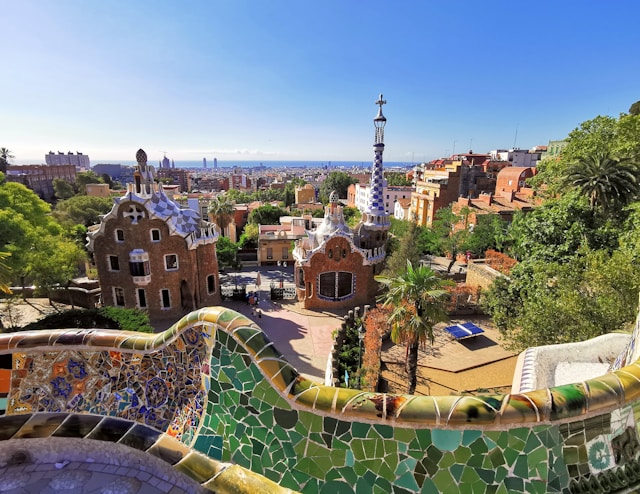
Park Güell
Park Güell is a whimsical public park designed by Antoni Gaudí, offering a surreal escape into a world of colorful mosaics, organic shapes, and stunning views of Barcelona. Originally intended as a housing development for the wealthy, the project was abandoned due to lack of interest and later transformed into a public park. The Dragon Stairway , with its iconic mosaic salamander, is one of the park's most photographed spots and symbolizes good luck. The Hypostyle Room , supported by 86 Doric columns, showcases Gaudí's genius for combining functionality with artistic beauty. The park's Serpentine Bench , covered in vibrant trencadís (broken tile mosaics), is both a work of art and a comfortable seating area, designed to encourage social interaction. From the park's terraces, visitors can enjoy panoramic views of the city and the Mediterranean Sea. Park Güell is a UNESCO World Heritage Site and a testament to Gaudí's ability to blend nature and architecture seamlessly. Interestingly, Gaudí lived in a house within the park for nearly 20 years, which is now the Gaudí House Museum .
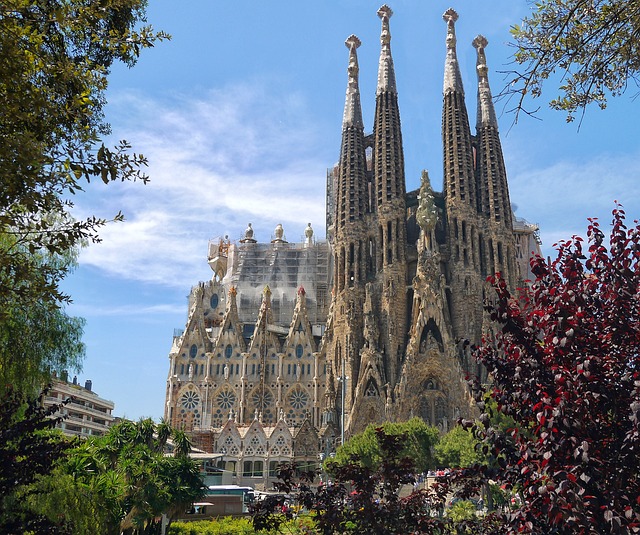
Sagrada Família
The Sagrada Família is undoubtedly Barcelona's most iconic landmark and a masterpiece of architectural genius. Designed by the legendary Antoni Gaudí, this basilica has been under construction since 1882 and is still a work in progress, with completion expected by 2026 to mark the centenary of Gaudí's death. The church's towering spires and intricate facades are a testament to Gaudí's unique vision, blending Gothic and Art Nouveau styles. The Nativity Facade , adorned with detailed sculptures, tells the story of Jesus' birth, while the Passion Facade depicts his crucifixion in a more austere style. Inside, the basilica is a kaleidoscope of light, with stained glass windows casting vibrant colors across the nave. The columns, designed to resemble trees, create a forest-like atmosphere, symbolizing nature's connection to spirituality. Gaudí's innovative use of geometry and natural forms makes the Sagrada Família a must-visit for architecture enthusiasts and spiritual seekers alike.
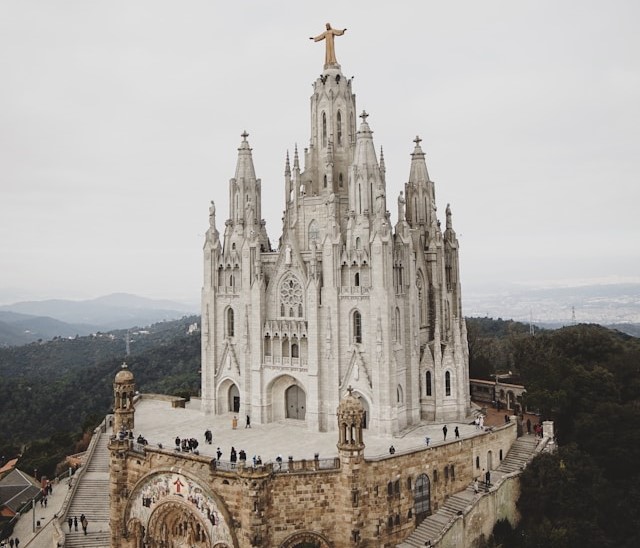
Temple of the Sacred Heart of Jesus
The Temple of the Sacred Heart of Jesus (Temple del Sagrat Cor) is a stunning basilica located atop Mount Tibidabo, offering panoramic views of Barcelona and the surrounding landscape. Designed by Enric Sagnier and completed by his son Josep Maria Sagnier i Vidal, the church is a blend of Neo-Gothic and Modernist architectural styles. The temple's most striking feature is the towering statue of Jesus Christ with outstretched arms, reminiscent of the famous Christ the Redeemer in Rio de Janeiro. The statue, made of bronze and covered in white stone, stands at the highest point of the basilica and serves as a symbol of peace and protection over the city. The interior of the church is equally impressive, with intricate stained glass windows, ornate altars, and a serene atmosphere perfect for reflection. The crypt, located beneath the main church, features beautiful mosaics and sculptures, adding to the spiritual ambiance. The temple is part of the Tibidabo complex, which includes the Tibidabo Amusement Park, making it a unique combination of spiritual and recreational experiences.
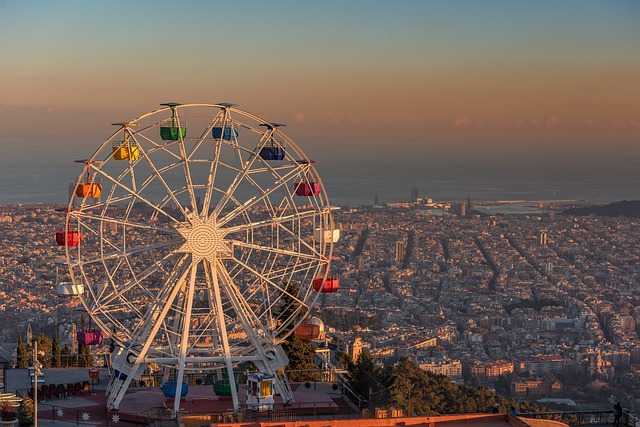
Tibidabo Amusement Park
Tibidabo Amusement Park , perched atop Tibidabo Mountain, is one of the oldest amusement parks in Europe and a beloved landmark in Barcelona. Opened in 1901, the park combines vintage charm with modern attractions, offering fun for visitors of all ages. The park's iconic Tibidabo Church , with its towering statue of the Sacred Heart of Jesus, stands nearby, adding a spiritual and picturesque backdrop to the park. One of the park's most famous rides is the Avio , a vintage airplane ride that has been operating since 1928, offering stunning views of the city and the Mediterranean Sea. The Ferris Wheel and the Mountain Ride are also popular attractions, providing thrilling experiences and panoramic vistas. The park's nostalgic atmosphere is enhanced by its historic carousel, puppet shows, and arcade games. Families can enjoy a variety of rides, from gentle carousels to adrenaline-pumping roller coasters, while the park's restaurants and cafes offer delicious snacks and meals.