
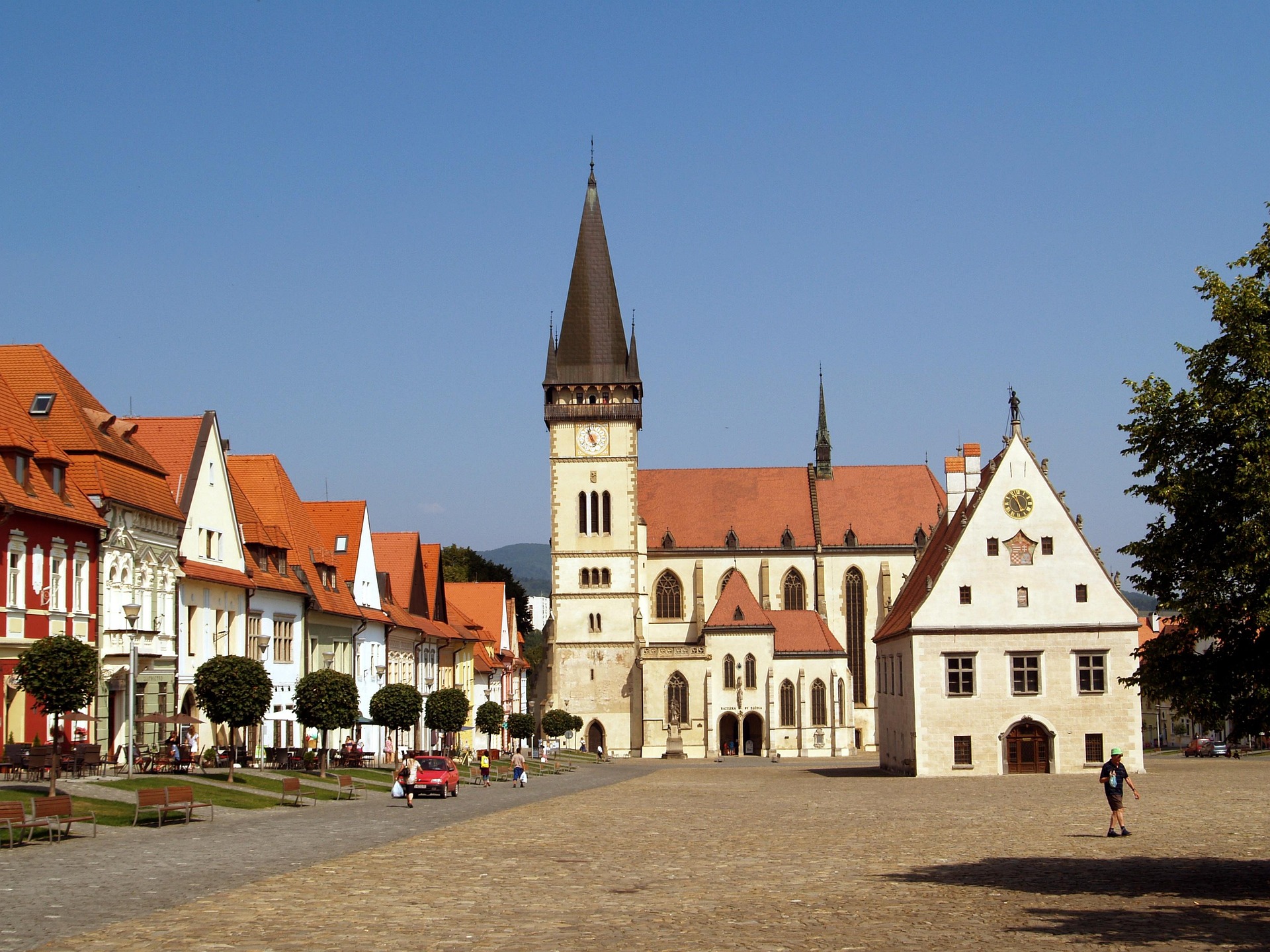
City view of Bardejov, Slovakia

Bardejov

Bardejov looks ready for a film set yet behaves like a real town with errands to run and soup to ladle. The square’s steep gables point to a history of merchants who counted carefully and built handsomely. The spa a short drive away adds eucalyptus steam to the weekly routine. Inside the basilica, altars bloom with late Gothic carving that turns saints into neighbors. Lunch might be garlic soup served in a bowl you will want to keep and a slice of loksa folded like a secret. Folk architecture in the open air museum explains rural patience with humor and detail. People greet each other in a quiet rhythm that visitors soon copy. Small delight, a watch repairer keeps a workshop window open on warm days and passersby pause to hear the faint chorus of ticking, a soundtrack that suits a town devoted to good timing.

Top attractions & things to do in Bardejov

If you’re searching for the best things to do in Bardejov, this guide brings together the top attractions and must-see places to visit in Bardejov. The top picks below highlight the most visited sights for first-time visitors, plus a few local favorites worth adding.

Bardejovske Kupele Spa in Bardejov, Slovakia

Bardejovske Kupele Spa

A short ride from town, the forest opens to pavilions and the soft punctuation of fountains. Springs here were noted early—tradition reaches to the 13th century—and modern doctors renewed the site with measured balneology rather than slogans. The waters are naturally carbonic, a detail you taste as a fine sparkle, and treatment menus pair drinking cures with hydrotherapy scheduled like trains. A colonnade links historic villas where summer social life once edited manners; in 1895 the visit of Empress Elisabeth added gossip to medical notes. Paths lead to a small music pavilion and a skanzen of folk buildings that keep the region’s grammar of wood alive. On cool mornings steam lifts from outdoor pools; in late light, verandas turn into theatres for unhurried conversation. The best souvenir is not bottled—sleep comes deeper, steps longer, errands kinder. Spa culture here feels like infrastructure for health rather than luxury, maintained with the same calm care as paths and railings.
Ads place
Ads place
Ads place
Ads place
Ads place
Basilica of St Egidius in Bardejov, Slovakia

Basilica of St Egidius

Step through the west door and the nave seems to steady your pace before you notice the forest of altars along the aisles. The parish here grew wealthy on trade, and the church answered with a refined Late Gothic program begun in the 14th century and matured across the next hundred years. Guides like to count the winged retables—often cited as 11—whose painted panels still read clearly from the pews. Carving in several chapels is linked to the circle of Master Paul of Levoca, with drapery that falls like thought made visible. Look for stone tracery where repairs used old profiles instead of shortcuts, and a font polished by generations of fingertips. During evening rehearsal the organ tests a chord that blooms down the nave; even silence sounds room-shaped. The town’s historic core joined the UNESCO list in 2000, and the basilica remains its anchor—devotion, craftsmanship, and civic pride agreeing on proportions that time confirms without argument. Step outside and the square arranges itself like a respectful audience.
Ads place
Ads place
Ads place
Ads place
Ads place
City Walls and Bastions in Bardejov, Slovakia

City Walls and Bastions

Walk the ring streets and you still read defense as a kind of careful handwriting. Bardejov’s fortifications began in the 14th century and grew into a disciplined circuit of towers, gates, and angled works tuned to new weapons. Surviving stretches run for roughly 2.5 kilometers, stitched where necessary but legible enough to explain logic at a glance. A guideboard near a former barbican outlines approach routes and how the moat once negotiated rain and trade. Look closely and you will spot reused blocks stamped with mason marks, thrifty choices that also preserved character. Gun loops and higher gunports remind you that walls learned to talk back in iron and smoke. At golden hour the brick keeps a second breath of cool air, and the path turns metronomic. Stand by a reconstructed Town Gate and imagine tolls, wagons, and passwords; the city still enters itself here, only gentler. History becomes a walk with good explanations and reliable shade.
Ads place
Ads place
Ads place
Ads place
Ads place
Jewish Suburbium and Synagogue in Bardejov, Slovakia

Jewish Suburbium and Synagogue

Tucked just beyond the square, the former Jewish quarter reads as an ensemble rather than a single monument. The synagogue—often dated to 1836—shares a yard with a beit midrash, school rooms, and a ritual bath (mikveh), a compact campus that once synchronized prayer, study, and daily business. Inside, the Ark anchors focus with disciplined ornament; outside, patterned brick and plaster manage light without theatrics. Plaques explain losses with frank economy and decode Hebrew inscriptions so names become legible again. Careful conservation favors reversible methods, and the restored women’s gallery floats on slim columns like a balcony in a quiet opera house. The historic town joined UNESCO in 2000; this precinct helps complete the picture by restoring a voice that war tried to silence. Visit with time for listening: creak of floors, echo of a courtyard, the soft grammar of thresholds connecting rooms that once knew exactly who arrived and why.
Ads place
Ads place
Ads place
Ads place
Ads place
Radnicne Namestie and Old Town Hall in Bardejov, Slovakia

Radnicne Namestie and Old Town Hall

The main square feels composed from any angle, a long rectangle where errands turn into promenades and facades speak in calm voices. At its center stands the Old Town Hall, a tidy blend of late Gothic bones and early Renaissance manners built around 1505–1511. Inside, a civic chamber keeps portraits, seals, and a cupboard of market measures that once taught honesty by weight. Under the eaves, masons left tiny marks that read like signatures rather than decoration; patches of sgraffito still wink in certain light. Market days draw a practical choreography of stalls and conversations, while evenings hand the stage to cafes and the soft metronome of footsteps. The wider historic ensemble entered UNESCO in 2000, confirming what visitors sense: the square is a textbook for living well together. Stand by the wellhead, look toward the basilica, and you will see how corners, roofs, and doorways cooperate so that nothing shouts and everything participates—urban civility written in stone and habit.
Ads place
Ads place
Ads place
Ads place
Ads place