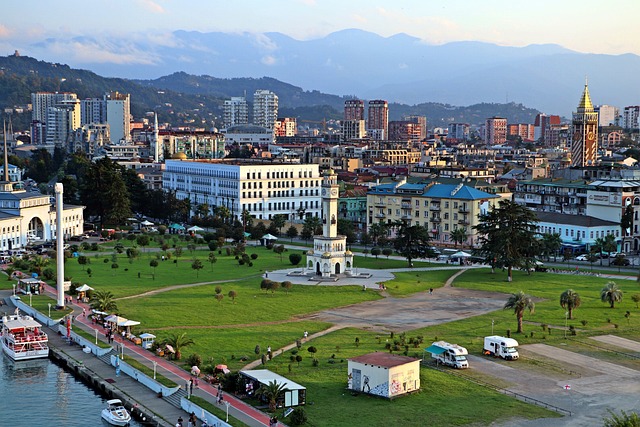
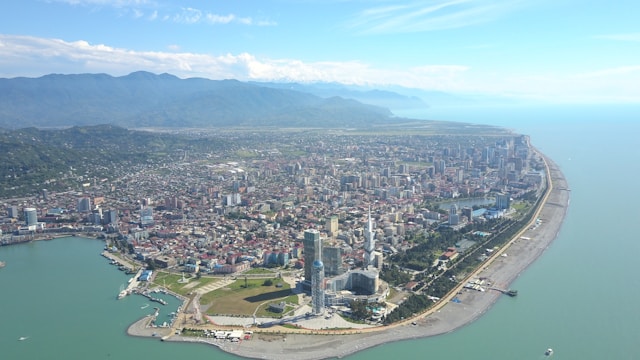
City view of Batumi, Georgia

Batumi

Batumi, the jewel of Georgia’s Black Sea coast, melds subtropical seaside charm with avant-garde urban design. Its palm-lined Batumi Boulevard—stretching nearly seven kilometers along the water—boasts landscaped gardens, fountains, and modern sculptures, including the kinetic “Ali and Nino.” Behind the promenade, a skyline of daring architecture punctuates the horizon: the twisting Piazza Tower, the Alphabetic Tower honoring Georgia’s unique script, and the Ferris wheel atop the Sheraton. Batumi’s historic district offers a quieter counterpoint, with 19th-century mansions, mosques, and European-style cafés. The city thrives as an entertainment destination, featuring casinos, theaters, and year-round festivals, from jazz to film. Inland, the Batumi Botanical Garden spills down the cliffside, showcasing flora from around the globe against dramatic sea vistas. Warm winters and mild summers make Batumi an all-season retreat, inviting sun-seekers, culture aficionados, and nightlife enthusiasts to a setting where the sea breeze cools architectural daring.

Top attractions & things to do in Batumi

If you’re searching for the best things to do in Batumi, this guide brings together the top attractions and must-see places to visit in Batumi. The top picks below highlight the most visited sights for first-time visitors, plus a few local favorites worth adding.

Ali & Nino Statue in Batumi, Georgia

Ali & Nino Statue

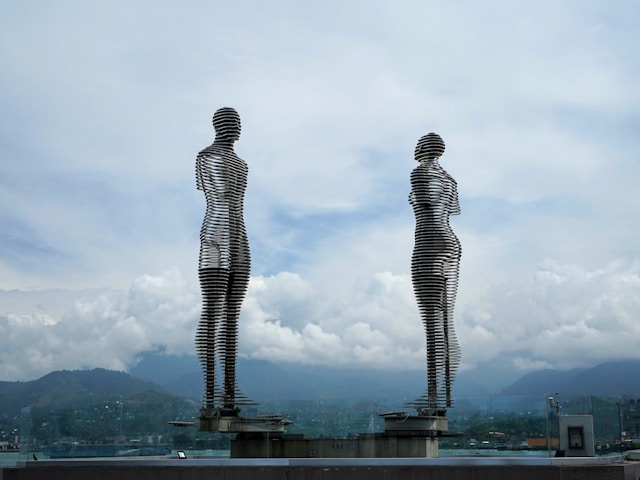
Rising 8 m on the Batumi waterfront, the kinetic “Ali & Nino” sculpture by Tamara Kvesitadze debuted in 2010 as a poetic emblem of East–West unity. Each evening at dusk, two 7-ton steel figures converge into one form before parting—symbolizing a timeless love story drawn from Kurban Said’s novel. Driven by a precision turntable, the installation completes its cycle every 10 minutes, creating a captivating photo opportunity against the sea horizon. Visitors gather on the promenade to witness its graceful motion, often accompanied by live street performances. Since its unveiling, Ali & Nino has become a cornerstone of Batumi’s creative renaissance and a must-see landmark for travel photographers seeking dynamic, in-motion imagery.
Ads place
Ads place
Ads place
Ads place
Ads place
Alphabetic Tower in Batumi, Georgia

Alphabetic Tower

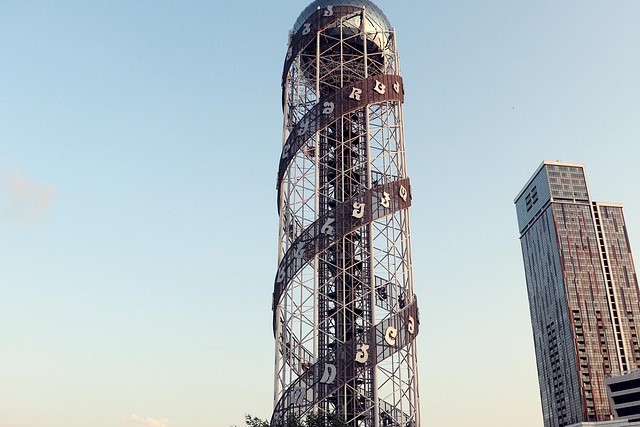
Completed in 2012, the 130 m Alphabetic Tower celebrates Georgia’s unique 33-letter script with a double-helix steel structure entwined by Georgian characters. Designed by Michele De Lucchi, the tower houses an observation deck at 110 m, offering 360° panoramic views of Batumi’s coastline and the Caucasus foothills. A rotating restaurant atop completes a full turn every 45 minutes, serving regional specialties. At the base, a landscaped plaza features panels on the script’s evolution since the 5th century and interactive kiosks teaching Georgian calligraphy. Illuminated at night in shifting hues, the tower stands as a modern icon of Batumi’s cultural identity and technological progress.
Ads place
Ads place
Ads place
Ads place
Ads place
Batumi Botanical Garden in Batumi, Georgia

Batumi Botanical Garden

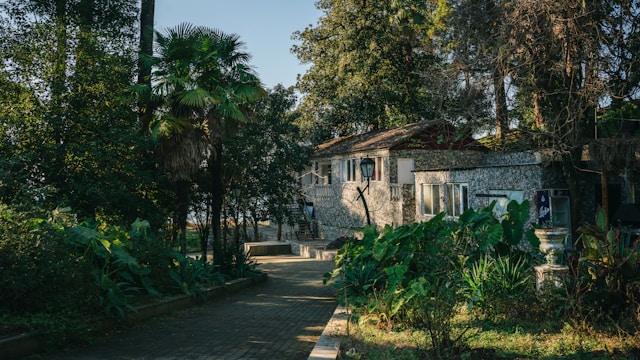
Perched on a coastal cliff 9 km north of the city, the Batumi Botanical Garden spans over 111 hectares and was founded in 1912 by Russian botanist Andrey Krasnov. It conserves more than 5,000 plant species from Asia, Australia, Africa, and the Americas, organized into thematic sectors—East Asian woodlands, Mediterranean shrublands, and the Austral Arid Zone. Meandering trails reveal panoramic views of the Black Sea and the city skyline, while hidden grottos house rare orchids and creepers. The garden’s waterfall, a 25 m cascade sourced from an artesian spring, feeds terraced pools lined with Japanese maples. A historic rose garden, replanted in 2016, showcases over 200 cultivars arranged around a central fountain. Visitors can join guided ecology tours or relax at the cliff-edge café serving herbal infusions made from home-grown mint and lavender. Renowned for its biodiversity and serenity, Batumi Botanical Garden remains both a scientific research center and a beloved nature escape.
Ads place
Ads place
Ads place
Ads place
Ads place
Batumi Boulevard in Batumi, Georgia

Batumi Boulevard

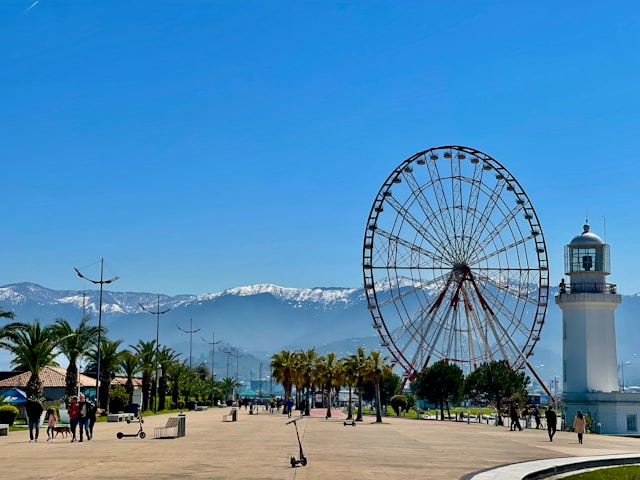
Stretching over 7 km along the Black Sea coast, Batumi Boulevard is one of Georgia’s oldest seaside promenades, originally laid out in 1881 under Russian Imperial rule. Today’s palm-lined walkway winds past iconic sculptures, terraced oceanfront parks, and modern glass pavilions, blending Victorian-era seating with cutting-edge architecture. Highlights include the “Love” sculpture by Tamara Kvesitadze and a series of 23 choreographed fountains that come alive at night. Cafés and bike rentals pepper the route, while shaded kiosks serve artisanal ice cream and local wine spritzers. Visitors also encounter dynamic kinetic installations such as the “Dancing Fountains” and “Whirling Hourglass,” each crafted by leading Georgian and international artists. A refurbished naval gallery at the boulevard’s western tip hosts rotating exhibitions and overlooks luxury yachts. Whether bathed in sunrise mist or lit by neon at midnight, Batumi Boulevard remains the city’s signature leisure destination.
Ads place
Ads place
Ads place
Ads place
Ads place
Batumi Lighthouse in Batumi, Georgia

Batumi Lighthouse

Standing on the seaside promenade since 1882, the Batumi Lighthouse is a whitewashed Ottoman-era beacon that has guided ships into the Black Sea port for over a century. Rising 20 m above the quay, its octagonal tower and wrought-iron balcony overlook a landscaped green where local fishermen mend nets and families picnic at sunset. The original oil lamp was replaced by an electric beacon in 1936, yet the lighthouse retains its historic mechanism and narrow spiral staircase. Each evening, the light pulses every 10 seconds, visible up to 12 nautical miles away. Around the base, stone plaques recount 19th-century navigation and Soviet-era maritime rescues. Beloved by photographers for its picturesque setting against the city skyline and misty Caucasus foothills, Batumi Lighthouse offers a serene counterpoint to the boulevard’s lively cafés.
Ads place
Ads place
Ads place
Ads place
Ads place
Europe Square in Batumi, Georgia

Europe Square

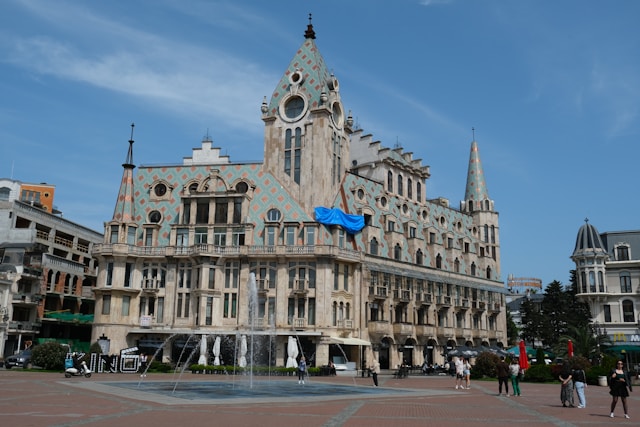
Nestled in the heart of Old Town, Europe Square is dominated by a 6 m bronze statue of Medea holding the Golden Fleece—an homage to Colchis’s mythic heritage. Unveiled in 2007 and sculpted by Zurab Tsereteli, it faces a semicircle of neoclassical buildings housing the city hall and art galleries. The square’s flagstone surface is paved with concentric circles of black and white granite, symbolizing unity between Europe and Asia. Seasonal festivals—from Christmas markets to jazz weekends—activate the space with live performances and artisan stalls. As dusk falls, warm spotlights accentuate Medea’s form and the surrounding façades, creating a magical urban theater that celebrates Batumi’s crossroads of myth and modernity.
Ads place
Ads place
Ads place
Ads place
Ads place
Gonio Fortress in Batumi, Georgia

Gonio Fortress

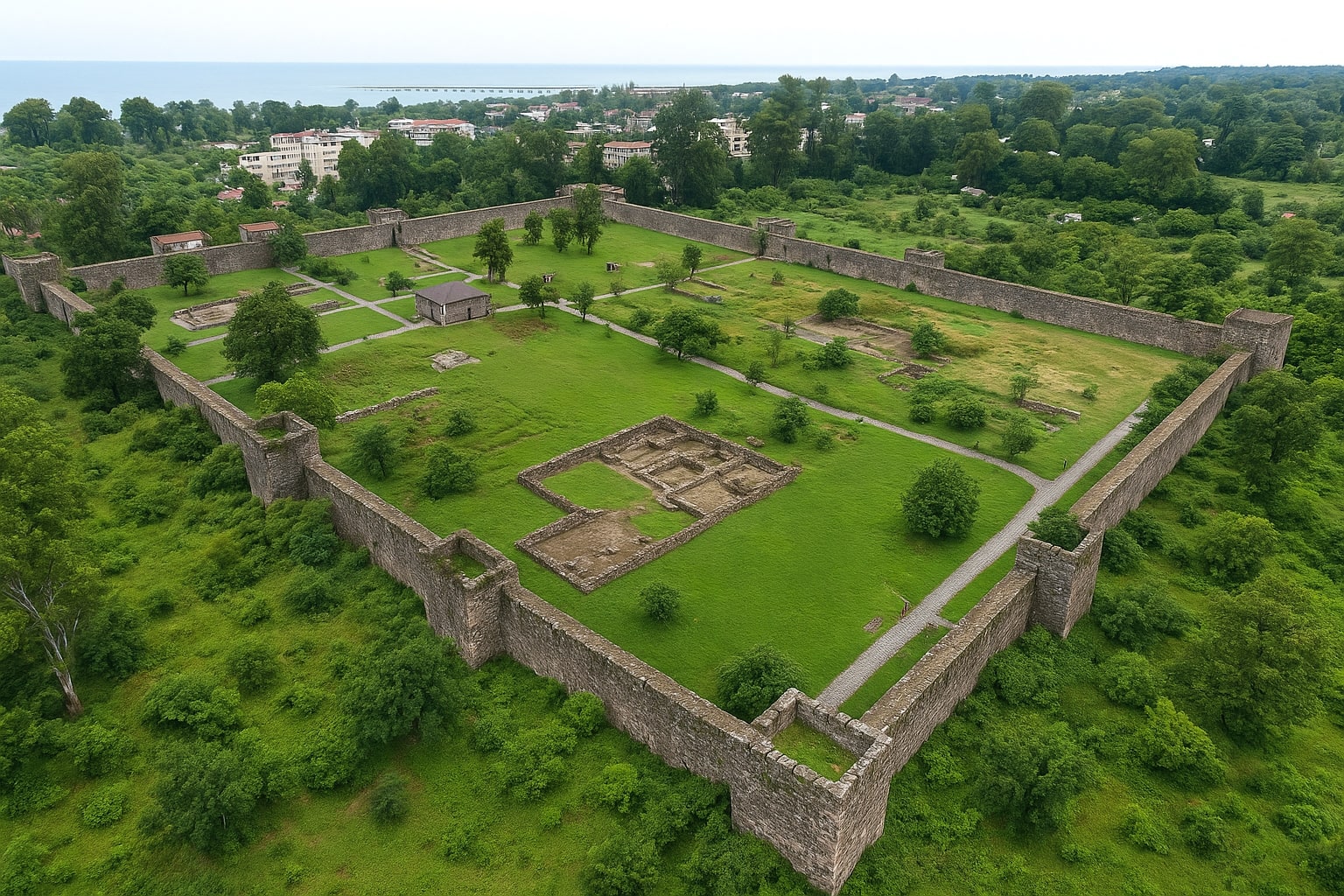
Gonio Fortress is a well-preserved Roman–Byzantine stronghold first recorded by Pliny the Elder in the 1st century AD. Its massive limestone walls enclose four hectares and feature 16 defensive towers linked by ramparts that withstood centuries of sieges. Excavations in 2010 uncovered hypocaust baths, an early-Christian necropolis, and exquisite hunting-scene mosaics. Once guarding the vital trade route between Colchis and the Bosporus—exchanging gold and tea—the site today invites visitors to walk its battlements at sunset, with views of the black-sand coastline and the Chorokhi River mouth. On-site displays present Roman amphora shards and medieval weaponry, while a keep-turned museum details Gonio’s evolution from ancient outpost to Ottoman bastion. Despite its nearness to Batumi’s nightlife, Gonio remains a serene portal to Georgia’s layered past.
Ads place
Ads place
Ads place
Ads place
Ads place
Holland House in Batumi, Georgia

Holland House

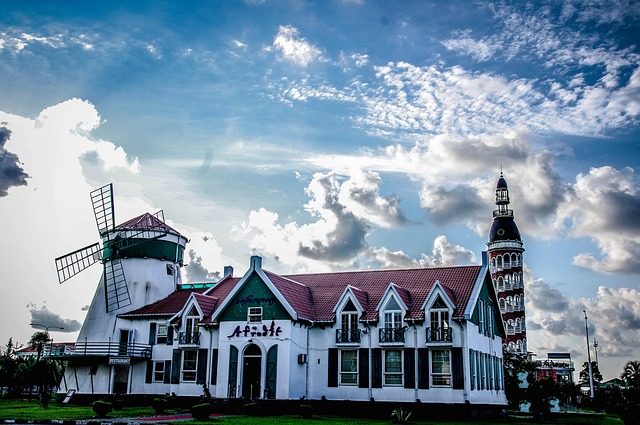
Opened in 2012 as a tribute to Georgian–Dutch cultural exchange, Holland House is modeled after classic 17th-century canal houses, complete with a red-tiled windmill tower and ornate clock turret. The ground floor café seats 36 guests and serves Stroopwafel and Dutch pancake specialties, while the second-floor gallery showcases rotating exhibitions of Georgian contemporary art. A spiral staircase winds beneath functioning millstones once used to grind grain, transported by nearby wooden sails. Each summer, the adjacent lawn hosts an annual tulip festival, planting over 10,000 bulbs in patterns inspired by Amsterdam’s fields. At dusk, the windmill sails illuminate in changing hues, echoing Batumi’s dynamic skyline. The on-site microbrewery crafts a signature “Black Sea” stout infused with local honey. With its blend of architectural whimsy, culinary delights, and vibrant events, Holland House bridges two maritime cultures on the shores of the Black Sea.
Ads place
Ads place
Ads place
Ads place
Ads place
Miracle Park & Ferris Wheel in Batumi, Georgia

Miracle Park & Ferris Wheel

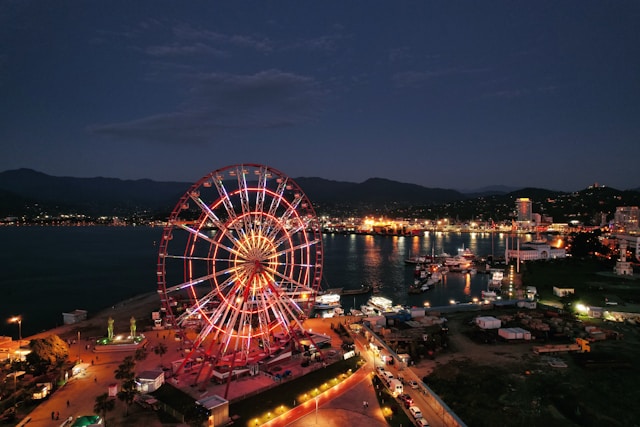
Miracle Park, established in 2012, occupies a clifftop overlooking Batumi’s skyline and features the landmark Ferris Wheel, which soars 60 m above sea level. Its 36 glass-enclosed gondolas offer 360° views of the Black Sea, the botanical garden, and the distant Caucasus foothills. The park’s landscaped terraces contain interactive light sculptures—such as the “Alphabet Fountain” spelling out Georgian letters in LED arches—and shaded seating nooks for sunset viewing. A children’s playground with traditional wooden carousels complements the modern attractions. Seasonal night shows project animated patterns onto the Ferris Wheel’s spokes, synchronized to music ranging from Georgian polyphony to contemporary pop. As twilight deepens, the wheel’s illumination becomes a glowing beacon visible across the bay, cementing its place as Batumi’s “miracle” of modern entertainment.
Ads place
Ads place
Ads place
Ads place
Ads place
Upside-Down House in Batumi, Georgia

Upside-Down House

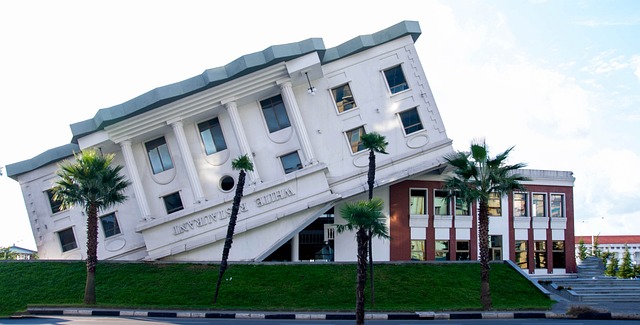
Built in 2017 by local designers, the Upside-Down House stands just off Batumi Boulevard as a whimsical celebration of optical illusion. This three-storey structure appears to have toppled onto its roof, complete with inverted windows and doorways. Inside, every piece of furniture—from couches to tables and even a piano—is affixed to the ceiling, creating a surreal setting that attracts Instagrammers and families alike. The 30-minute interior tour guides visitors through rooms where chandeliers hang from the floor and place settings are reversed. Educational panels explain the building’s engineering, while interactive stations test balance and perception in picture-perfect photo zones. Located near the city’s famed dolphinarium, the house hosts seasonal themed exhibits and a gift shop offering novelty souvenirs. With its vibrant façade and spirit of innovative tourism, the Upside-Down House remains one of Batumi’s most memorable attractions.
Ads place
Ads place
Ads place
Ads place
Ads place