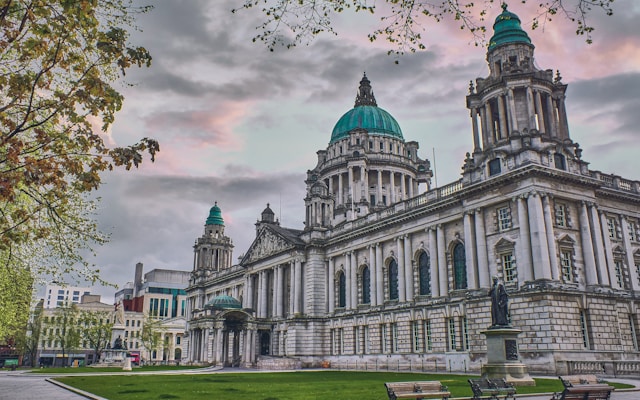
City view of Belfast, United Kingdom

Belfast

Belfast, the capital of Northern Ireland, is known for its maritime history and cultural heritage. The Titanic Belfast museum, located on the site of the former Harland & Wolff shipyard, tells the story of the ill-fated RMS Titanic. The city's murals, particularly in the Falls Road and Shankill Road areas, reflect its complex political history. Belfast's Victorian architecture, including the City Hall and the Ulster Museum, adds to its charm. The city's vibrant music scene, with traditional Irish music and modern bands, is a highlight for visitors. Belfast's green spaces, such as the Botanic Gardens, offer a tranquil escape. The city's friendly locals and rich history make it a fascinating destination.

Top attractions & things to do in Belfast

If you’re searching for the best things to do in Belfast, this guide brings together the top attractions and must-see places to visit in Belfast. The top picks below highlight the most visited sights for first-time visitors, plus a few local favorites worth adding.

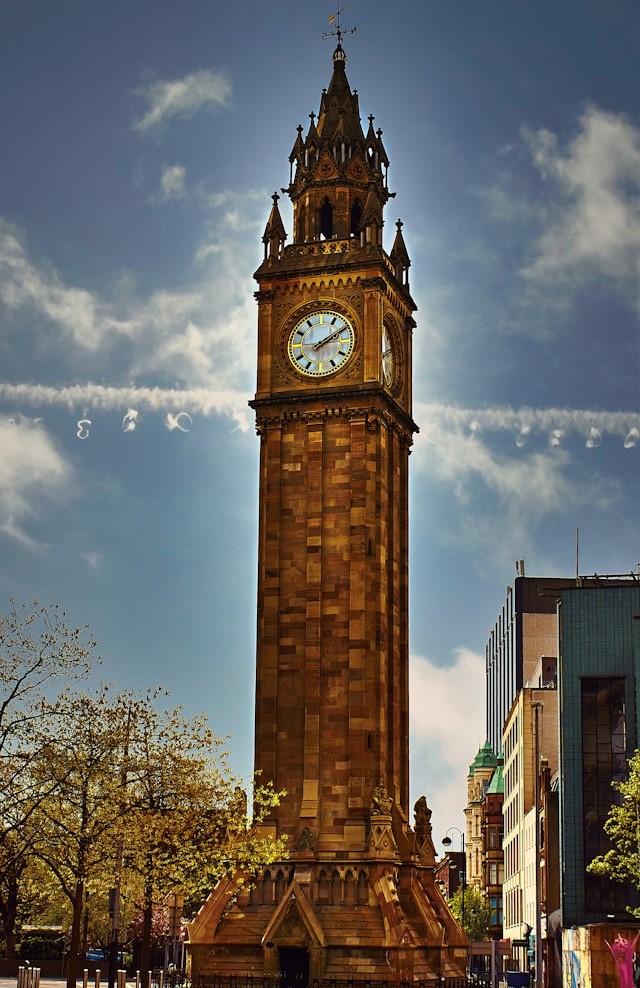
Albert Memorial Clock Tower in Belfast, United Kingdom

Albert Memorial Clock Tower

The Albert Memorial Clock Tower is one of Belfast's most iconic landmarks, standing proudly in Queen's Square. Built in 1869 in memory of Prince Albert, the consort of Queen Victoria, it was designed by W.J. Barre in the Gothic style. The clock tower is renowned for its slight tilt, often compared to the Leaning Tower of Pisa, due to the marshy land it was constructed on. Standing at 113 feet, the tower is adorned with intricate carvings of lions, floral motifs, and Prince Albert's statue in Carrara marble. It originally served as a timepiece for sailors docking at Belfast Harbour. In the 1990s, extensive restoration work was carried out to stabilize its leaning structure and restore its architectural splendor. During the Troubles, the area around the clock became a hotspot for political gatherings and public demonstrations. Despite its turbulent history, the tower remained a symbol of Belfast's resilience. An interesting historical fact is that the clock was once known as 'Belfast's Big Ben,' echoing the chimes that resonated through the bustling docks. Today, the Albert Memorial Clock Tower is a popular tourist attraction and a meeting point for locals. It's surrounded by vibrant pubs, cafes, and cultural landmarks, reflecting the lively spirit of modern Belfast. The area has undergone significant revitalization, blending historical charm with contemporary urban life. The clock tower stands as a testament to the city's architectural heritage and continues to fascinate visitors with its beauty and peculiar tilt.
Ads place
Ads place
Ads place
Ads place
Ads place
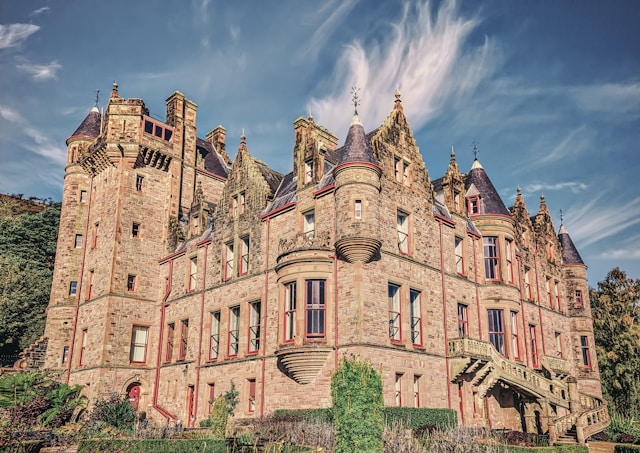
Belfast Castle in Belfast, United Kingdom

Belfast Castle

Perched on the slopes of Cave Hill overlooking the city, Belfast Castle is a symbol of elegance and history. Built in the Scottish Baronial style in 1870 by the 3rd Marquess of Donegall, the castle replaced an earlier structure dating back to the 12th century. Its location offers breathtaking panoramic views of Belfast Lough and the city below, making it a popular destination for tourists and locals alike. The castle's architectural design is captivating, with turrets, pointed windows, and intricate stone carvings that reflect Victorian grandeur. Inside, visitors can explore the beautifully restored rooms, each adorned with period furniture and artwork. The castle also features the Cave Hill Visitor Centre, which provides insights into the history of the estate and the surrounding area. A highlight of Belfast Castle is its landscaped gardens, designed in the style of a traditional Victorian garden. The grounds are meticulously maintained with vibrant flower beds, manicured lawns, and stone terraces. An intriguing aspect of the garden is the presence of nine cat-themed features, inspired by the legend that good fortune will come to those who find them all. This quirky tradition adds a playful element to the castle's majestic ambiance. The castle's history is closely linked to the Chichester family, who played a significant role in the development of Belfast. The building was gifted to the city in 1934 and has since been used for events, weddings, and community gatherings. An interesting historical note is that during World War II, the castle served as a military base, contributing to Belfast's wartime efforts.
Ads place
Ads place
Ads place
Ads place
Ads place
Botanic Gardens in Belfast, United Kingdom

Botanic Gardens

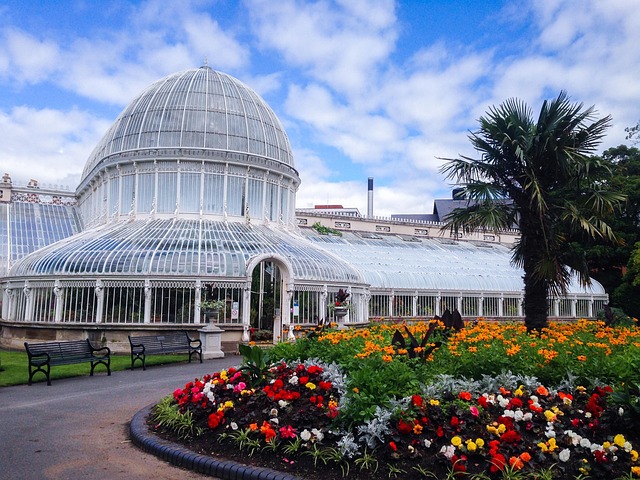
The Botanic Gardens in Belfast is an urban oasis of tranquility and beauty, located in the heart of the Queen's Quarter. Established in 1828, it covers 28 acres of lush landscapes, vibrant flowerbeds, and historic glasshouses. The gardens are renowned for their Victorian heritage, with the highlight being the magnificent Palm House, one of the oldest surviving examples of curvilinear cast iron and glass architecture. Designed by Sir Charles Lanyon and constructed in the 1830s, the Palm House showcases a rich collection of tropical plants, including exotic orchids, giant ferns, and a 400-year-old Xanthorrhoea plant. Its elegant dome and curved wings create a stunning visual contrast against the surrounding greenery. Adjacent to the Palm House is the Tropical Ravine, which houses a unique sunken garden filled with tropical flora, including banana plants and cinnamon trees. The Ravine recently underwent a multi-million-pound restoration, preserving its Victorian charm while enhancing visitor accessibility. The Botanic Gardens is also a cultural hub, hosting outdoor concerts, art exhibitions, and community events throughout the year. It's a popular spot for students from the nearby Queen's University, who come to relax and study amidst the scenic landscape. The gardens are home to a wide variety of birds and wildlife, adding to its natural appeal. An interesting historical note is that the Botanic Gardens was originally a private park for members of the Belfast Botanic and Horticultural Society before being opened to the public in 1895. It also played a significant role during World War II, when parts of the gardens were used for growing vegetables as part of the 'Dig for Victory' campaign.
Ads place
Ads place
Ads place
Ads place
Ads place
City Hall in Belfast, United Kingdom

City Hall

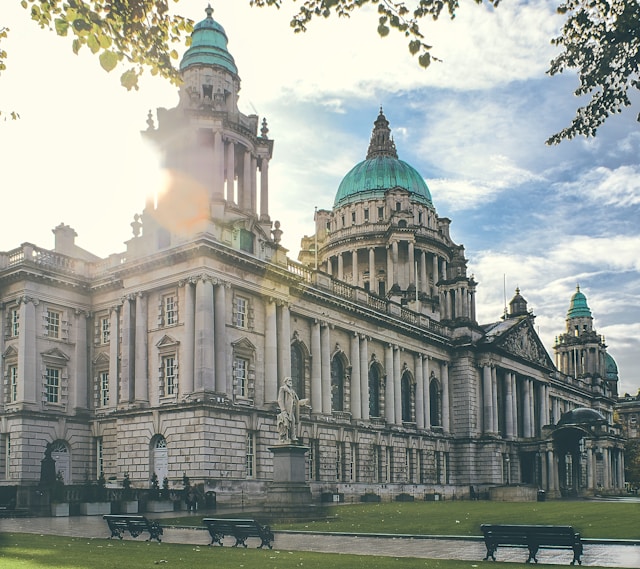
Belfast City Hall is an architectural masterpiece located in the heart of the city, symbolizing Belfast's rich history and civic pride. Completed in 1906, the building was designed by Sir Alfred Brumwell Thomas in the Baroque Revival style, reflecting the city's prosperity during the industrial era. The exterior is adorned with sculptures of Queen Victoria, Edward Harland, and notable figures who shaped Belfast's history. The interior is equally impressive, featuring grand marble staircases, stained glass windows, and the majestic Council Chamber. The Great Hall is a popular venue for cultural events and public ceremonies, showcasing stunning chandeliers and intricate plasterwork. The building also houses the Titanic Memorial Garden, commemorating the lives lost in the Titanic disaster, a ship built in Belfast's Harland and Wolff shipyard. City Hall has been a witness to many historic events, from the city's rapid industrial growth to the political challenges of the Troubles. During World War II, it served as a command center for civil defense. An interesting fact is that City Hall's dome is modeled after St. Paul's Cathedral in London, symbolizing Belfast's ambition and growth. The grounds surrounding City Hall feature beautiful gardens, statues, and memorials, offering a tranquil space amidst the bustling city. Guided tours provide insights into Belfast's political and cultural evolution, highlighting significant historical milestones.
Ads place
Ads place
Ads place
Ads place
Ads place
Parliament Building in Belfast, United Kingdom

Parliament Building

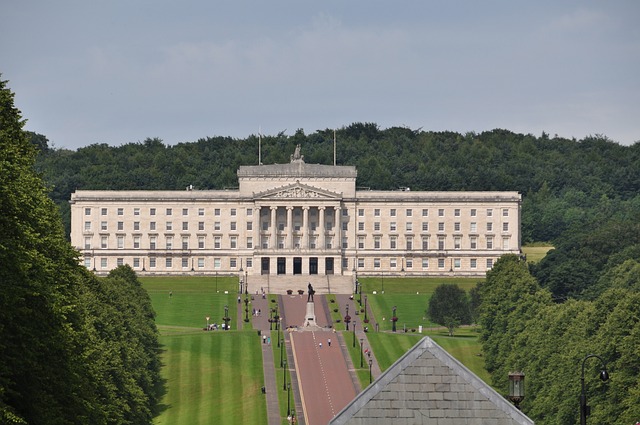
The Parliament Building, also known as Stormont, is the seat of the Northern Ireland Assembly. Situated on a hill overlooking East Belfast, the building is a striking example of neoclassical architecture, surrounded by beautifully landscaped gardens. Opened in 1932, it was designed by Sir Arnold Thornely and built from Portland stone, giving it its distinctive white façade. The building is 365 feet long, symbolizing every day of the year, and its six floors represent the six counties of Northern Ireland. The Great Hall inside is adorned with Italian marble, grand staircases, and elegant chandeliers, reflecting its political significance. At the front, the statue of Sir Edward Carson, a prominent unionist leader, stands as a reminder of Northern Ireland's complex political history. Stormont played a pivotal role during the Troubles and the subsequent peace process, serving as the venue for significant political negotiations, including the Good Friday Agreement. Guided tours offer insights into Northern Ireland's political landscape, exploring the Assembly Chamber and the Senate Chamber. Visitors can learn about the legislative process and the building's historical importance. An interesting fact is that during World War II, the building was coated in tar and cow manure to camouflage it from enemy aircraft. It remained hidden from aerial attacks, preserving its architectural integrity. Today, the Parliament Building stands as a symbol of Northern Ireland's governance and its journey toward peace and stability.
Ads place
Ads place
Ads place
Ads place
Ads place
Queen's University Belfast in Belfast, United Kingdom

Queen's University Belfast

Queen's University Belfast is one of the most prestigious educational institutions in the United Kingdom, known for its rich history, stunning architecture, and academic excellence. Founded in 1845, the university is part of the Russell Group, reflecting its status as a leading research institution. The main building, the Lanyon Building, was designed by Sir Charles Lanyon in the Gothic Revival style and is renowned for its red-brick façade and elegant cloisters. The university's library, the McClay Library, is a modern architectural masterpiece, housing over 1.2 million books and state-of-the-art research facilities. The campus is also home to the Naughton Gallery, showcasing contemporary art exhibitions, and the Whitla Hall, a prominent venue for concerts and public lectures. The Botanic Gardens, adjacent to the university, provide a serene environment for students and visitors alike. Queen's University has produced many notable alumni, including Nobel Prize-winning poet Seamus Heaney and former President of Ireland Mary McAleese. It played a crucial role during the Troubles, fostering dialogue and promoting peace through education. Today, the university continues to contribute to global research, particularly in fields like medicine, engineering, and law. An interesting fact is that Queen's University was one of the first universities in the UK to admit women, reflecting its progressive outlook. The campus seamlessly blends historic architecture with modern facilities, creating an inspiring atmosphere for learning and innovation. Its vibrant student community, cultural events, and academic achievements make Queen's University Belfast a cornerstone of Northern Ireland's intellectual and cultural life.
Ads place
Ads place
Ads place
Ads place
Ads place
The Cathedral Church of St. Anne in Belfast, United Kingdom

The Cathedral Church of St. Anne

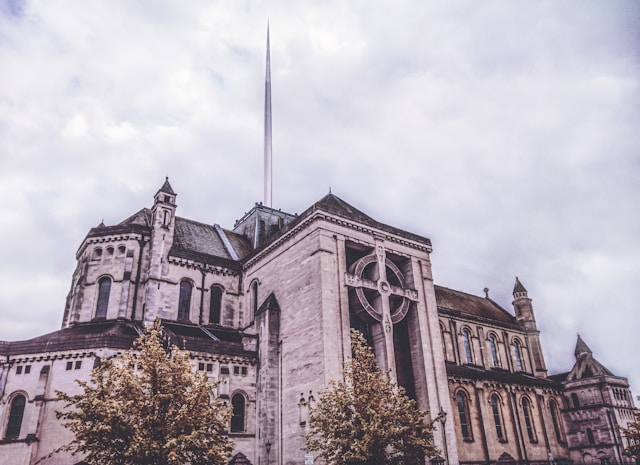
The Cathedral Church of St. Anne, commonly known as Belfast Cathedral, is an architectural and cultural gem located in the Cathedral Quarter. Built in the Romanesque Revival style, its construction began in 1899, symbolizing Belfast's growing importance as a city. The cathedral is renowned for its exquisite mosaics, detailed carvings, and stunning stained glass windows, reflecting the artistic craftsmanship of the early 20th century. One of its unique features is the Spire of Hope, added in 2007, which rises 40 meters above the roof, symbolizing peace and renewal. Inside, the intricate mosaics in the Baptistery were crafted by the Italian artist Gaetano Meo, depicting biblical stories with remarkable detail. The cathedral also houses the Regimental Chapel, dedicated to the Royal Irish Rifles, commemorating those who served in World Wars. An interesting historical fact is that the foundation stone was laid by the Countess of Shaftesbury, marking the beginning of a century-long construction process. The cathedral remained incomplete for many years due to financial constraints, leading to its unique architectural blend of styles. Despite this, it stands as a testament to Belfast's cultural and religious heritage. The surrounding Cathedral Quarter is now a vibrant cultural hub, known for its artistic community, lively pubs, and street art. The cathedral continues to be an active place of worship while hosting concerts, art exhibitions, and cultural events.
Ads place
Ads place
Ads place
Ads place
Ads place
Titanic Belfast in Belfast, United Kingdom

Titanic Belfast

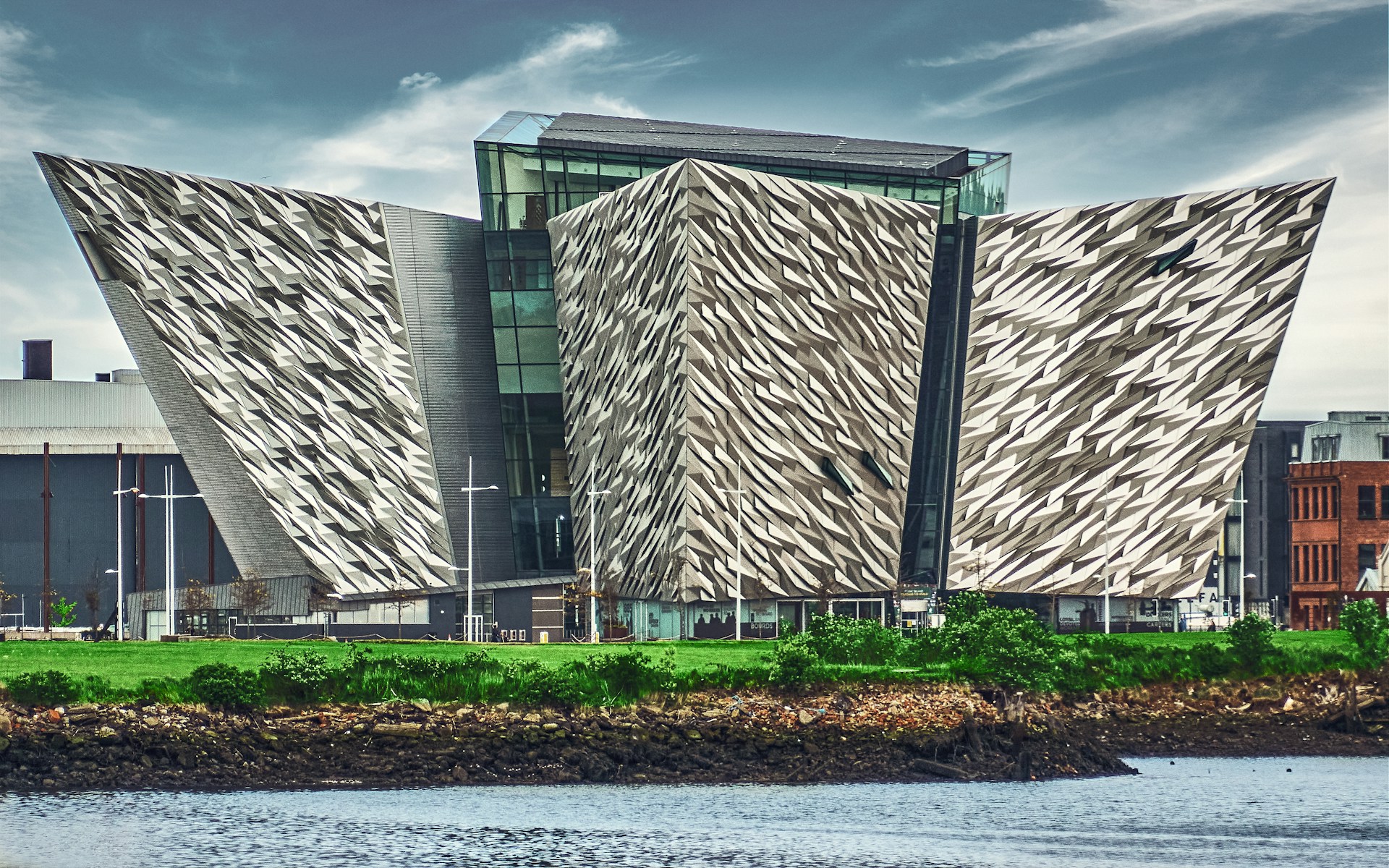
Titanic Belfast stands as an iconic tribute to the city's shipbuilding heritage, located on the very site where the RMS Titanic was built. Opened in 2012 to commemorate the centenary of the ship's ill-fated maiden voyage, this state-of-the-art museum features nine interactive galleries that bring the story of the Titanic to life. Visitors can explore the ship's design, construction, launch, and tragic sinking through immersive exhibits, including a virtual reality ride that showcases the shipyard's grandeur. Designed to resemble the hulls of ships, the building's architecture is a masterpiece in itself, covered with 3,000 silver anodized aluminum shards, reflecting Belfast's maritime history. The height of the structure mirrors that of the Titanic's bow, giving a sense of the vessel's monumental scale. Inside, the galleries are meticulously crafted with audio-visual displays, artifacts, and replicas, including a recreation of the lavish Grand Staircase. An intriguing aspect of Titanic Belfast is its connection to the Harland & Wolff shipyard, which was once the world's largest. The museum sits beside the historic slipways where Titanic and her sister ship, Olympic, were constructed. Visitors can walk along the slipways, now marked with illuminated outlines of the ships, gaining a powerful sense of history. A lesser-known fact is that Titanic Belfast also houses the original Harland & Wolff drawing offices, where the ship's blueprints were created. These restored offices preserve the architectural heritage and spirit of innovation that defined Belfast during its shipbuilding peak. With its unparalleled storytelling and architectural brilliance, Titanic Belfast is a place where history, memory, and culture converge.
Ads place
Ads place
Ads place
Ads place
Ads place
Ulster Museum in Belfast, United Kingdom

Ulster Museum

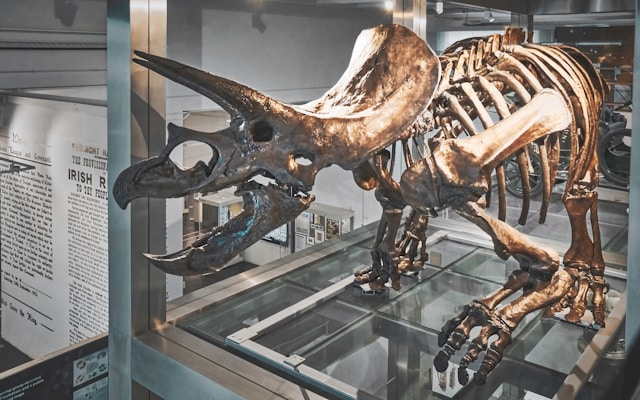
The Ulster Museum is Northern Ireland's largest museum, showcasing a rich collection of art, history, and natural sciences. Located in the Botanic Gardens, the museum spans over 8,000 square meters and features a striking mix of neoclassical and modernist architecture. Originally opened in 1929, it underwent a major refurbishment in 2009, transforming it into a state-of-the-art cultural institution. Inside, visitors can explore a diverse range of exhibits, from ancient Egyptian mummies to modern art installations. The museum is particularly renowned for its extensive collection of Irish art, including works by notable artists such as Sir John Lavery and Paul Henry. It also houses a fascinating exhibit on the Spanish Armada, featuring artifacts recovered from the wreck of the Girona, which sank off the Antrim coast in 1588. A standout feature is the 'Troubles' gallery, offering a sensitive exploration of Northern Ireland's complex political history. Through multimedia displays, photographs, and personal stories, the exhibit provides a nuanced perspective on the conflict and its impact on society. The natural history section is equally impressive, showcasing a range of fossils, minerals, and taxidermy, including the famous 'Peter the Polar Bear,' a popular exhibit since the 1920s. The museum also explores Northern Ireland's geological history, highlighting its volcanic past and the formation of the Giant's Causeway. An interesting fact about the Ulster Museum is that it was the first museum in the UK to have an exhibition dedicated to the Troubles, reflecting its commitment to addressing challenging aspects of history.
Ads place
Ads place
Ads place
Ads place
Ads place
Umbrella Street in Belfast, United Kingdom

Umbrella Street

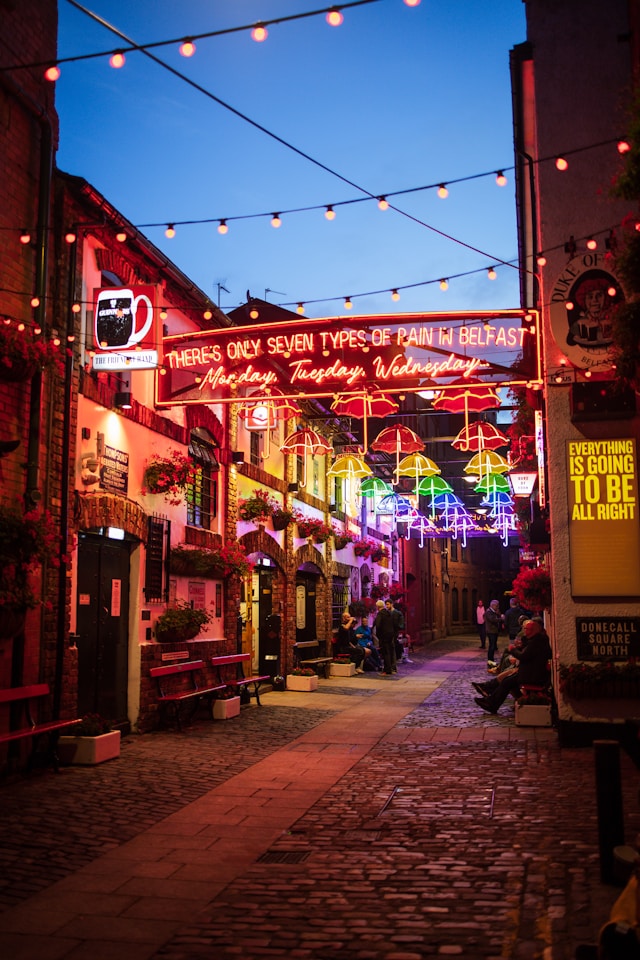
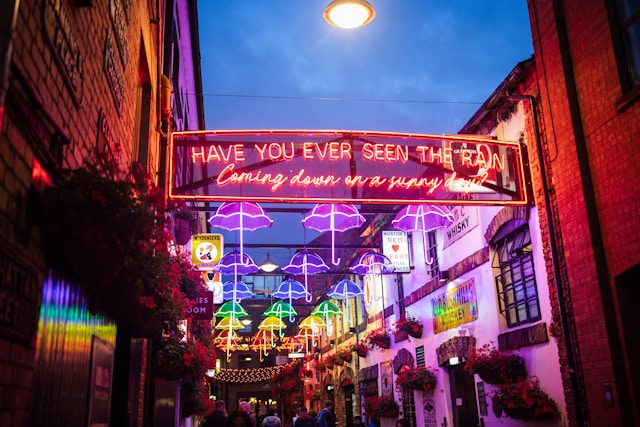
Umbrella Street is one of Belfast's most vibrant and visually striking attractions, located in the bustling area of Commercial Court in the Cathedral Quarter. The street is adorned with a canopy of colorful umbrellas suspended above, creating a picturesque scene that has become a favorite spot for photographers and social media enthusiasts. Inspired by similar installations in Portugal and Japan, the umbrellas bring a burst of color to the historic cobblestone alley, attracting locals and tourists alike. The initiative was part of an urban art project aimed at revitalizing the area and supporting local businesses. Surrounding Umbrella Street, visitors can explore a variety of traditional pubs, street art murals, and live music venues. The area is renowned for its lively atmosphere, particularly in the evenings when the umbrellas are illuminated, creating a magical ambiance. An interesting fact is that each year, the umbrellas are changed to reflect different themes, celebrating cultural events and festivals. During Pride Week, they are replaced with rainbow-colored umbrellas, symbolizing Belfast's inclusive and vibrant community. The installation not only adds artistic charm but also serves as a reminder of the city's creative spirit. Umbrella Street is located near some of Belfast's oldest pubs, including the Duke of York and The Harp Bar, known for their traditional music sessions. The street art in this area also reflects Belfast's evolving identity, blending political history with contemporary culture. Umbrella Street beautifully encapsulates Belfast's transformation into a dynamic and artistic city, making it a must-visit destination for art lovers and culture enthusiasts.
Ads place
Ads place
Ads place
Ads place
Ads place