
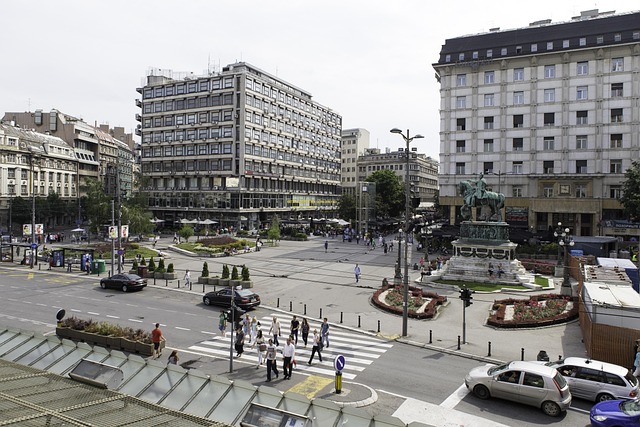
Republic Square
In Belgrade, Serbia .
More places to visit in Belgrade
Discover more attractions and things to do in Belgrade.
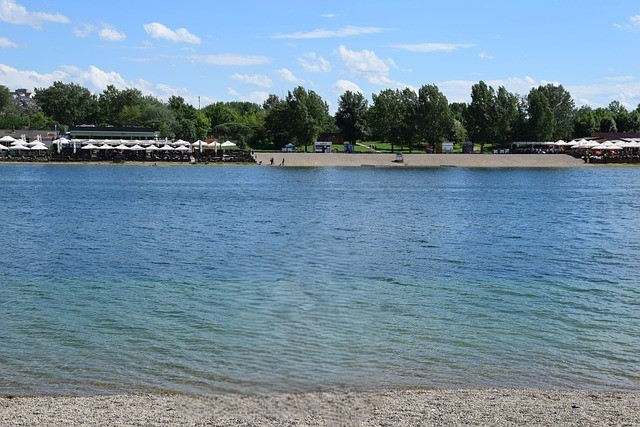
Ada Ciganlija
An island turned peninsula, Ada Ciganlija offers a shoreline where Belgraders learn to treat leisure seriously. Its nickname “Belgrade Sea” comes from the artificial lake created in the 1960s to tame the Sava’s current, a project tied to engineer Miladin Pecinar . Historical records mention the area even in the 16th century , when it served as pasture and military ground, but its reinvention as a recreational zone changed the city’s summers. Beaches stretch for kilometers, ringed by cafés and sports courts that keep the air lively. In winter, quiet paths host joggers and flocks of swans. Legends about the origin of the name, linking it to Cigani or to “forest” in Celtic, add linguistic intrigue. Ada demonstrates that even industrial rivers can be persuaded into landscapes of play, and that urban identity sometimes grows strongest when it learns to relax.
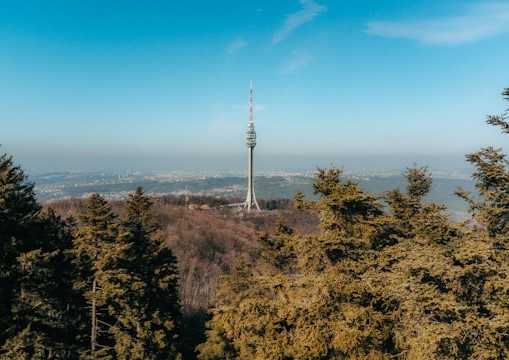
Aval Tower
On a wooded hill south of the city rises a needle of concrete and glass, rebuilt after destruction and charged with symbolism. The original Avala Tower was completed in 1965 , the work of architects Ugljesa Bogunovic and Slobodan Janjic , and stood proudly until 1999 when NATO bombing brought it down. Its triangular cross-section was unique in Europe, a feat of engineering meant to resist winds and earthquakes. Reconstructed by 2010 , the tower now offers observation decks where Belgrade and the Danube plain unfold in wide relief. Exhibits at the base narrate the story of loss and resilience, while cafés serve visitors who climb for both view and memory. Standing at 204 meters, the tower demonstrates how nations rebuild identity as much as infrastructure. Sunset from Avala blends melancholy with optimism, and every lit window at night feels like a punctuation mark reclaiming the skyline.
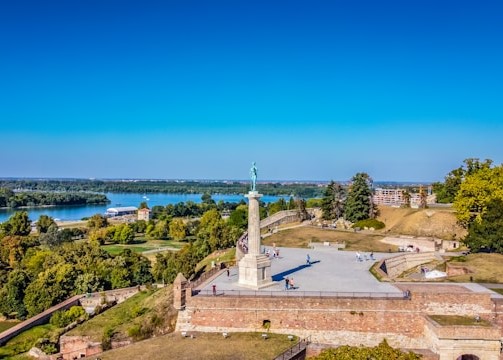
Belgrade Fortress and Kalemegdan Park
Stone terraces lean over the meeting of two rivers, and paths thread past cannon, galleries, and lawns where the city comes to breathe. The plateau once held the Roman camp of Singidunum, later refortified by medieval rulers and remembered for the rule of Despot Stefan Lazarevic in the early 15th century . Siege stories linger from campaigns between the Ottoman Empire and the Habsburg Monarchy , with the capture of 1521 still echoing through the gates. After the victory of 1717 , engineers redrew the walls with star-shaped logic, and promenades softened the edges in peacetime. Lookouts face the Sava and Danube where traders once watched for sails and soldiers for banners, a habit the view never quite forgets. Today art pavilions, a Roman well, and shaded benches make the fortress a campus of memory, where dates become landmarks as reliable as towers and every sunset feels like a small, well-earned armistice.
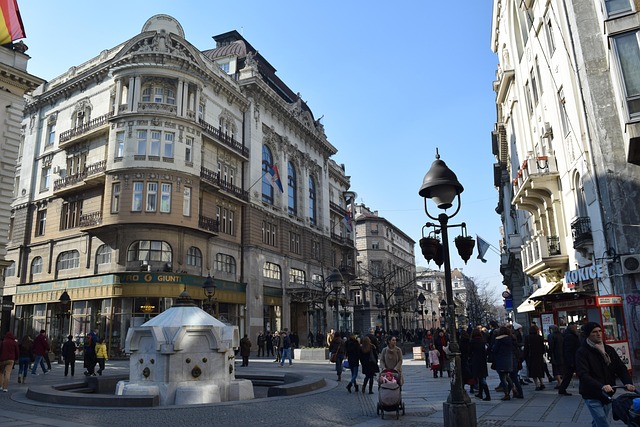
Knez Mihailova Street
Every capital needs a stage where citizens rehearse modern life, and in Belgrade that role belongs to this mile of stone and shopfront. Developed mainly in the 19th century when the city shook off Ottoman layers, the avenue was named after Prince Mihailo Obrenovic , whose assassination in 1868 still shadows the story. Buildings mix academicism with playful Secession touches, a catalogue of tastes that merchants and architects paraded as proof of ambition. Side passages hide courtyards where print shops once set the type of national newspapers, giving the street a political as well as commercial script. The crowds change from morning commuters to evening strollers, but the tempo remains persuasive. Monuments and bookshops anchor the flow while cafés provide punctuation. Walking here is less about shopping than about tracing the lines of a city that insisted on being central, European, and unmistakably itself, one stride at a time.
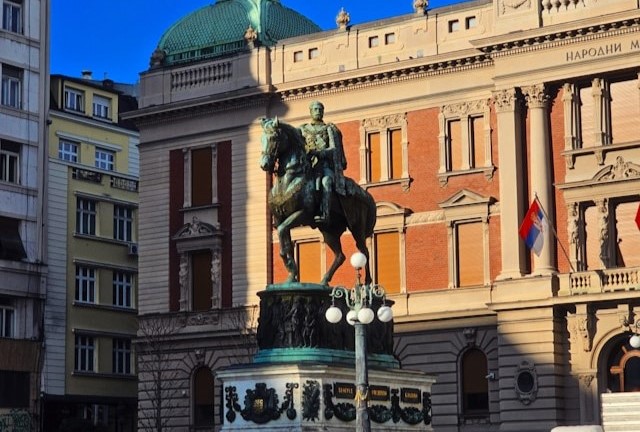
National Museum of Serbia
Behind neoclassical columns lies the custodian of Serbian art and history, reopened in 2018 after a decade of careful renovation. The museum’s origins trace back to 1844 , when Prince Aleksandar Karadjordjevic established a state collection to nurture identity. Today galleries display medieval icons, Renaissance masters, and modern canvases by Nadezda Petrovic , a pioneer who bridged art and patriotism in the early 20th century . Archaeological finds from Lepenski Vir and Vinca pull prehistory into the same story, while Roman treasures from the Balkans map empire onto local soil. The building itself, once a bank, was adapted into an archive of culture, its marble floors rehearsing the footsteps of countless curators. Standing here you feel Serbia’s centuries compressed into a single address, each room an argument that memory is best preserved when placed on public display.
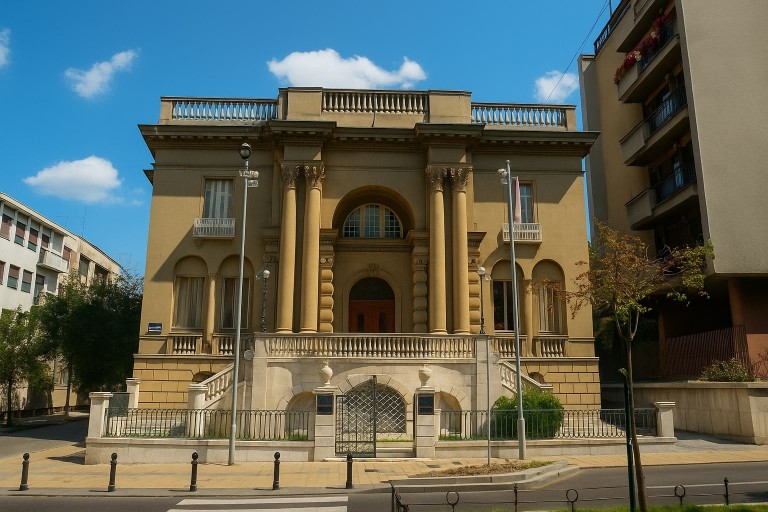
Nikola Tesla Museum
Step through an ordinary villa door and meet the extraordinary imagination of Nikola Tesla , born in 1856 in Smiljan but forever linked to Serbia’s cultural map. Established in 1952 , the museum guards his personal archive, more than 150,000 documents that the UNESCO Memory of the World program recognized in 2003 . Visitors pause before the urn holding his ashes, then wander among working models of coils, turbines, and remote controls that once felt like science fiction. Demonstrations crackle with blue lightning, a theater where physics and showmanship collaborate. Exhibits explain his battles with Thomas Edison and his alliance with George Westinghouse , turning the drama of electricity into human narrative. Students and tourists alike leave with the sense that genius was both local and global, fragile and relentless, a current that still hums in sockets around us.
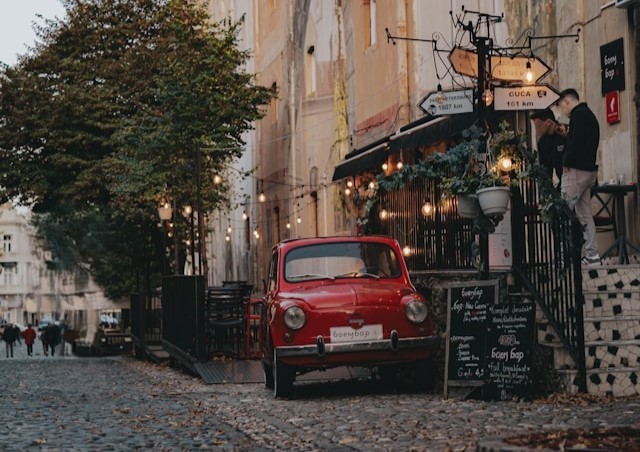
Skadarlija Bohemian Quarter
Cobblestones shine with spilled wine and accordion notes, echoing the late nights that made this quarter famous. By the late 19th century , artists and poets had already claimed taverns here as their unofficial academy, following the tradition of Djordje Jovanovic and Branislav Nusic . Restaurants preserve menus where recipes remember Ottoman and Balkan exchanges, and walls recall stories of painters who traded canvases for supper. The demolition of the Skadarlija theatre in 1901 pushed performers into taverns, strengthening the bond between art and appetite. Murals today honor bohemians who lived intensely and left sentences or songs behind. At night, gas lamps flicker like rehearsals of another century, while waiters balance plates with an elegance earned through tradition. Skadarlija remains a memory factory, producing nostalgia in real time, and walking its slope you sense that art never really leaves the table.
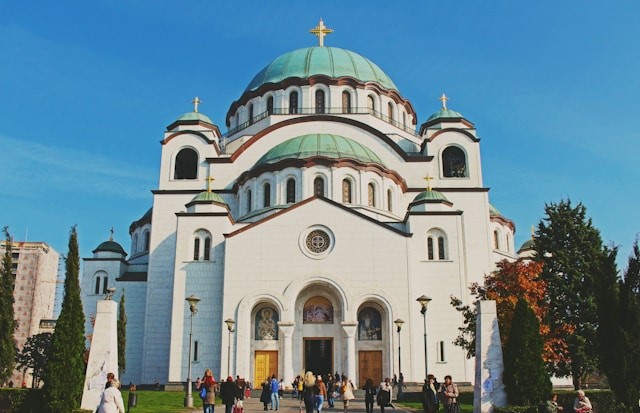
St. Sava Temple
White domes rise steadily above the Vracar plateau, a monumental answer to centuries of interrupted plans. The church honors St. Sava , founder of the Serbian Orthodox Church in the 13th century , whose relics were burned here in 1595 by Sinan Pasha . The scale was conceived in the 1930s but wars and politics delayed completion until late in the 20th and early 21st centuries. Architects borrowed from Byzantine grammar yet stretched the vocabulary to modern dimensions, producing one of the largest Orthodox churches in the world. Inside, mosaics glitter with over 15,000 square meters of gold and color, narratives that lift the gaze as much as the dome itself. Choirs rehearse acoustics that seem to hold eternity in an echo, while pilgrims light candles that whisper individual petitions into the vast space. The temple is both unfinished story and realized promise, an act of persistence written in stone and song.
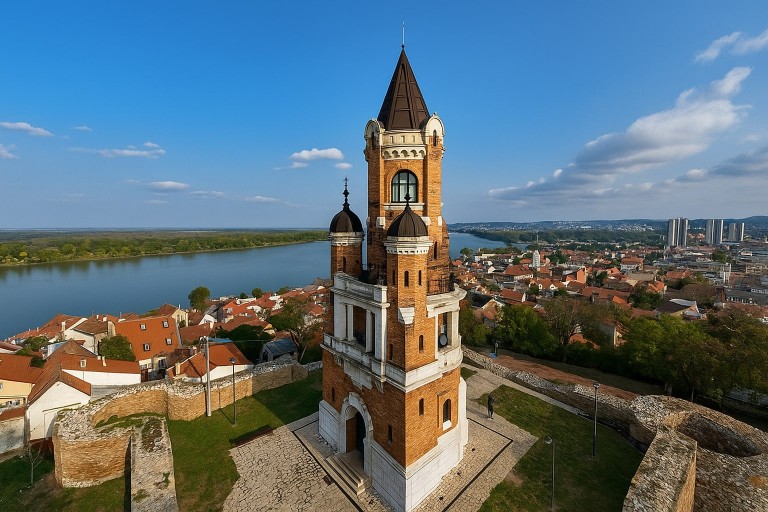
Zemun Old Town and Gardos Tower
Across the river the city changes accent, narrowing into streets that still echo the days when Zemun belonged to the Habsburg Empire . Red roofs climb toward Gardos Hill, where the Millennium Tower was raised in 1896 to celebrate a thousand years of Hungarian settlement in the Carpathian Basin. The tower, often called the Gardos Tower, offers a panorama where the Danube writes its long sentence past bridges and barges. Down below, Orthodox and Catholic churches share bells across neighborhoods that once met at imperial borders. Taverns spill tables onto cobbled lanes while fishermen balance nets on the quay. Zemun’s identity lies in this borderland quality, part Belgrade, part Central Europe, always watchful of currents both political and natural. Climbing the tower you sense how anniversaries become architecture, and how stones can be persuaded to hold the memory of an empire’s optimism.