
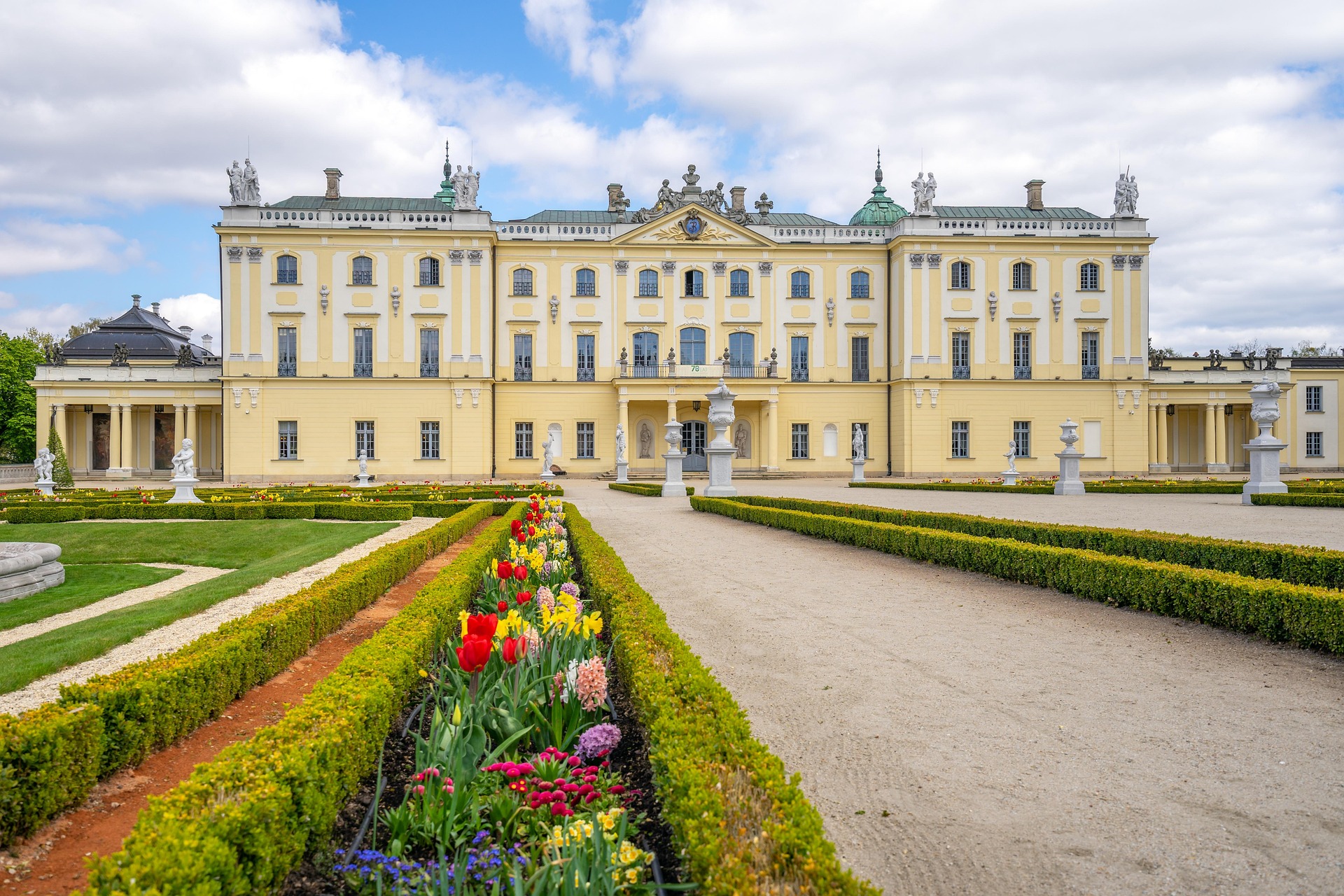
City view of Bialystok, Poland

Bialystok

Bialystok, the largest city in northeastern Poland, stands as a crossroads of cultures, faiths, and architectural styles. Its crown jewel, Branicki Palace, is surrounded by French gardens and is known as the "Polish Versailles." The city boasts vibrant street art and a thriving theater scene. Nearby, the Bialowieza Forest, a UNESCO World Heritage site, is home to Europe's last primeval woodland and the rare European bison. Bialystok's diverse heritage is reflected in its synagogues, Orthodox churches, and Tatar influences. The Podlasie Opera and Philharmonic is a modern landmark for the arts. A hidden highlight is the city's baroque market square, a hub for festivals and local cuisine. Bialystok offers visitors a blend of natural wonder and multicultural discovery. Lesser-known, Bialystok’s tradition of lace making and folk crafts adds a charming touch to its local markets and annual celebrations.

Top attractions & things to do in Bialystok

If you’re searching for the best things to do in Bialystok, this guide brings together the top attractions and must-see places to visit in Bialystok. The top picks below highlight the most visited sights for first-time visitors, plus a few local favorites worth adding.

Bialowieza Forest in Bialystok, Poland

Bialowieza Forest

Just outside Bialystok lies the legendary Bialowieza Forest, a UNESCO World Heritage site and one of Europe’s last and largest remaining stretches of primeval woodland. The forest is home to the iconic European bison (zubr), Poland’s national animal, as well as rare lynx, wolves, and hundreds of bird species. Visitors can follow winding trails, explore ancient oak groves, or join guided tours into the strict nature reserve. The forest is steeped in legend and folklore, with stories of hidden villages and ancient rituals that continue to this day. At the heart of the reserve stands the Bialowieza Palace Park, once a hunting retreat for Russian tsars. The park also includes a charming wooden palace and an educational center. Each autumn, the forest comes alive with the sound of rutting bison, a spectacle drawing wildlife photographers from around the world. Scientists consider Bialowieza a living laboratory, with some trees over 500 years old and new species still being discovered in its depths.
Ads place
Ads place
Ads place
Ads place
Ads place
Branicki Palace in Bialystok, Poland

Branicki Palace

Often called the “Polish Versailles,” the Branicki Palace is Bialystok’s most celebrated landmark and an enduring symbol of aristocratic splendor. Built in the 18th century for Hetman Jan Klemens Branicki, the palace features an exquisite blend of baroque and classical architecture, surrounded by French-style gardens filled with fountains, statues, and symmetrical flowerbeds. Its grand halls, adorned with stucco and frescoes, once hosted Europe’s most illustrious guests, including Russian tsars and Polish kings. Today, the palace houses the Medical University and is open to visitors who can explore the elegant interiors, the orangerie, and the impressive main gate. The palace grounds are particularly enchanting in spring when thousands of tulips bloom in vivid color. A lesser-known detail is the palace’s hidden library, which survived wartime plundering and preserves rare manuscripts and ancient maps. In the evenings, the illuminated façade casts a golden glow over the gardens, creating an atmosphere of timeless romance that has inspired poets and filmmakers alike.
Ads place
Ads place
Ads place
Ads place
Ads place
Kosciuszko Market Square in Bialystok, Poland

Kosciuszko Market Square

Kosciuszko Market Square is the historic heart of Bialystok, a lively plaza framed by pastel-colored townhouses, bustling cafes, and the imposing Town Hall with its distinctive clock tower. Named after national hero Tadeusz Kosciuszko, the square has witnessed centuries of trade fairs, political rallies, and local celebrations. The square is home to a vibrant weekend market where local farmers sell fresh produce, honey, and traditional Podlasie cheeses. Nearby stands the elegant Cathedral Basilica of the Assumption, whose twin spires dominate the skyline. In summer, open-air concerts and art installations transform the square into a cultural stage, drawing crowds late into the evening. Statues and fountains pay homage to the city’s multicultural heritage, including Jewish, Tatar, and Belarusian influences. A little-known fact is that beneath the square, archaeologists have unearthed layers of medieval settlements, providing fascinating glimpses into Bialystok’s evolving history.
Ads place
Ads place
Ads place
Ads place
Ads place
Podlasie Opera and Philharmonic in Bialystok, Poland

Podlasie Opera and Philharmonic

The Podlasie Opera and Philharmonic is a dazzling architectural and cultural landmark, opened in 2012 and designed by renowned architect Marek Budzynski. The building’s striking modern form, with green terraces and glass facades, rises above the city center, symbolizing Bialystok’s dynamic spirit. Inside, state-of-the-art acoustics and a 1,300-seat main hall welcome world-class opera, ballet, and symphony performances. The opera house is famed for its innovative productions and annual festivals that attract artists and audiences from across Europe. Its rooftop gardens provide a unique retreat with panoramic views of the city. The building is also home to contemporary art exhibitions and community workshops. Few know that the site was once a Soviet military compound before being transformed into this beacon of culture. In summer, the surrounding amphitheater hosts open-air concerts under the stars, adding a magical touch to Bialystok’s vibrant nightlife.
Ads place
Ads place
Ads place
Ads place
Ads place
St Nicholas Orthodox Cathedral in Bialystok, Poland

St Nicholas Orthodox Cathedral

The St Nicholas Orthodox Cathedral is one of the largest and most magnificent Orthodox churches in Poland, reflecting Bialystok’s unique multiethnic heritage. Built in the 19th century, the cathedral impresses with its distinctive blue domes, ornate iconostasis, and intricate frescoes depicting biblical scenes. The church serves as the spiritual center for the region’s Orthodox community and is a focal point during colorful religious processions, especially at Easter and Christmas. Inside, sunlight filters through stained-glass windows, casting a rainbow of colors across the gold and silver icons. The cathedral’s bell tower offers panoramic views of Bialystok’s historic center. Few visitors know that the crypt beneath the church contains the tombs of notable clergy and community leaders, a silent testament to the city’s turbulent past. The cathedral is surrounded by tranquil gardens where choral music often drifts in the air during evening services, creating an atmosphere of peace and reflection.
Ads place
Ads place
Ads place
Ads place
Ads place