
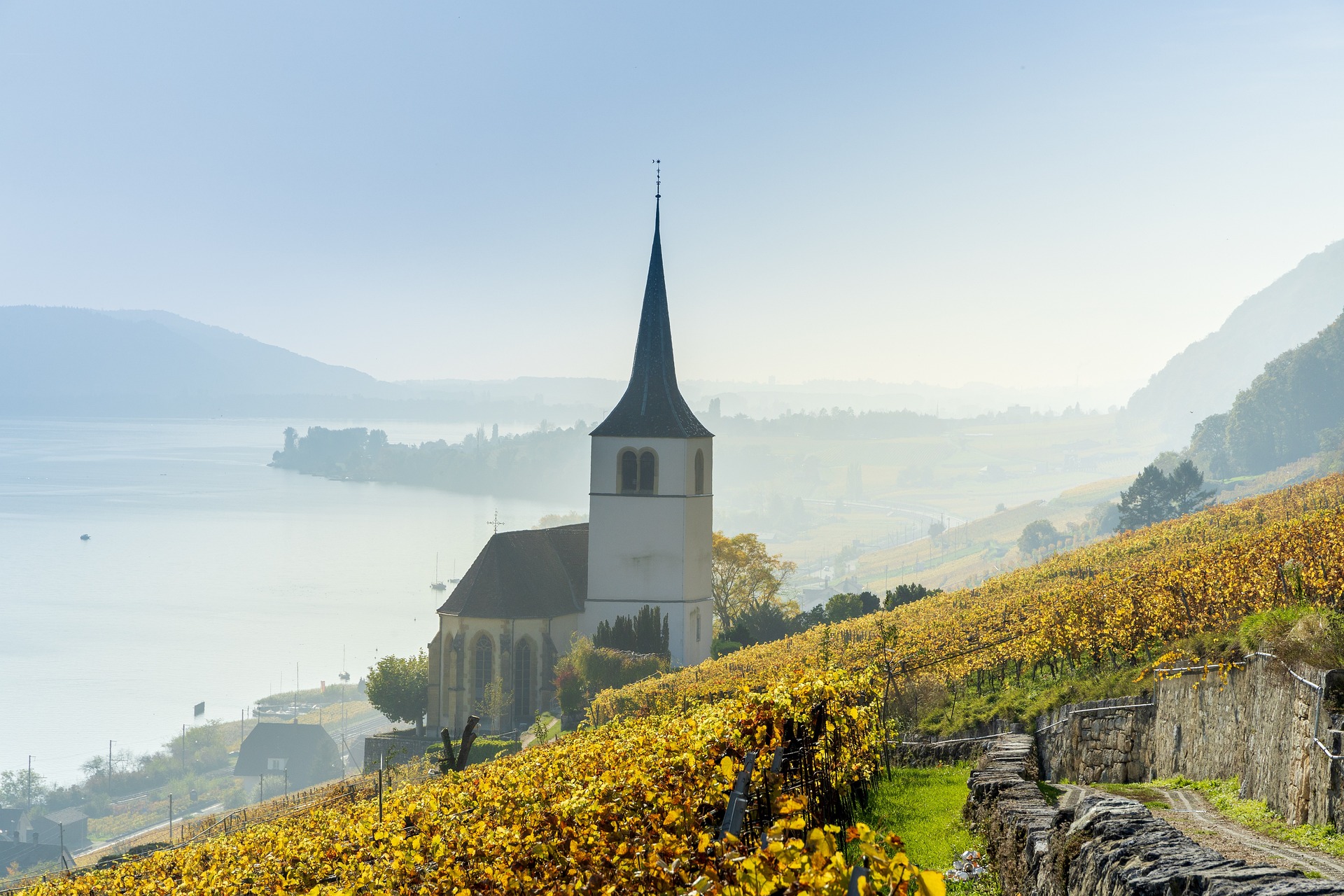
City view of Biel, Switzerland

Biel

Biel lies where the Jura hills lean toward Lake Biel and is known for both bilingual street life and watchmaking workshops. The town expanded quickly in the nineteenth century as precision factories grew, yet the historic center still keeps fountains, arcades, and steep cobbled lanes. French and German mingle on shop signs and restaurant menus, where lake fish and creamy potato dishes share space with elaborate cakes. From the lakeside promenade, boats reach wine covered slopes and St Peter Island, which fascinated philosopher Jean Jacques Rousseau in the seventeen sixties. A modern funicular climbs to the Magglingen plateau, delivering hikers and sports students to wide views over water and vineyards. Each spring, locals organise a light hearted watch parade with oversized wooden models, a playful nod to the town reputation for accurate seconds and reliable ticking.

Top attractions & things to do in Biel

If you’re searching for the best things to do in Biel, this guide brings together the top attractions and must-see places to visit in Biel. The top picks below highlight the most visited sights for first-time visitors, plus a few local favorites worth adding.

Biel Old Town and Ring in Biel, Switzerland

Biel Old Town and Ring

Biel Old Town and Ring is the most atmospheric quarter of the city, a compact hill crowned with towers and roofs that feel older than the modern streets below. You enter through narrow lanes and quickly find yourself among arcaded facades, sandstone townhouses and painted shutters that mirror the bilingual character of the town. Around the Ring, the main upper square, cafes push tables onto the cobbles and a historic fountain anchors the scene. Short stairways drop toward lower streets, opening sudden glimpses of Lake Biel and the distant Jura ridge between gables. Shop fronts and menus switch naturally between French and German, and small craft workshops sit beside contemporary wine bars. Late afternoon is ideal, when warm light softens the stone and locals drift out for an aperitif, giving you time to wander with a camera, tracing quiet corners and viewpoints before the hilltop slowly folds back into evening.
Ads place
Ads place
Ads place
Ads place
Ads place
Lake Biel Promenade and Nidau-Bueren Canal in Biel, Switzerland

Lake Biel Promenade and Nidau-Bueren Canal

Lake Biel Promenade and the Nidau Bueren Canal form the natural front yard of Biel, where wide water and long views replace traffic noise. A generous path lined with plane tree avenue planting follows the shore, passing lake shore lawns, playgrounds and small bathing jetties where swimmers slip into the shallows on warm days. Across the water you see vineyard slopes stepping up the opposite bank, and on clear days a faint line of Alps appears beyond. Toward Nidau, the walk merges into the embankment of the Nidau-Bueren Canal, with moored boats, allotment gardens and quiet benches. Simple kiosks and terrace cafes serve ice cream, coffee and grill dishes, so a short stroll easily becomes a lazy afternoon. In late summer evenings, sunset colours stretch across the lake and reflections lengthen, while locals gather with fishing rods and picnic blankets, showing how closely daily life here is tied to the waterfront.
Ads place
Ads place
Ads place
Ads place
Ads place
Magglingen Funicular and Jura Viewpoint in Biel, Switzerland

Magglingen Funicular and Jura Viewpoint

Magglingen Funicular and the Jura Viewpoint offer an easy escape from the town into a broader landscape. From the lower station above Biel, a vintage style funicular railway climbs steadily through beech forest and hillside gardens to the sports campus and village on the ridge. From there, signed paths lead in minutes to open meadow viewpoints where you overlook the town, Lake Biel, the chain of Seeland lakes and, on clear days, distant Bernese Alps. Benches and picnic tables encourage long pauses, while short loops through the woods suit families and casual walkers. The area is also a training base, so you may share trails with athletes moving between facilities. In the soft light of late afternoon, the plains below take on a patchwork quality and the lake begins to reflect the sky. A brief detour along a ridge trail extends the panorama before you glide back down to Biel on the quietly humming car.
Ads place
Ads place
Ads place
Ads place
Ads place
Omega Museum and Watchmaking Quarter in Biel, Switzerland

Omega Museum and Watchmaking Quarter

The Omega Museum and the surrounding watchmaking quarter reveal the industrial heart of Biel without feeling closed or technical. Inside the museum, carefully designed galleries trace a century of Swiss watch innovation, from early pocket models to space tested chronographs and sleek Olympic timekeeping equipment. Historic advertising posters, films and interactive stations show how watches became both precise tools and desirable objects. Large windows frame working manufacture buildings next door, reminding you that this story continues every day in the factories outside. Step back into the quarter and a short loop walk passes other watch company headquarters, modern offices and quieter residential streets, underlining how production and everyday life share the same space. It is worth allowing time to move slowly between museum, pavements and small cafes, so the measured rhythm of assembly lines, the tick of display pieces and the relaxed pace of the neighbourhood combine into one clear picture of Biel as a watch city.
Ads place
Ads place
Ads place
Ads place
Ads place
Taubenloch Gorge Walk in Biel, Switzerland

Taubenloch Gorge Walk

A short bus or train ride from the centre brings you to the entrance of Taubenloch Gorge, a surprisingly wild canyon carved by the Suze river between Biel and the plateau above. The path threads along rock cut walkways and over stone bridges, with water rushing through churning pools and small cascades just below your feet. In summer, moss covered cliffs, dripping overhangs and dense foliage create a cool microclimate that feels far removed from town streets. Occasional viewing balconies allow you to pause above the strongest rapids and feel the fine spray on your face. Information boards explain the geology and the early use of the gorge for power, adding context without slowing the walk. Sturdy shoes help on damp sections, but the route remains accessible for most visitors. At the upper end you can continue toward Frinvillier or loop back through forest, combining raw river energy with gentler woodland before returning comfortably to Biel.
Ads place
Ads place
Ads place
Ads place
Ads place