City view of Birmingham, United Kingdom

Birmingham

Birmingham, often referred to as the 'Second City' of the UK, is a dynamic metropolis with a rich industrial history. The city is home to the Birmingham Museum and Art Gallery, which houses an impressive collection of Pre-Raphaelite art. The Library of Birmingham, with its striking modern architecture, is one of the largest public libraries in Europe. Birmingham's canals, which stretch longer than those in Venice, offer picturesque walks and boat tours. The Jewellery Quarter, once the heart of the UK's jewelry industry, is now a thriving area with independent boutiques and workshops. The city's culinary scene is diverse, with the Balti Triangle offering some of the best curry dishes in the country.

Top attractions & things to do in Birmingham

If you’re searching for the best things to do in Birmingham, this guide brings together the top attractions and must-see places to visit in Birmingham. The top picks below highlight the most visited sights for first-time visitors, plus a few local favorites worth adding.

Ads place
Ads place
Ads place
Ads place
Ads place
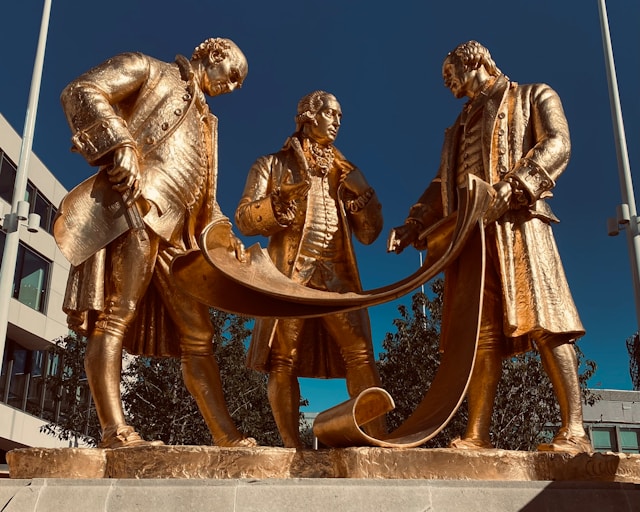
Boulton, Watt, and Murdoch in Birmingham, United Kingdom

Boulton, Watt, and Murdoch

The gilded bronze statue of Matthew Boulton, James Watt, and William Murdoch, affectionately known as the 'Golden Boys', stands as a testament to Birmingham's pivotal role in the Industrial Revolution. Designed by sculptor William Bloye and unveiled in 1956, this iconic monument depicts the trio examining plans of a steam engine, symbolizing their groundbreaking contributions to industrial advancements. Originally situated on Broad Street, the statue was relocated to Centenary Square in 2022 after a period in storage due to city developments. The figures are portrayed in dynamic discussion, capturing the collaborative spirit that fueled innovations in steam technology. Boulton, a prominent manufacturer, partnered with engineer Watt and inventor Murdoch to revolutionize steam power, leading to significant industrial growth in the 18th century. An intriguing aspect of the statue is its colloquial nickname, 'The Carpet Salesmen', derived from the rolled-up engine blueprint resembling a carpet, reflecting the public's engagement with the artwork. The monument not only celebrates technological progress but also invites contemplation of the complex historical narratives associated with industrialization. Notably, the statue has been accompanied by discussions acknowledging the era's socio-economic contexts, including links to slavery, prompting reflections on the multifaceted legacies of such figures. Positioned against the backdrop of modern Birmingham, the 'Golden Boys' serve as a focal point for educational initiatives, public discourse, and cultural events, continually connecting past innovations with contemporary conversations.
Ads place
Ads place
Ads place
Ads place
Ads place
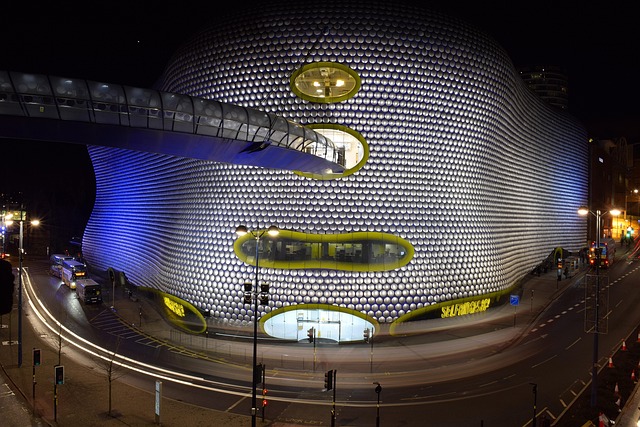
Bullring & Grand Central in Birmingham, United Kingdom

Bullring & Grand Central

At the center of Birmingham's commercial district, the Bullring & Grand Central complex stands as a testament to the city's evolution from a historic marketplace to a modern shopping destination. The area's architecture is a fusion of contemporary design and preserved historical elements, where sleek glass facades are interspersed with hints of the original cobbled streets. The site retains traces of its past as a bustling trading hub during the Industrial Revolution, with underground remnants that once formed part of the ancient market. Visitors can explore a diverse range of retail outlets, dining establishments, and cultural spaces that reflect Birmingham's vibrant urban life. The rooftop terrace of Grand Central offers expansive views of the evolving city skyline, and the integration of art installations throughout the complex underscores its role as a cultural landmark. There is also evidence of historical trade routes beneath the surface, suggesting that the area has long been a center for commerce and community exchange.
Ads place
Ads place
Ads place
Ads place
Ads place
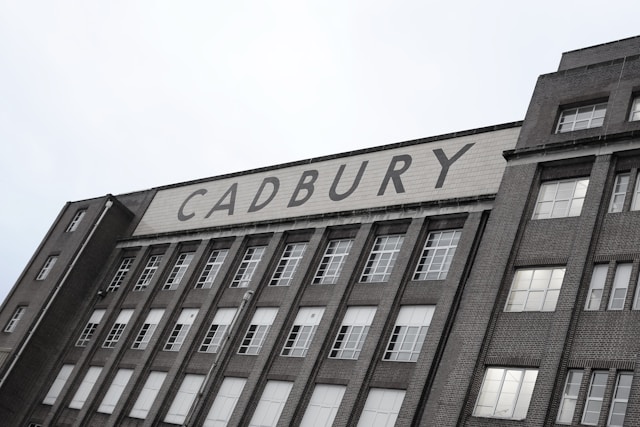
Cadbury World in Birmingham, United Kingdom

Cadbury World

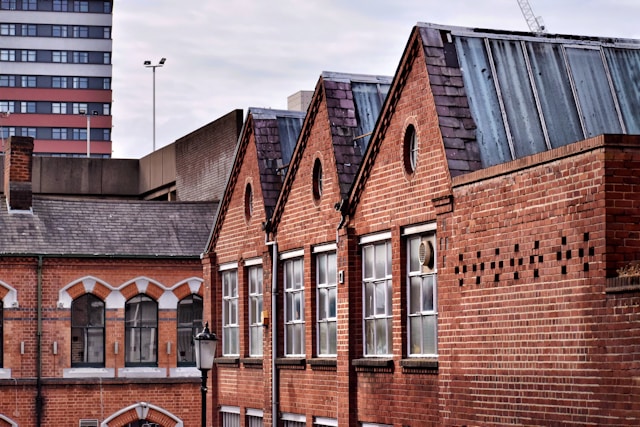
Cadbury World offers an immersive journey into the world of chocolate and industrial heritage, set in the historic suburb of Bournville. Established in the 19th century by the Cadbury family, the attraction delves into the origins of chocolate-making with interactive exhibits that reveal every stage of production from cocoa bean to finished treat. The facility features modern multimedia displays that explain the science behind flavor development and the secret techniques passed down through generations of expert confectioners. Visitors are treated to the nostalgic ambiance of vintage packaging and historical advertisements that chronicle the evolution of the brand. The original Cadbury recipe, still preserved in secret archives, is highlighted in special exhibits. The building, with its robust red brick façade and detailed ironwork, reflects the industrial era that played a crucial role in Birmingham's growth. Throughout the tour, guests experience hands-on workshops and sample a variety of chocolate products that illustrate the company's innovation in confectionery. A few seldom-known details include a recreated Victorian factory setting and an interactive timeline that charts the company's global influence on chocolate production.
Ads place
Ads place
Ads place
Ads place
Ads place
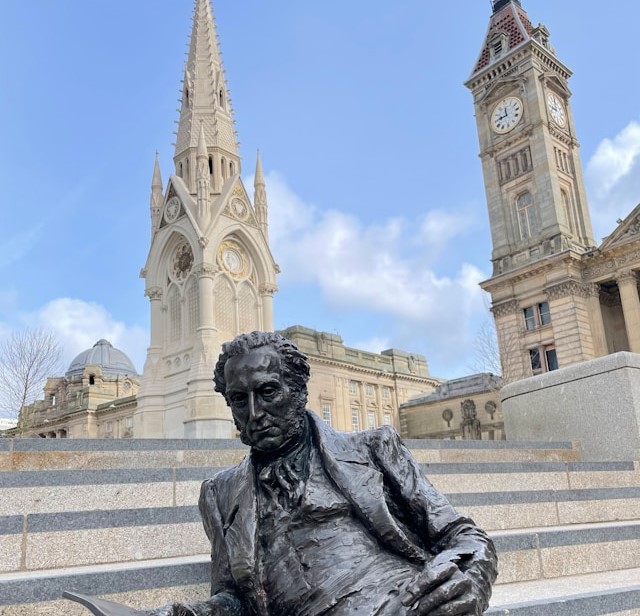
Chamberlain Square in Birmingham, United Kingdom

Chamberlain Square

Chamberlain Square, situated in the heart of Birmingham, stands as a testament to the city's rich Victorian heritage and its ongoing evolution. Named after the influential statesman and former mayor, Joseph Chamberlain, the square has long been a focal point for civic life and architectural grandeur. Dominating the square is the Chamberlain Memorial Fountain, erected in 1880 to honor Chamberlain's public service. Designed by architect John Chamberlain, the fountain features intricate Gothic Revival elements, serving as a centerpiece that draws both locals and visitors. Flanking the square are notable structures such as the Birmingham Town Hall and the Birmingham Museum and Art Gallery, both exemplifying the city's commitment to culture and the arts. In recent years, Chamberlain Square has undergone significant transformations as part of the Paradise redevelopment project. This initiative aims to blend the historical essence of the area with contemporary design, introducing modern office spaces, retail outlets, and dining establishments. The juxtaposition of new buildings alongside preserved landmarks reflects Birmingham's dedication to honoring its past while embracing future growth. The square has also been a hub for public gatherings, cultural events, and seasonal markets, reinforcing its role as a communal space that adapts to the city's dynamic rhythm. As Birmingham continues to evolve, Chamberlain Square remains a symbol of the city's resilience and its harmonious blend of history and modernity.
Ads place
Ads place
Ads place
Ads place
Ads place
Hall of Memory in Birmingham, United Kingdom

Hall of Memory

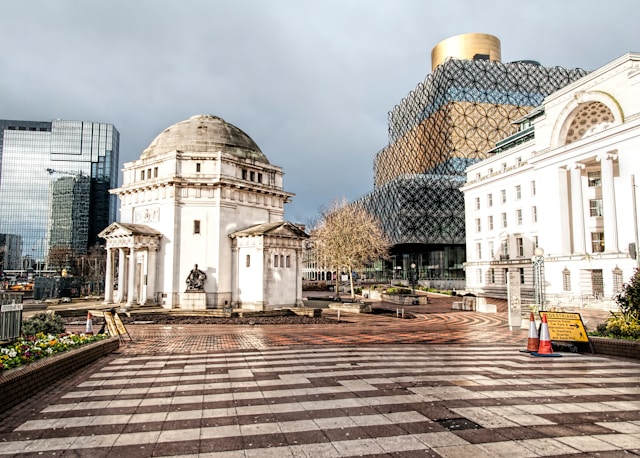
The Hall of Memory in Birmingham stands as a solemn monument commemorating the sacrifices of those who served in the world wars. Commissioned in the years following World War I, the memorial was designed to embody the city's deep respect for its fallen heroes and to serve as a tangible reminder of the cost of conflict. Constructed with a harmonious blend of classical symmetry and modern memorial design, the building features sturdy columns, a gracefully arched dome, and intricately carved stone details that evoke a sense of enduring honor. Within its interior, plaques and memorial inscriptions meticulously record the names and deeds of local soldiers, while a series of discreetly placed wartime bas-reliefs depict scenes from wartime, capturing the raw emotion and sacrifice of the era. A little-known aspect of the Hall of Memory is the existence of an archival repository beneath the monument, this underground space stores personal artifacts and letters donated by families, providing valuable insights into the human stories behind historical events. The design also incorporates subtle acoustical resonance features that allow ceremonial music to softly resonate during commemorative events, creating an atmosphere that encourages reflection. Its central location in Birmingham ties the memorial closely to other historic sites, reinforcing the city's commitment to preserving its cultural heritage. Over time, the Hall of Memory has evolved into a focal point for local remembrance ceremonies and educational programs that highlight the legacy of the conflicts.
Ads place
Ads place
Ads place
Ads place
Ads place
Jewellery Quarter in Birmingham, United Kingdom

Jewellery Quarter

The Jewellery Quarter is a storied district in Birmingham with a heritage of craftsmanship that dates back to the 18th century. Known for its narrow, winding streets and traditional workshops, the area is celebrated for producing exquisite silver, gold, and gemstone jewellery. Many of the workshops here have been run by families for generations and continue to use traditional techniques that have been passed down through centuries. A remarkable aspect of the Jewellery Quarter is the way it has preserved its industrial charm alongside modern creative enterprises. Behind some of the centuries-old facades, visitors can find state-of-the-art studios and innovative design boutiques, reflecting the evolution of craftsmanship in a contemporary setting. Detailed historical records and interactive displays in local museums reveal that some techniques used in this area remain unchanged since the early 1900s. Hidden engravings on doorways and ancient machinery remnants underscore the district's enduring legacy. Key terms like artisan traditions and heritage workshops capture the essence of this unique area without overwhelming the narrative with excessive highlights.
Ads place
Ads place
Ads place
Ads place
Ads place
Kelly Ingram Park in Birmingham, United Kingdom

Kelly Ingram Park

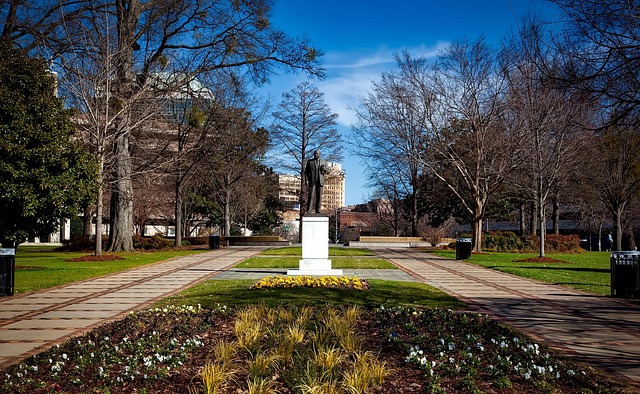
Kelly Ingram Park, located in the heart of Birmingham, Alabama, stands as a powerful testament to the city's pivotal role in the American Civil Rights Movement. Encompassing four acres, the park is bounded by 16th and 17th Streets and 5th and 6th Avenues North, forming a central component of the Birmingham Civil Rights District. Historically known as West Park, it was renamed in 1932 to honor Osmond Kelly Ingram, the first U.S. Navy sailor killed in World War I. During the 1960s, Kelly Ingram Park became a focal point for civil rights demonstrations, serving as a gathering place for activists challenging segregation and racial injustice. Notably, in May 1963, under the leadership of figures such as Reverend James Bevel and Dr. Martin Luther King Jr., the park was the epicenter of the Children's Crusade—a series of nonviolent protests led by African American schoolchildren advocating for desegregation. The peaceful demonstrators faced aggressive tactics from local law enforcement, including the use of fire hoses and police dogs, under the orders of Public Safety Commissioner Eugene 'Bull' Connor. These confrontations, broadcast nationally, galvanized public support for the civil rights movement and were instrumental in the eventual passage of the Civil Rights Act of 1964. Today, Kelly Ingram Park serves as an open-air museum, featuring several poignant sculptures and installations that commemorate the struggles and triumphs of the era. Among these are three installations by artist James Drake along the 'Freedom Walk', capturing well-known events and photographs in metal sculptures that evoke a deep connection to the experiences of the children involved in the march.
Ads place
Ads place
Ads place
Ads place
Ads place
Library of Birmingham in Birmingham, United Kingdom

Library of Birmingham

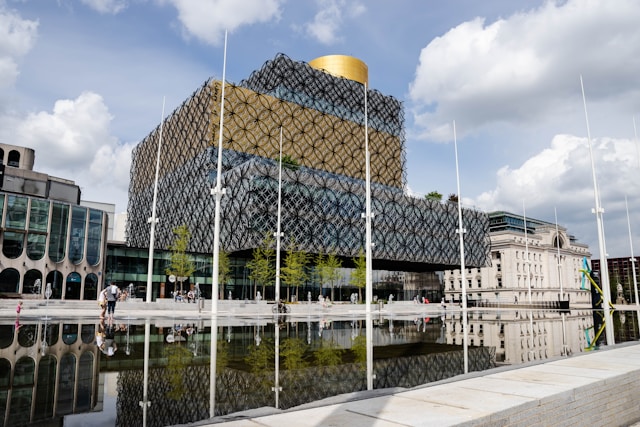
The Library of Birmingham redefines the modern public library with its striking circular design and innovative use of space. Opened in 2013, the building's futuristic exterior, with its reflective glass and dynamic curves, is a visual symbol of Birmingham's commitment to education and cultural exchange. Inside, vast collections of books, digital media, and historical archives are housed alongside interactive displays that invite visitors to engage with literature and art in new ways. One notable feature is the dedicated section that showcases local history, including rare photographs and documents that chronicle Birmingham's transformation during the Industrial Revolution. The building was constructed with sustainable materials and incorporates eco-friendly features such as rainwater harvesting and solar panels. A lesser-known detail is the library's underground archive, which preserves fragile manuscripts and historical texts, offering researchers a rare glimpse into the city's past. The structure's design encourages community collaboration and creativity, serving as a hub for public events and educational programs.
Ads place
Ads place
Ads place
Ads place
Ads place
Piccadilly Arcade in Birmingham, United Kingdom

Piccadilly Arcade

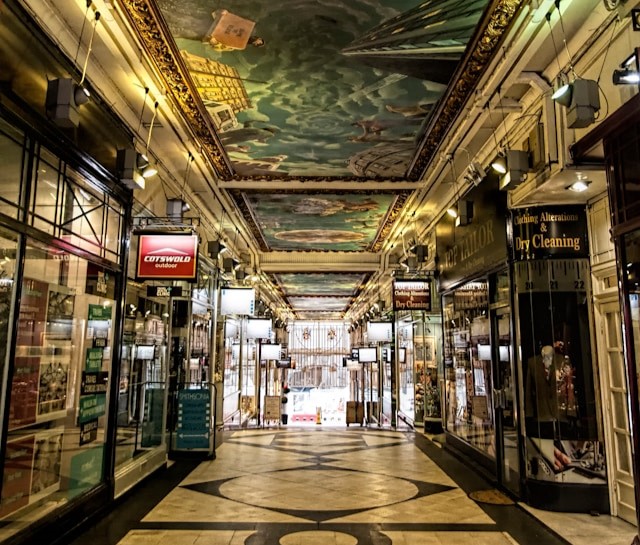
Piccadilly Arcade in Birmingham is a cherished shopping passage that offers an intimate glimpse into the city's commercial heritage. Constructed in the early 20th century, the arcade retains original features such as ornate Edwardian ironwork, intricate mosaic floors, and period shopfronts that reflect a bygone era. Originally designed to serve as a central marketplace, it evolved over decades into a vibrant venue where local merchants and artisans conducted their business. Visitors today are often intrigued by the existence of discreet corridors and remnants of the original layout, including a network of secret passageways and preserved archival signage that hint at past commercial activities. The arcade's transformation over the years has been carefully managed so that modern retail elements coexist harmoniously with its architectural legacy. Notably, the building still exhibits traces of its early use as a meeting point for influential local figures who once held confidential gatherings in hidden passageways, a detail underscored by evidence of Victorian craftsmanship and historic design. Researchers have uncovered records suggesting that one section of the arcade was used as a hidden transfer system for discreet transfers of goods, while another area is rumored to contain the remnants of a secret meeting room where early 20th-century entrepreneurs discussed plans that would help shape the city's industrial future.
Ads place
Ads place
Ads place
Ads place
Ads place