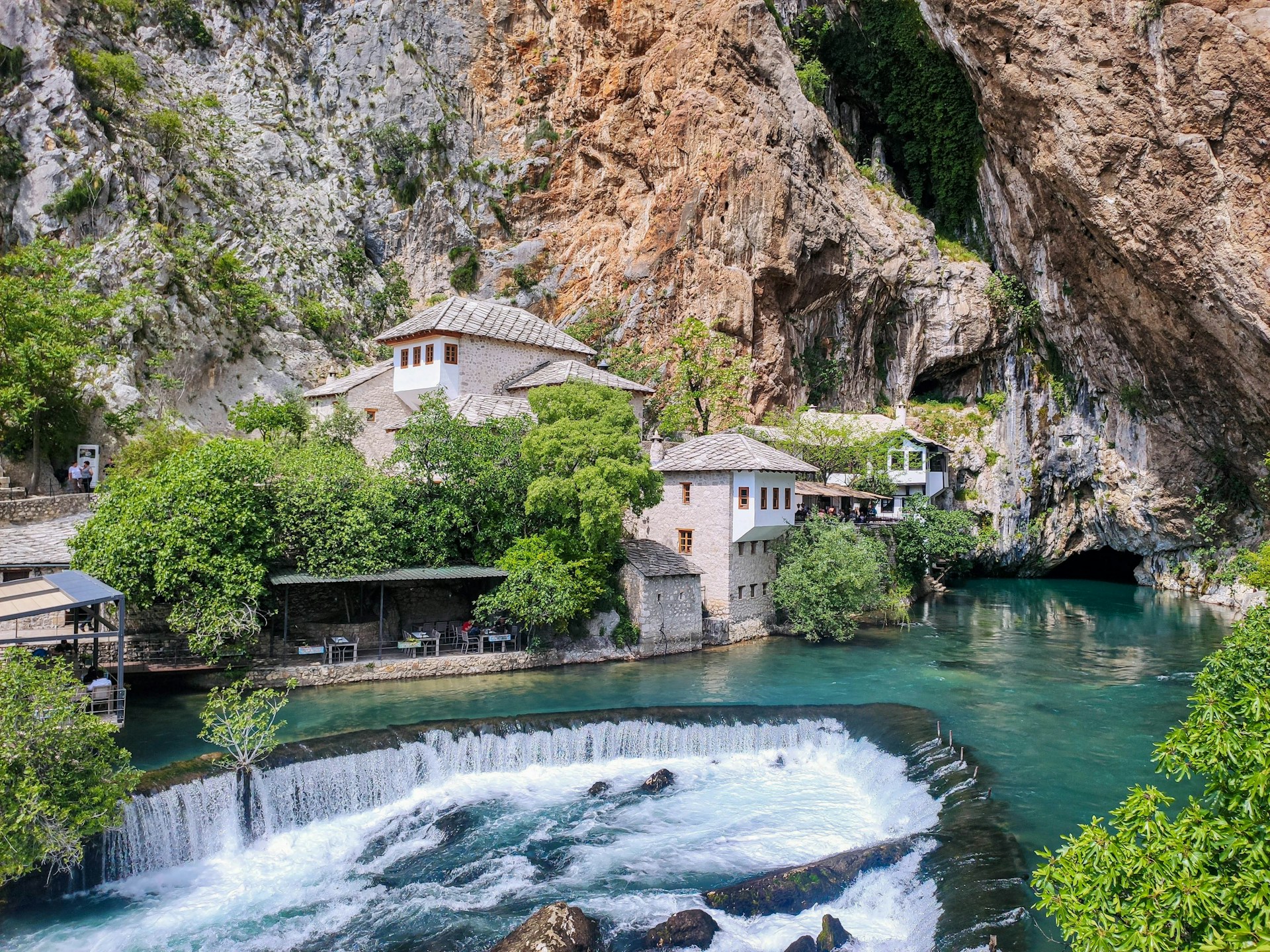

City view of Blagaj, Bosnia and Herzegovina

Blagaj

Blagaj is a small village located just outside Mostar, famous for the Blagaj Tekke, a Dervish monastery built at the base of a cliff where the Buna River emerges from a cave. The serene setting, with the emerald river flowing by, makes it one of the most picturesque spots in Bosnia and Herzegovina. The monastery itself dates back to the Ottoman era and is a peaceful place for reflection. Blagaj is also home to medieval fortresses and offers opportunities for hiking and nature exploration.

Top attractions & things to do in Blagaj

If you’re searching for the best things to do in Blagaj, this guide brings together the top attractions and must-see places to visit in Blagaj. The top picks below highlight the most visited sights for first-time visitors, plus a few local favorites worth adding.

Blagaj Fortress (Stjepan Grad) in Blagaj, Bosnia and Herzegovina

Blagaj Fortress (Stjepan Grad)

The Blagaj Fortress, also known as Stjepan Grad, is an ancient fortress perched on a hill overlooking the town of Blagaj. It dates back to the early medieval period, with some sections believed to be from Roman times. The fortress was an important stronghold for local rulers, including Duke Stjepan Vukcic Kosaca. Today, the ruins offer a glimpse into Bosnia's rich history and provide a panoramic view of the valley and surrounding mountains. The challenging hike up to the fortress rewards visitors with stunning scenery and a sense of stepping back in time. Archaeologists discovered Roman artifacts beneath its walls, proving it was built atop a military outpost from antiquity. Its strategic position controlled medieval trade routes, and a secret tunnel once linked it to the Blagaj Tekija for wartime escapes. Recognized for its cultural value, the fortress is part of Blagaj’s UNESCO Tentative List nomination for blending natural and architectural heritage.
Ads place
Ads place
Ads place
Ads place
Ads place
Blagaj Tekija (Dervish Monastery) in Blagaj, Bosnia and Herzegovina

Blagaj Tekija (Dervish Monastery)

The Blagaj Tekija is a stunning 16th-century Dervish monastery situated at the base of a 200-meter cliff. It is located near the source of the Buna River, a place of great spiritual significance for Sufis. Visitors are drawn to the peaceful atmosphere, traditional Ottoman architecture, and breathtaking views of the surrounding nature. The Tekija was built as a retreat for Dervishes and has since become a popular pilgrimage site. Inside, visitors can experience the serene beauty of the prayer rooms and the traditional interior design that has been preserved for centuries. The calm of the monastery, combined with the cool waters of the Buna, creates a truly magical setting. The monastery’s design follows Sufi cosmological principles, integrating seven symbolic elements like the cliff, river, and cave to reflect harmony with nature. After collapsing 12 times due to falling rocks, its 2013 restoration revived rare Turkish Baroque features, including a polychromed ceiling and oval roof. Today, it hosts Bosnia’s second-largest Islamic event, the annual Mawlid celebration, drawing thousands to riverside rituals honoring the Prophet Muhammad’s birth.
Ads place
Ads place
Ads place
Ads place
Ads place
Buna River in Blagaj, Bosnia and Herzegovina

Buna River

The Buna River, which emerges from the Vrelo Bune, is known for its pristine waters and tranquil flow through the Herzegovinian landscape. It is a popular destination for those who enjoy outdoor activities such as fishing, kayaking, and walking along its scenic banks. The river's cold, clear water provides a refreshing escape during hot summer months. Additionally, several restaurants and cafes are located near the river, where visitors can enjoy local cuisine while listening to the calming sounds of the flowing water. The Buna River is not only a natural attraction but also a cultural and social hub in Blagaj. The river’s emerald-green trout is a local delicacy, grilled using Ottoman-era recipes in riverside restaurants. Historic stone cuprije (bridges) from the 16th century dot its banks, showcasing Ottoman engineering blended with Herzegovinian craftsmanship. During summer, traditional watermill museums along its course demonstrate how grain was ground for centuries.
Ads place
Ads place
Ads place
Ads place
Ads place
Lehina (Ottoman-style House) in Blagaj, Bosnia and Herzegovina

Lehina (Ottoman-style House)

Lehina is a traditional Ottoman-style house located near the Blagaj Tekija. This historic house has been preserved as a museum, showcasing the way of life during the Ottoman period. It features authentic furnishings, textiles, and household items that reflect the blend of Bosnian and Ottoman cultures. Walking through its rooms, visitors can gain insight into the daily lives of the people who lived there centuries ago. The house is surrounded by a peaceful garden, offering a relaxing atmosphere in the heart of Blagaj. Lehina stands as a testament to the architectural and cultural heritage of the region. Its musafirhana (guest wing) once hosted Sufi pilgrims, serving Bosnian coffee and börek as part of dervish hospitality. Restored in 2012 using 17th-century techniques, the house features mud-brick walls and walnut-wood carvings true to its origins. The garden’s “holy geometry” layout aligns with Sufi teachings, using symmetry to mirror divine order.
Ads place
Ads place
Ads place
Ads place
Ads place
Vrelo Bune (Buna River Spring) in Blagaj, Bosnia and Herzegovina

Vrelo Bune (Buna River Spring)

The Vrelo Bune is one of the most powerful and beautiful karst springs in Europe. It gushes out from a deep cave at the base of a cliff and forms the Buna River, providing water to the entire region. The crystal-clear water and lush vegetation surrounding the spring make it a perfect place for nature lovers. Visitors can take boat rides near the cave opening, which offers a close view of the spring and the towering cliffs above. The unique geological and hydrological characteristics of Vrelo Bune have made it a well-known natural wonder, contributing to the town's charm. The spring’s cave stretches 150 meters underground, with water temperatures constant at 8–10 °C year-round, sustaining rare moss species unseen elsewhere in the Balkans. Local legends claim it was a Bogomil sanctuary before Ottoman rule, adding spiritual depth to its natural allure. Its pristine water is drinkable directly from the source and still powers historic watermills along the riverbanks.
Ads place
Ads place
Ads place
Ads place
Ads place