City view of Braga, Portugal

Braga

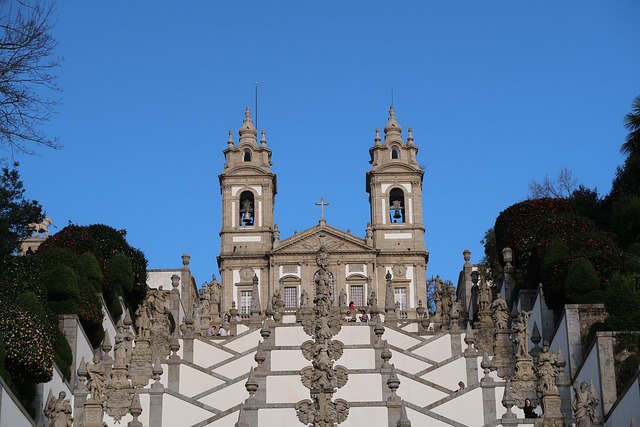
Braga wakes early for bells and pastry, then climbs toward the theatrical stairways of Bom Jesus do Monte. Pilgrims count steps while fountains whisper theology, and the water powered funicular from 1882 still glides uphill using ballast like a magician's trick. Downtown, the Roman grid of Bracara Augusta peeks through plazas where teenagers debate music under arcades. Baroque churches share walls with sleek cafes, and lunch might be cod topped with cornbread crumbs or a bowl of caldo verde so simple it feels profound. As sunset washes the hills, the sanctuary terrace becomes a balcony over a city that prefers conversation to spectacle. For something unexpected, look for the tiny medieval chapel embedded in a supermarket's car park, an urban mashup that says history refuses to move out no matter who arrives next. Locals joke that even the traffic lights are devout on feast days, pausing long enough for processions to pass without breaking stride.

Top attractions & things to do in Braga

If you’re searching for the best things to do in Braga, this guide brings together the top attractions and must-see places to visit in Braga. The top picks below highlight the most visited sights for first-time visitors, plus a few local favorites worth adding.

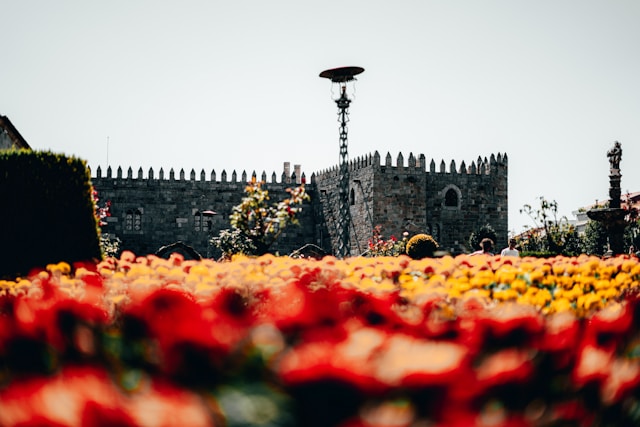
Archbishop’s Palace and Gardens in Braga, Portugal

Archbishop’s Palace and Gardens

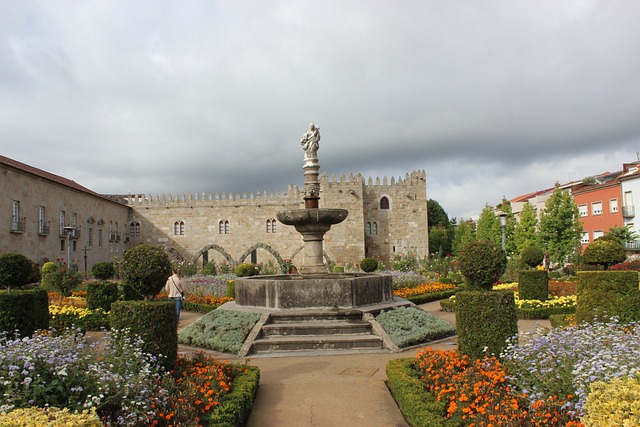
Beside the cathedral, the former Archbishop’s Palace anchors centuries of civic and spiritual authority. Parts of it date to the 14th century, and the Gothic windows of the medieval wing contrast with the later Baroque facade. Today it houses the Public Library and District Archive, where rare volumes and charters narrate Portugal’s growth. Outside, the Santa Barbara Garden decorates ruins with clipped hedges, roses, and fountains, creating a dialogue between stone and flower. Students read on benches under carved coats of arms, while tourists frame the palace through arcs of foliage. The garden, reimagined in the 20th century, offers a living gallery of color in every season. A quirky fact: fragments of Roman walls reused in construction link Braga’s distant past with its episcopal power. Whether seen as archive, ruin, or retreat, the palace stands as a reminder that authority can be both solemn and beautifully framed by blossoms.
Ads place
Ads place
Ads place
Ads place
Ads place
Bom Jesus do Monte Sanctuary in Braga, Portugal

Bom Jesus do Monte Sanctuary

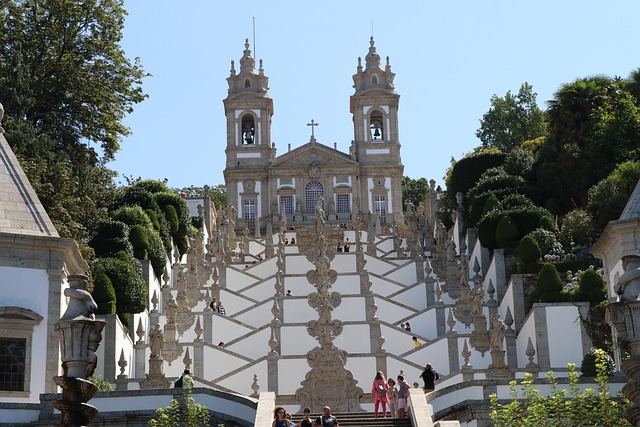
The sanctuary rises above Braga as a layered conversation between stone, water, and devotion. Its monumental stairway, begun in the 18th century, cascades downhill with Baroque fountains that stage virtues and biblical allegories on each landing. Pilgrims climb in silence or with laughter, but every step rehearses the rhythm of ascent. A funicular, built in 1882, still operates on a water counterweight system, an engineering feat that feels like a miracle in itself. At the top, the church presides with calm symmetry, flanked by viewpoints where the Minho plain opens like a scroll. Processions at feast times fill terraces with music, and lanterns stretch the stairway into a glowing path. For an odd detail, the hill shelters grottoes where once hermits lived almost invisible lives, proof that devotion sometimes chooses withdrawal to teach presence. Visitors leave with legs tired, lungs refreshed, and eyes tuned to architecture as landscape.
Ads place
Ads place
Ads place
Ads place
Ads place
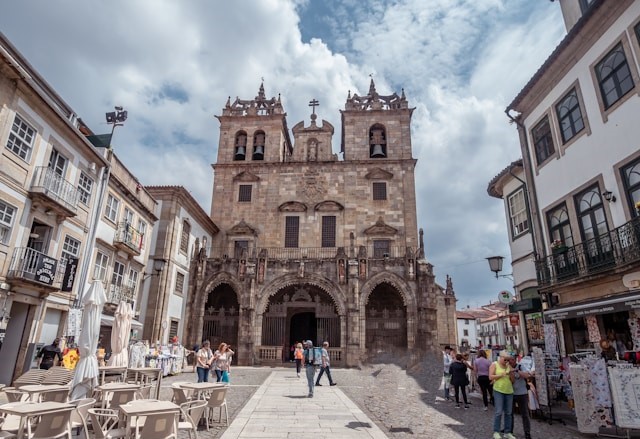
Braga Cathedral (Se de Braga) in Braga, Portugal

Braga Cathedral (Se de Braga)

In the heart of the old city, the cathedral holds centuries of Portugal’s religious memory. Consecrated in the 11th century, it is older than the nation itself and blends Romanesque, Gothic, and Baroque details into one complex fabric. The twin towers frame a facade that once set the standard for Iberian churches, and the treasury inside gleams with relics, vestments, and manuscripts that scholars still study. Tombs of Henri of Burgundy and his wife Teresa, parents of Portugal’s first king, rest here in quiet dignity. The cloisters shelter azulejo panels, while side chapels echo with centuries of polyphonic chant. Step into the high choir and carved stalls remind you that artisans once prayed through chisels. Bells toll across the rooftops each evening, uniting students, families, and pilgrims in a sound older than the city walls. The cathedral remains not only a monument but also a living compass of Braga’s faith and identity.
Ads place
Ads place
Ads place
Ads place
Ads place
Campo das Hortas in Braga, Portugal

Campo das Hortas

At the southern entrance to Braga’s historic core, Campo das Hortas opens like a forecourt that once greeted travelers arriving from Porto. Its name recalls the kitchen gardens that spread here in the Middle Ages, supplying monasteries and inns clustered near the gates. Today, the square balances history and leisure: the Arch of Porta Nova frames one end with baroque swagger, while cafes and tiled houses circle the cobblestones. A fountain dated to the 16th century still murmurs in the center, flanked by coats of arms carved into granite. During festivals, processions spill into the square, turning it into both stage and thoroughfare. Students gather here at night, mixing chatter with guitars under lamplight. For a curious note, some guides claim Campo das Hortas once doubled as a marketplace for mules and oxen, proof that even gateways had to balance ceremony with the grit of trade. Today it remains a pause between journeys, where Braga first shakes your hand.
Ads place
Ads place
Ads place
Ads place
Ads place
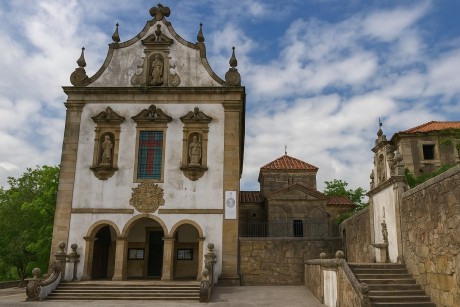
Chapel of Sao Frutuoso in Braga, Portugal

Chapel of Sao Frutuoso

Tucked beside the church of Sao Salvador de Montelius, this small chapel compresses centuries of style into a modest footprint. Built in the 7th century, it is one of the few surviving pre-Romanesque structures in Portugal, later adapted by Baroque renovations in the 18th century. The Greek cross plan and horseshoe arches recall Visigothic traditions, making it a unique stop for architectural pilgrims. Fresco remnants still cling to walls, whispering color into the stone. Scholars point out how the chapel’s survival through conquests and reconstructions symbolizes Braga’s resilience. Standing inside, you sense time folded tightly, as if centuries were stacked within a single chamber. A curious note: some believe relics of Saint Frutuoso were once housed here, giving the chapel a resonance far larger than its size. It remains a rare jewel in the city’s architectural crown.
Ads place
Ads place
Ads place
Ads place
Ads place
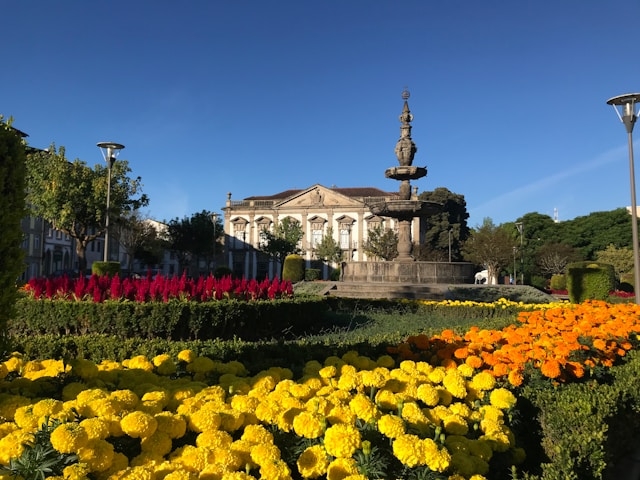
Garden of Santa Barbara in Braga, Portugal

Garden of Santa Barbara

Next to the Archbishop’s Palace, the Garden of Santa Barbara turns ruins into a patterned carpet of blooms. Established in the 20th century, it surrounds Gothic arches with clipped hedges and roses that change color through the seasons. The garden borrows its name from the small statue of Saint Barbara, patroness of protection, which presides quietly from a niche. Students sit with sketchpads under pergolas, and tourists photograph walls draped with ivy. In spring, wisteria spills purple curtains, while summer evenings host impromptu concerts. The juxtaposition of medieval stone and carefully ordered beds gives the garden a theatrical quality. For trivia lovers, the layout was once redesigned to echo the Portuguese coat of arms, using flowerbeds instead of heraldry. The garden remains both civic ornament and quiet refuge, proving that even ruins can blossom when patience and design collaborate.
Ads place
Ads place
Ads place
Ads place
Ads place
Raio Palace in Braga, Portugal

Raio Palace

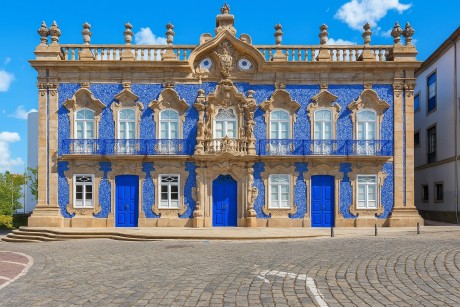
On a corner near the old city, Raio Palace flashes blue and white tiles like a formal smile. Built in the 1750s for a wealthy nobleman, its facade mixes Baroque and Rococo lines, with curving balconies and exuberant stonework that seemed almost theatrical to its contemporaries. The azulejos panels glisten under sunlight, narrating themes of faith and daily life. Inside, ceilings lift with frescos, and salons showcase ornate furniture, gilded mirrors, and carved staircases. Now open as a museum, it presents exhibitions about Braga’s civic history, revealing how power and wealth once translated into architecture. Step into the courtyard and the balance of symmetry feels like choreography. A delightful detail: the palace’s name, meaning “lightning,” echoes the brilliance of its tilework, which seems to strike visitors with sudden beauty. Evening illumination highlights its curves and ensures that Raio Palace continues to spark admiration as brightly as in the 18th century.
Ads place
Ads place
Ads place
Ads place
Ads place
Republic Square (Praca da Republica) in Braga, Portugal

Republic Square (Praca da Republica)

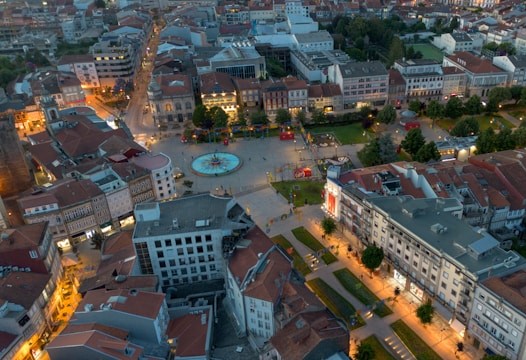
At the center of Braga’s daily rhythm, Republic Square behaves as both living room and stage. The arcades trace back to the 16th century, when merchants and municipal leaders shaped the space for commerce and ceremony. Today cafes spill onto the cobbles, and students sketch assignments while fountains measure time with gentle arcs. The square’s Church of the Holy Cross anchors one end, its Baroque facade holding its own against neon signs and tram chatter. Seasonal events fill the plaza with concerts, markets, and parades, a continuity of civic use stretching over 400 years. One anecdote says political rallies here influenced debates that shaped modern Portuguese democracy. Evening light filters through colonnades, making every conversation seem framed in architecture. It is a space where Braga’s layers converge: commerce, devotion, and leisure looping endlessly in the sound of footsteps across stone.
Ads place
Ads place
Ads place
Ads place
Ads place
Roman Thermae of Maximinus in Braga, Portugal

Roman Thermae of Maximinus

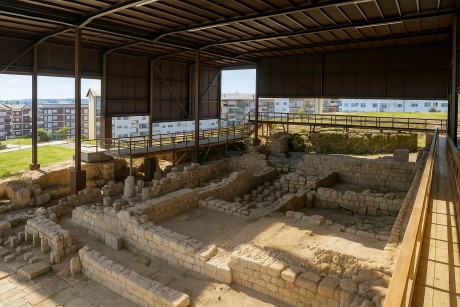
Beneath modern Braga, archaeologists revealed the stone skeleton of a Roman bath complex tied to the city of Bracara Augusta. The 3rd century site preserves hypocaust heating systems, pools, and courtyards where Roman citizens once practiced rituals of hygiene and conversation. Fragments of mosaics and amphorae survive, hinting at the sophistication of daily life. Excavations also uncovered nearby remnants of a theater and forum, proving Braga’s ancient importance within the Roman Empire. Panels explain how warm air circulated through brick pillars to heat water, a technology that feels surprisingly modern. Standing on glass walkways, you imagine steam rising where today’s traffic hums above. A curious note: scholars believe the baths were linked to the cult of Maximinus, a soldier emperor who briefly ruled Rome in the 3rd century. The ruins remind visitors that the city’s long conversation with power and culture began in stone and water.
Ads place
Ads place
Ads place
Ads place
Ads place
Sameiro Sanctuary in Braga, Portugal

Sameiro Sanctuary

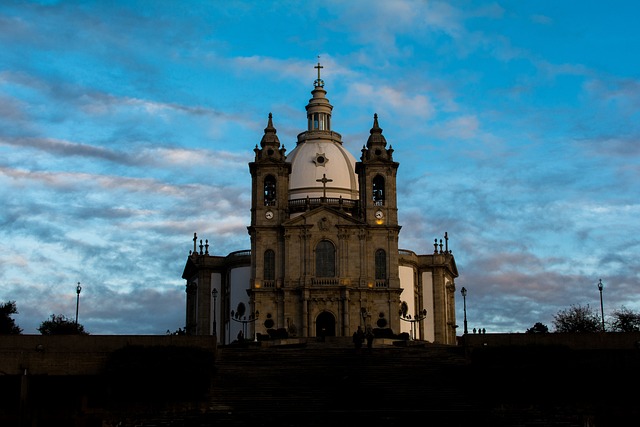
High above Braga, the Sanctuary of Our Lady of Sameiro offers serenity shaped in stone and panorama. Construction began in the 19th century, inspired by Marian devotion, and the resulting Neoclassical church crowns the hill with a dome that gleams in sunlight. Pilgrims climb toward its vast esplanade, where statues of popes and saints guard approaches like sentinels. Inside, marble altars and azulejos celebrate the Virgin’s role in Portugal’s story, while stained glass windows scatter color across pews. The feast of the Immaculate Conception each June draws thousands in song and candlelight, and the procession stretches down the hill like a river of flame. From the steps, the view sweeps across Braga to the mountains, rewarding devotion and effort alike. For an unusual note, locals recall that the sanctuary’s dome became a rallying point for early aeronauts testing flights above the valley. The sanctuary today blends belief, artistry, and sky.
Ads place
Ads place
Ads place
Ads place
Ads place