
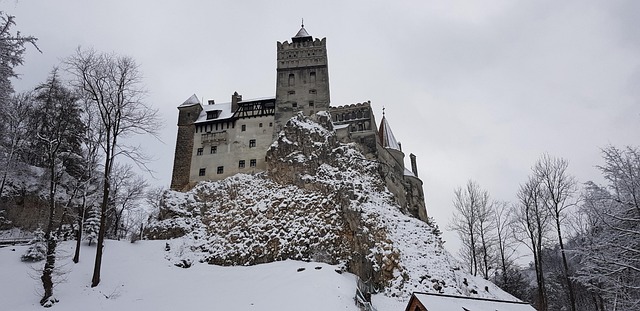
Bran Castle
In Brasov, Romania .
More places to visit in Brasov
Discover more attractions and things to do in Brasov.
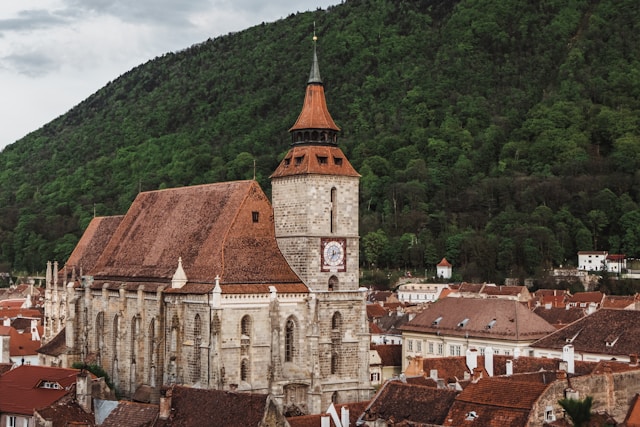
Black Church
Smoke-darkened stone anchors the old town as a bell toll rolls across rooftops and market chatter. Raised by Saxon burghers in the late 14th century , the cathedral wears a sober Gothic frame that still breathes cool air and candle scent. After the Great Fire of 1689 , masons rebuilt vaults and towers with a restraint that lets light do the decoration. Along the walls hang dozens of Anatolian carpets , traded for brass and grain when merchants rode the long road east, their patterns turning the nave into a quiet atlas. Outside, a statue of Johannes Honterus reminds visitors that print and schoolbooks once traveled from his presses to every lane in town. On concert nights, the baroque organ folds thunder into honey, and the building seems to inhale before answering. Step back into the square and the facade looks sterner than it feels, a patient neighbor that has learned endurance without losing curiosity.
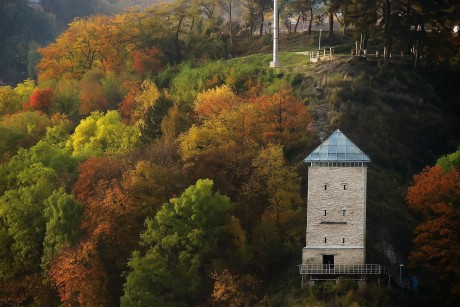
Black Tower
Despite the name, the stone shines pale most days; the label comes from fire, not pigment. Struck by lightning in the 16th century and singed again in the 1689 blaze, the lookout kept its job above the western approaches, part of a quartet with the White Tower . Today a glass wedge caps the ruin, an architect’s handshake between past and present that doubles as a windbreak for visitors. Panels walk you through signal codes, weapons, and the careful math of angles that once made archers effective. From the platform, the Carpathians frame a town that learned to balance walls and trade routes without losing its patience. In autumn, beeches wash the slopes in copper; in spring, the hill smells like rain on slate. The tower’s trick is simple: survive, explain, and keep the view honest. You come for history and leave with a compass that points to roofs, lanes, and dinner.
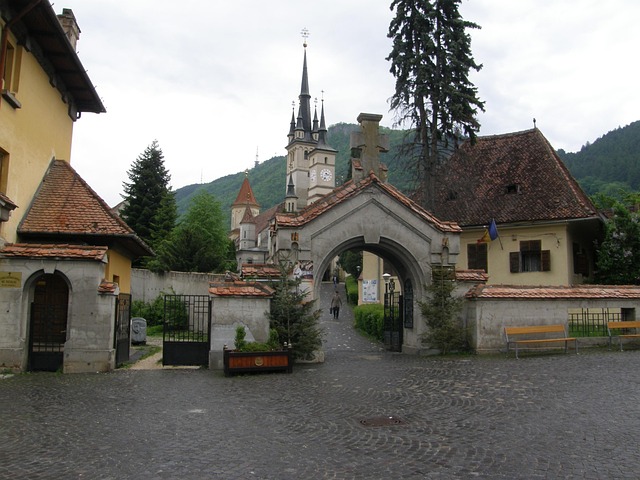
Catherine's Gate
Timber roof and stone base meet under a quartet of little turrets that once announced jurisdiction with cheerful clarity. Built in 1559 by the Tailors’ Guild on foundations from the 15th century , the gate regulated who could enter the fortress town and when, a civic metronome disguised as architecture. The four corner spires signaled the council’s right to punish—stern law packaged in storybook form. Nearby, the later Schei Gate widened traffic, but this older portal kept its role as the charming bureaucrat of entrances. The upper chamber hosted paperwork and the occasional reception; today it hosts memory, layered over with restorations that respected the odd angles. Outside, the Schei quarter begins, where Romanian merchants once paid tolls to bring cheese, honey, and news. Stand beneath the timber and you hear footsteps cross centuries at an even pace, a reminder that borders can be negotiated in wood and stone long before they are argued on paper.
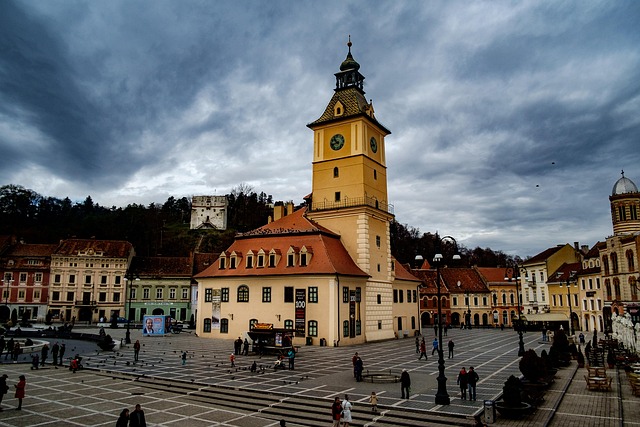
Council Square (Piata Sfatului)
Color-washed facades frame a space where trade, verdicts, and festivals have shared the same stones for centuries. The Town Hall’s clock keeps its own tempo while pigeons annotate the roofline, and in winter the fountain throws mist that turns to glitter. Market stalls recall guild days when measures and oaths were taken seriously, a memory kept inside the history museum’s rooms. On summer evenings the square becomes a salon; you hear three languages in one conversation and nobody rushes the punchline. Bakers pass plates of kurtos and pretzels as if they were footnotes to larger stories, and brass bands rehearse around corners. During outbreaks in the 17th century , the belfry rang warnings; today it rings for concerts and weddings, an easier assignment. The nearby Casa Muresenilor preserves 19th century political pamphlets, proof that debate once walked these same cobbles. At dusk the Carpathians edge the horizon, the Habsburg facades warm, and the square edits the city into one generous paragraph.
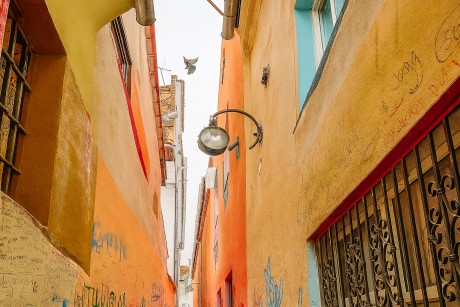
Rope Street (Strada Sforii)
Two people passing sideways is the usual choreography here, a narrow cut in the fabric of the old defense quarter that makes pedestrians polite by design. Built as a shortcut for fire brigades in the 17th century , the lane reads like a margin note between houses that learned to compromise. Plaster walls show fingerprints of rain and repair, and every echo becomes company. Guides enjoy the data—its tightest points measure less than a meter—and then yield the space to giggles and camera experiments. The passage sits in the former Saxon district shaped by guilds , where stairways drop to courtyards and recipes travel through windows. At one end, you step into the orbit of the Black Church ; at the other, cafes angle chairs to catch the spill of light. Urban myths claim duels of umbrellas and dramatic rescues; the truth is softer. This is micro-architecture with a memory, a small proof of medieval problem-solving that still works.
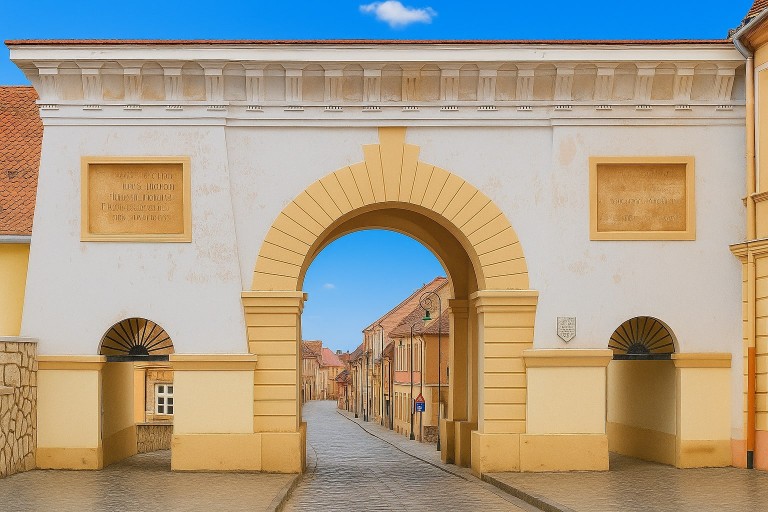
Schei Gate
A triumphal arch with modest manners, this gateway opened the wall to carts and carriages when trade demanded a wider welcome. Raised in 1827 after repeated floods and fires tested earlier schemes, it stands a few steps from Catherine's Gate , the older portal it politely upstaged. Three arches handled traffic like a civil servant: carts in the middle, pedestrians at the sides, and tolls recorded with neat handwriting. The structure belongs to the calm language of late Neoclassicism , its proportions more about workflow than ceremony. Beyond lies the Schei suburb, where Romanian guilds and priests once lived outside Saxon jurisdiction, yet threaded daily life back through this opening. Anniversaries bring costumes, flags, and speeches that acknowledge both separation and exchange. Look up and you will see carved dates and coats of arms weathered to soft relief. The best time is late afternoon, when the arch edits traffic into silhouettes and the wall remembers its earlier tensions.
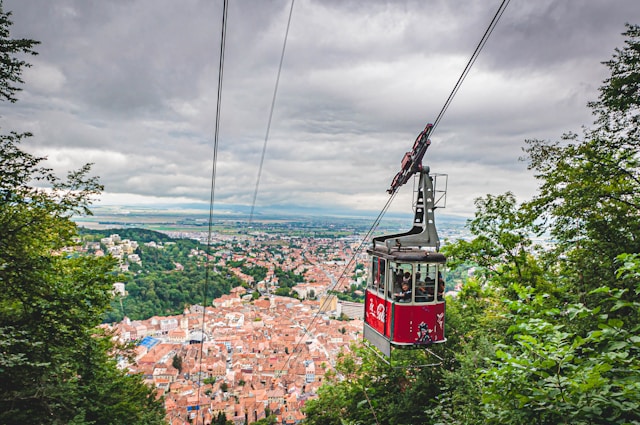
Tampa Mountain
A cable car lifts you from street noise to pine hush in four unhurried minutes, trading bakery aromas for resin and wind. The ridge trails carry families and trail runners along switchbacks where wildflowers stage tiny revolutions in May. From the belvedere you read the town like a map—walls, towers, red roofs—and the plains beyond where caravans once approached with measured drama. During the 13th century , watchmen signaled danger from this slope; now hikers signal selfies to friends below. The mountains belong to the Carpathians , yet the feeling is almost urban: a green terrace anyone can claim for an hour. In the communist era, the giant hillside letters replaced an emblem and then outlived it, a billboard that turned into a landmark by stubborn popularity. Woodpeckers supply percussion, and a shadow of the old Teutonic Order redoubt still clings to the forest floor. On clear days you can spot Poiana Brasov shining like a promise two valleys away.
Weavers' Bastion
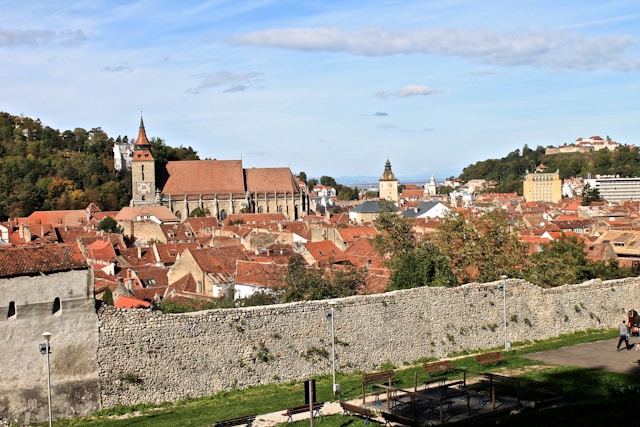
Thick walls cinch a corner of the former fortifications where a guild once traded thread for defense duty. Raised in the 15th century and enlarged under threat from Ottoman campaigns, the bastion shows how craft and strategy shared budgets and pride. Inside, a museum narrates sieges and treaties with models that make supply lines look like choreography. Timber galleries creak with satisfying honesty, and arrow loops become picture frames for the Carpathians . The guild’s charter survives in copies, the clauses tidy about weapons, fines, and who sweeps on Thursdays. During the 17th century , repairs after floods and fire hardened the outwork into the shape you see, a geometry of patience. Concerts now replace musters; acoustics love stone, and the city sits for music the way it once sat for musters. You exit under a coat of arms stitched in mortar, a reminder that weaving can include walls as well as wool.
White Tower
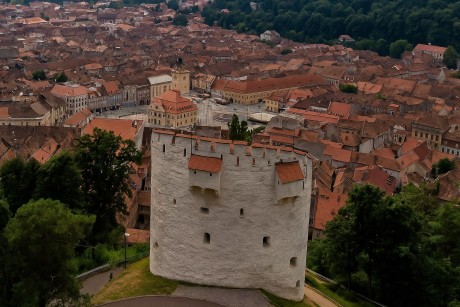
A curved flank of stone leans into the hillside, its slits aimed at approaches that attackers once preferred. Built in the late 15th century , the tower sat outside the main wall, a detached guardian connected by wooden galleries to the ramparts above. Fires from the 1689 catastrophe scorched the masonry, but repairs kept the lookout alive for new duties: panoramas rather than alarms. From the viewing ledge you can place rooftops like pieces on a board—Council Square, the Black Church , the traces of vanished streets. Snow outlines the geometry in winter; in summer, linden scent rises from gardens below. Inside, exhibits explain how guilds financed defense, turning commerce into stone and discipline. The walk up is a steady climb on stairs that practice persuasion; the descent passes the Black Tower , a sibling with its own scars. Evening light makes the walls blush, and the town settles into the pose it holds best: alert, but content.