
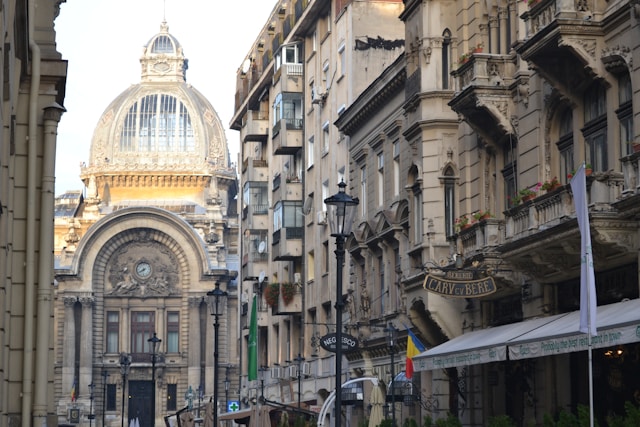
Old Town (Lipscani)
In Bucuresti, Romania .
More places to visit in Bucuresti
Discover more attractions and things to do in Bucuresti.
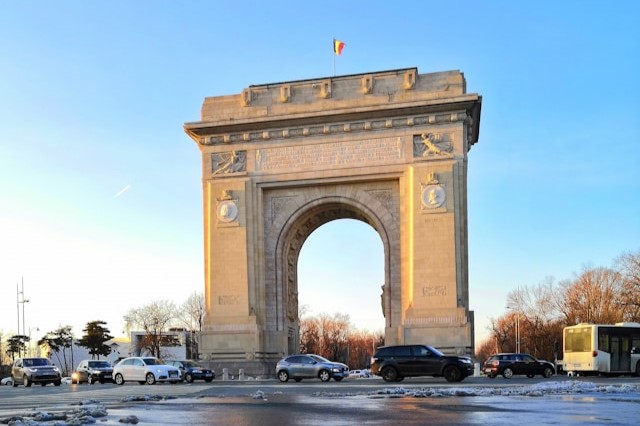
Arcul de Triumf
Standing sentinel on the Kiseleff Road, this arch celebrates victories and resilience in stone. The first version was a modest wood-and-plaster structure erected in 1878 after Romania’s independence. The current granite monument, inaugurated in 1936 , was designed by Petre Antonescu and echoes Paris’s Arc de Triomphe, though with distinctly Romanian motifs. Bas-reliefs honor World War I battles, and inscriptions pay tribute to soldiers who never returned. Each December 1st , the National Day parade marches beneath it, stitching tradition into civic pride. From its terrace, visitors glimpse both the Herastrau Lake and the orderly boulevards of northern Bucharest. Restoration after 2014 cleaned its surface and reopened the small museum inside, where uniforms and photographs recall sacrifices. For locals, it is both a patriotic landmark and a place of evening walks, where children cycle in its shadow. The arch demonstrates that memory can be solemn yet welcoming, monumental yet woven into daily life.
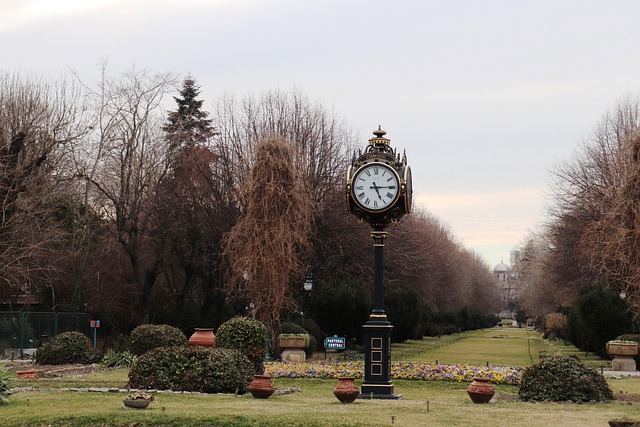
Cismigiu Gardens
Laid out in the 19th century by landscape architect Carl Meyer , Cismigiu Gardens offer Bucharest a leafy respite at its center. Winding alleys, lakeside promenades, and shaded benches provide a stage for chess players, poets, and teenagers rehearsing freedom. The garden’s small islands and rowboats carry echoes of Vienna’s Ringstrasse parks, yet the atmosphere feels distinctly local. Statues commemorate national writers and soldiers, turning walks into lessons of memory. In spring, lilacs perfume the paths, while in winter, children test skates on the frozen lake. The central kiosk has hosted everything from brass bands to protest speeches, its octagonal floor absorbing more than dance steps. A curious detail: during the interwar period, the park had its own aviary, where exotic birds taught locals that wonder could be imported. Today, the gardens remain democratic—free to all and generous in mood, a civic living room that edits city noise into gentler notes.
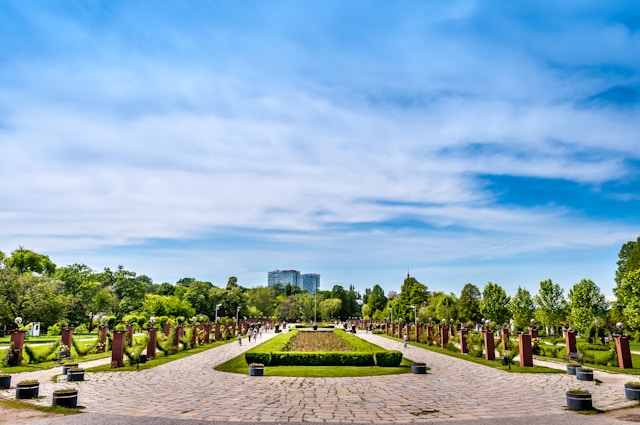
Herastrau Park (King Michael I Park)
The largest park of Bucharest unfolds around a generous lake, an urban lung shaped in the 1930s . Originally designed by Niculae Caranfil and named after King Carol II , it was later renamed for King Michael I , a monarch who embodied both exile and return. Joggers, cyclists, and boaters animate its lanes daily, while shaded benches host chess matches with the patience of long afternoons. The Japanese Garden blooms each spring as a cultural ambassador, while the Rose Island recalls the romance of interwar promenades. Statues of poets and politicians line the paths, turning a casual walk into a seminar in stone. Festivals bring music and fireworks, yet quiet corners always survive. In winter, the frozen lake becomes a mirror, in summer, pedal boats chase ducks. The park demonstrates that public space can be both monumental and intimate, carrying decades of social memory within its green lungs.
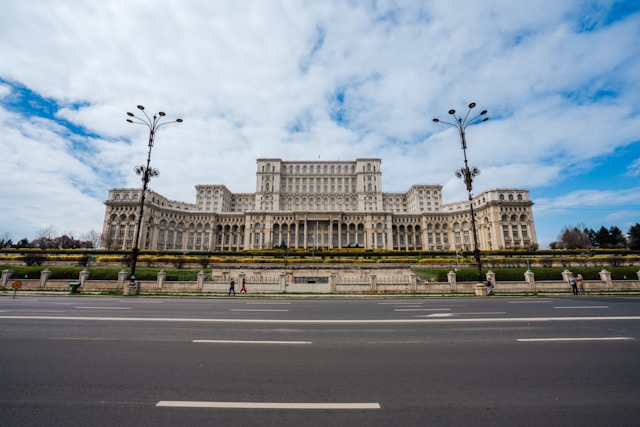
Palace of the Parliament
The city’s skyline bends around this monumental building, a symbol that is both admired and questioned. Commissioned by Niculae Ceausescu in the 1980s , the Palace of the Parliament became one of the largest administrative structures in the world, rivaling even the Pentagon. Built with Romanian marble, crystal, and oak, it consumed entire neighborhoods, displacing thousands of residents. Inside, chandeliers weigh tons and carpets stretch across ballrooms that once staged the grand theater of dictatorship. Today, it houses parliament chambers and the National Museum of Contemporary Art , proof that even concrete symbols of control can be repurposed for dialogue. Guides share stories about the 20,000 workers who toiled day and night to complete its extravagant halls. From the balcony, you see boulevards drawn to match the palace’s symmetry, a gesture of power frozen in stone. Visiting is a study in contrasts: ambition, excess, resilience, and adaptation all live under one roof.
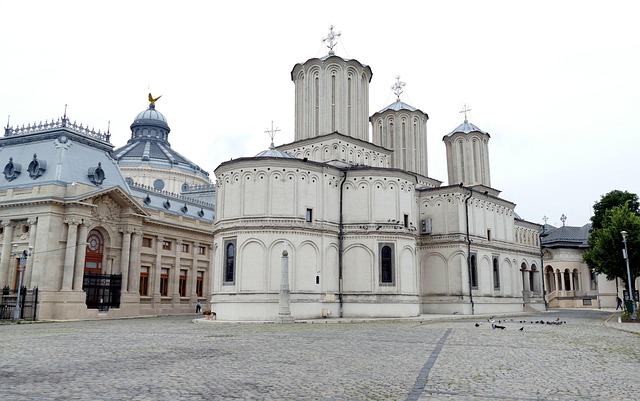
Patriarchal Cathedral (Dealul Mitropoliei)
Atop a hill rises the spiritual headquarters of the Romanian Orthodox Church, a complex where state ceremonies and liturgy intertwine. Built in 1658 under Constantin Serban Basarab , the cathedral blends Byzantine plan with Wallachian details. The interior frescoes narrate saints and struggles, restored repeatedly after earthquakes, especially the one in 1977 . Pilgrims climb the steps for annual celebrations of Saint Demetrius , patron of Bucharest, when processions circle the hill with relics and song. The patriarchal palace nearby, expanded in the 20th century , hosts synods and receptions, blending spiritual and administrative roles. Bells carry across the city, heard equally by believers and hurried passersby. The hill itself preserves a sense of enclave, as though time slows within its walls. Visitors often remark on the mix of grandeur and humility, a paradox that defines faith in a capital full of noise and change.
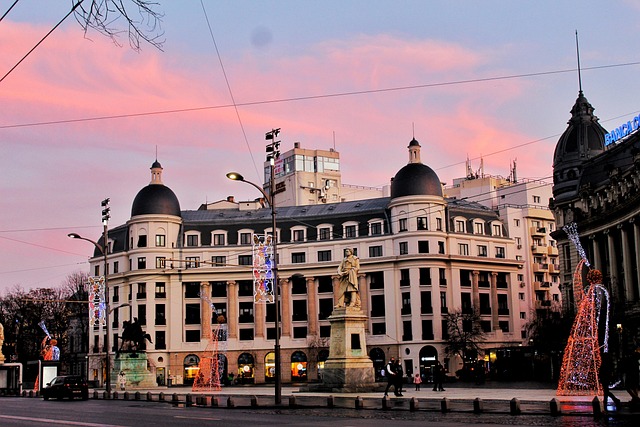
Revolution Square
Traffic hums where once crowds roared, a place forever tied to December 1989 and the fall of Niculae Ceausescu . Revolution Square witnessed history unfold as protesters filled the space before the Central Committee building, demanding freedom after decades of repression. Today, monuments like the Memorial of Rebirth attempt to capture that volatile mix of pain and triumph. Nearby stands the former Royal Palace , now the National Museum of Art, and the Atheneum glimmers only steps away, proving how culture and politics cohabited this axis. Guides point to the balcony where Ceausescu gave his last speech, interrupted by the wave that became a revolution. The square carries quiet now, its trees and fountains a buffer between daily errands and historic weight. To stand here is to sense both fragility and courage, the paradox of a society reshaping itself in real time. Every anniversary brings candles and songs, reminding Bucharest that memory lives in open air.
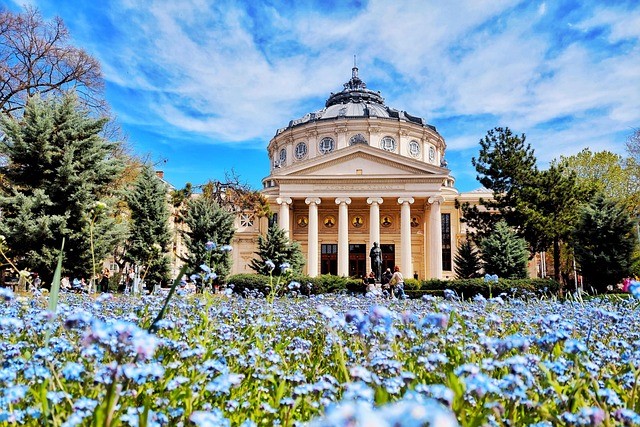
Romanian Athenaeum
A domed temple of music rises on Victory Avenue, its columns welcoming audiences as if into a civic cathedral. Completed in 1888 , the Athenaeum was financed through a public campaign whose slogan, “Give a penny for the Athenaeum,” still echoes in cultural lore. Architect Albert Galleron designed the building with a blend of neoclassical and romantic influences, while the interior houses a mural of 25 historical scenes narrating Romania’s past. Its acoustics are praised as some of the best in Europe, a reputation confirmed each year during the George Enescu Festival . Crystal chandeliers catch light in the great hall, where red velvet and gold leaf combine to make music visible as well as audible. Locals consider it a temple of national identity as much as a concert hall. Visitors often pause on the steps, where pigeons and violinists alike seem to rehearse for the evening’s performance.
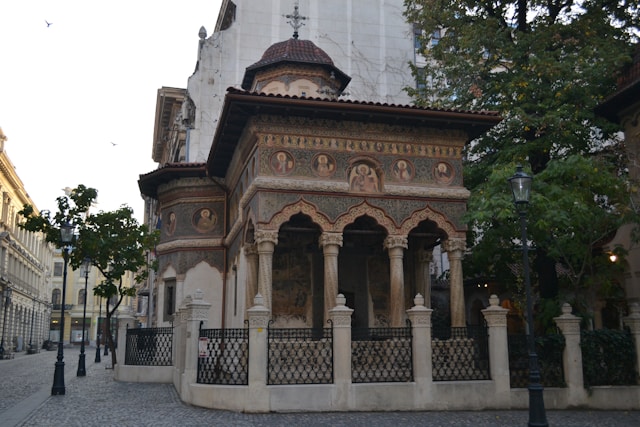
Stavropoleos Monastery
Tucked inside the Old Town, this small monastery commands attention through exquisite detail rather than size. Built in 1724 by Ioanikie Stratonikeas , a Greek abbot, it embodies the Brancovenesc style , a fusion of Byzantine, Ottoman, and Renaissance aesthetics unique to Romania. The facade brims with stone-carved floral motifs, while inside, frescoes glow with colors that seem to breathe even in candlelight. Though much of the complex was lost in the 19th century , the church itself and its cloistered courtyard remain intact, a sanctuary of silence in a noisy quarter. Its library holds thousands of rare volumes on Byzantine music and theology, making it a reference point for scholars worldwide. Monks still chant liturgy in a style preserved for centuries, proof that tradition can outlast political upheavals and earthquakes. Visitors often linger in the courtyard’s shade, where stone fragments whisper of vanished chapels. The monastery speaks softly, but with remarkable endurance.
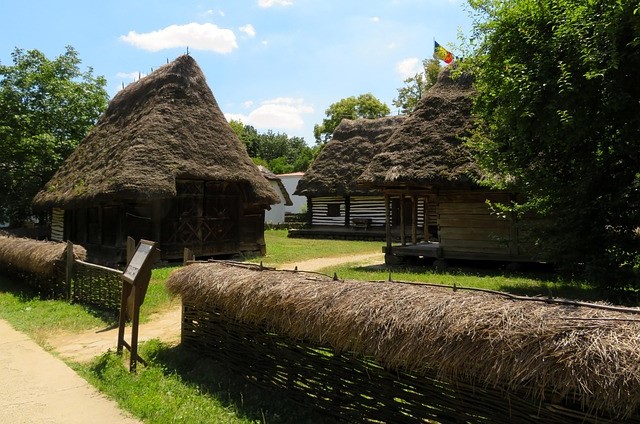
Village Museum (Muzeul Satului)
On the shore of Herastrau Lake unfolds a living anthology of rural Romania. Established in 1936 under the guidance of folklorist Dimitrie Gusti , the Village Museum assembles houses, windmills, and churches relocated from every region. Step into a Maramures wooden church or a thatched Oltenian homestead, and each tells stories of craft, ritual, and adaptation. More than 300 structures dot the grounds, making it one of Europe’s largest open-air museums. Exhibits explain how communities celebrated harvest, mourned losses, and survived winters, turning architecture into anthropology. Seasonal fairs add taste and sound—folk music, pottery, and cozonac scent travel across the lawns. During communist times, the museum itself narrowly escaped closure, yet public affection preserved it. Today, students sketch, couples stroll, and villagers who once lived in similar houses explain details with affection. The museum is less about nostalgia than about continuity, showing how rural roots nourish urban lives.