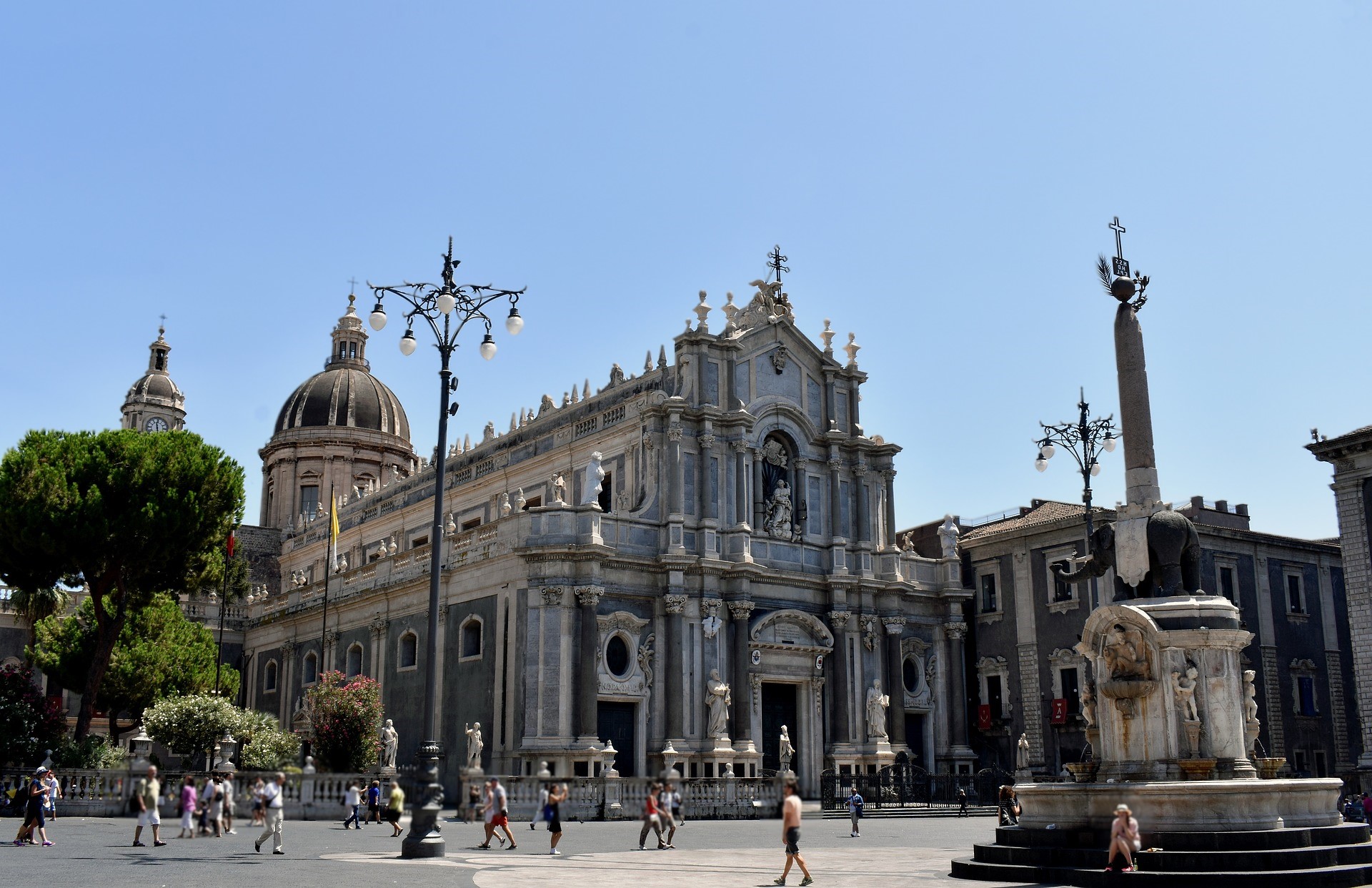

City view of Catania, Italy

Catania

Catania, located on the eastern coast of Sicily, is a vibrant city at the foot of Mount Etna, Europe's largest active volcano. Known for its black lava stone architecture, Catania's historic center is a UNESCO World Heritage Site. Piazza del Duomo, with its iconic Elephant Fountain and the stunning Catania Cathedral, is the heart of the city. Visitors can explore bustling markets like La Pescheria, sample delicious Sicilian cuisine, or embark on an adventure to Mount Etna. Catania's unique blend of natural wonders and cultural treasures makes it a dynamic destination.

Top attractions & things to do in Catania

If you’re searching for the best things to do in Catania, this guide brings together the top attractions and must-see places to visit in Catania. The top picks below highlight the most visited sights for first-time visitors, plus a few local favorites worth adding.

Castello Ursino in Catania, Italy

Castello Ursino

Castello Ursino is a medieval fortress in the heart of Catania, one of the city's most significant historical landmarks. Built in the 13th century by the Holy Roman Emperor Frederick II, the castle was originally designed to serve both as a royal residence and a military stronghold. Constructed with volcanic lava stone, the castle's architecture reflects the power and authority of its time. Throughout its history, Castello Ursino has undergone various modifications, but it has remained a symbol of Catania's enduring strength and resilience. The castle is not only an architectural marvel but also houses a museum that showcases the rich history of Catania and its surroundings. Inside, visitors can explore a collection of art, historical artifacts, and exhibitions that span the city's history, including medieval relics and more modern works. The castle survived the 1669 eruption of Mount Etna because lava flows split around it—visible in the uneven floor levels today. Its dungeon once held political prisoners, and their graffiti can still be seen on the walls.
Ads place
Ads place
Ads place
Ads place
Ads place
Catania Cathedral in Catania, Italy

Catania Cathedral

Catania Cathedral, also known as the Cathedral of Saint Agatha, is a magnificent example of Baroque architecture located in the heart of Piazza del Duomo. Originally built in the 11th century, the cathedral has undergone various reconstructions, most notably after the devastating earthquakes that have affected the region. This resilience has made the cathedral not only a spiritual but also a historical symbol of Catania. The exterior of the cathedral features an ornate façade, which is complemented by a grand staircase that leads up to the entrance. Inside, visitors are greeted by breathtaking frescoes, marble columns, and a striking altar dedicated to Saint Agatha, the city's patron saint. The cathedral houses the relics of Saint Agatha, and its crypt is a site of pilgrimage for many. The interior also features elaborate Baroque decorations, providing a captivating experience for art lovers and those interested in religious architecture. The cathedral's lava stone columns were salvaged from the Roman amphitheater after the 1693 earthquake. During festivals, the silver bust of Saint Agatha wears a crown containing 2,000 precious stones donated by devotees over centuries.
Ads place
Ads place
Ads place
Ads place
Ads place
Giardino Bellini in Catania, Italy

Giardino Bellini

Giardino Bellini, also known as the Bellini Gardens, is one of Catania's most beloved public spaces. Located in the city center, the garden offers a serene escape from the hustle and bustle of urban life. Established in the 19th century, it is one of the oldest and most important green spaces in the city, providing a peaceful retreat for both locals and visitors. The garden features beautifully manicured flower beds, fountains, and shady walkways lined with mature trees. Statues and sculptures are scattered throughout the garden, adding an artistic touch to the tranquil surroundings. In the warmer months, the garden hosts various cultural events, concerts, and outdoor activities, making it a lively spot for entertainment and relaxation. Its central location makes it a perfect place for a leisurely stroll, while the picturesque setting is ideal for reading a book or enjoying a quiet conversation. The garden is also home to a wide variety of flora, contributing to its vibrant and ever-changing landscape. The garden's central fountain contains stones from ancient Roman baths discovered during its construction. Vincenzo Bellini, the composer for whom it's named, allegedly composed parts of his operas while sitting under its oldest oak tree.
Ads place
Ads place
Ads place
Ads place
Ads place
Piazza del Duomo in Catania, Italy

Piazza del Duomo

Piazza del Duomo is the beating heart of Messina, Sicily, dominated by its stunning Duomo (Cathedral of Santa Maria Assunta) and the world's largest astronomical clock tower. But beyond its beauty lies a treasure trove of intriguing, lesser-known stories. Did you know that Messina's original Duomo, founded in the 12th century by Norman King Roger II, was almost entirely rebuilt after the devastating 1908 earthquake? The reconstruction meticulously recreated its Norman-Arab facade, but if you look closely, some original medieval elements remain, like the 14th-century Gothic portal. The Bell Tower's Astronomical Clock is a marvel—unveiled in 1933, it's not just a timekeeper but a mechanical theater! At noon, golden lion statues roar, a rooster crows (symbolizing St. Peter's denial of Christ), and biblical figures parade in a mesmerizing show. Few realize the clock's mechanisms were designed by Swiss firm Ungerer, the same creators of Strasbourg's famous clock. Beneath the square, hidden cisterns and tunnels from the Middle Ages once supplied water during sieges.
Ads place
Ads place
Ads place
Ads place
Ads place
Teatro Romano in Catania, Italy

Teatro Romano

The Teatro Romano in Catania is a remarkable ancient Roman theater that dates back to the 2nd century AD. This historic site offers visitors a fascinating glimpse into the city's Roman past and its cultural heritage. Once able to hold up to 15,000 spectators, the theater is an impressive architectural feat, with its tiered stone seating still visible today. The theater was primarily used for performances such as plays and gladiatorial contests, and its remains reveal much about the entertainment culture of ancient Catania. What makes the Teatro Romano particularly interesting is its location in the city center, with parts of the theater integrated into the surrounding urban environment. The ruins are incredibly well-preserved, and visitors can explore its grand stages, detailed stonework, and well-maintained seating areas. The site also provides an opportunity to admire the sophisticated engineering techniques used by the Romans, particularly in the design of the auditorium and stage. The theater's acoustics were so advanced that a whisper from the stage could be heard in the top rows. Beneath the visible structure lies a network of underground passages used by performers and gladiators, some still accessible today.
Ads place
Ads place
Ads place
Ads place
Ads place