
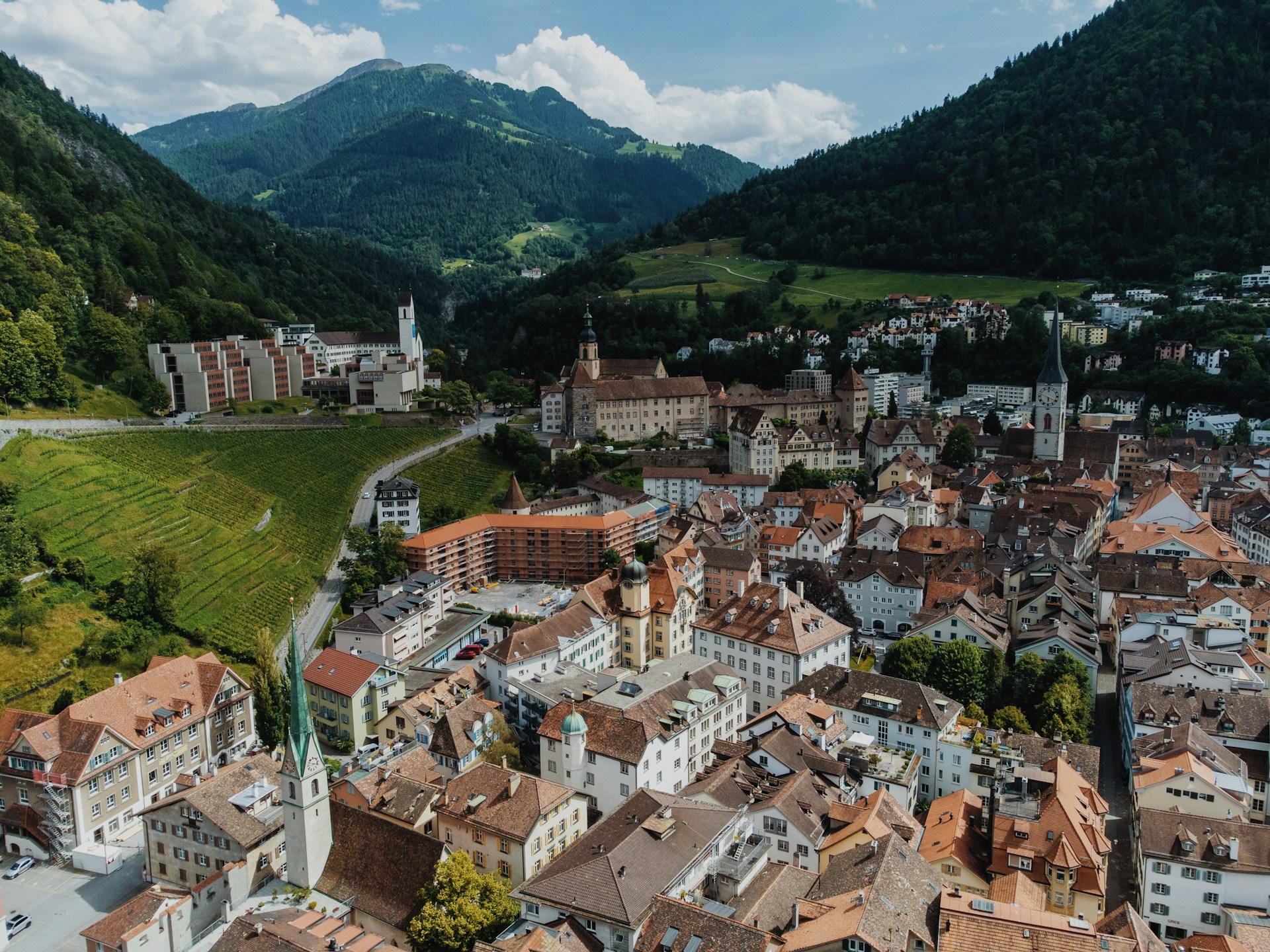
City view of Chur, Switzerland

Chur

Chur claims to be one of the oldest towns in Switzerland, with traces of settlement going back thousands of years and Roman references in early texts. Its old town curls around narrow lanes, painted facades, and a cathedral with roots in the twelfth century. Rail lines leaving the station branch toward St Moritz, Arosa, and Disentis, turning the city into a gateway for Graubunden valleys. Restaurants serve barley soup, capuns wrapped in chard leaves, and famous nut cakes from surrounding villages. In museums and cafes you may hear conversations in Romansh, German, and Italian on the same afternoon. A short funicular and lift combination reaches Brambruesch, where meadows and bike trails begin almost at the edge of town. Locals like to say that the departure boards here read more like invitations to choose adventures than simple schedules.

Top attractions & things to do in Chur

If you’re searching for the best things to do in Chur, this guide brings together the top attractions and must-see places to visit in Chur. The top picks below highlight the most visited sights for first-time visitors, plus a few local favorites worth adding.

Brambruesch Cable Car and Panorama Trails in Chur, Switzerland

Brambruesch Cable Car and Panorama Trails

From the edge of town, the Brambruesch cable car lifts you smoothly from urban streets into a calmer world of forest, meadows and rounded hills. At the upper station, a small cluster of mountain inns, wooden chalets and signposted trailheads marks the start of easy walks suitable for families as well as more ambitious hikers. Paths lead through mixed woodland and across open pastures where cows graze in summer, with frequent clearings offering views back down to Chur and across to higher Graubuenden peaks. Benches and simple grill areas encourage unhurried picnics, while in winter the area transforms into a modest ski and sledging zone that still feels intimate compared to larger resorts. Because the ascent is short, Brambruesch works well as a half day break from travel or city errands, giving you a quick immersion in Alpine air and landscape. Returning by cable car near sunset, you watch the valley lights switch on one by one, reconnecting forest quiet with the evening rhythm below.
Ads place
Ads place
Ads place
Ads place
Ads place
Bundner Kunstmuseum and Villa Planta in Chur, Switzerland

Bundner Kunstmuseum and Villa Planta

Bundner Kunstmuseum, housed partly in the historic Villa Planta and partly in a contemporary extension, offers a focused look at art from the canton of Graubuenden and beyond. The villa’s ornate staircases, high stuccoed ceilings and carefully restored parquet floors create an intimate backdrop for paintings and sculptures, while the modern wing provides bright, flexible spaces for larger works and temporary exhibitions. Collections highlight regional artists who engaged deeply with Alpine landscapes and village life, as well as more experimental movements that emerged from this mountain context. Large windows frame views of trees and streets outside, reminding you that the museum sits firmly in the centre of Chur. Clear wall texts and occasional multimedia points make the displays approachable without overwhelming you with theory. A small cafe and garden space invite you to sit for a while and let what you have seen settle, before you step back into the neighbouring park or old town streets just a few minutes’ walk away.
Ads place
Ads place
Ads place
Ads place
Ads place
Chur Cathedral and Episcopal Quarter in Chur, Switzerland

Chur Cathedral and Episcopal Quarter

High above the lower streets, Chur Cathedral and the surrounding episcopal quarter occupy a terrace that feels like a separate, older world. You reach it via stepped alleys and covered walkways that climb between houses, suddenly opening onto a quiet precinct of fortified walls, bishop’s buildings and the church itself. Inside the cathedral, a blend of Romanesque architecture, later Gothic details and rich painted altarpieces rewards slow, careful looking. The cool interior, faint smell of stone and wood and filtered light from tall windows create a calm that contrasts with the busier town below. Small cloister like corners and garden patches around the complex offer additional places to pause. From the edge of the terrace, you gain sweeping views over Chur’s rooftops and toward the surrounding mountains, especially atmospheric in the late afternoon. Information panels and guided visits help link the buildings to the region’s religious and political history, but even a casual visit leaves a strong impression of continuity on this raised spur above the valley.
Ads place
Ads place
Ads place
Ads place
Ads place
Chur Old Town and Arcas Square in Chur, Switzerland

Chur Old Town and Arcas Square

Chur Old Town and Arcas Square form a compact maze of alleys, painted facades and small squares that reveal the city’s long history as you wander. Around the gently sloping Arcas, you find colour washed townhouses, quiet stone fountains and arched passageways that frame narrow glimpses of surrounding hills. Cafes push tables out onto the cobbles, turning the square into a relaxed living room where you can sit with coffee and watch everyday life unfold. A short walk leads you past medieval tower houses, discreet courtyards and tiny shops selling local produce. Traces of Roman foundations and later fortifications appear in walls and layouts if you pay attention to small plaques. Early evening is especially pleasant, when warm light softens the plaster and locals drift between bars, bakeries and grocery stores. Because the historic core is largely car free, it feels safe and unhurried, making it easy to stitch together your own route between squares, churches and view points without constantly checking a map.
Ads place
Ads place
Ads place
Ads place
Ads place
Rhaetian Railway Start and Station Quarter in Chur, Switzerland

Rhaetian Railway Start and Station Quarter

Chur’s station quarter is more than a transport hub; it is the starting point of classic journeys into the Alps on the Rhaetian Railway. On the platforms, distinctive red narrow gauge trains stand ready beside standard gauge services, their panoramic carriages and clean lines hinting at routes toward Arosa, the Albula line and the Engadin. The steady rhythm of departures and arrivals, announcements in multiple languages and the sight of railway staff preparing trains create a gentle sense of departure even if you are not travelling that day. Just outside, a forecourt with tram stops, buses and bike stands links the station to the rest of Chur, while information boards and ticket offices make planning excursions straightforward. A short walk takes you back into the old town, but it is worth pausing here to study maps, watch trains pull out toward the mountains and feel how strongly the city’s identity is tied to its role as a gateway for rail based Alpine exploration.
Ads place
Ads place
Ads place
Ads place
Ads place