
City view of Cluj-Napoca, Romania

Cluj-Napoca

Cluj-Napoca studies hard and plays harder, a university city where lecture halls empty into espresso bars and tech hubs. Gothic St. Michael's Church anchors the main square while baroque palaces frame festivals that seem to multiply with the seasons. Menus move from Transylvanian stews to meticulous nouvelle plates, and everyone has an opinion about which place grills the best kurtos. Hike the Cetatuia hill for a panorama that includes art spaces tucked into former factories and botanical gardens designed for unhurried afternoons. The city's layered past shows up in Hungarian bookshops, Romanian theaters, and synagogues restored with care. Nightlife hops from jazz basements to electronica lofts, yet mornings still begin with strong coffee and covrigi on the go. An offbeat detail: a modern stadium opens its shell for outdoor concerts while a neighboring cemetery doubles as a cherished walking park, proof that Cluj edits space with wit and tenderness.

Top attractions & things to do in Cluj-Napoca

If you’re searching for the best things to do in Cluj-Napoca, this guide brings together the top attractions and must-see places to visit in Cluj-Napoca. The top picks below highlight the most visited sights for first-time visitors, plus a few local favorites worth adding.

Alexandru Borza Botanical Garden in Cluj-Napoca, Romania

Alexandru Borza Botanical Garden

Paths slope through a quilt of microclimates and the city fades into birdsong and plant labels that read like passports. Founded in 1920 under botanist Alexandru Borza, the garden spreads over roughly 14 hectares and treats science as an act of hospitality. A wooden bridge leads to a meticulous Japanese garden where maples write red notes into autumn, while the Roman garden sets columns among Mediterranean herbs that smell like history warming in the sun. Greenhouses exhale tropical air and glass beads with condensation as if applauding photosynthesis. Students sketch palms and cacti then retreat to benches to compare Latin names with sandwiches. The herbarium preserves a paper city of leaves, a quiet archive that outlasts seasons. In spring, magnolias stage a short brilliant argument for skipping errands. The lesson is gentle and persuasive. If you learn to look closely at petals here, you will look more kindly at streets outside the gate too.
Ads place
Ads place
Ads place
Ads place
Ads place
Banffy Palace Art Museum in Cluj-Napoca, Romania

Banffy Palace Art Museum

On one side of Piata Unirii a palace performs elegance without effort and then invites you in to argue about beauty. Commissioned in the 18th century by Miklos Banffy, the residence wears a confident Baroque facade whose balconies overlook a square that never stops editing itself. Halls unfold with portraits and landscapes that trace the city’s taste from Rococo flirtation to Romanticism and beyond. Marble staircases promise ceremony yet deliver calm and good light for looking slowly. Curators lean into context so Transylvanian painters converse with Viennese neighbors rather than pose in isolation. In the 1790s the palace hosted balls where fashion arrived on the same coach as news, a habit the museum continues with temporary shows that feel timely without shouting. Step to a window and the square becomes part of the collection, carriages traded for trams, lace traded for backpacks. You leave rehearsing a favorite canvas and noticing the city now looks painted too.
Ads place
Ads place
Ads place
Ads place
Ads place
Cetatuia Hill in Cluj-Napoca, Romania

Cetatuia Hill

Climb the switchbacks and Cluj arranges itself like a map that finally admits scale. The hill once held an 18th century Habsburg garrison built to a compact Vauban idea of order, and fragments of earthworks still guide the foot without fanfare. Benches face the river Somesul Mic and the stadium’s silver shell, while chimneys trace neighborhoods that make more sense from above. Couples time sunsets and runners count laps by lamp posts turning on one by one. During 1848 the fortress hosted troops and the city listened to drums with mixed feelings, a reminder that panoramas also carry politics. Today a café keeps warm cups ready for cold evenings and summer brings guitar cases that open like invitations. The view edits weather into story and helps you understand why planners kept corridors of green between rooftops. Walk down slowly and every shortcut becomes a promise to return with friends.
Ads place
Ads place
Ads place
Ads place
Ads place
St. Michael's Church in Cluj-Napoca, Romania

St. Michael's Church

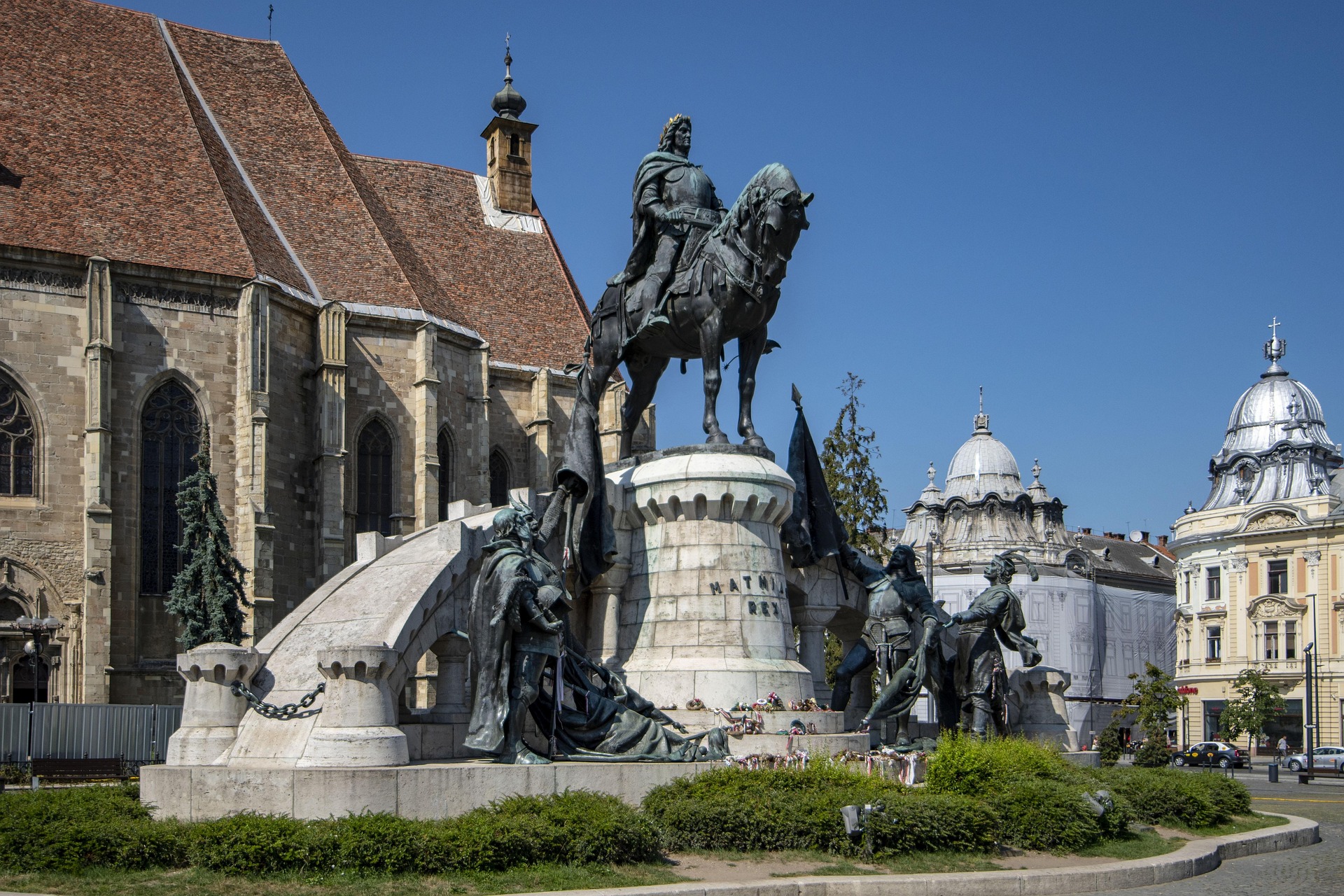
Step into the main square and the eye rises naturally to a lacework of stone that seems to breathe with the day. Built across the 14th century by a prosperous town of merchants and guilds, the church stands as a northern textbook of Gothic ambition translated into local sandstone. Chronicles recall royal visits from King Sigismund, while a bronze nearby salutes Matthias Corvinus whose story begins in these streets. Inside, tracery softens light into ribbons and the vaults feel both weightless and resolute. Organ recitals turn the nave into an instrument that plays the square outside by echo. Guides always mention the tower reaching about 80 meters, but the better detail is how masons left tiny marks on blocks like signatures that survived reform and fire. During the Reformation, sermons changed languages yet the building kept its steady grammar. Step back out and the marketplace resumes around you as if the clock had waited politely at the door.
Ads place
Ads place
Ads place
Ads place
Ads place
Tailors' Bastion and City Walls in Cluj-Napoca, Romania

Tailors' Bastion and City Walls

Where boulevard traffic pauses the old defenses step forward and explain the geometry that once kept danger at a respectful distance. Raised and reinforced through the 16th century, the bastion belonged to the tailors guild, a reminder that artisans here defended rights with needle and pike. Guides trace lines of fire and show loopholes that read like punctuation carved into brick. Exhibits recount repairs after the 1700s and the quiet satisfaction of a community that maintained walls as faithfully as contracts. The surviving curtain points toward vanished gates and to towers that other guilds once manned on market days. A careful restoration in the modern era reopened casemates for concerts and lectures so the place still gathers people to listen. Outside, cyclists ring bells and kids test echoes with laughter. Stand under the battered cornice and the city splits briefly into two tempos, present hurry on one side and watchful patience on the other.
Ads place
Ads place
Ads place
Ads place
Ads place