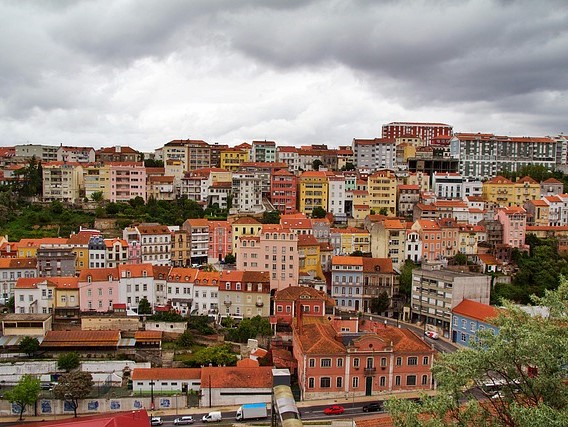
City view of Coimbra, Portugal

Coimbra

Coimbra studies by day and sings by night, a hillside campus layered with centuries of scholarship. The baroque library Biblioteca Joanina shelters tomes from the 18th century behind gilded wood and an unlikely colony of bats that eat book gnats after closing. Students in black capes cross courtyards where fado de Coimbra carries softer, more academic notes than its Lisbon cousin. Down by the river, rowing crews train with monastic focus while cafes weigh pastry against exams. Roman ruins share corners with medieval towers, and gardens lend shade to arguments about philosophy and football. Lamp light on limestone turns streets into quiet corridors, inviting detours that last longer than planned. A delightful footnote: the university once posted guards to protect the library's wood from hungry insects, but the bats do the job for free and are rewarded with tiny water bowls at dawn.

Top attractions & things to do in Coimbra

If you’re searching for the best things to do in Coimbra, this guide brings together the top attractions and must-see places to visit in Coimbra. The top picks below highlight the most visited sights for first-time visitors, plus a few local favorites worth adding.

Biblioteca Joanina in Coimbra, Portugal

Biblioteca Joanina

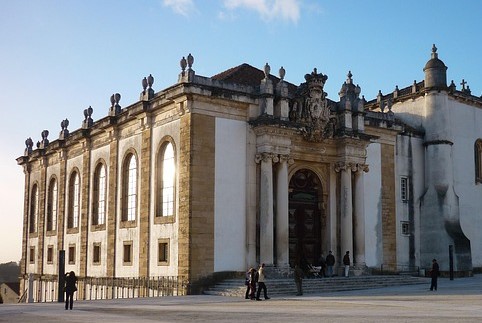
Inside the University's hilltop courtyard, a baroque showpiece guards knowledge with theatrical flair. Commissioned by King Joao V and begun in 1717, the Biblioteca Joanina drapes carved wood in gold leaf while painted ceilings pretend to open into sky. Shelves heave with first editions and travel journals, protected by two meter thick walls that steady temperature without modern machines. At night, a discreet colony of bats clears insects before the librarians arrive at dawn, a partnership quietly maintained for centuries. Look closely and you will see royal emblems, Chinese lacquer, and Portuguese atlases that mapped ambitions from Goa to Brazil. The building anchors the UNESCO listing granted to the University in 2013, recognition of a campus where learning shaped a nation. Step onto the balcony and Coimbra drops away toward the Mondego, reminding you that books, not people, are the rightful citizens of this terrace.
Ads place
Ads place
Ads place
Ads place
Ads place
Jardim Botanico da Universidade de Coimbra in Coimbra, Portugal

Jardim Botanico da Universidade de Coimbra

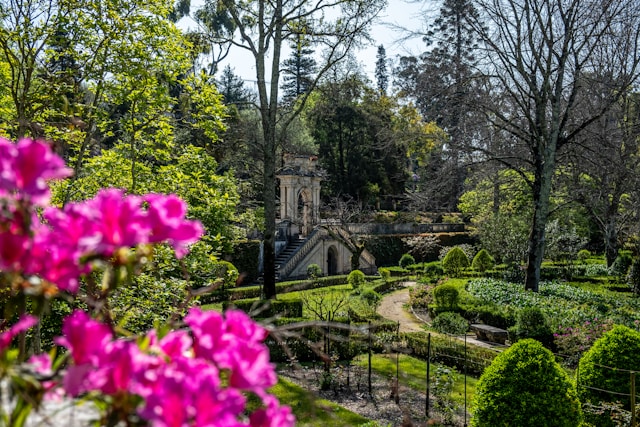
A steep garden steps down from the university like a green amphitheater, mixing scholarship with shade. Founded in 1772 under the reforms of the Marques de Pombal, the Botanical Garden tested which species might thrive in Portugal's varied climates. Terraces hold camellias, bamboos, and medicinal beds laid out for clear thinking, while a historic estufa shelters tropical experiments. Students sketch ferns beside researchers labeling seeds for the herbarium, a backstage where science keeps meticulous diaries. The site forms part of the university's UNESCO recognition, proof that knowledge can be landscaped as carefully as mathematics. In spring, frogs audition from the ponds; in summer, alleys become libraries of leaf and light. By the time you reach the lower gate, the city feels cooler, and you have learned that patience is a plant with many varieties. Some mornings a botanist leads free walks for curious neighbors.
Ads place
Ads place
Ads place
Ads place
Ads place
Jardim da Manga in Coimbra, Portugal

Jardim da Manga

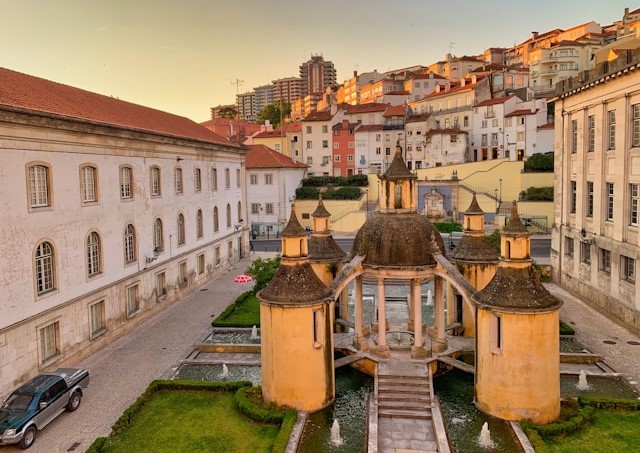
At the edge of the old Santa Cruz precinct, an open-air cloister disguises theology as hydraulics: a central tank feeds slender channels to four small oratories, and water becomes the quiet curator. Raised during the reign of Joao III around 1528, the ensemble is one of Coimbra's earliest gestures toward the Renaissance, often linked to the French master Joao de Rouao. Built for the canons of Santa Cruz as a place for meditation and ritual ablutions, it later earned protection as a National Monument in 1934. Locals call it the sleeve garden because the octagonal pavilion resembles a folded cuff, and at certain hours the basins mirror clouds like marginal notes. Sit on the low steps and the surrounding city hums at a respectful distance; vendors from the nearby market trade greetings while students rehearse chords from last night's serenade. It is a pocket space with an outsized echo, reminding visitors that Coimbra has always engineered its devotion through light and water.
Ads place
Ads place
Ads place
Ads place
Ads place
Mosteiro de Santa Clara a Velha in Coimbra, Portugal

Mosteiro de Santa Clara a Velha

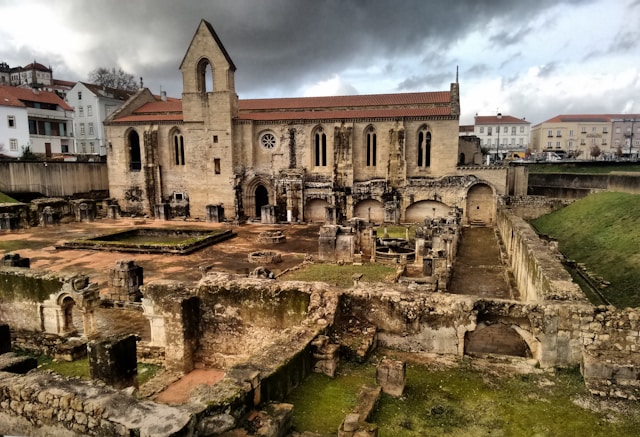
Across the river, the ruined monastery of Santa Clara a Velha lies slightly below the modern street level, as if time forgot to lift it. Founded in the early 14th century under Queen Isabel, the convent fought the Mondego for centuries as floods crept into chapels and cloisters. Excavations and a careful intervention reopened the site in 2009, revealing a delicate Gothic plan that had slept in mud. Walkways hover above the floor so you can read foundations like a book, tracing drainage experiments and improvised defenses that never quite beat the river. The visitor center sets chalices beside mud cores, proving that devotion and archaeology can share the same table. Stand in the apse at late afternoon and the light feels filtered through water, a lingering memory of the nuns who prayed here while listening for the next storm. The ruin does not ask for pity; it offers a compact lesson in persistence, humility, and building high.
Ads place
Ads place
Ads place
Ads place
Ads place
Mosteiro de Santa Cruz in Coimbra, Portugal

Mosteiro de Santa Cruz

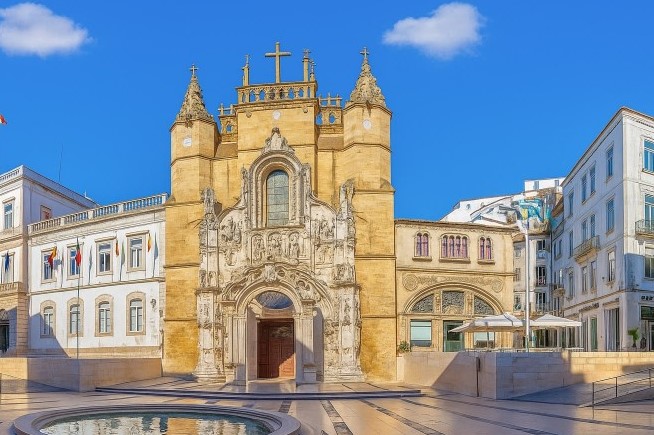
In the lower town, Santa Cruz gathers theology, politics, and stone under the same vaults. Founded in 1131 for the Augustinian canons, the monastery educated princes and advised kings long before universities issued diplomas. Here lie Afonso I and Sancho I, the first two monarchs, their tombs recut in a lavish Manueline idiom that turns rope and coral into marble. The choir stalls wear centuries of polish; the cloister carries light just sternly enough to focus wandering minds. A fountain murmurs beside azulejos that tell moral stories without nagging, and the sacristy treats wood as a precious metal. Restoration notes reveal layers of repainting and repair that mark each century's taste without erasing the previous one. Step outside and the market stirs nearby, proof that faith and appetite are neighbors who borrow salt from one another, and that civic life fits comfortably at the monastery's doorstep.
Ads place
Ads place
Ads place
Ads place
Ads place
Paco das Escolas in Coimbra, Portugal

Paco das Escolas

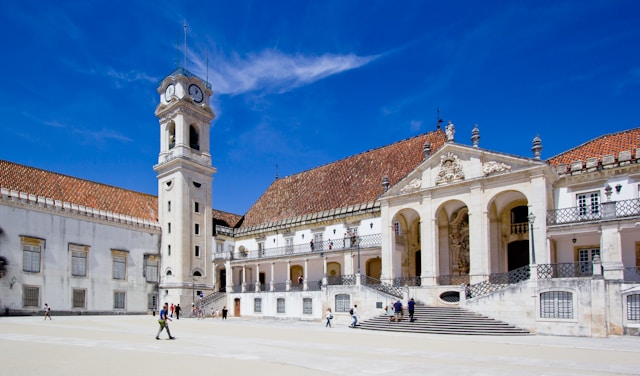
Above the river, the University's central square, Paco das Escolas, gathers centuries into one stage. Students cross beneath the Porta Ferrea, then glance up at the slender tower whose bell, the Cabra, has kept academic time since the 18th century. Founded in 1290 and settled here for good in 1537, the university shaped Coimbra's rhythm so completely that shop hours still bow to exam timetables. In the former royal palace, ceremonial halls display Manueline details and portraits that march like a roll call of rectors. From the balconies you see roofs tumble toward the Mondego, a reminder that scholarship grew from trade, river mud, and stubborn optimism. Graduation days bring black capes, guitars, and serenades, while visitors slip into classrooms where ink stained desks survived reforms, revolts, and the occasional love note carved too deeply. It is a campus that teaches with stone as much as with books, inviting you to measure ambition in footsteps across sunstruck tiles.
Ads place
Ads place
Ads place
Ads place
Ads place
Penedo da Saudade in Coimbra, Portugal

Penedo da Saudade

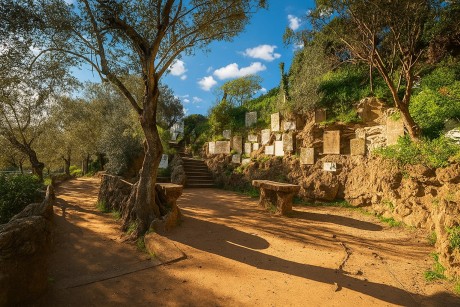
On a rocky terrace above the neighborhoods, granite slabs carry verses like pinned leaves. At Penedo da Saudade, generations of students carved names and left plaques, so the viewpoint reads like an anthology of poems exposed to weather. Couples arrive after concerts of fado de Coimbra, and daytime visitors find serenades still echoing in the pine shade. The Mondego swings below in a wide curve, a reminder that cities, too, have currents and back eddies. Graduates tie ribbons to branches, wish one another luck, and postpone goodbyes until the light thins to amber. There is no kiosk and no hurry, only benches and air, and the gentle insistence that study makes sense when shared. On misty mornings, the hill seems to float, and the city reassembles itself in fragments when the sun returns. At night, the viewpoint doubles as a star chart for beginners.
Ads place
Ads place
Ads place
Ads place
Ads place
Portugal dos Pequenitos in Coimbra, Portugal

Portugal dos Pequenitos

Across the bridge, a child scaled village invites adults to crouch and rediscover proportion. Created in 1937 by patron Bissaya Barreto with architect Cassiano Branco, Portugal dos Pequenitos stitches miniature monuments and regional houses into a walkable atlas. Kids dart through tiny doorways while parents compare stonework to the originals seen on longer trips. Pavilions reflect a historical worldview now discussed with nuance, and new labels frame the collection as both play and lesson. Carved ships, tiled facades, and pint sized plazas compress geography into delight, yet the craftsmanship stays serious about detail. In summer, workshops turn folklore into paint and paper; in winter, the place feels like a snowless nativity where culture plays every role. The surprise is how the park teaches empathy for scale, reminding visitors that architecture can be educational, theatrical, and gently provocative all at once.
Ads place
Ads place
Ads place
Ads place
Ads place
Quinta das Lagrimas in Coimbra, Portugal

Quinta das Lagrimas

On the south bank, gardens and a palace carry a story that Portugal refuses to forget. Here the prince Pedro loved Ines de Castro, a liaison ended in 1355 with a murder that turned grief into legend. Paths lead to the spring called Fonte das Lagrimas, where stone and water conspire to keep the tale near the surface. Today the estate hosts a hotel and a refined restaurant, but the grounds remain open enough for quiet speculation under ancient trees. Botanists catalog rare species while school groups compare chronicles to the stubborn facts of geology and hydrology. If you listen, the railway on the far side of the Mondego adds a percussive counterpoint that keeps romance from tipping into sugar. The lesson, folded into shade and scent, is that memory can be landscaped: part botanical collection, part theater, entirely human.
Ads place
Ads place
Ads place
Ads place
Ads place
Se Velha de Coimbra in Coimbra, Portugal

Se Velha de Coimbra

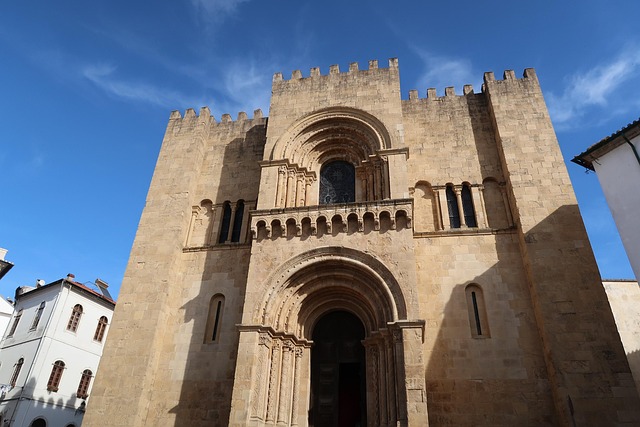
The Old Cathedral sits like a citadel, its crenellated walls proving that faith once doubled as defense. Consecrated in the 12th century, the Se Velha is a rare survivor of Romanesque gravity in Portugal, its nave marching forward with the calm of stone. A later cloister from the 13th century opens a quiet garden where capitals sprout leaves and lions, and footsteps turn thoughtful. Inside, a gilded Baroque retable adds warm theater without drowning the older geometry. On spring nights the student Serenata Monumental unfurls on the steps, black capes swaying as guitars braid voices into prayers and protests at once. Look for the carved portal whose archivolts ripple like waves, and for chapels where merchants and magistrates bought a little eternity in limestone. Outside again, the facade meets the sun squarely, and you understand why this building became the city's moral north even as empires rose and fell along the Mondego.
Ads place
Ads place
Ads place
Ads place
Ads place