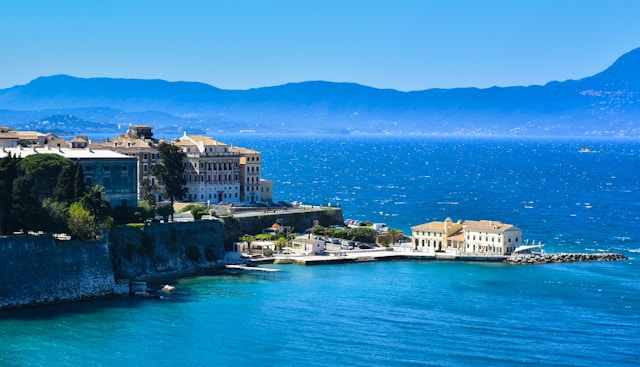
City view of Corfu, Greece

Corfu

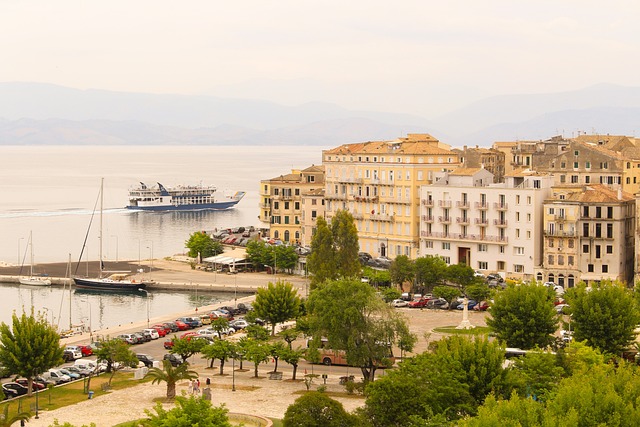
Corfu, the emerald of the Ionian, reflects Venetian, French and British influences in its pastel-painted Old Town—UNESCO-listed for its fortified bastions and elegant Liston promenade. The Old Fortress, rebuilt by the Venetians in the 16th century, commands panoramic views over the harbor’s sapphire waters. Spianada Square—Europe’s largest plaza—is lined with plane trees and neoclassical colonnades, hosting open-air concerts beneath café terraces. Just outside town, the 19th-century Achilleion Palace—commissioned by Empress Elisabeth of Austria—boasts statues of Achilles and manicured gardens overlooking the Albanian coast. Inland, olive groves and cypress-shaded monasteries dot rolling hills, while the Byzantine chapel at Paleokastritsa clings to cliffs above hidden bays. Local artisans press kumquats into liqueur and bakers handcraft mandolato nougat. Each Holy Week, candlelit processions weave through narrow streets to the sound of choral hymns. With its blend of maritime elegance, lush landscapes and vibrant traditions, Corfu captivates visitors from dawn till moonlit serenades.

Top attractions & things to do in Corfu

If you’re searching for the best things to do in Corfu, this guide brings together the top attractions and must-see places to visit in Corfu. The top picks below highlight the most visited sights for first-time visitors, plus a few local favorites worth adding.

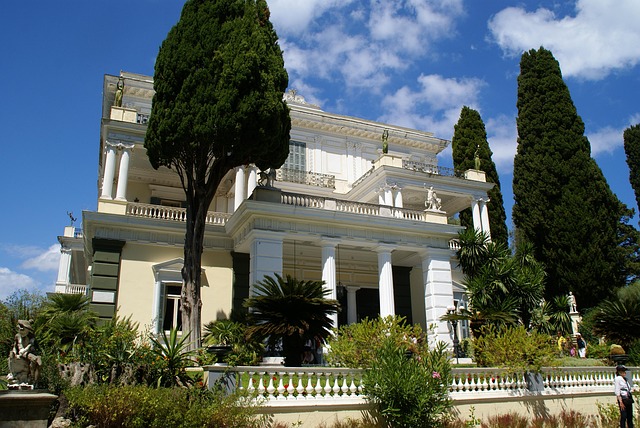
Achilleion Palace in Corfu, Greece

Achilleion Palace

Achilleion Palace, commissioned by Empress Elisabeth of Austria—“Sisi”—in 1890, perches on a hill overlooking the Ionian Sea. Designed by Italian architect Raffaele Caritto, its neoclassical façade frames gardens adorned with statues of Achilles, telling the hero’s myth through marble and bronze. Inside, opulent salons display frescoed ceilings by Franz Matsch, while the Throne Room’s portrait of “Sisi” captures her tragic elegance. The palace’s historic “Hall of the Emperor” once hosted diplomatic receptions for Kaiser Wilhelm II, whose adjacent summer villa remains off-limits to tourists. In 1921, the Habsburg heir turned Achilleion into a hospital for wounded soldiers, leaving behind forged iron beds and medical records preserved in a small on-site museum. Terrace views stretch to Albania’s coastline and Mount Pantokrator, offering photographers sweeping panoramas at sunrise. Achilleion Palace melds imperial romance, theatrical art and tragic biography into one of Corfu’s most evocative landmarks.
Ads place
Ads place
Ads place
Ads place
Ads place
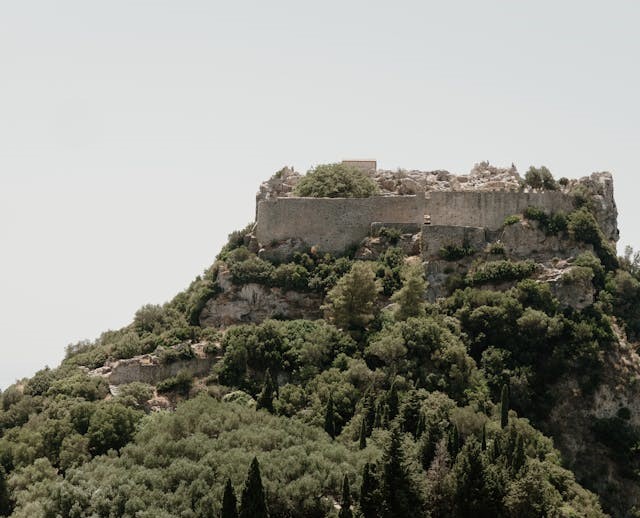
Angelokastro Castle in Corfu, Greece

Angelokastro Castle

Angelokastro, meaning “Angel Fortress,” crowns a rocky promontory 300 m above Corfu’s northwestern coast. Built by Byzantine governors in the 13th century and later reinforced by Venetians in 1401, its triangular walls enclose a cistern, chapel and watchtower. According to legend, the Archangel Michael appeared to guide the castle’s founders, giving the fortress its name. Excavations in 1978 uncovered early Christian floor mosaics beneath the battlements, indicating a sacred precursor to the military structure. From its ramparts, sweeping views encompass the Ionian Sea, Ereikoussa Island and the rugged Corfiot countryside. Each spring, bougainvillea blooms drape the ruined walls in vibrant magenta. Accessible via a steep 2-hour hike through olive groves and stone terraces, Angelokastro rewards adventurers with both historical grandeur and breathtaking panoramas. It stands as Corfu’s most dramatic example of tension between faith and fortitude.
Ads place
Ads place
Ads place
Ads place
Ads place
Corfu Museum of Asian Art in Corfu, Greece

Corfu Museum of Asian Art

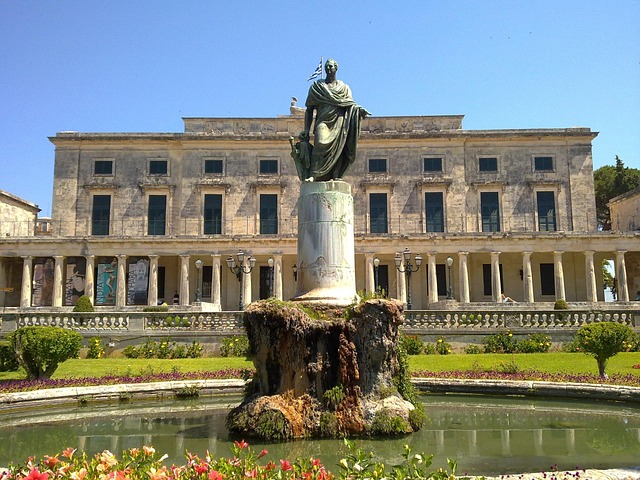
Housed in the 18th-century Palace of St. Michael and St. George—built by the British in 1819—the Corfu Museum of Asian Art is the only institution of its kind in Greece. Founded in 1928 by art collector Barbey d’Aurevilly, its galleries display over 10,000 objects from China, Japan, India and Southeast Asia, including rare Ming dynasty porcelain (16th century), Edo-period woodblock prints and intricately carved ivory tusks. The Venetian-wing features Cretan School icons that subtly influenced Japanese lacquerware in the 17th century. A recent 2018 renovation uncovered hidden frescoes depicting Corfu’s Ottoman siege in 1716. The palace’s grand marble staircase and domed ballroom serve as rotating exhibition spaces for contemporary Asian art. On the rooftop terrace, oriental gardens bloom beside Ionian Sea vistas. The Corfu Museum of Asian Art bridges two hemispheres of artistic heritage within a neoclassical landmark.
Ads place
Ads place
Ads place
Ads place
Ads place
Corfu Old Town & Liston in Corfu, Greece

Corfu Old Town & Liston

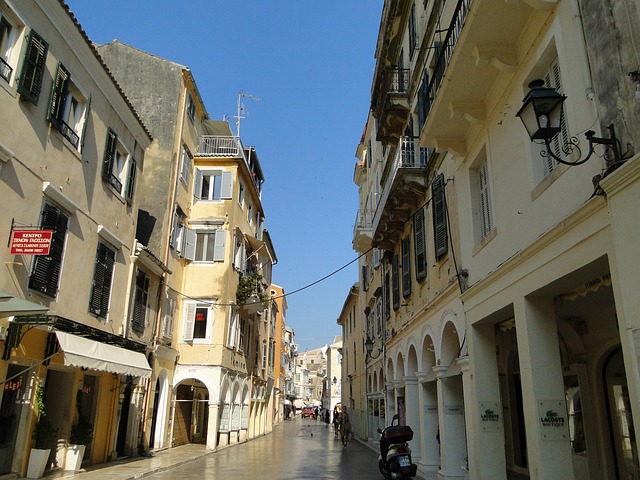
Corfu Old Town, a UNESCO World Heritage Site since 2007, weaves Venetian arcades, cobblestone alleys and Ottoman-era churches into a timeless urban tapestry. At its heart lies the Liston promenade—modeled on Paris’s Rue de Rivoli and built in 1814 by the British—where cafés spill beneath plane trees onto gleaming flagstones. Hidden just off the main thoroughfare, the Church of St. Spyridon (17th century) shelters the saint’s silver-clad relics, while the nearby Venetian Arsenal recalls Corfu’s maritime defense. Look for the rare “Provveditore” plaques on palazzo façades—remnants of the 15th-century Venetian governor’s rule—and the intricate friezes above the town hall, crafted by local stonemasons in 1623. Each August, the historic Esplanade transforms for the Corfu International Festival, filling baroque squares with chamber music and opera beneath lantern-lit porticoes. Corfu Old Town & Liston blend Mediterranean flair, layered history and living traditions in one wander-worthy enclave.
Ads place
Ads place
Ads place
Ads place
Ads place
Mon Repos Palace in Corfu, Greece

Mon Repos Palace

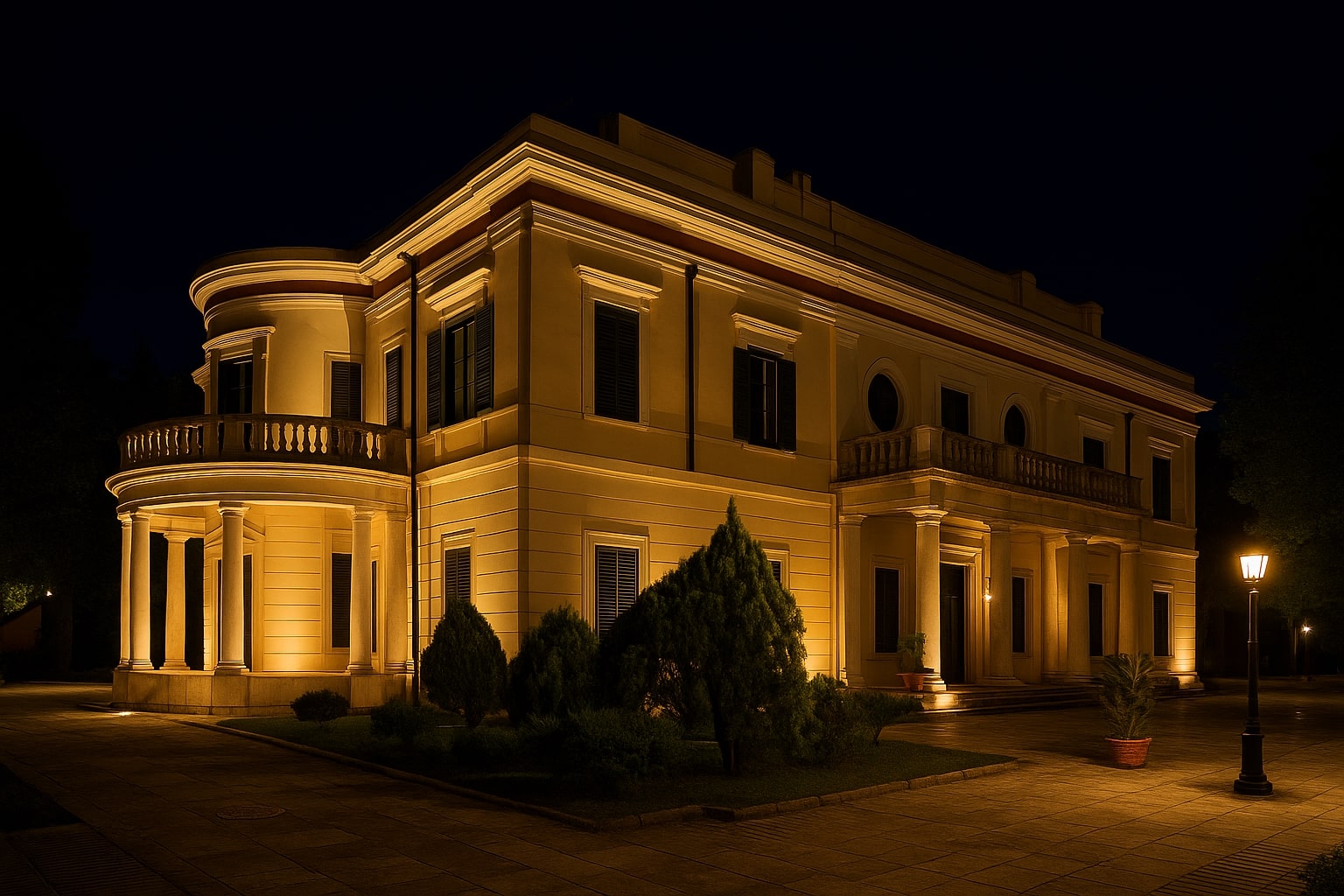
Mon Repos Palace, built in 1831 as the summer residence of British Lord High Commissioner Sir Frederick Adam, sits amid manicured gardens and shaded groves overlooking the Garitsa Bay. The neoclassical villa—designed by architects George Whitmore and Colonel W.H. Wood—features Ionic columns and a central rotunda once used for royal receptions. In 1921, Princess Elizabeth (later Queen Elizabeth II) was born here, a fact commemorated by a plaque in the ballroom. The estate’s adjacent museum displays archaeological finds from Corfu’s Paleolithic and Venetian periods, including obsidian tools and 16th-century ceramics. Sculpted marble benches line the garden pathways, leading to hidden grottos where local guides share Venetian ghost stories. Annual open-air concerts transform the palace terrace into a stage under antique lanterns. Mon Repos Palace merges royal biography, archaeological intrigue and romantic landscaping in one of Corfu’s most elegant retreats.
Ads place
Ads place
Ads place
Ads place
Ads place
Mouse Island & Vlacherna Monastery in Corfu, Greece

Mouse Island & Vlacherna Monastery

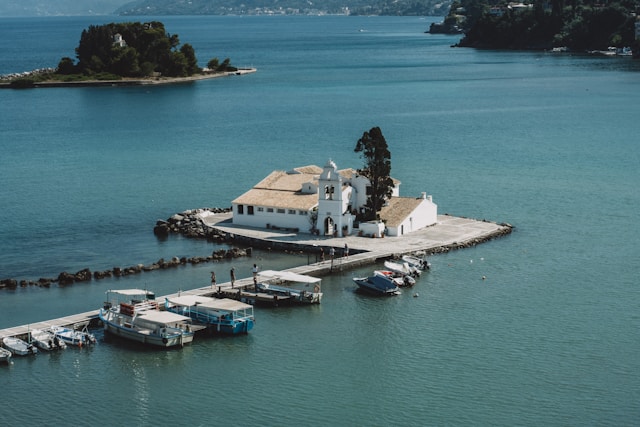
Just off Corfu’s Kanoni peninsula, the tiny Mouse Island—Pontikonisi—sits framed by cypress and pine, its silhouette crowned by the 11th-century Byzantine Chapel of Agios Georgios. Legend says the island is the petrified ship of the mythic Jason, turned to stone by Poseidon. Across a narrow causeway stands Vlacherna Monastery, rebuilt in 1688 on foundations dating to the 13th century. Its simple whitewashed church and octagonal bell tower reflect in the lagoon’s still waters. In 1995, restoration of its mosaic-tiled floor revealed medieval inscriptions beneath layers of plaster. Photographers flock at sunrise and sunset to capture the mirror-like reflections of monks’ cells and the chapel’s iconic façade. Boat tours offering sea-level views of both islets depart every hour from Kanoni’s pier. Mouse Island & Vlacherna Monastery encapsulate Corfu’s blend of myth, monastic tradition and postcard-perfect scenery.
Ads place
Ads place
Ads place
Ads place
Ads place
New Fortress in Corfu, Greece

New Fortress

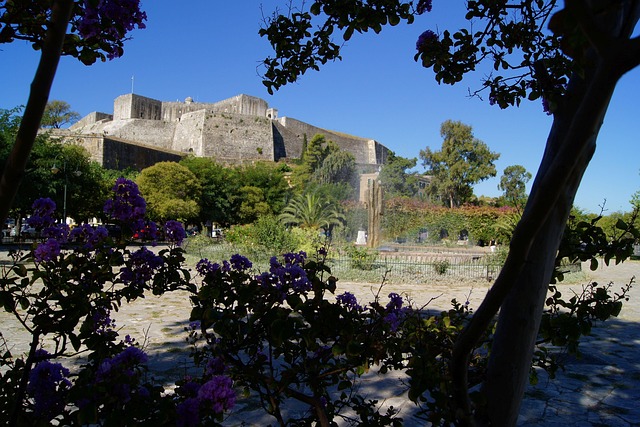
Perched west of the Old Town, the New Fortress was constructed by the Venetians between 1576–1588 to guard against both Ottoman assault and internal revolt. Its massive stone ramparts, bastions and dry ditch create a labyrinth beneath which hidden tunnels link the bastions to the sea. The central gate—flanked by marble columns salvaged from Corfu’s ancient temples—displays the Venetian lion and the inscription “MDLXXXVII,” marking the year of its completion. Under British rule in 1814, the fortress served as a garrison and prison, where political dissidents left graffiti still visible on the stone walls. Since 1993, the site has hosted open-air concerts on its grassy parade ground, drawing audiences to performances framed by sunset-lit ramparts. From the upper terraces, panoramic vistas stretch across Corfu Town, the Old Fortress, and the Moraitika coast. The New Fortress remains a testament to military ingenuity and Corfu’s layered heritage.
Ads place
Ads place
Ads place
Ads place
Ads place
Old Fortress in Corfu, Greece

Old Fortress

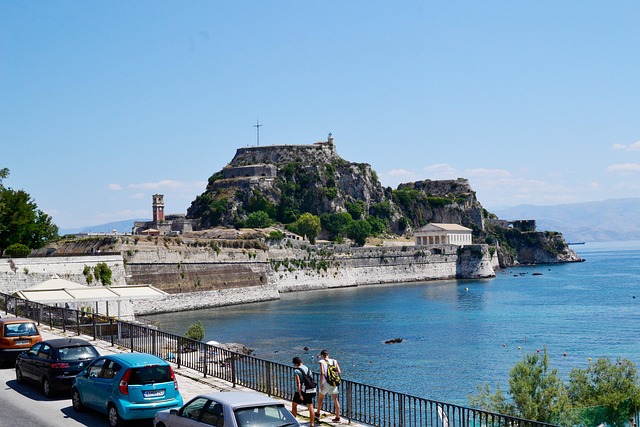
The Old Fortress, dominating Corfu Town’s eastern flank, dates originally to Byzantine builders in the 6th century AD and was extensively refortified by the Venetians from 1546 under engineer Michele Sanmicheli. Its concentric walls and deep moat once repelled Ottoman sieges in 1537 and 1716, preserving the island’s Venetian legacy. Within its bastions lie a 16th-century church dedicated to St. George and an Ottoman powder magazine repurposed as a cultural center. Archaeological digs in 2002 uncovered medieval cisterns and a rare 14th-century chapel painted with faded frescoes. Each summer, the fortress ramparts host the Corfu Beer Festival, blending contemporary craft brews with battlemented vistas. From the ramparts, visitors enjoy panoramic views over the town’s red-tiled roofs and the azure Ionian Sea beyond. The Old Fortress stands as a living monument to Corfu’s strategic importance and multicultural history.
Ads place
Ads place
Ads place
Ads place
Ads place
Paleokastritsa Monastery in Corfu, Greece

Paleokastritsa Monastery

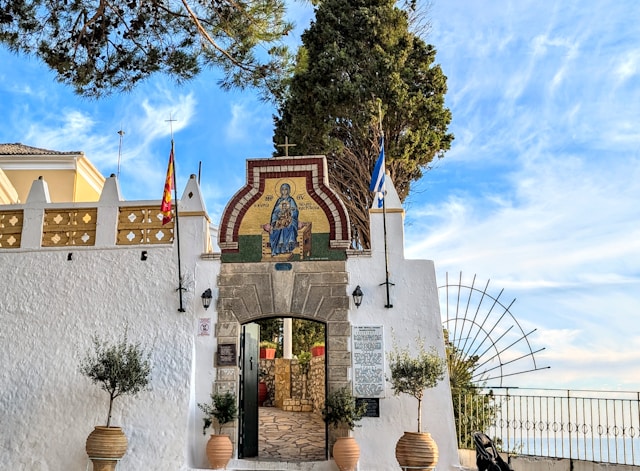
The Paleokastritsa Monastery, founded in 1225 by Byzantine hermits, is set among olive groves atop a cliff overlooking six hidden coves. Dedicated to the Virgin Mary, its current Venetian-baroque church was rebuilt in 1689 after pirate raids destroyed the original chapel. Inside, a collection of priceless icons—some attributed to Cretan School painters of the 16th century—adorn gilded iconostases. The monastery’s museum houses ancient manuscripts, Byzantine chalices and a rare 12th-century gospel book. Legend holds that St. Spyridon visited the site in 1653, blessing the rocky shore below. Monastic beekeepers produce thyme honey, sold alongside olive wood carvings at a hillside kiosk. From the terraced gardens, you can glimpse the bay’s sapphire waters and the Byzantine ruins of Angelokastro across the headland. Paleokastritsa Monastery blends spiritual tranquility with panoramic natural beauty on Corfu’s rugged northwest coast.
Ads place
Ads place
Ads place
Ads place
Ads place
Spianada Square in Corfu, Greece

Spianada Square

Spianada Square—Europe’s largest—spreads across 40,000 m² at the heart of Corfu Town, its name derived from the Venetian “Spianata,” meaning “esplanade.” Laid out in 1814 by the British, its neoclassical colonnades and pastel façades evoke Georgian elegance. The square’s centerpiece, the Maitland Monument—erected in 1821 for Sir Thomas Maitland—features an Ionic rotunda crowning the displayed sword of the British high commissioner. During carnival season, Spianada transforms into a vibrant parade route, hosting elaborate masquerades and folklore performances that harken back to Venetian-era revelries. On the southwest edge, the Municipal Gymnasion houses the Corfu Museum of Asian Art—unique in Greece since its founding in 1928—presenting Indochinese textiles and Japanese prints within an Ottoman-era bathhouse. Cafés ring the square, offering crowning views of the Liston and St. Michael & George Palace. Spianada Square embodies Corfu’s fusion of Mediterranean light and European grandeur.
Ads place
Ads place
Ads place
Ads place
Ads place