
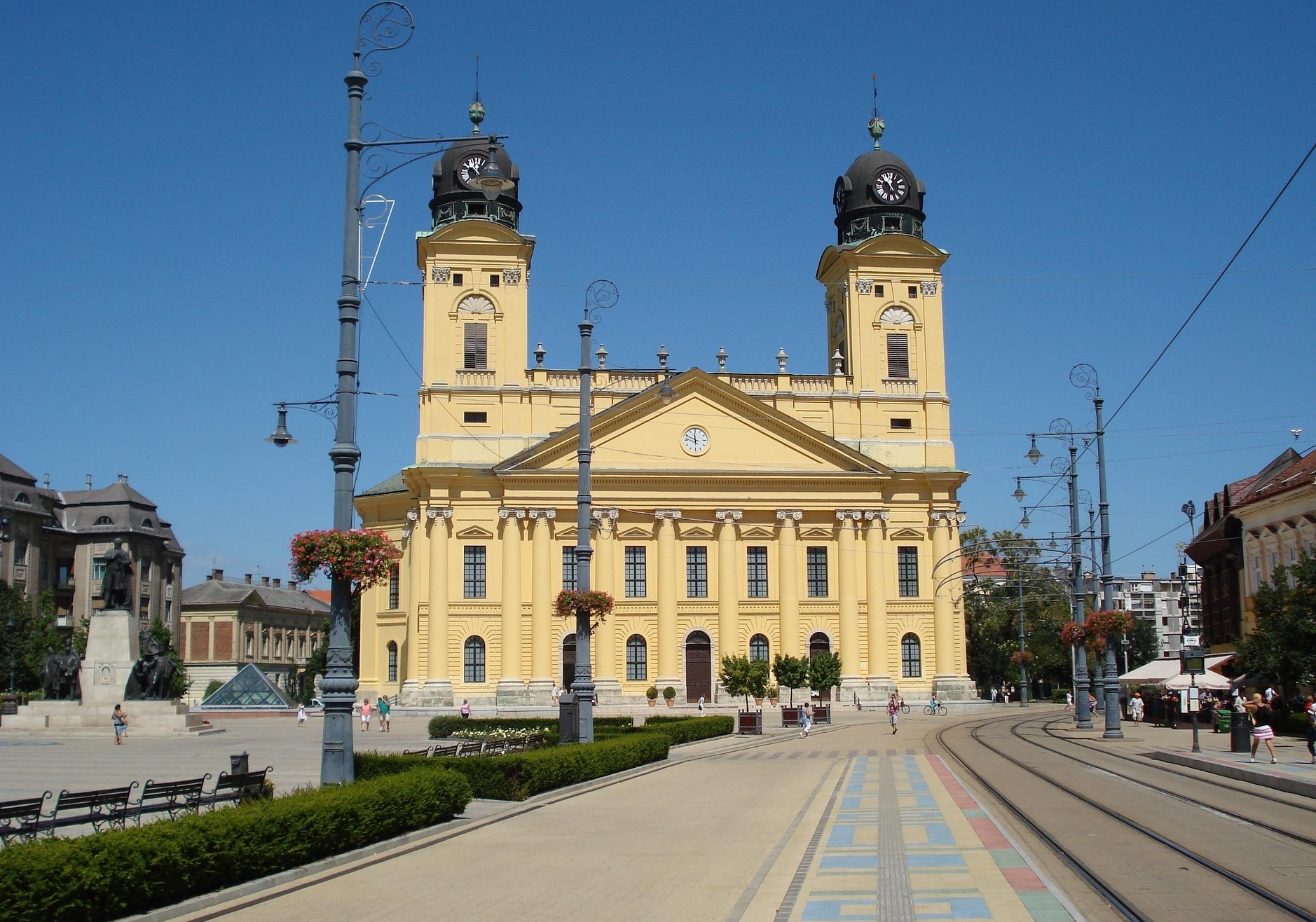
City view of Debrecen, Hungary

Debrecen

Debrecen, Hungary’s second-largest city, beats with a vibrant student energy amid the Great Hungarian Plain. The iconic Great Reformed Church, with its twin towers, presides over Kossuth Square where cultural festivals, open-air concerts and lively markets enliven the city center. Explore the Déri Museum’s impressive collection of Hungarian art and history, or wander through Nagyerdo Park’s leafy avenues, home to the renowned Aquaticum thermal baths and the modern Nagyerdei Stadium. Debrecen’s Flower Carnival each August fills streets with dazzling floral floats and parades, drawing crowds from across the country. Traditional csárda restaurants serve spicy goulash and chimney cake, while buzzing cafés offer locally roasted coffee. Thanks to its universities and thriving arts scene, Debrecen effortlessly fuses academic tradition with youthful innovation, making it a compelling destination for culture, relaxation and discovery. For a taste of tradition, don’t miss the local Hortobágy National Park with its iconic nine-arch bridge and herds of Hungarian grey cattle.

Top attractions & things to do in Debrecen

If you’re searching for the best things to do in Debrecen, this guide brings together the top attractions and must-see places to visit in Debrecen. The top picks below highlight the most visited sights for first-time visitors, plus a few local favorites worth adding.

Deri Museum in Debrecen, Hungary

Deri Museum

Located in the heart of Debrecen, the Deri Museum is renowned for its vast and diverse collection spanning archaeology, ethnography, and fine art. Established in 1930, this elegant museum is particularly celebrated for housing Mihaly Munkacsy's magnificent "Christ Trilogy", an extraordinary set of paintings that attracts art enthusiasts worldwide. Additionally, the museum preserves remarkable archaeological artifacts from the ancient civilizations of the Carpathian Basin, providing an intriguing glimpse into prehistoric life in Hungary. The building itself, designed in neo-baroque style, adds architectural value to the rich experience. An often-overlooked feature is the museum’s tranquil Japanese garden, a gift symbolizing friendship from the city of Tochigi, Japan. The Deri Museum regularly hosts thematic temporary exhibitions and cultural events, enhancing its appeal as an educational and cultural cornerstone. It remains a must-visit for those interested in Hungarian culture, history, and art, enriching the understanding of Debrecen's heritage.
Ads place
Ads place
Ads place
Ads place
Ads place
Great Reformed Church in Debrecen, Hungary

Great Reformed Church

The Great Reformed Church stands prominently in Debrecen as the largest Protestant church in Hungary, symbolizing the city's historical role in Hungarian Protestantism. Built between 1805 and 1824, this impressive neoclassical structure has witnessed key moments in national history, notably the proclamation of Hungary's independence by Lajos Kossuth on April 14, 1849. The church houses an organ renowned for its exquisite sound, installed by Viennese master Jacob Deutschmann. Visitors often climb its twin towers, offering breathtaking panoramas over the entire city. An intriguing yet lesser-known fact is that beneath the church lie extensive crypts containing historic burial chambers from the 19th century, which remain largely unexplored. Additionally, a small museum inside provides fascinating exhibits on local religious history, including ancient manuscripts and artifacts detailing Debrecen’s ecclesiastical past. Today, the church remains a vibrant cultural hub hosting concerts, exhibitions, and significant civic ceremonies, deeply intertwined with local identity.
Ads place
Ads place
Ads place
Ads place
Ads place
Hortobagy National Park in Debrecen, Hungary

Hortobagy National Park

Hortobagy National Park, located just outside Debrecen, is Hungary's first and largest national park, established in 1973. Renowned for its unique landscape, known as the "Puszta", it showcases vast grasslands, salt lakes, and marshes teeming with wildlife, including rare and protected species like the great bustard and the Hungarian grey cattle. The park's traditional shepherding culture, dating back centuries, has been recognized by UNESCO as a World Heritage Site. Visitors can witness authentic Hungarian cowboy shows called "csikos" and enjoy bird-watching tours that reveal diverse avian life. Hortobagy is home to the iconic "Nine-Holed Bridge", Hungary’s longest stone bridge, built in the early 19th century. A lesser-known but fascinating detail is the presence of numerous ancient burial mounds scattered throughout the park, evidence of prehistoric settlements. Today, Hortobagy offers visitors not only spectacular natural beauty but also rich cultural experiences deeply embedded in Hungarian traditions.
Ads place
Ads place
Ads place
Ads place
Ads place
MODEM Centre for Modern and Contemporary Arts in Debrecen, Hungary

MODEM Centre for Modern and Contemporary Arts

MODEM Centre for Modern and Contemporary Arts, opened in 2006, stands as one of Hungary's most significant contemporary art spaces. Located centrally in Debrecen, MODEM is celebrated for its innovative, provocative exhibitions and dynamic cultural programs featuring both Hungarian and international artists. The center’s architectural design, characterized by clean lines and minimalist aesthetics, complements the forward-thinking spirit of its exhibitions. MODEM frequently hosts interdisciplinary projects that integrate visual arts with literature, music, and theater, enhancing its cultural relevance. An interesting but lesser-known aspect is MODEM's active involvement in community engagement through workshops and interactive educational programs aimed at fostering creativity among young people. The museum has gained recognition for hosting landmark exhibitions showcasing major modernist figures like Pablo Picasso and Andy Warhol. With its commitment to contemporary dialogue and artistic experimentation, MODEM significantly contributes to Debrecen’s vibrant cultural life and international reputation as an arts destination.
Ads place
Ads place
Ads place
Ads place
Ads place
Nagyerdei Park in Debrecen, Hungary

Nagyerdei Park

Nagyerdei Park, also known as the Great Forest Park, is Debrecen's largest urban green space, covering approximately 228 hectares of lush greenery and recreational facilities. Officially declared a protected area in 1939, it represents Hungary’s first Nature Conservation Area within city limits. The park offers extensive walking paths, cycling routes, and beautifully landscaped gardens that surround a picturesque lake, attracting visitors for leisurely strolls and relaxation. Notably, the park includes the impressive Nagyerdei Stadium, opened in 2014, designed to seamlessly blend with its natural surroundings. Another significant landmark within the park is the University of Debrecen, one of the country’s largest educational institutions, featuring striking architecture and botanical gardens. An intriguing lesser-known feature is the Water Tower, an iconic Art Nouveau structure now serving as a cultural and exhibition space with panoramic views. Nagyerdei Park remains an essential part of Debrecen’s identity, providing residents and visitors alike with recreation, education, and tranquility.
Ads place
Ads place
Ads place
Ads place
Ads place