
City view of Delphi, Greece

Delphi

Delphi, once deemed the “navel of the world” in ancient Greece, perches on Mount Parnassus’s southwestern slopes above olive-studded valleys. Pilgrims flocked to the Temple of Apollo—rebuilt in the 4th century BC—seeking oracular prophecies delivered by the Pythia. Marble treasuries from Siphon, Athens and Macedonia line the Sacred Way, their Ionic friezes narrating tales of devotion and victory. The modern Delphi Archaeological Museum houses the Charioteer of Delphi, a masterpiece of Classical sculpture discovered in 1896, alongside kouroi statues and votive offerings. Above the sanctuary, a 3rd-century BC theater still hosts performances during the Parnassos Festival each summer. Hidden cisterns and aqueduct remnants attest to advanced water management by ancient engineers. Pilgrims once placed carved omphalos stones at the sanctuary’s heart; today, visitors still pause at the symbolic “navel” to marvel at the panorama of cypress groves and distant sea. Delphi’s fusion of mythic resonance, archaeological treasure and mountain serenity makes it an enduring pilgrimage destination.

Top attractions & things to do in Delphi

If you’re searching for the best things to do in Delphi, this guide brings together the top attractions and must-see places to visit in Delphi. The top picks below highlight the most visited sights for first-time visitors, plus a few local favorites worth adding.

Ancient Stadium of Delphi in Delphi, Greece

Ancient Stadium of Delphi

High above the Sanctuary lies the Ancient Stadium of Delphi, carved into the mountain slope to host athletic contests of the Pythian Games. Constructed in the 4th century BC, its stone seating accommodated approximately 6,500 spectators who gathered to witness footraces, javelin, and discus throws celebrating Apollo. Archaeological surveys unveiled the stadium’s starting blocks, a restored marble finish line, and the subterranean vaulted tunnel used by athletes. The stadium’s straight track, framed by commanding views of the Gulf of Corinth, symbolized human striving towards divine favour. Inscriptions honor victors such as the famed runner Astylos of Croton, whose three-time triumphs c. 488 BC immortalized his name. Today, spectators tread the ancient arena, imagining the fervor of competition that once echoed here.
Ads place
Ads place
Ads place
Ads place
Ads place
Castalian Spring in Delphi, Greece

Castalian Spring

Enshrined in myth and ritual, the Castalian Spring provided sacred waters for purification at Delphi since the 7th century BC. Flowing through a vaulted Roman fountain house (rebuilt in the 2nd century AD), its crystal-clear stream fed into stone basins where supplicants cleansed themselves before consulting the Pythia. Ancient graffiti on the fountain walls includes dedications to Apollo and invocations of nymphs. Pausanias documented elaborate cleansing rites involving laurel branches and oil anointments. Adjacent archaeological remnants of a Hellenistic retaining wall and cisterns attest to complex hydraulic engineering. Today’s visitors sip water from pilgrim cups, wander nearby hiking trails past olive groves, and reflect at a site that seamlessly blends natural beauty with millennia of spiritual tradition.
Ads place
Ads place
Ads place
Ads place
Ads place
Delphi Archaeological Museum in Delphi, Greece

Delphi Archaeological Museum

Housed at the foot of the Sanctuary, the Delphi Archaeological Museum showcases one of Greece’s richest collections, anchored by the renowned Charioteer of Delphi—a bronze masterpiece dated c. 470 BC. The museum’s sculptures span the Bronze Age through Roman rule, including the monumental Naxian Sphinx (c. 560 BC) and the majestic Fundorou Kouros. Excavated pedimental groups from the Temple of Apollo display intricate mythological scenes. Curators have reassembled geometric pottery, inscribed stelae, and votive reliefs, charting the evolution of Greek art and religious practice. Interactive exhibits elucidate the Pythia’s ritual and the site’s role in celebrating the Pythian Games. Carefully restored galleries provide contextual lighting, allowing visitors to appreciate the patina of age and artistic innovation. The museum’s design, by architect Patroklos Karantinos, harmonizes modern lines with ancient stone, creating a contemplative space for art and history.
Ads place
Ads place
Ads place
Ads place
Ads place
Sanctuary of Apollo & Oracle in Delphi, Greece

Sanctuary of Apollo & Oracle

Perched on the sacred slopes of Mount Parnassus, the Sanctuary of Apollo at Delphi was revered as the umbilicus mundi—the world’s navel—since the 8th century BC. The extant Temple of Apollo, constructed between 330–325 BC to designs by architect Spintharos, housed the legendary Pythia, whose prophetic utterances shaped Hellenic history. Pilgrims offered treasures at the Treasury of the Athenians (mid-5th century BC), one of several monumental dedications along the Sacred Way. Roman Emperor Hadrian later funded extensive restorations in the 2nd century AD. Nearby, the stone omphalos—believed by Delphi’s priests to mark the earth’s center—and the marble-adorned theatre (seating 5,000) hearken to the Pythian Games held every four years. Archaeologists have uncovered archaic votive offerings and intricate friezes depicting mythic battles. Visitors today traverse its layered ruins, tracing millennia of religious fervor, political alliance, and architectural mastery at this UNESCO World Heritage Site.
Ads place
Ads place
Ads place
Ads place
Ads place
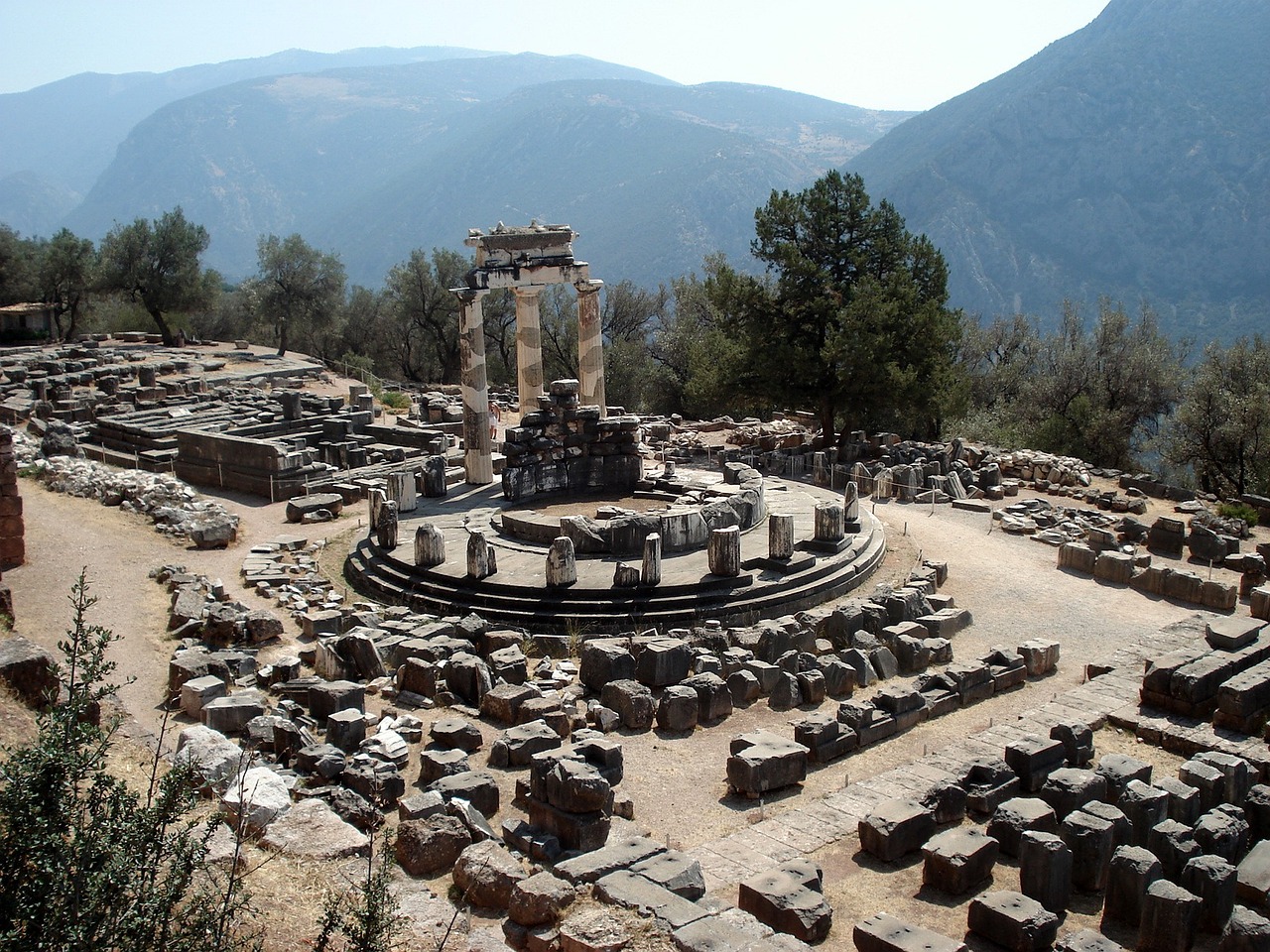
Tholos of Athena Pronaia in Delphi, Greece

Tholos of Athena Pronaia

Located at the gateway to Delphi, the Tholos of Athena Pronaia is a circular marvel built circa 380 BC within the Sanctuary of Athena. Its six Doric outer columns and sixteen inner Corinthian pillars supported a now-lost conical roof of terracotta tiles. Excavations led by archaeologist Théophile Homolle in the late 19th century revealed votive offerings, including ivory statuettes and bronze tripods dedicated by Hellenistic monarchs. The Tholos’s rhythmic geometry and precise entasis illustrate advanced Classical Greek engineering. Pilgrims paused here for ritual purification before consulting the Oracle. Surrounding remains of treasuries and altars underscore the site’s pan-Hellenic draw. Today’s preservation efforts highlight its perfect proportions against the Parnassus backdrop, making the Tholos an enduring symbol of Delphi’s religious and architectural splendour.
Ads place
Ads place
Ads place
Ads place
Ads place