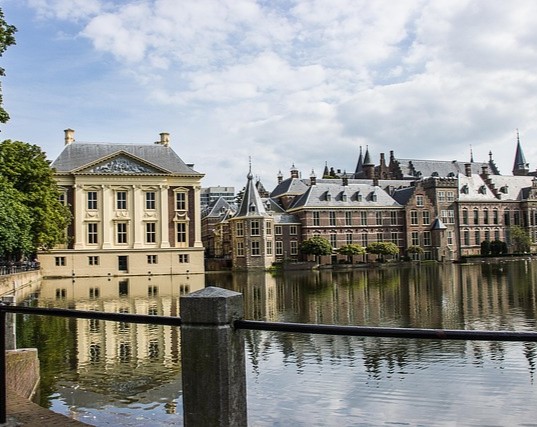
City view of Den Haag, Netherlands

Den Haag

Den Haag is a city that wears a power suit by day and flips on a surfboard by dusk. Home to royalty, international courts, and more diplomats than you can count, it’s the nerve center of Dutch and global politics. Yet, step away from the gleaming embassies, and you’ll find golden North Sea beaches, bohemian street art in Zeeheldenkwartier, and enough cozy cafés to fuel any rebel poet. Don’t miss the Mauritshuis, where Vermeer’s Girl with a Pearl Earring flirts with visitors, or the Peace Palace, which looks like it fell out of a fairytale. Evenings bring breezy strolls along Scheveningen Pier with fries in hand. Den Haag is all at once stately and salty, refined and utterly real—your favorite paradox, ready for discovery. The city’s tram line is the oldest still running in the Netherlands, dating to 1864.

Top attractions & things to do in Den Haag

If you’re searching for the best things to do in Den Haag, this guide brings together the top attractions and must-see places to visit in Den Haag. The top picks below highlight the most visited sights for first-time visitors, plus a few local favorites worth adding.

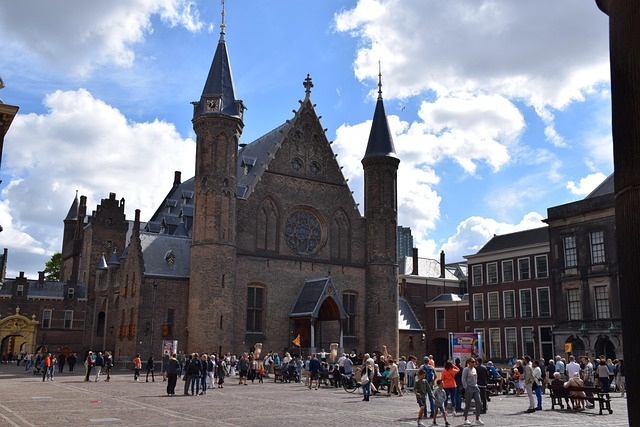
Binnenhof and Ridderzaal in Den Haag, Netherlands

Binnenhof and Ridderzaal

Ringed by the Hofvijver and flocks of cyclists, the Binnenhof feels like a small city within the city, its courtyards humming with journalists, ministers, and curious visitors. Arcades lead to the Ridderzaal, where sunlight falls across brick patterns and an oak-beamed roof shaped like an inverted ship. Here, the States General evolved from medieval assemblies into a modern parliament, and the ritual of Prinsjesdag still begins with a royal carriage arriving at the gate. The complex grew from a castle founded in the 13th century, later reshaped by counts of Holland in the 14th century. In the Ridderzaal, the dais hosts the King's Speech, a practice formalized in 1904. The fountain by Pierre Cuypers anchors the central square, while debates in the House of Representatives give the site its pulse. Step out to the Hofvijver and the skyline stacks eras together, proof that Dutch politics learned to live in tight spaces and long timelines.
Ads place
Ads place
Ads place
Ads place
Ads place
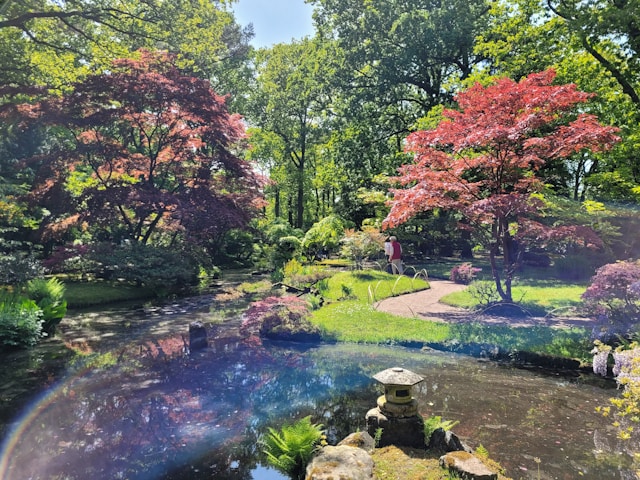
Clingendael Park and Japanese Garden in Den Haag, Netherlands

Clingendael Park and Japanese Garden

Paths slip from meadow to shadow under beeches, then turn quiet beside bridges where carp write ripples across dark water. The estate grew from country retreat to public park, a green hinge between the city and Wassenaar. The Japanese Garden opens for brief windows each year, its lanterns and maples carefully tended because the site is fragile and old. Laid out by Marguerite M. Baronesse van Brienen around 1910, the garden preserves early 20th century fascination with imported craft. Stone basins and gates came from Japan, and restorations since 2001 respect that provenance. Elsewhere on the estate, lines of limes recall 18th century avenues, while ditches and dunes explain Haagse Bos ecology. Come early and you hear only crows and feet on gravel; come late and you share benches with readers and strolling families. In every season, the park teaches a small lesson: calm requires care, and beauty likes quiet company.
Ads place
Ads place
Ads place
Ads place
Ads place
Grote Kerk (St. Jacobskerk) in Den Haag, Netherlands

Grote Kerk (St. Jacobskerk)

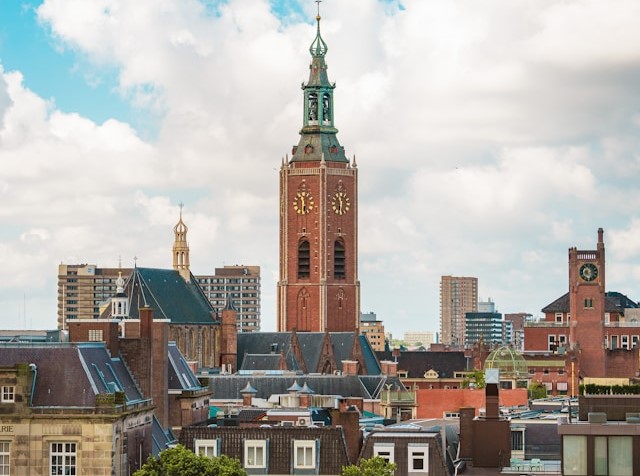
A tall, many-sided tower rises over the old streets like a patient metronome, measuring hours for markets and weddings. Inside, whitewashed walls set off memorial stones and a vast timber roof that creaks slightly in changing weather. The church grew across the 14th century and 15th century, its hall-church plan an elegant expression of North Sea Gothic. Carillons added in 1686 gave the neighborhood its music, while the nave welcomed civic ceremonies tied to the city's growth. After damage and repairs in the 20th century, restorers returned the space to a dignified clarity that suits concerts and exhibitions. Climb the tower on open days for a reading of the center—street grids, dunes, and the thin line of sea. Back on the square, cafe tables lean into the sun, and the bells resume their work: small, exact notes that make time feel well kept.
Ads place
Ads place
Ads place
Ads place
Ads place
Kunstmuseum Den Haag in Den Haag, Netherlands

Kunstmuseum Den Haag

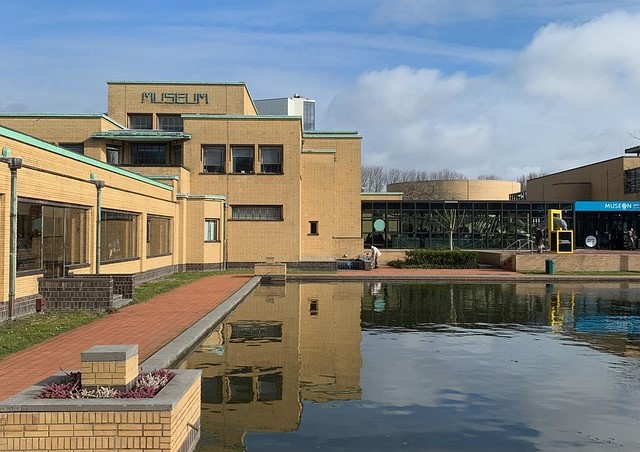
A calm grid of yellow brick and glass pavilions leads visitors from daylight to galleries where color feels newly mixed. Water moats the blocks, and long corridors deliver quiet that suits looking. Designed by Hendrik Petrus Berlage and opened in 1935, the complex is a masterwork of measured Modernism tuned for paintings rather than spectacle. Here the city keeps the world's largest collection of Piet Mondrian, including the late composition finished in 1942 and known as “Victory Boogie Woogie.” The museum also holds Delftware and fashion, linking craft to experiment across the 20th century. Renovations respected Berlage's proportions, so even new wings feel inevitable. Sit by a window and the pond returns the building as an abstract composition; stand before a grid and the architecture answers it in brick. The effect is cumulative—by the exit, visitors walk more slowly, as if angles and colors had recalibrated the city outside.
Ads place
Ads place
Ads place
Ads place
Ads place
Kurhaus Scheveningen in Den Haag, Netherlands

Kurhaus Scheveningen

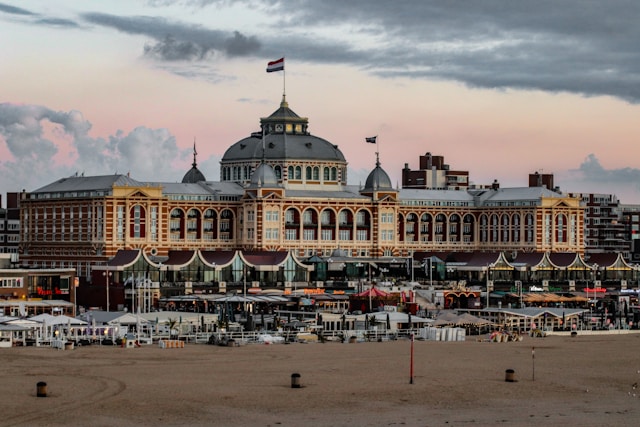
Facing the surf with colonnades and a grand dome, the Kurhaus turns the beach into a ballroom and the ballroom into a memory. Waves roll in, gulls wheel, and the terrace fills with a soft murmur of languages as menus rustle in the breeze. Opened in 1885 and rebuilt after a fire in 1886, the hotel became a stage for seaside leisure in the age of trains. Concerts by world-famous artists echoed under the dome through the 20th century, while the facade watched fashions change from parasols to surfboards. The architecture blends Neo-Baroque grandeur with pragmatic seaside engineering, a combination that has weathered storms and economic tides. Restorations preserved the gilded plasterwork and the promenade stairs that carry families down to sand. At sunset, the building catches the last light like a ship at anchor, and the evening feels briefly cinematic, as if the whole coast were pausing for a photograph.
Ads place
Ads place
Ads place
Ads place
Ads place
Madurodam in Den Haag, Netherlands

Madurodam

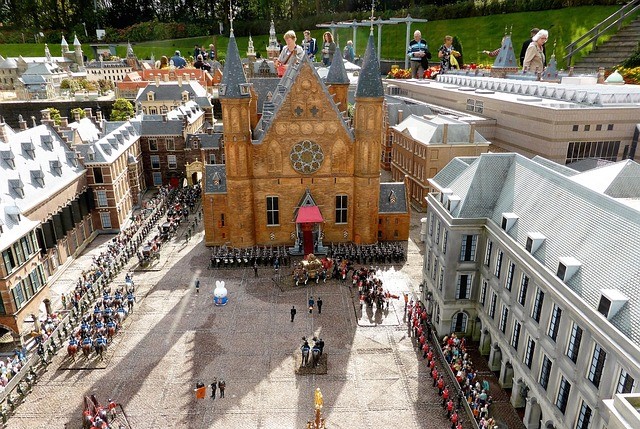
Miniature streets buzz like a pocket republic, with trains circling, bridges lifting, and tiny market stalls set for the day. Families lean close to see tulips, ship locks, and concert halls compressed to the scale of a coffee table. Opened in 1952 and named for war hero George Maduro, the park turned remembrance into a playful civic lesson. Models reproduce landmarks from the 17th century to the 21st century, inviting visitors to trace engineering and design in a single loop. Waterworks demonstrate the logic of the Delta Plan; airport runways at about 1:25 scale send miniature jets taxiing under watchful eyes. Revenues support student charities, an idea woven into the project from 1952 onward. By the exit, kids know the country by bridges and dikes; adults grin at details hidden in windows and shop signs. The whole place feels like a storybook footnote to the Netherlands, written in precise, affectionate handwriting.
Ads place
Ads place
Ads place
Ads place
Ads place
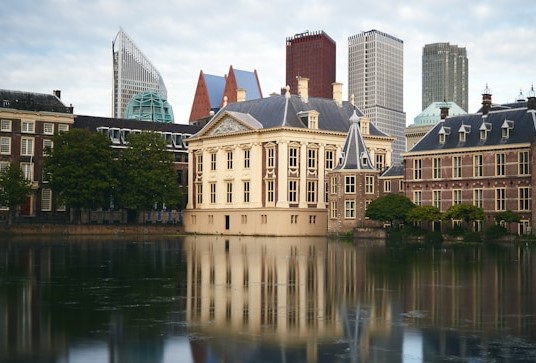
Mauritshuis in Den Haag, Netherlands

Mauritshuis

Across the water from the Binnenhof, a compact palace holds a treasury of quiet faces, candlelight, and northern skies. Rooms are intimate, floors creak softly, and frames seem to breathe as visitors lean in. Built for Johan Maurits and completed in 1644, the house stands as a jewel of Dutch Classicism designed by Jacob van Campen and Pieter Post. Its collection traces the 17th century at human scale, from Rembrandt's uncertainty to Vermeer's stillness. Renovations in 2014 added an underground link while preserving the gracious enfilade of salons above. Paintings like the tiny goldfinch travel widely, yet the building itself remains the best argument for staying. Marble, light, and measured proportions make the visit feel personal—more conversation than spectacle. Step back outside to the Hofvijver and the reflected facade looks freshly minted, as if the city continually renews the promise that great art can live comfortably in a modest house.
Ads place
Ads place
Ads place
Ads place
Ads place
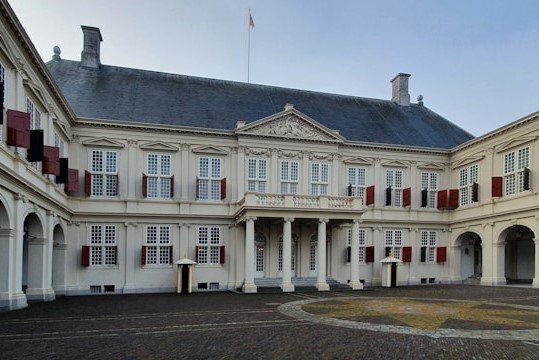
Noordeinde Palace in Den Haag, Netherlands

Noordeinde Palace

On a narrow shopping street, iron railings and a measured facade signal a working palace rather than a museum piece. Courtyards lead to offices where red boxes and handwritten briefs still set the pace of royal routines. The site began as a mansion in the 16th century, expanded for Stadtholder Frederik Hendrik in 1640, and today functions as the monarch's workplace. The formal garden spreads quietly behind the buildings, a green room for the city that locals treat with respectful affection. After the wedding of Queen Wilhelmina in 1901, the complex gained a steadier public role, balancing ceremony with administration. Although interiors are rarely open, the exterior tells its story in understatement—stone, symmetry, and gates that open only when they must. On weekday mornings, cyclists glide past as guards change, and the whole scene reads like a Dutch version of pageantry: precise, efficient, and more interested in service than display.
Ads place
Ads place
Ads place
Ads place
Ads place
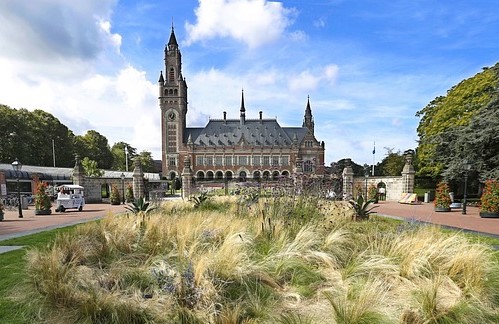
Peace Palace (Vredespaleis) in Den Haag, Netherlands

Peace Palace (Vredespaleis)

Behind iron gates and formal lawns, the Peace Palace gathers marble staircases, tapestries, and gifts from nations into a building designed to argue for calm. Visitors arrive along an axis of trees and pass a flame that never goes out, a small reminder that agreements need tending. Financed by industrialist Andrew Carnegie and opened in 1913, the palace was designed by Louis M. Cordonnier in a dignified Neo-Renaissance style. It houses the International Court of Justice and the Permanent Court of Arbitration, institutions that give the city its diplomatic gravity. A library founded in 1913 supports the work with shelves of treaties and commentaries. Tours reveal mosaics and woodwork gifted by dozens of states, evidence that architecture can be a form of conversation. Step outside again and the tower clock keeps quiet time, while trams slide by as if the law were simply another civic service—reliable, patient, and always slightly ahead of schedule.
Ads place
Ads place
Ads place
Ads place
Ads place
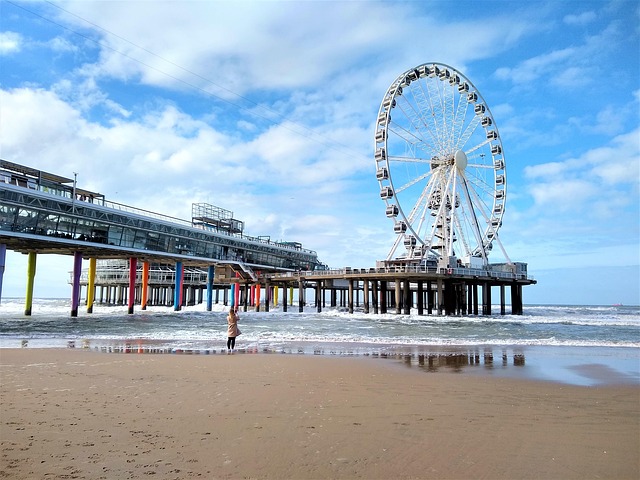
Scheveningen Pier in Den Haag, Netherlands

Scheveningen Pier

From the boardwalk, a long pier strides out into the North Sea, carrying cafes, a bungee tower, and a wheel whose cabins frame wind and water in quiet circles. Walkways rise and dip, so the sea comes and goes beneath your feet like a slow engine. The first pier opened in 1901, later replaced in 1959 with a concrete structure suited to postwar optimism. Its silhouette nods to Modernist engineering, while recent renovations in the 2010s added leisure decks and glass floors. The Ferris wheel lifts riders to about 50 meters, a small observation post for storms, sunsets, and shipping lanes. In winter the spray turns to pearls on railings; in summer the planks warm and music drifts from kiosks. The pier's pleasure is simple—air, horizon, and the feeling that the city has stepped out onto the water to breathe for a while.
Ads place
Ads place
Ads place
Ads place
Ads place