
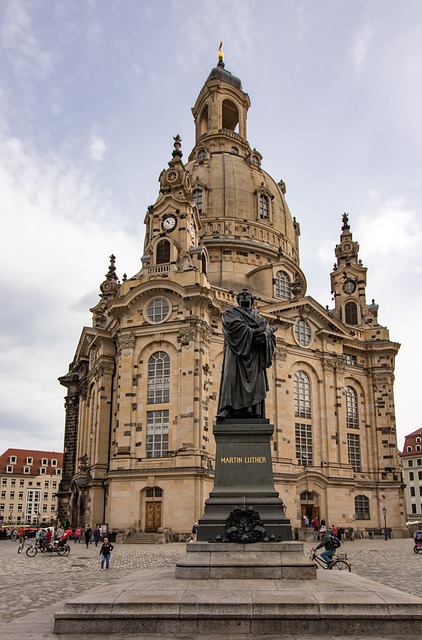
Frauenkirche
In Dresden, Germany .
More places to visit in Dresden
Discover more attractions and things to do in Dresden.
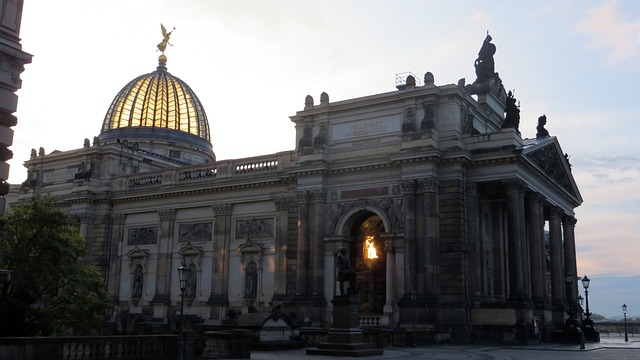
Albertinum
The Albertinum 's Flood Relief Wing preserves watermarks 9.40m high from the 2002 Elbe deluge. Gerhard Richter's Birkenau Cycle overlays Holocaust photos with 3,000 painted panels. The Skulpturenhalle displays 18th-century plaster casts used to reconstruct war-damaged statues. A climate chamber preserves Caspar David Friedrich's Chalk Cliffs on Rügen at 45% humidity. The rooftop terrace's steel lattice mirrors the Frauenkirche's dome geometry. UV night tours reveal fluorescent minerals in the Earth Science Collection . The 1889 Bronze Age Hall contains Europe's oldest known wheel fragment.
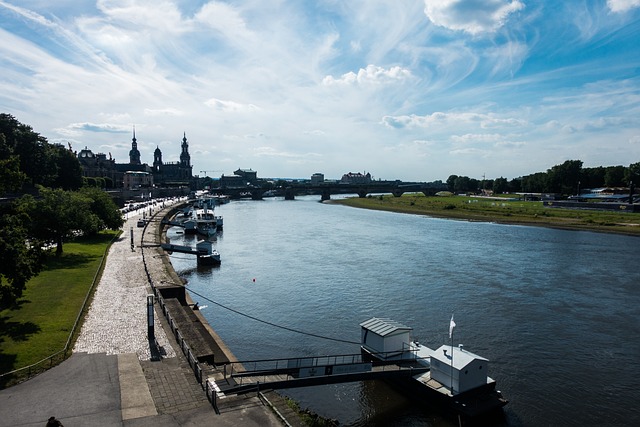
Brühl's Terrace
Brühl's Terrace rests on 1,800 oak piles driven into the Elbe's bed in 1591. The Four Times of Day statues cast solstice shadows matching their seasonal themes. Napoleon stored looted art in the terrace's Festungskeller vaults during his 1813 retreat. The 1876 Saxon Stairs incorporate 42 regional granite types in their 134 steps. A hidden 1850 hydraulic system irrigates flower beds using river water. Night projections recreate Johannisberg Palace's 1760 destruction frame-by-frame. The Academy of Fine Arts dome rotates 360° for natural light optimization.
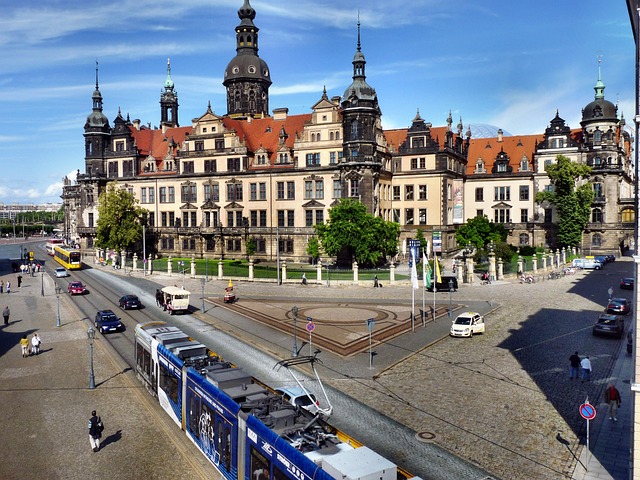
Dresden Castle
Dresden Castle 's 800-year-old Processional Staircase bears grooves from 30 generations of electors' spurred boots. The Turkish Chamber displays Sultan Süleyman's 1620s war tent captured at Vienna's siege. The 41-carat Dresden Green Diamond fluoresces under UV due to natural radiation exposure. Hidden doors in the New Green Vault lead to a bombproof chamber protecting the 110kg Moorish Emerald Globe. The facade's 3,250 Renaissance carvings include alchemical symbols from Augustus' occult studies. Archaeologists recently uncovered a 1572 gold leaf laboratory beneath the courtyard. The Armory 's 16th-century jousting armor fits modern athletes perfectly.
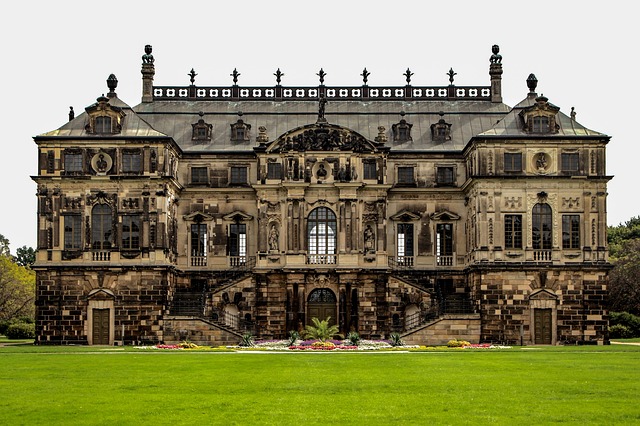
Great Garden of Dresden
The Great Garden 's 1683 Carolasee lake is fed by 17 underwater springs maintaining 14°C year-round. The 1895 Park Railway runs original coal-fired locomotives on 5.6km tracks. The Baroque Summer Palace aligns 56 windows to form a solar calendar marking equinoxes. The 1909 Botanical Garden conserves 162 plant species extinct in the wild. Hidden yew hedges conceal a 1950s nuclear bunker now growing exotic mushrooms. Spring brings 12,000 tulips arranged in patterns copied from Meissen porcelain. The Zoological Garden houses descendants of Augustus' 1720 menagerie.
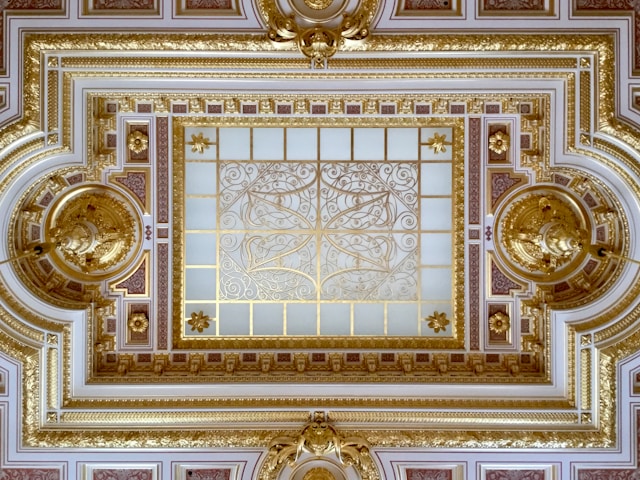
Green Vault
The Green Vault 's 3,018 treasures require 27km of fiber-optic security lines and 40-ton vault doors. The 648ct Dresden White Diamond sits in a mirrored chamber creating infinite reflections. August the Strong's 1708 Amber Cabinet contains 1,284 insect fossils from Baltic forests. The Moor with Emerald Cluster statue holds a 16kg Colombian emerald mined in 1594. During WWII, curators hid treasures in a Königstein granary disguised as potato sacks. The 1725 Golden Coffee Service brewed 144 cups simultaneously using hidden heating coils. Night tours reveal the Bath of Diana statuette's 297 embedded diamonds under UV light.
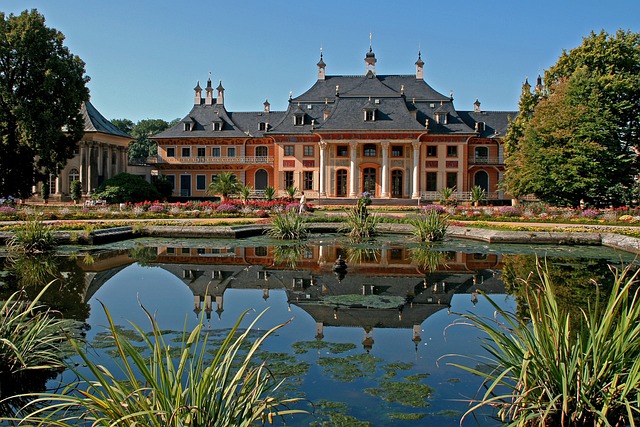
Pillnitz Palace
Pillnitz Palace 's 1725 Camellia japonica blooms 35,000 flowers annually under Europe's oldest mobile greenhouse. The Water Palace's Wave Wall creates optical river currents through 12,000 hand-set tiles. Secret passages connect the Chinese Pavilion to 18th-century royal bathhouses. The English Garden grows 47 medicinal plants from Captain Cook's 1778 voyages. The palace kitchen still roasts meat on 1742 beechnut-wood fires during historical demos. Winter visitors skate on a 300m Schlossteich ice track cleared with 1850s-style scrapers. The Upper Palace's lacquer panels were gifts from Qing Dynasty Emperor Qianlong.
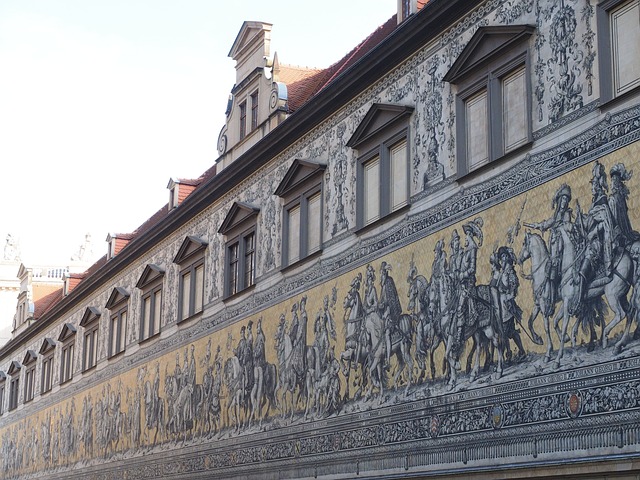
Procession of Princes
The Procession of Princes mural uses 24,000 Meissen tiles fired seven times at 1,400°C for weatherproofing. Wilhelm Walther's 1907 design incorporated electric tram tracks without damaging the artwork. The 1876 Princes' Vault beneath holds DNA samples from 35 rulers in porcelain urns. Night illumination reveals 43 uranium-glaze tiles glowing faintly from Wilhelm Röntgen's 1896 experiments. The mural's 93m length matches Dresden Castle's east facade precisely. Conservationists use AI to match 1945 shrapnel marks with original tile fragments. The Scholar's Procession section depicts 14th-century astronomer Johannes Fabricius holding a telescope.
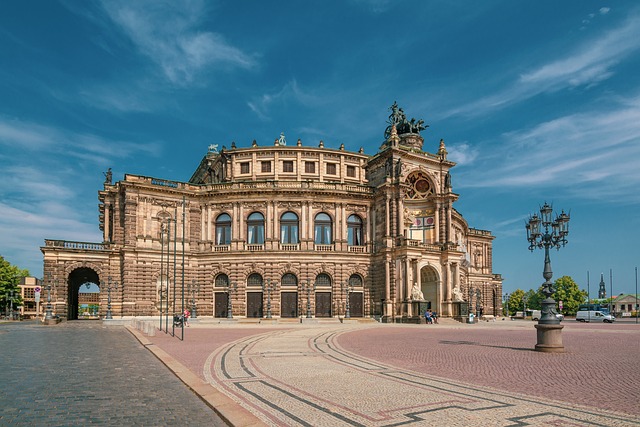
Semperoper
The Semperoper 's ceiling mural uses 1.2kg gold leaf to depict Shakespearean scenes visible from every balcony seat. Its acoustic shell projects unamplified voices 42m to the farthest listener with 1.2-second reverberation. Wagner premiered Der fliegende Holländer here in 1843, conducting from a harpsichord now displayed backstage. A 120m secret tunnel connects to Dresden Castle for royal entrances. The 1985 rebuild reused 12,000 original stones dredged from the Elbe. The 45-ton asbestos-free fire curtain withstands 1,200°C blazes. Nightly projections illuminate the facade with designs from Semper's 1841 blueprints.
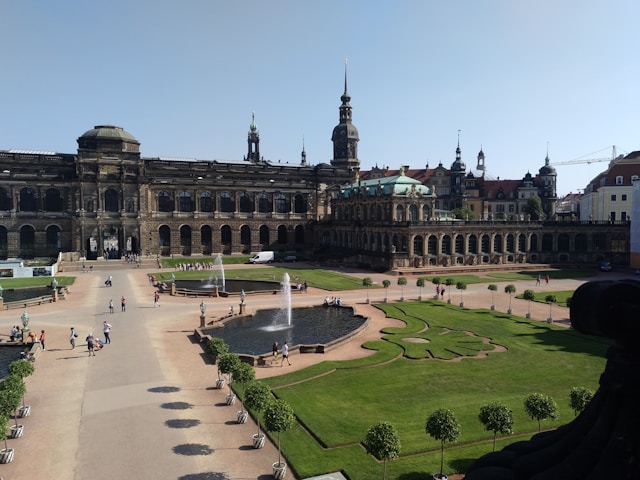
Zwinger Palace
The Zwinger Palace 's 1719 Nymphaeum fountain boasts 200 gilded statues symbolizing Saxon mining wealth, watered by a 12km underground aqueduct. Its Mathematical-Physical Salon displays Augustus the Strong's 2.6m planetary clock predicting eclipses until 2123. Raphael's Sistine Madonna hangs in a climate-controlled case mimicking 18th-century candlelight conditions. The Crown Gate's Polish regalia motifs reflect Augustus' dual monarchy over Saxony and Poland. During WWII, 3,000 artworks were hidden in Königstein Fortress' salt mines to avoid destruction. The Orangery grows 47 citrus varieties cloned from the 1730s royal collection. Night tours reveal hidden gaslight grooves in the gallery walls.