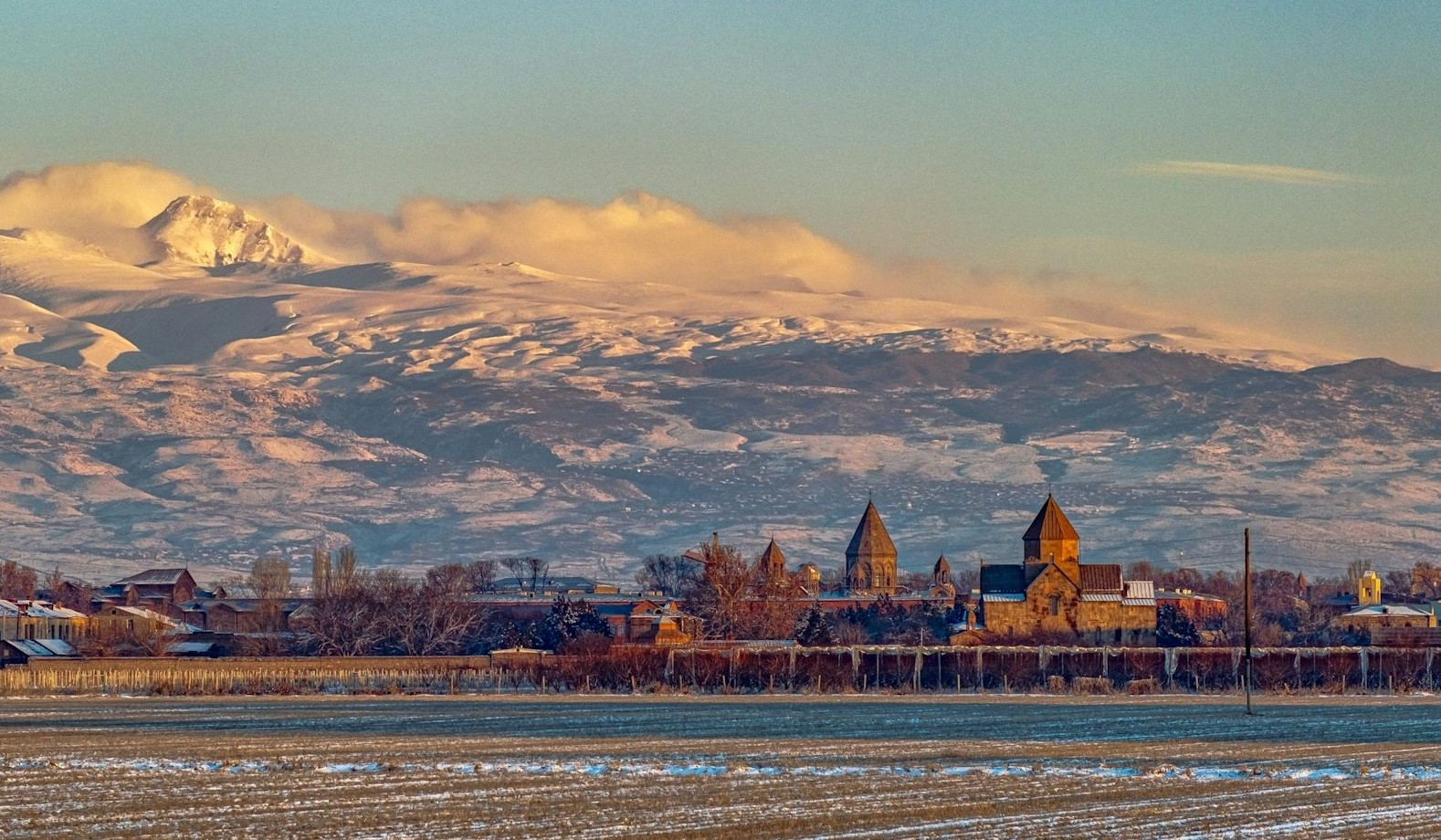

City view of Echmiadzin (Vagharshapat), Armenia

Echmiadzin (Vagharshapat)

Echmiadzin, officially known as Vagharshapat, is the spiritual center of Armenia and the seat of the Armenian Apostolic Church. It is home to the Mother See of Holy Echmiadzin, the oldest cathedral in the world, built in the early 4th century by St. Gregory the Illuminator. This UNESCO World Heritage site remains the heart of Armenian Christianity. The town also hosts other significant churches like St. Gayane and St. Hripsime. Echmiadzin is a pilgrimage site and cultural hub, deeply intertwined with Armenian identity and religious history.

Top attractions & things to do in Echmiadzin (Vagharshapat)

If you’re searching for the best things to do in Echmiadzin (Vagharshapat), this guide brings together the top attractions and must-see places to visit in Echmiadzin (Vagharshapat). The top picks below highlight the most visited sights for first-time visitors, plus a few local favorites worth adding.

Etchmiadzin Treasury Museum in Echmiadzin (Vagharshapat), Armenia

Etchmiadzin Treasury Museum

Located within the Etchmiadzin Cathedral complex, the Etchmiadzin Treasury Museum houses a vast collection of priceless religious artifacts, manuscripts, and relics significant to the Armenian Church. One of the museum's most revered objects is the Holy Lance (Geghard), believed to be the spear that pierced Christ's side during the crucifixion. Other treasures include ancient reliquaries, vestments, crosses, and illuminated manuscripts. The museum provides deep insights into the religious and cultural heritage of Armenia, and its extensive collection makes it an essential stop for those interested in Christian art and history. The Holy Lance's tip contains microscopic blood particles dating to the 1st century AD. A 6th-century processional cross bears inscriptions in 12 ancient languages including Caucasian Albanian.
Ads place
Ads place
Ads place
Ads place
Ads place
Mother See of Holy Etchmiadzin Cathedral in Echmiadzin (Vagharshapat), Armenia

Mother See of Holy Etchmiadzin Cathedral

The Mother See of Holy Etchmiadzin Cathedral is the spiritual and administrative center of the Armenian Apostolic Church and one of the oldest Christian cathedrals in the world. Founded in 301 AD by St. Gregory the Illuminator after Armenia became the first country to adopt Christianity as its state religion, the cathedral is an architectural and religious masterpiece. Its name, "Etchmiadzin," translates to "The Descent of the Only-Begotten," referring to a vision St. Gregory had of Christ descending to indicate the location where the cathedral should be built. Inside, visitors can explore centuries-old frescoes, carvings, and the sacred relics housed in the museum. The surrounding grounds, including gardens and other ecclesiastical buildings, offer a peaceful setting for contemplation. The foundation incorporates stones from a 3rd-century pagan temple dedicated to Vahagn. The cathedral's asymmetrical dome was intentionally designed to face the exact spot where Gregory received his divine vision.
Ads place
Ads place
Ads place
Ads place
Ads place
Saint Gayane Church in Echmiadzin (Vagharshapat), Armenia

Saint Gayane Church

Saint Gayane Church, built in 630 AD, is another important religious site in Etchmiadzin. The church is dedicated to Saint Gayane, a Christian martyr who played a key role in converting Armenia to Christianity. The church's architecture is a fine example of classical Armenian design, with a cruciform layout and central dome. Despite its relatively modest size, the church has a peaceful and solemn atmosphere. The site also contains the tomb of Saint Gayane, making it a significant pilgrimage destination. The church's beautiful proportions and historical importance have earned it a place on the UNESCO World Heritage list. Recent restorations revealed hidden catacombs containing 7th-century liturgical objects. The western wall bears ancient Greek inscriptions from Byzantine masons who assisted in construction.
Ads place
Ads place
Ads place
Ads place
Ads place
Saint Hripsime Church in Echmiadzin (Vagharshapat), Armenia

Saint Hripsime Church

Saint Hripsime Church, constructed in 618 AD, is one of the most prominent examples of early Armenian architecture and is also a UNESCO World Heritage site. The church is named after Saint Hripsime, another early Christian martyr whose resistance to marriage led to her execution. The church is noted for its stunning design, particularly its vaulted central plan and the way light filters through its stone windows. The tomb of Saint Hripsime lies beneath the altar, making this a revered site for pilgrims. The church's enduring structure and historical significance make it a must-see for visitors interested in Armenian religious history. The altar stone contains relics from 40 Roman martyrs brought from Constantinople. Laser scans revealed acoustic channels in the walls that amplify chants at specific frequencies.
Ads place
Ads place
Ads place
Ads place
Ads place
Shoghakat Church in Echmiadzin (Vagharshapat), Armenia

Shoghakat Church

Shoghakat Church, built in 1694, is dedicated to the memory of Christian martyrs who were killed alongside Saints Gayane and Hripsime. Its name means “drop of light,” symbolizing the ray of divine light that fell on the martyrs. This small, yet graceful church, situated near the Saint Hripsime Church, features traditional Armenian architectural elements such as the pointed dome and stone walls. Although less ornate than other churches in the area, its simplicity and spiritual significance create a peaceful atmosphere for visitors. Shoghakat, like the other churches in Etchmiadzin, is part of the UNESCO World Heritage site. The church's orientation aligns with the winter solstice sunrise over Mount Ararat. Beneath the nave lies a 17th-century crypt containing martyrs' remains rediscovered in 1988.
Ads place
Ads place
Ads place
Ads place
Ads place