
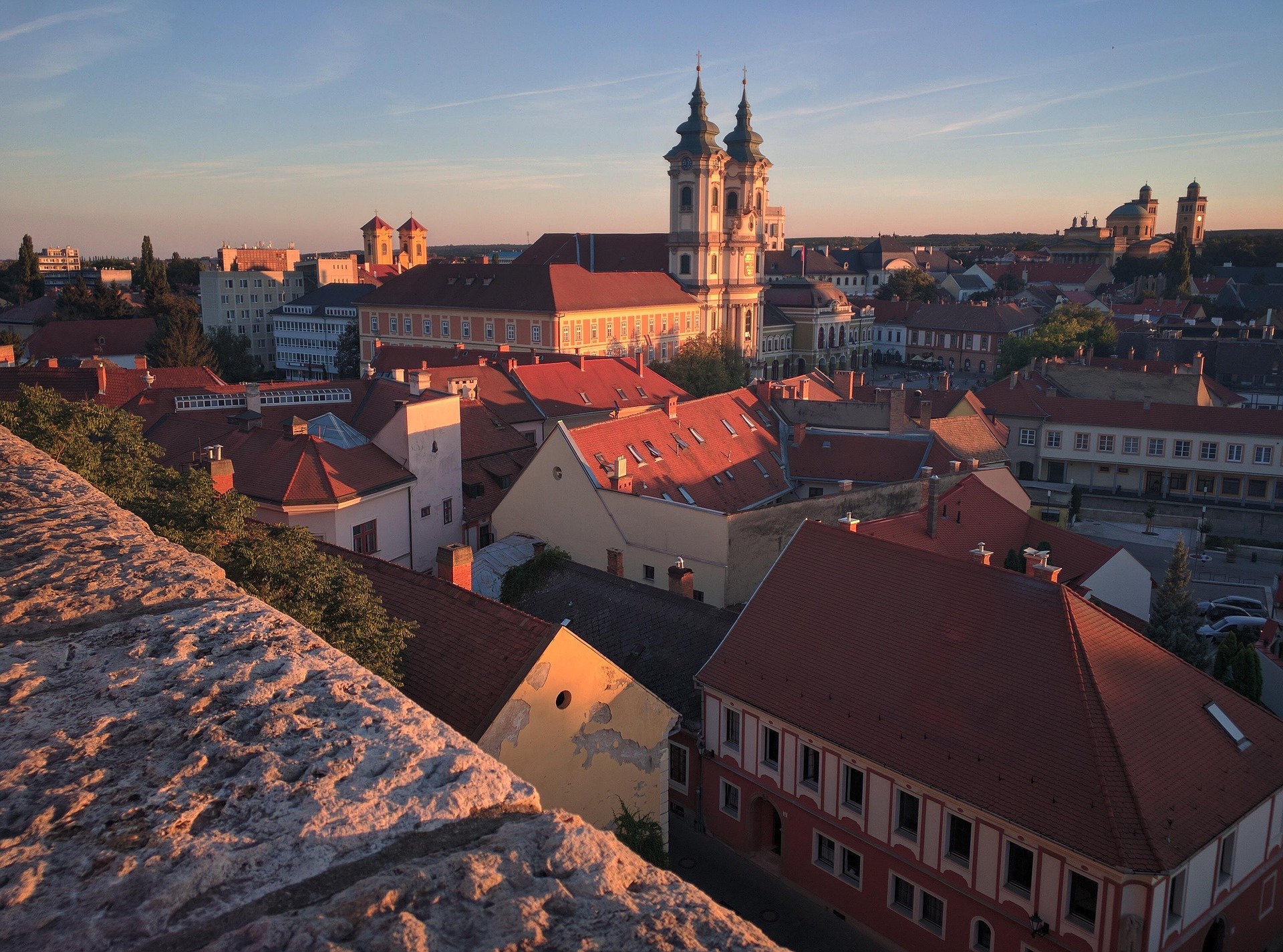
City view of Eger, Hungary

Eger

Eger, set amidst the rolling Bükk Hills, is famed for its baroque architecture, legendary castle, and robust red wines. Walk the winding streets lined with pastel mansions to the 18th-century Minorite Church and the iconic minaret, a rare Ottoman relic you can climb for panoramic views. Explore Eger Castle, where defenders repelled a massive Turkish siege in 1552—now housing museums, ramparts and cannon towers. Sample the renowned Egri Bikavér ("Bull’s Blood”) wine in atmospheric cellars carved deep beneath the Valley of the Beautiful Women. Relax in the city’s historic Turkish baths, or enjoy open-air concerts in Dobó Square surrounded by fountains and terraces. Every autumn, Eger hosts harvest festivals with music, folk dancing and feasting, blending medieval heroism with modern hospitality and a love of fine living. For a quirky experience, check out the city’s Camera Obscura, a centuries-old optical device offering a panoramic rooftop view.

Top attractions & things to do in Eger

If you’re searching for the best things to do in Eger, this guide brings together the top attractions and must-see places to visit in Eger. The top picks below highlight the most visited sights for first-time visitors, plus a few local favorites worth adding.

Basilica of Eger in Eger, Hungary

Basilica of Eger

The Basilica of Eger, built between 1831 and 1837, is Hungary's second-largest church and a striking example of neoclassical architecture. Its monumental twin towers and thirty-seven-meter-high dome dominate the city, while the intricate frescoes and marble columns inside create a solemn, majestic atmosphere. The basilica was designed by Jozsef Hild, renowned for his grand vision and technical mastery. Notably, the crypt houses tombs of Eger's archbishops, and the pipe organ is celebrated for its exceptional acoustics, attracting international musicians for grand concerts. During World War II, the basilica miraculously survived heavy bombings, becoming a symbol of endurance for locals. In summer, the steps become a popular gathering spot for local festivals and cultural events. Few know that a hidden spiral staircase leads up to the dome, rewarding the brave with breathtaking panoramic views over the city and surrounding vineyards. The basilica's bell still calls parishioners to major celebrations.
Ads place
Ads place
Ads place
Ads place
Ads place
Eger Castle in Eger, Hungary

Eger Castle

Eger Castle dominates the city skyline, standing as a symbol of resilience and national pride since the 1552 siege, when local defenders heroically repelled a much larger Ottoman army. Its medieval ramparts, winding tunnels, and reconstructed towers invite visitors to step back into centuries of Hungarian history. The Dobo Istvan Museum, located within the castle, displays artifacts from the Turkish occupation, medieval armaments, and even the original sword of the famed commander Istvan Dobo. A unique feature is the panoramic terrace offering sweeping views over the baroque cityscape and vineyards. Each September, the castle hosts a vivid reenactment of the historic battle, complete with costumed soldiers and booming cannons. Less known is the castle's secret wine cellar network, once used to store local Egri Bikaver wines in times of conflict. Visiting Eger Castle is like walking through the pages of a living epic, where legend, bravery, and heritage converge. The echo of ancient celebrations still resonates in the walls today.
Ads place
Ads place
Ads place
Ads place
Ads place
Lyceum and Astronomical Tower in Eger, Hungary

Lyceum and Astronomical Tower

The Lyceum and Astronomical Tower, built in the 18th century, are hallmarks of Eger's intellectual tradition. The Lyceum, once a theological college and now Eszterhazy Karoly University, boasts a grand library containing more than 130,000 volumes, including medieval manuscripts. Its elegant facade and marble staircases exemplify late baroque design. The Astronomical Tower is famous for its functional camera obscura, offering a real-time panoramic projection of the city—one of only a handful in Europe. The observatory also houses rare antique telescopes and celestial globes, treasured by generations of scholars. Each summer, the Lyceum hosts public stargazing events and historical exhibitions. Hidden behind the library, a peaceful botanical garden provides an oasis for students and visitors. The Lyceum's historic halls once welcomed famous poets and politicians who shaped Hungarian culture. Today, the tower's bell marks the hours for university life and city celebrations.
Ads place
Ads place
Ads place
Ads place
Ads place
Minaret in Eger, Hungary

Minaret

The Eger Minaret stands as one of the northernmost remains of Ottoman architecture in Europe, soaring 40 meters above the old town. Built in the 17th century during Turkish rule, its slender stone column and narrow spiral staircase challenge visitors with 97 steep steps. The balcony offers a unique vista over Eger, and once served as the call to prayer for the city's Muslim inhabitants. Remarkably, the minaret was almost demolished after Ottoman rule, but it proved too robust for chains and horse teams to topple. Today, it is a rare and well-preserved monument, symbolizing the city's multicultural history. During the Ottoman era, it stood beside a now-lost mosque and bathhouse, both integral to daily life. Many visitors leave coins on the minaret's window ledge, a tradition for good luck. Each spring, local guides recount the story of how this slender tower resisted every attempt at destruction and became a cherished icon.
Ads place
Ads place
Ads place
Ads place
Ads place
Valley of the Beautiful Women in Eger, Hungary

Valley of the Beautiful Women

The Valley of the Beautiful Women is Eger's legendary wine quarter, celebrated for its cellar-lined lanes and lively tasting rooms carved into volcanic rock. Here, visitors sample the region's famed Egri Bikaver ('Bull's Blood') and other varietals directly from local winemakers. Legend has it that the name derives from a beautiful innkeeper who charmed nobles and travelers alike, and the valley continues to enchant guests today. The tradition of communal wine-making dates back to the 18th century, and some families have pressed grapes here for generations. Throughout the year, the valley comes alive with folk music, harvest festivals, and open-air events under the chestnut trees. A little-known fact is that some cellars conceal hidden passageways, once used for secret gatherings during periods of unrest. The atmosphere at sunset, with music drifting through the vines, is simply unforgettable. It's a place where stories and laughter flow as freely as the wine.
Ads place
Ads place
Ads place
Ads place
Ads place