
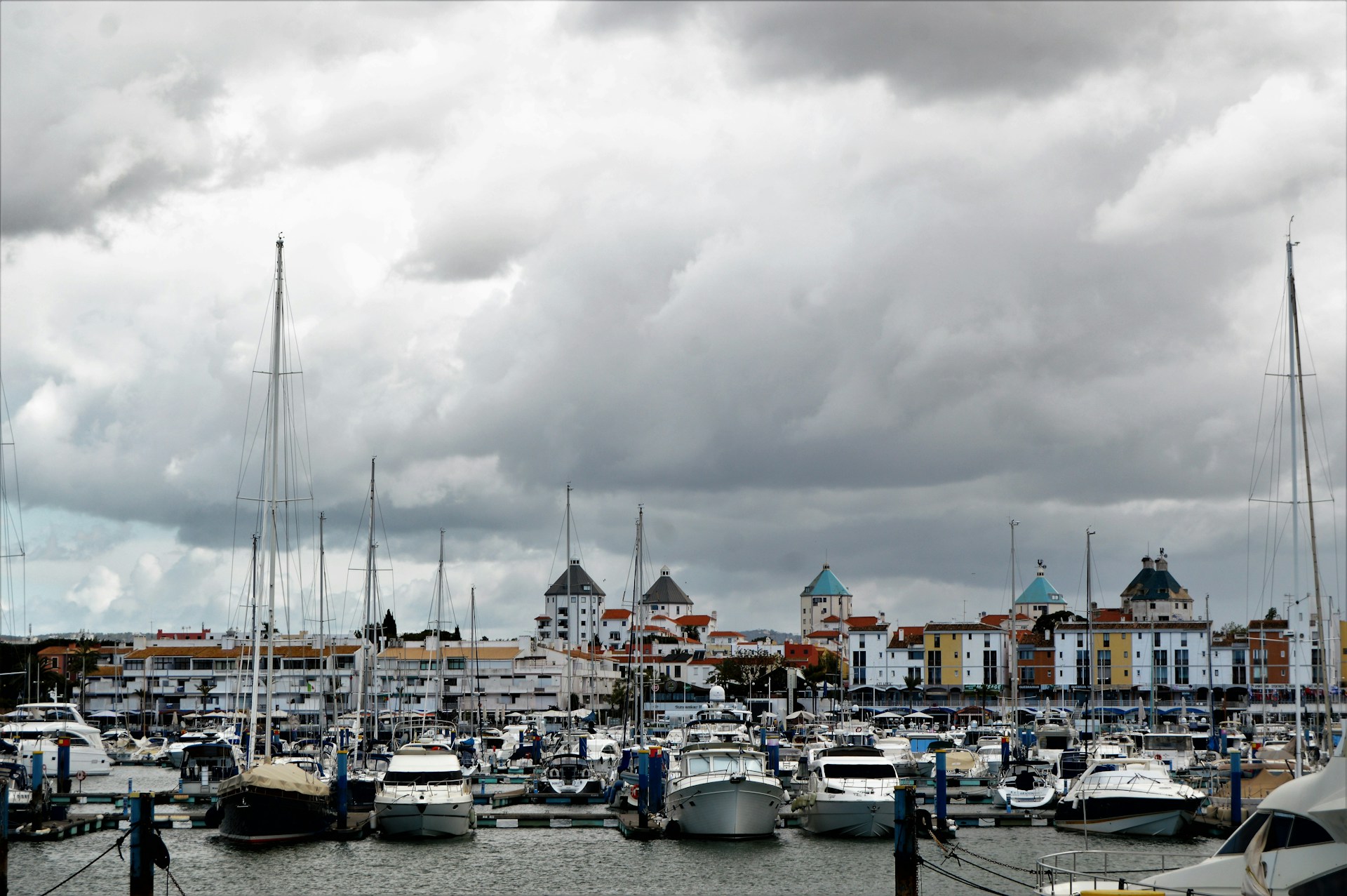
City view of Faro, Portugal

Faro

Faro balances student chatter and sea breezes, a gateway city that rewards unhurried detours. Inside the old walls, a cathedral folds Gothic bones into Renaissance repairs, and swallows claim the bell tower at dusk. The Capela dos Ossos in the Carmo church adds a quiet shiver to otherwise sunlit days. Offshore, the Ria Formosa lagoon rearranges itself with every tide, sending boats toward sandbar islands where shellfish lunches arrive within minutes of leaving the water. Kitchens grill dourada with lemon and nothing else, confident in the math of freshness. Trams are absent, so walking teaches the map, and cicadas handle the soundtrack. A neat surprise: storks nest on streetlights and rooftops with such seniority that traffic plans adapt to their schedules, turning urban planning into a partnership between biology and patience. Museums lean maritime, but a small collection of Roman mosaics rewards anyone who enjoys stories told in tiny stone.

Top attractions & things to do in Faro

If you’re searching for the best things to do in Faro, this guide brings together the top attractions and must-see places to visit in Faro. The top picks below highlight the most visited sights for first-time visitors, plus a few local favorites worth adding.

Arco da Vila in Faro, Portugal

Arco da Vila

The city of Faro greets visitors through an arch that blends centuries of influence into a single stone threshold. Built in 1812 on top of the remains of a medieval gateway, it was commissioned by Bishop Francisco Gomes do Avelar and designed by Italian architect Francesco Xavier Fabri. The arch still preserves part of the original Moorish wall, a reminder that the city once held an important Islamic stronghold before being retaken in 1249. Above the entrance, a niche holds a statue of Saint Thomas Aquinas, quietly presiding over centuries of processions. Carriages once passed through to reach the old city, while today tourists pause beneath swallows darting overhead. Passing through the gateway feels like stepping into layers of history, where cobbled alleys stretch toward tiled houses and the cathedral square. Legend whispers that captured ships brought the bells that still ring nearby, gifts and spoils that remind Faro of its shifting tides.
Ads place
Ads place
Ads place
Ads place
Ads place
Carmo Church in Faro, Portugal

Carmo Church

Step inside and the first impression is gilded wood glowing in candlelight, a textbook example of Portuguese Baroque completed in the 18th century. Commissioned by the Carmelite order, the church remains famous for its startling side chapel, the Capela dos Ossos. Here, walls are lined with the bones and skulls of more than 1,000 monks, arranged as a memento mori to remind the living of life’s brevity. The contrast between the lavish high altar, shimmering with gold leaf, and the stark bone chapel creates an atmosphere both theatrical and sobering. Earthquakes in the 1750s damaged the structure, yet careful rebuilding preserved its ornate façade, crowned by twin bell towers that dominate Faro’s skyline. During festivals, processions still depart from its heavy doors, carrying saints beneath arcades of light. Look closely, and you’ll see small maritime motifs carved into details, linking faith with the sea journeys that once defined the Algarve’s destiny.
Ads place
Ads place
Ads place
Ads place
Ads place
Cidade Velha (Old Town) in Faro, Portugal

Cidade Velha (Old Town)

Encircled by walls that date back to the Roman period and later strengthened by the Moors, Faro’s Old Town is a living archive of southern Portugal’s layered past. The main gate, Arco da Vila, leads into a labyrinth of cobblestones where tiled houses lean into narrow streets. At the heart sits the Se Cathedral, founded in 1251 on the ruins of a mosque, its bell tower still watching over the city. Cafés spill onto shaded corners, where locals linger over coffee as if rehearsing traditions centuries old. The streets whisper of Francis Drake’s raids in the 16th century, when the town’s library was looted and shipped abroad. Today, silence reigns in shady courtyards interrupted only by birdsong and the occasional bicycle. At dusk, lamplight glows against whitewashed walls, creating a timeless atmosphere that carries the weight of history without needing to say a word. Every stone here tells a layered, unfinished story.
Ads place
Ads place
Ads place
Ads place
Ads place
Faro Cathedral (Se de Faro) in Faro, Portugal

Faro Cathedral (Se de Faro)

Standing at the center of Faro’s Old Town, the cathedral embodies more than seven centuries of history. Built in 1251 after the Christian reconquest, it rose directly on the foundations of a Moorish mosque. The façade combines Gothic, Renaissance, and Baroque elements, each layer reflecting repairs after disasters like the 1755 earthquake and later fires. Inside, gilded chapels dazzle with carved wood and azulejos narrating biblical scenes, while the choir loft holds a magnificent 18th-century organ decorated with oriental motifs—a nod to Portugal’s maritime reach. Climb the bell tower, and Faro spreads below in a quilt of terracotta roofs leading out to the lagoon. In the quiet cloister, orange trees cast shade over tombstones, softening the dialogue between life and death. It is said that sailors once prayed here before long voyages, leaving ex-votos as thanks for safe return, a tradition that binds the cathedral to the sea even now.
Ads place
Ads place
Ads place
Ads place
Ads place
Ria Formosa Natural Park in Faro, Portugal

Ria Formosa Natural Park

Stretching for nearly 60 kilometers along the Algarve coast, the Ria Formosa lagoon is a shifting world of islands, channels, and salt marshes. Declared a Natural Park in 1987, it is home to thousands of migratory birds, including flamingos, spoonbills, and the rare purple swamphen. The landscape itself changes daily with tides that sculpt sandbanks and lagoons anew, creating one of Europe’s most dynamic ecosystems. Fishermen still harvest shellfish and sea salt here, continuing traditions that go back to Roman times. Wooden boats carry visitors to sandbar islands like Ilha Deserta, where dunes stretch uninterrupted by roads or houses. In spring, fields of samphire and glasswort glow red against the lagoon’s pale water. Beyond its beauty, the park serves as a crucial defense against coastal erosion, protecting Faro from the Atlantic’s full force. For locals, it is both workplace and sanctuary, a reminder that survival here has always meant listening to the tides.
Ads place
Ads place
Ads place
Ads place
Ads place