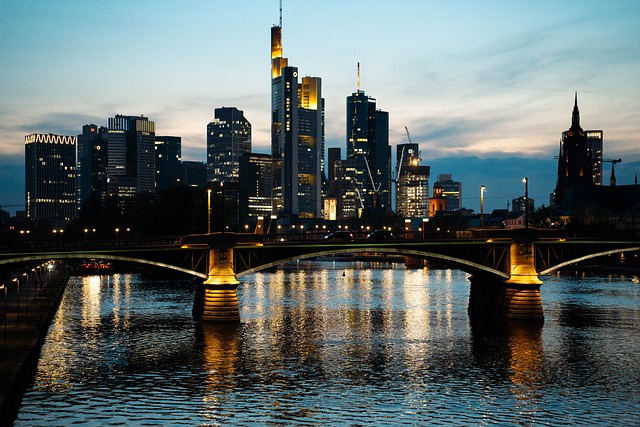
City view of Frankfurt, Germany

Frankfurt

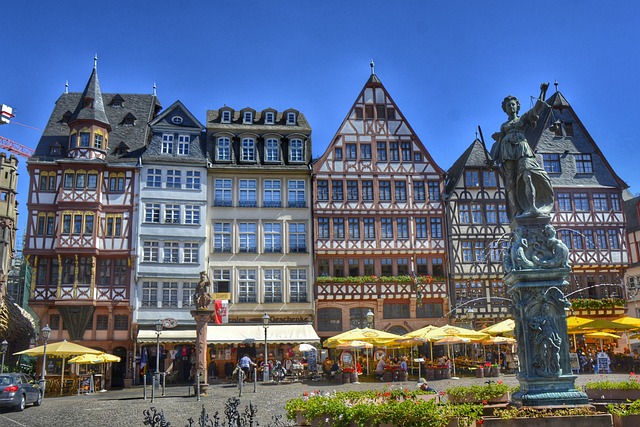
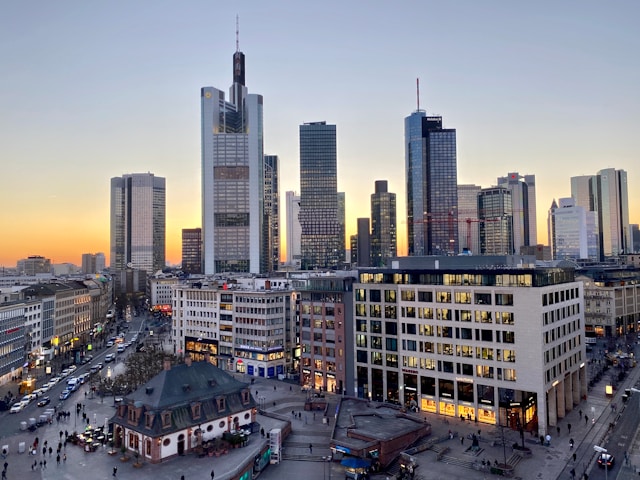
Frankfurt, located in the heart of Germany, is a major financial hub known for its striking skyline and international significance. The city is home to the European Central Bank and numerous multinational corporations. Frankfurt's Old Town, or Altstadt, features the charming Römer square with its half-timbered houses. Visitors can explore the historic St. Bartholomew's Cathedral and the Goethe House, the birthplace of the famous writer Johann Wolfgang von Goethe. The Main River runs through the city, offering scenic views and boat tours. Museums along the Museumsufer, such as the Städel Museum, showcase art and history. Frankfurt's culinary scene ranges from traditional German dishes to global cuisines, reflecting its diverse population. The city's public transport network makes it easy to navigate its modern and historical attractions. Annual events like the Frankfurt Book Fair highlight its status as a cultural and intellectual center.

Top attractions & things to do in Frankfurt

If you’re searching for the best things to do in Frankfurt, this guide brings together the top attractions and must-see places to visit in Frankfurt. The top picks below highlight the most visited sights for first-time visitors, plus a few local favorites worth adding.

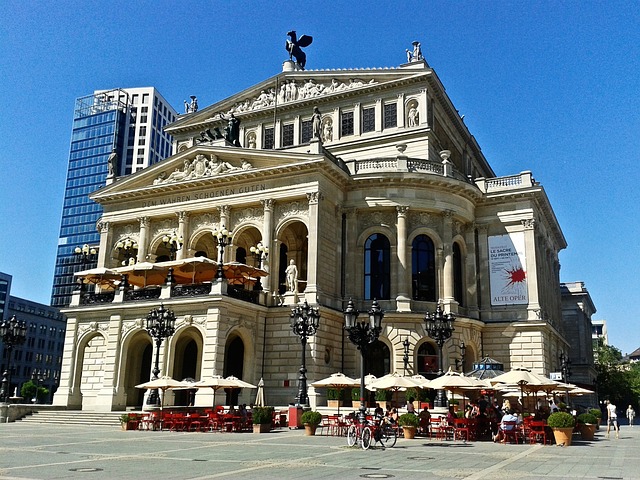
Alte Oper in Frankfurt, Germany

Alte Oper

Alte Oper, Frankfurt's "Old Opera," debuted in 1880 with Mozart's Don Giovanni. Designed by Richard Lucae in neo-Renaissance style, its facade statues depict Muses and composers like Beethoven. Bombed in 1944, it rose from ruins in 1981 with a modernist interior housing 2,500 seats. The Mozart Saal acoustics rival Vienna's Musikverein, hosting legends like Maria Callas (1959) and Herbert von Karajan. The plaza's Fountain of Wisdom (1981) cycles 7,000 liters of water hourly, while the Operncafé serves Black Forest cake beneath crystal chandeliers. Backstage tours reveal the Archiv der Zeiten—original librettos from Wagner's Frankfurt premiere. Summer's Opernplatzfest transforms the square into a beer garden with symphonic pop covers. A symbol of rebirth, Alte Oper bridges imperial grandeur with cutting-edge performances.
Ads place
Ads place
Ads place
Ads place
Ads place
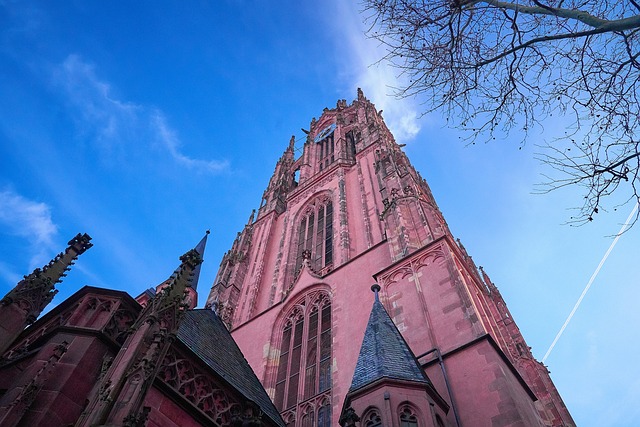
Frankfurt Cathedral in Frankfurt, Germany

Frankfurt Cathedral

Frankfurt Cathedral (Dom St. Bartholomäus), built from red sandstone (1250–1550), hosted 10 Holy Roman Emperor coronations between 1562–1792. The 95-meter Gothic tower, added in 1877, offers views of the Taunus Mountains. The Wahlkapelle (Election Chapel) preserves the original imperial throne, while the Maria-Schlaf-Altar (1434) depicts the Virgin's dormition in gold leaf. Firebombed in 1944, the cathedral's reconstruction revealed Carolingian foundations (852 AD). The St. Bartholomew Sculpture (1514) flanks the portal, clutching his flayed skin. The Cathedral Treasury displays the Imperial Gospel Book (1555) and electors' swords. At Advent, the Domweihnacht market sells frankincense beside medieval stalls. Climb the 328 spiral steps to see Emperor Charles IV's initials carved in 1356. A spiritual and political landmark, the cathedral towers over Frankfurt's history.
Ads place
Ads place
Ads place
Ads place
Ads place
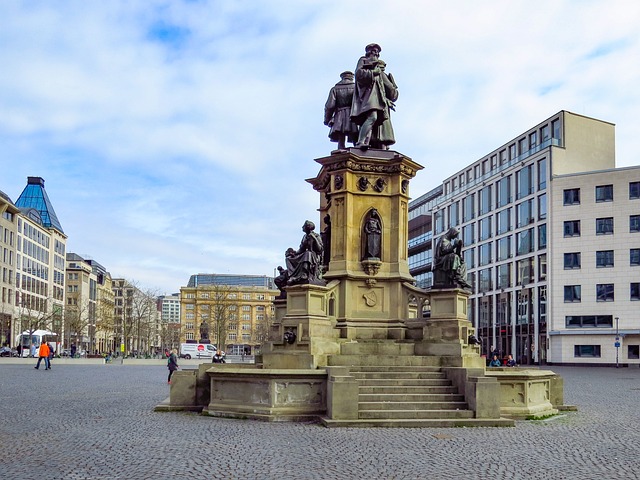
Gutenberg-Denkmal in Frankfurt, Germany

Gutenberg-Denkmal

The Gutenberg Monument (1840), designed by Eduard Schmidt von der Launitz, honors the inventor of movable type (c. 1440). The bronze statue shows Gutenberg holding a type mold, flanked by allegorical figures of Typography and Bookbinding. The pedestal reliefs depict Fust and Schöffer, his financier and apprentice. Hidden in a salt mine during WWII, the monument was re-erected in 1946 as a symbol of post-war renewal. The square's Literaturhaus hosts the annual Book Fair readings, while the Gutenberg School nearby teaches antique press techniques. At night, LED projections animate the statue with 42-line Bible pages. A plaque lists 100 "Words that Changed the World," from Goethe to Gandhi. On April 14 (Gutenberg's death date), printers lay wreaths of lead type. A testament to the word's enduring power.
Ads place
Ads place
Ads place
Ads place
Ads place
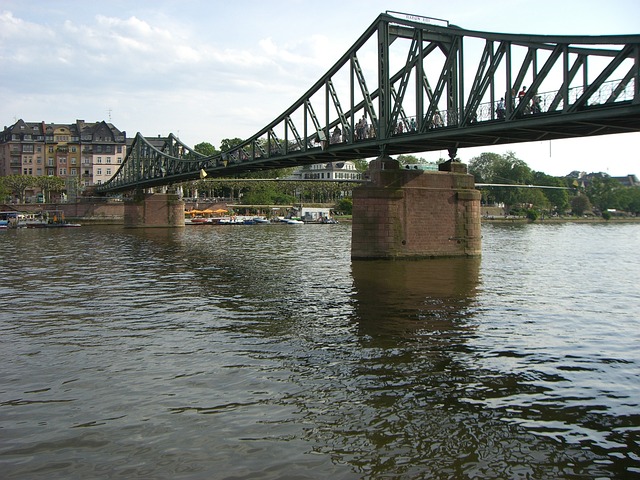
Iron Bridge in Frankfurt, Germany

Iron Bridge

The Eiserner Steg (1869), Frankfurt's first iron pedestrian bridge, spans 174 meters across the Main. Designed by Peter Schmick, its neo-Gothic portals feature riveted arches and Art Nouveau lamps. Over 40,000 love locks weigh its railings, with keys rusting in the river below. The bridge linked medieval Frankfurt to Sachsenhausen's apple wine taverns, where Goethe caroused. Bombed in 1945, it reopened in 1946 as a symbol of unity. The Museum Embankment vista from mid-span inspired Max Beckmann's expressionist landscapes. At sunrise, joggers pass fishermen casting for pike; at night, LED lights mirror the skyline. A time capsule in the north pillar holds 19th-century coins and a Gutenberg Bible page. A steel thread stitching Frankfurt's halves together.
Ads place
Ads place
Ads place
Ads place
Ads place
Museum Embankment in Frankfurt, Germany

Museum Embankment

Museumsufer, Frankfurt's museum mile along the Main, unites 38 institutions in 19th-century villas and modernist cubes. The Liebieghaus (1896) displays a 3,000-year sculpture timeline, including a Roman copy of Myron's Discus Thrower. The German Film Museum screens expressionist classics like Metropolis in a 1984 Helmut Jahn-designed cinema. August's Museumsuferfest draws 3 million visitors to riverside concerts and firework-lit boat parades. The Museum of World Cultures houses Benin bronzes and Navajo textiles, while the Architectural Museum preserves Frank Lloyd Wright's Fallingwater models. Cross the Holbeinsteg footbridge to reach the Städel's contemporary extension. At low tide, fossilized mammoth bones emerge on the riverbank—remnants of Ice Age hunters. A cultural axis where past and future converge.
Ads place
Ads place
Ads place
Ads place
Ads place
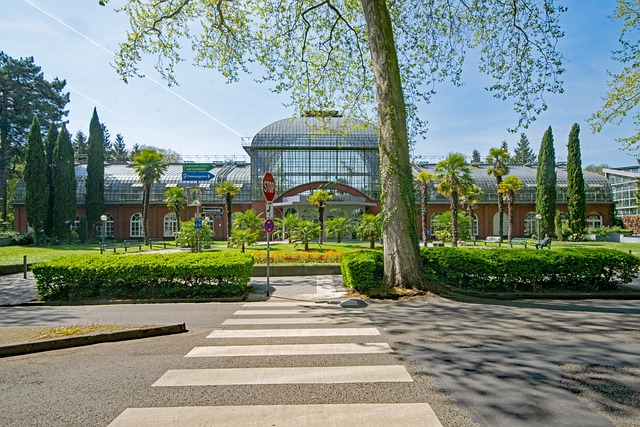
Palmengarten in Frankfurt, Germany

Palmengarten

Palmengarten, founded in 1868, is a 22-hectare botanical wonderland housing over 13,000 plant species. The Tropicarium, Europe's largest greenhouse complex, simulates Amazonian rainforests with 30-meter-tall palms and vanilla orchids. The Subantarctic House nurtures carnivorous King Sundews from Tasmania, while the Rose Garden blooms with 450 historic varieties like the Frankfurt Rose (1799). The garden's iconic Palm House (1871), a glass-and-iron masterpiece, hosts winter jazz concerts under banana trees. Children adore the Sealife Pond with koi carp and the Bonsai Pavilion showcasing 200-year-old Japanese pines. Scientists here pioneered lichen air pollution studies in the 1970s. Don't miss the Goethe Garden, replicating the poet's herbal collection. Annual highlights include June's Night of the Palms, where bioluminescent installations illuminate pathways. A green sanctuary since the Industrial Revolution, Palmengarten marries ecology with artistry.
Ads place
Ads place
Ads place
Ads place
Ads place
Römerberg in Frankfurt, Germany

Römerberg

Römerberg, Frankfurt's medieval soul, has been the city's central square since the 12th century. The reconstructed half-timbered houses—like the 1904 Wertheim am Dom—echo the square's pre-war glory, destroyed in 1944 and restored in the 1980s. The Fountain of Justice (1543) depicts Justitia blindfolded, sword in hand, a reminder of Frankfurt's role as a Holy Roman Empire coronation city. The Römer complex, Frankfurt's town hall since 1405, includes the Kaisersaal where emperors celebrated coronations beneath 52 royal portraits. December transforms the square into Germany's oldest Christmas Market (1393), with 200 stalls serving Bethmännchen marzipan treats. Beneath the cobblestones, archaeologists uncovered a Roman settlement (1st century AD), now displayed in the Dom-Römer Museum. Summer brings open-air theater performances of Goethe's works, while the Ostzeile facades glow amber at dusk. A living stage for history and festivity, Römerberg embodies Frankfurt's resilience.
Ads place
Ads place
Ads place
Ads place
Ads place
St. Catherine's Church in Frankfurt, Germany

St. Catherine's Church

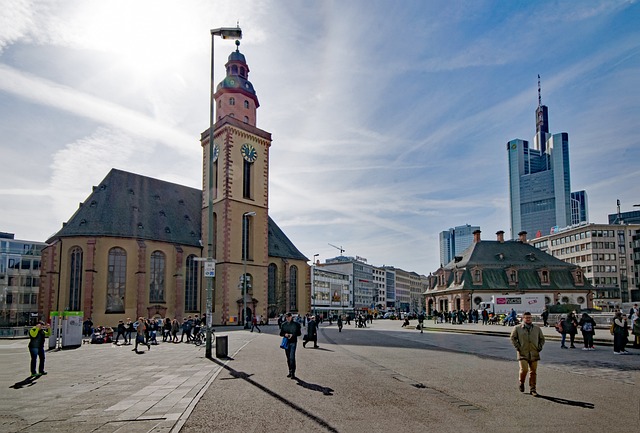
St. Katharinenkirche, founded in 1338 as a monastery chapel, became Frankfurt's first Protestant church in 1526. The baroque spire (1681) soars 54 meters, crowned by a gilded weathervane. Bach's Christmas Oratorio premiered here in 1734, performed on the 1717 Wagner organ. The stained-glass choir windows (1954) by Charles Crodel depict Reformation scenes. The Thirty Years' War cannonball embedded in the north wall recalls Swedish sieges. The Goethe Family Pew, numbered 23, marks where the poet worshipped. Beneath the nave, 500 medieval grave slabs include plague victims. The Carillon (1987) plays Luther hymns at noon. After 1944 firebombing, locals salvaged 16th-century altar fragments now displayed in the crypt. A living hymn in stone and glass.
Ads place
Ads place
Ads place
Ads place
Ads place
Städel Museum in Frankfurt, Germany

Städel Museum

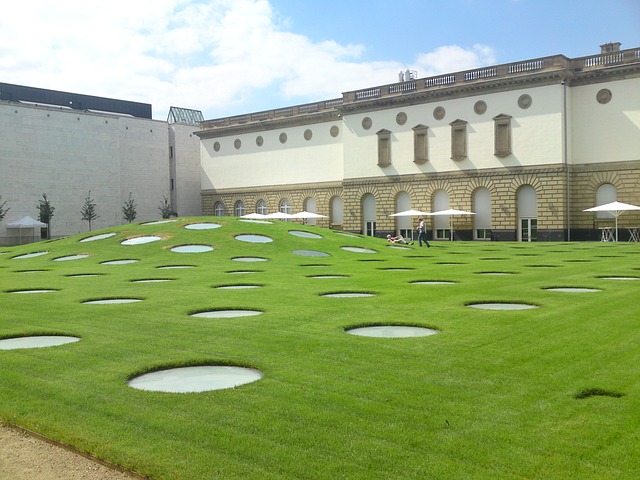
The Städel Museum, founded in 1815 by banker Johann Städel, spans 700 years of art across 3,100 paintings. The Old Masters Wing showcases Dürer's Lucretia (1518) and Rembrandt's Blinding of Samson (1636). The Modern Wing, burrowed beneath a grassy dome, displays Beckmann's Departure triptych (1932) and Richter's Abstract Painting (1992). The 2021 Digital Extension offers VR tours of Bosch's lost works. Don't miss the Degas Dancers pastels or the Garden of Earthly Delights tapestry (1540). The museum's Kunstkeller hosts experimental video art, while the Städel School trained Max Ernst. During WWII, curators hid masterpieces in a salt mine near Heidelberg. The rooftop café overlooks the Main, pairing espresso with views of Botticelli's Venus. A temple of creativity, the Städel remains Europe's oldest civic art foundation.
Ads place
Ads place
Ads place
Ads place
Ads place
Zeil Shopping Street in Frankfurt, Germany

Zeil Shopping Street

Zeil, dubbed "Germany's Fifth Avenue," traces its mercantile roots to medieval cloth markets (12th century). The MyZeil mall (2009), with its swirling glass facade by Massimiliano Fuksas, houses 100 stores beneath a kinetic roof collecting rainwater. The Hauptwache plaza, once a prison (1730), now buzzes with the Bitter & Zart chocolate café. Historic Zeilgalerie (1992) offers rooftop views from its 11th-floor terrace. Don't miss the Kleinmarkthalle (1954), where butchers sell Handkäse mit Musik cheese. January's Zeil Lights festival bathes the street in neon, while August brings sidewalk sales of Apfelwein steins. The Goethe Monument (1844) overlooks the chaos, quill in hand. Retail therapy meets history on this mile of commerce.
Ads place
Ads place
Ads place
Ads place
Ads place