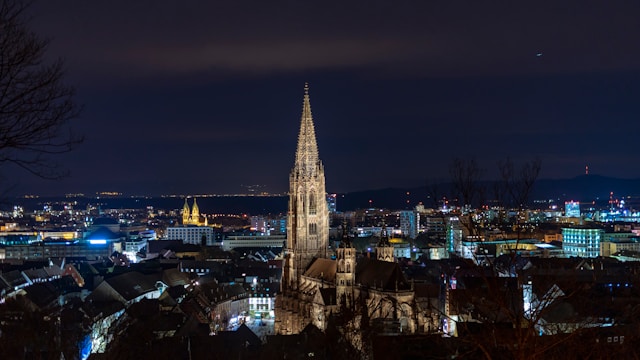
City view of Freiburg, Germany

Freiburg

Freiburg, nestled in the Black Forest region, is known for its charming old town and eco-friendly ethos. The city's landmark is the Freiburg Minster, a stunning Gothic cathedral with an impressive spire. Visitors can explore the historic Münsterplatz, where local markets offer fresh produce and regional specialties. Freiburg's Bächle, small water channels running through the streets, add to the city's unique character. The city is surrounded by scenic hiking and cycling trails, making it an ideal destination for outdoor enthusiasts. The nearby Schlossberg hill provides panoramic views over Freiburg. The city's warm climate contributes to its relaxed atmosphere and thriving wine culture.

Top attractions & things to do in Freiburg

If you’re searching for the best things to do in Freiburg, this guide brings together the top attractions and must-see places to visit in Freiburg. The top picks below highlight the most visited sights for first-time visitors, plus a few local favorites worth adding.

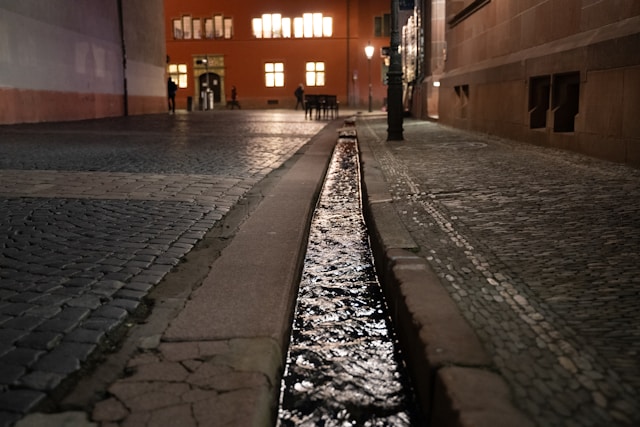
Bächle in Freiburg, Germany

Bächle

Freiburg's Bächle—a network of tiny canals—have flowed through the city since the 12th century. Originally designed for firefighting and livestock, these 15 km of channels now symbolize civic pride. The water, diverted from the Dreisam River, is drinkable and maintained by the "Bächleputzer" guild using medieval tools. Locals claim stepping in a Bächle ensures marriage to a Freiburger—a tradition immortalized in bronze "Bächlepatscher" statues. Children sail toy boats during the Bächle Boat Festival, while cafes offer "Bächlewasser" schnapps. In winter, the channels steam magically, and at Easter, they’re lined with painted eggs. Engineers recently added fish ladders to protect endangered Danube salmon. The most picturesque Bächle runs down Gerberau Street, flanked by artisan shops. Sustainable urban planning keeps the water clean—trout now thrive in the channels. More than a tourist quirk, the Bächle represent Freiburg's innovative spirit, blending ecology, history, and community.
Ads place
Ads place
Ads place
Ads place
Ads place
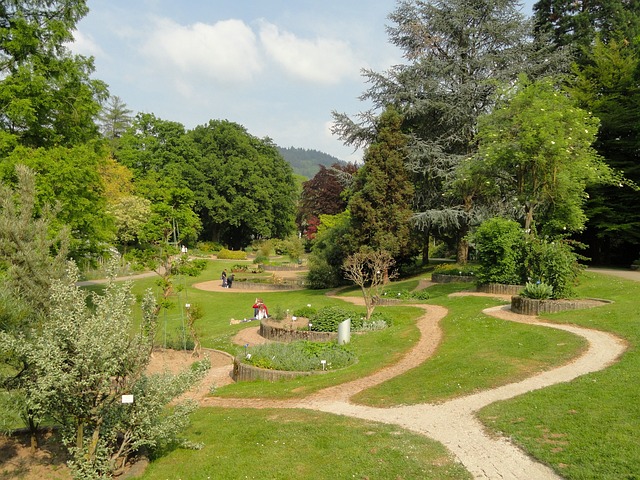
Freiburg Botanical Garden in Freiburg, Germany

Freiburg Botanical Garden

Established in 1620 as a medicinal herb garden, Freiburg Botanical Garden now spans 4 hectares with over 6,000 species. The Victorian Palm House, built in 1859, shelters carnivorous plants and a 200-year-old cycad. The alpine garden recreates Black Forest microclimates, while the beech tree arboretum tracks climate change impacts. Rare specimens include a Titan arum (corpse flower) that blooms once a decade. The garden's "Green Classroom" teaches permaculture, and the insect hotel supports endangered pollinators. Don’t miss the poison plant collection, curated for pharmaceutical research. In spring, cherry blossoms from Japan’s twin city Matsuyama draw crowds, while autumn illuminations highlight nocturnal flora. The garden partners with Freiburg University to preserve Swabian heirloom crops. A hidden moss labyrinth offers a tactile experience for visually impaired visitors. From its historic herbalist's cottage to cutting-edge phytotechnology exhibits, this living laboratory celebrates nature's wonders.
Ads place
Ads place
Ads place
Ads place
Ads place
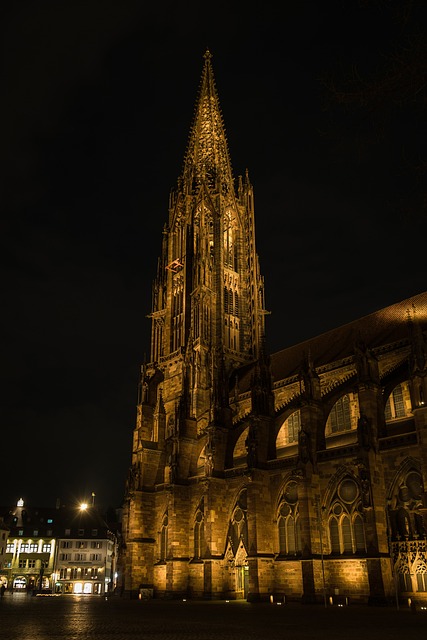
Freiburg Minster in Freiburg, Germany

Freiburg Minster

Freiburg Minster is a stunning Gothic cathedral that dominates the city's skyline. Constructed between the 13th and 16th centuries, it is renowned for its intricately detailed spire, soaring to 116 meters—one of the tallest in Europe. Inside, visitors marvel at the medieval stained-glass windows, among the oldest in Germany, which bathe the nave in kaleidoscopic light while depicting biblical narratives. The cathedral's interior also boasts exquisite stone carvings, including the famed "Dancing Death" frescoes, and an ornate high altar adorned with gilded reliefs. The bell tower houses the "Hosanna Bell," cast in 1258, whose resonant tones echo across Freiburg. Adventurous visitors can ascend the spire's 329 steps for panoramic views of the city and the Black Forest. Below the Minster lies a crypt containing tombs of medieval bishops, while the adjacent Augustiner Museum displays original sculptures from the cathedral's facade. A weekly farmers' market held at its base adds lively contrast to this spiritual sanctuary. As both a masterpiece of Gothic architecture and a living symbol of faith, Freiburg Minster captivates historians, pilgrims, and artists alike.
Ads place
Ads place
Ads place
Ads place
Ads place
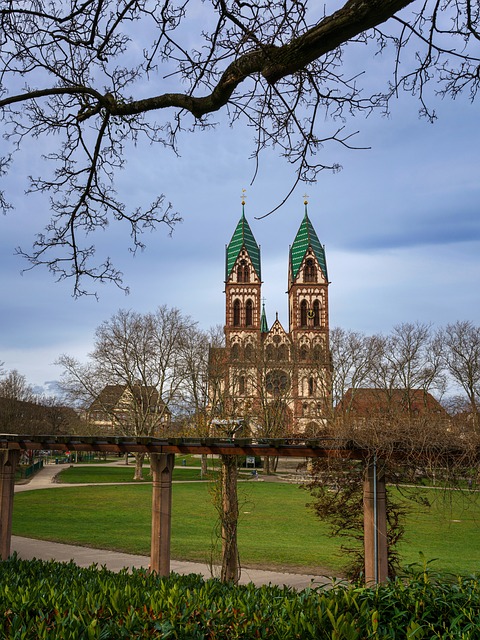
Herz-Jesu-Kirche in Freiburg, Germany

Herz-Jesu-Kirche

The Herz-Jesu-Kirche (Sacred Heart Church), a neo-Gothic masterpiece completed in 1897, dazzles with its twin 68-meter spires and intricate brickwork. Designed by architect Max Meckel, the church's interior features vaulted ceilings adorned with gold-leaf stars and 14 Stations of the Cross carved from linden wood. Its stained-glass windows, crafted by the famed Freiburg artist Fritz Geiges, depict scenes from Christ's life in vibrant hues. The church's 1878 Walcker organ, with 3,200 pipes, fills the nave with rich acoustics during weekly choir performances. Beneath the altar lies a crypt housing relics of early Christian martyrs. During WWII, the church miraculously survived Allied bombings, though its original bells were melted for munitions—replaced in 1955 with a bronze set tuned to C major. The adjacent parish hall hosts community theater productions, while the cloistered garden offers a quiet retreat with medicinal herbs mentioned in medieval texts. A guided tour reveals hidden mason's marks on the pillars, left by 19th-century craftsmen. Blending sacred art with civic pride, Herz-Jesu-Kirche remains a cornerstone of Freiburg's cultural identity.
Ads place
Ads place
Ads place
Ads place
Ads place
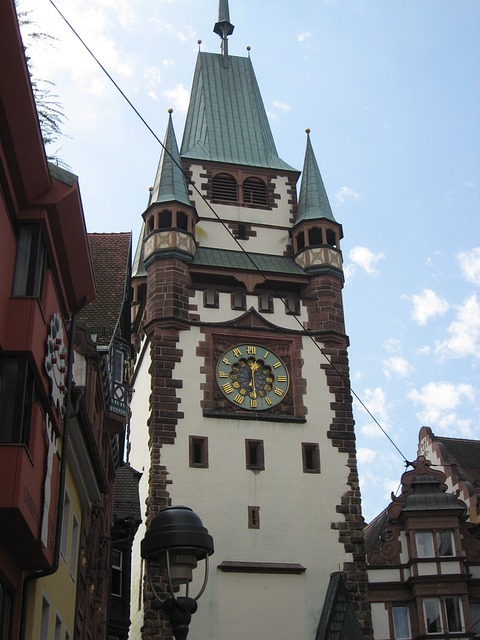
Martinstor in Freiburg, Germany

Martinstor

Martinstor (St. Martin's Gate), Freiburg's oldest surviving city gate, has guarded the city since 1202. Originally part of a 15-tower defensive ring, its Romanesque foundations support a 19th-century neo-Gothic facade added after a fire. The gate's namesake fresco depicts St. Martin sharing his cloak, a symbol of charity. A macabre detail is the witch's cage once used to display accused sorceresses—now marked by a discreet plaque. Today, the tower houses a McDonald's, creating a quirky blend of medieval and modern. Visitors can still see grooves from portcullis mechanisms in the stonework. The clock face, installed in 1901, uses black forest folk motifs. At night, LED lighting bathes the gate in colors reflecting seasonal festivals. Nearby, the "Blue House" memorializes victims of the 1944 Freiburg bombings. Climb the spiral staircase (open during heritage days) to a small exhibit on the city's fortifications. Martinstor's enduring presence—amid bustling tram lines and street performers—epitomizes Freiburg's ability to honor its past while embracing progress.
Ads place
Ads place
Ads place
Ads place
Ads place
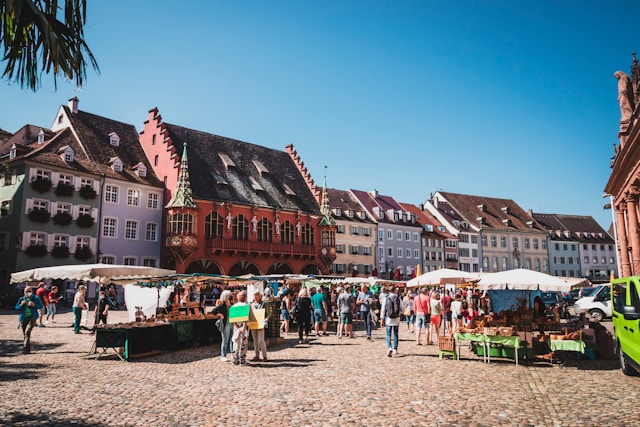
Munsterplatz Market in Freiburg, Germany

Munsterplatz Market

The Münsterplatz Market, sprawling beneath Freiburg Minster's spires, is a sensory feast operating since 1120. Over 120 stalls offer Swabian specialties like schäufele (pork shoulder) and flammkuchen (Alsatian flatbread). Vendors sell Black Forest honey, organic cheeses, and hand-pressed sunflower oil. Every Wednesday and Saturday, flower merchants create bouquets from local blooms, while Fridays feature artisan crafts like Bollenhut hats. The market's star attraction is the Bächle channel, where children sail wooden boats. At the "Himmelsstamm" stall, farmers pour cider from 200-year-old apple varieties. Don't miss the "Münsterwurst" grilled at the butchers' stand—a recipe dating to 1340. In December, the square transforms into a Christmas market, with mulled wine served in collectible mugs. Early risers witness the "Glockenläuten" ritual, where merchants ring the Minster's bells at dawn. Sustainability is key: stalls use biodegradable packaging, and unsold produce goes to food banks. More than a marketplace, Münsterplatz is where Freiburg's community spirit comes alive, blending commerce, tradition, and camaraderie.
Ads place
Ads place
Ads place
Ads place
Ads place
Schlossberg in Freiburg, Germany

Schlossberg

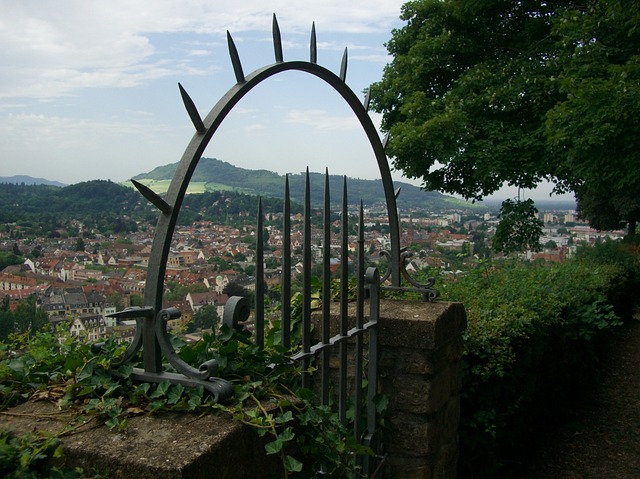
Schlossberg, Freiburg's "green lung," is a forested hill offering sweeping vistas of the city and the Black Forest. Accessible by a modern funicular or winding trails, its summit features a 35-meter observation tower with 360-degree views stretching to the Vosges Mountains. Historically, the hill hosted a 10th-century castle destroyed during the Thirty Years' War; remnants of its bastions and tunnels still dot the slopes. The Kanonenplatz, a sunlit clearing, marks where Napoleonic troops once positioned artillery. Today, visitors picnic amid wildflowers or dine at the hilltop restaurant, which hosts open-air jazz concerts in summer. The Duke Berthold Monument, honoring the city's founder, crowns the eastern slope. Hikers can explore trails leading to the Loretto Chapel or follow the "Historical Path" explaining Schlossberg's military past. At dusk, the hill transforms into a romantic vantage point, with Freiburg's lights twinkling below. A hidden gem is the Eichhalde rock garden, home to rare alpine plants. Whether for recreation or reflection, Schlossberg embodies Freiburg's harmony of nature and history.
Ads place
Ads place
Ads place
Ads place
Ads place
Schwabentor in Freiburg, Germany

Schwabentor

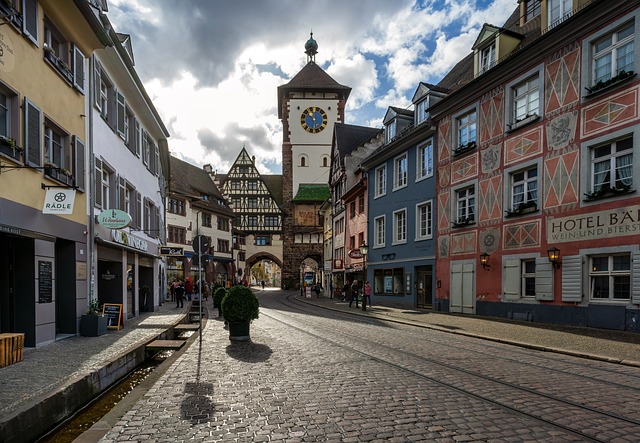
The Schwabentor (Swabian Gate), one of Freiburg's two surviving medieval gates, stands as a proud relic of the city's 13th-century fortifications. Its imposing sandstone facade features a striking mural of a Swabian merchant, symbolizing the gate's role in regulating trade. Originally part of a 2.5-kilometer defensive wall, the Schwabentor now anchors a picturesque neighborhood of cobblestone streets and half-timbered cafes. Inside, a small museum chronicles Freiburg's medieval history, including artifacts from the Thirty Years' War and the gate's strategic importance. The tower's clock mechanism, dating to 1904, still chimes hourly. Visitors can climb to the rooftop terrace for views of the Schlossberg and Dreisam River. By night, the gate is illuminated, casting dramatic shadows that evoke its martial past. A lesser-known feature is the hidden witches' cage embedded in the wall—a grim reminder of 16th-century trials. Today, the Schwabentor bridges Freiburg's medieval heritage with its vibrant present, hosting seasonal markets and art installations beneath its arched passageway.
Ads place
Ads place
Ads place
Ads place
Ads place
Seepark Betzenhausen in Freiburg, Germany

Seepark Betzenhausen

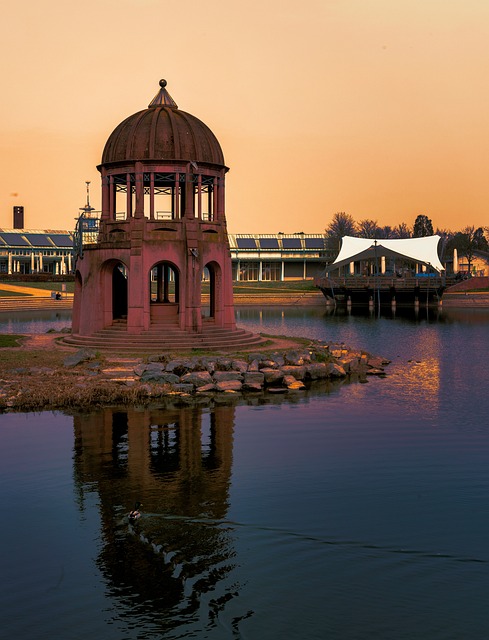
Seepark Betzenhausen, a 35-hectare oasis centered on a glacial lake, is Freiburg's largest urban park. Created for the 1986 State Garden Show, it blends Japanese Zen gardens with wildflower meadows. The lake, fed by groundwater springs, hosts grebes and kingfishers—best observed from the wooden birdwatching platform. Visitors rent rowboats in summer or ice-skate in winter. The park's Solar Cafe, powered entirely by photovoltaics, serves organic strawberry cakes and fair-trade coffee. Children adore the adventure playground with a replica Roman fort, while art enthusiasts admire the "Stone Circle" sculpture park. Hidden trails lead to the "Gourmet Garden," where herbs and edible flowers grow for public use. At dusk, the park's LED lighting system, designed by students from Freiburg University, casts ethereal patterns on the water. Annual highlights include the Seepark Festival, featuring fire dancers, and the "Freiburg Dragon Boat Race." A wetland conservation area protects endangered amphibians, and the park's beehives produce "Seepark Honey." Whether biking the 3.5-kilometer perimeter path or lounging in a hammock, this eco-friendly retreat embodies Freiburg's green ethos.
Ads place
Ads place
Ads place
Ads place
Ads place
Theater Freiburg in Freiburg, Germany

Theater Freiburg

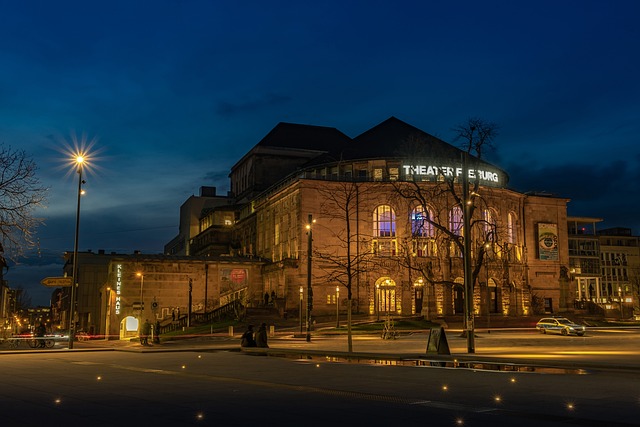
Theater Freiburg, a cultural powerhouse since 1910, stages 30+ productions annually across opera, ballet, and drama. The complex includes the Großes Haus (main stage) with its Art Nouveau foyer and the experimental Werkraum for avant-garde works. A 2012 renovation added a glass-walled lobby showcasing the original 1910 Jugendstil mosaics. The theater's orchestra, using period instruments, specializes in Baroque operas by Telemann and Handel. Notable premieres include Wolfgang Rihm's "Dionysos" and immersive productions like "Faust in VR." Backstage tours reveal the costume atelier, where 19th-century looms still weave fabrics for historical plays. The theater's "Junges Ensemble" program mentors young playwrights, while audio-described performances ensure accessibility. During the summer "Theater im Park" series, actors perform Shakespeare in Seepark. A hidden gem is the underground Jazzkeller, hosting jam sessions since the 1950s. From classic Wagner to radical reinterpretations of Chekhov, Theater Freiburg pushes artistic boundaries while honoring its rich legacy.
Ads place
Ads place
Ads place
Ads place
Ads place