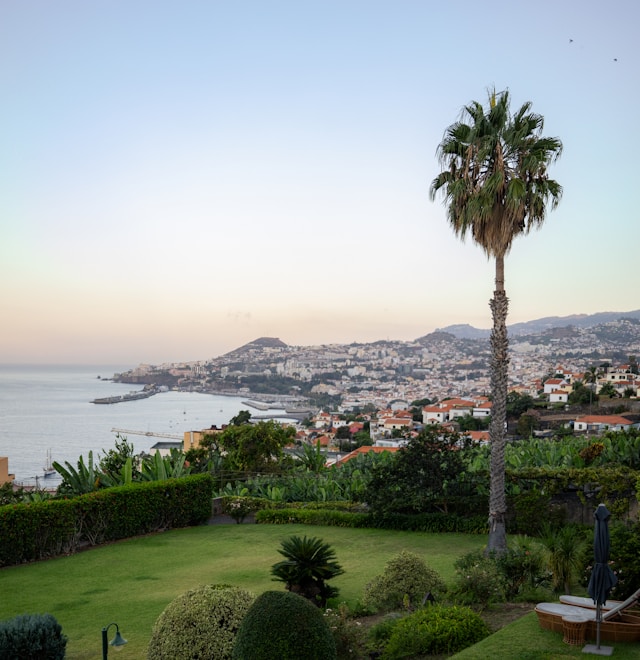
City view of Funchal, Portugal

Funchal

Funchal rises amphitheater style from the bay, a Madeira capital that treats gardens as civic rights. A cable car lifts you to Monte for vistas and a church holding the tomb of Charles I of Austria, a royal resting far from Vienna. From there, wicker toboggans steer down polished lanes with the flourish of street luge, a tradition credited to carreiros in the 19th century. The market stacks passion fruit in improbable varieties and hawks the sweet perfume of island honey cake. Meanwhile, levada trails carry water and walkers along contour lines that reveal banana terracing and sudden cliffs. Dinner leans toward espetada—beef on bay laurel skewers—followed by the citrus buzz of poncha. For a delightful oddity, look for street art painted on doorways, a gallery that changes with the weather and keeps the old town talking between tides. Even winter finds flowers here, as if the island forgot to read the calendar and carried on blooming anyway.

Top attractions & things to do in Funchal

If you’re searching for the best things to do in Funchal, this guide brings together the top attractions and must-see places to visit in Funchal. The top picks below highlight the most visited sights for first-time visitors, plus a few local favorites worth adding.

Blandys Wine Lodge in Funchal, Portugal

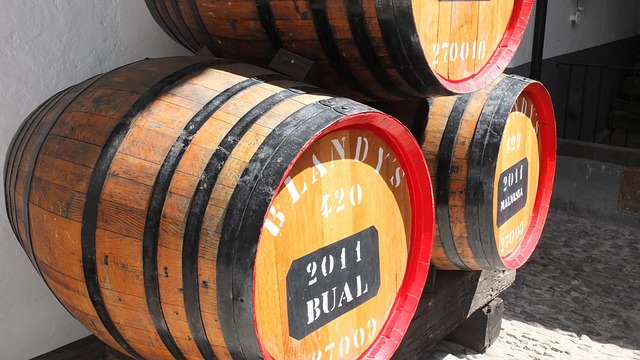
Blandys Wine Lodge

In old town warehouses, casks doze under warm rafters while guides translate chemistry into patient, drinkable stories. The family firm founded in 1811 still ages wines by estufagem and the slower canteiro method, stacking barrels where sun and attic heat do half the work. Tours move through cooperage rooms and tasting halls lined with maps of export routes and harvest dates. In glass you will meet sercial, verdelho, boal, and malmsey, each defined by sweetness but disciplined by acidity. An archive of vintage bottles sits behind steel mesh like a small bank; nearby, visitors sniff staves and caramel in warm air. Labels explain how fortified wine survived long voyages by design, making Madeira a case where technology and flavor married early across the Atlantic. Leave with a half bottle and a new respect for evaporation, sometimes nicknamed the angels' share.
Ads place
Ads place
Ads place
Ads place
Ads place
Capela do Corpo Santo in Funchal, Portugal

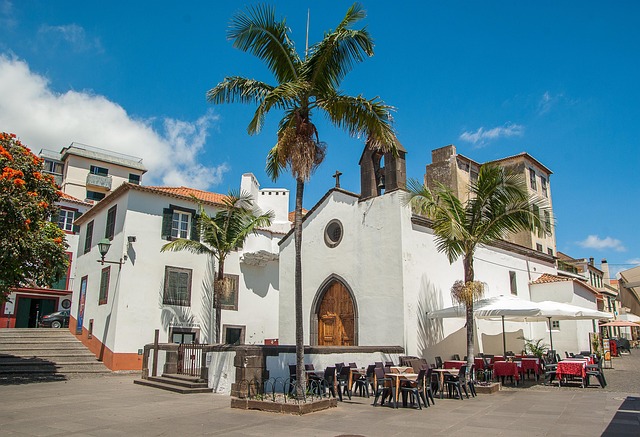
Capela do Corpo Santo

Down by the old harbor, a seafarers' chapel keeps close to the tide, its white walls carrying salt stories better than any plaque. Raised by the island's mariners in the 15th century, it sheltered prayers before departures and thanks on return, a rhythm older than cruise schedules. Step inside and the nave glows with gilded woodcarving that folds shells, ropes, and vines into a single language of devotion. A doorway in the Manueline taste frames the threshold, and blue-and-white azulejos stitch scenes of storms calmed and nets blessed. The patron here is St. Elmo, protector of sailors; look up and you may notice votive boats hanging from beams like a fleet at anchor. A side room gathers ex-votos, oilskins, and tools from the mariners' guild, proof that faith and craft worked the same waters. Outside, the slipway still smells of tar, and the chapel's small bell answers gulls with a note steady enough to steer by.
Ads place
Ads place
Ads place
Ads place
Ads place
CR7 Museum in Funchal, Portugal

CR7 Museum

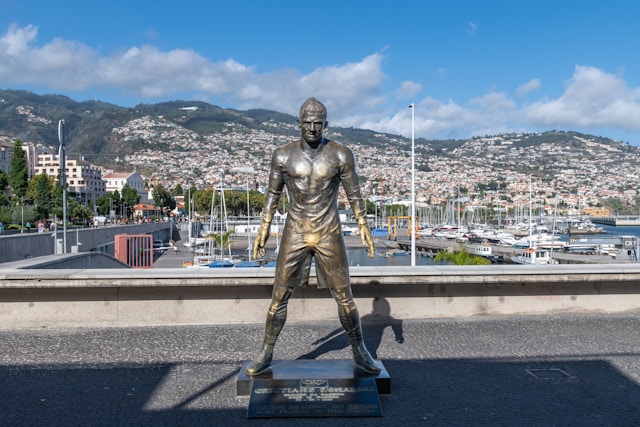
Near the marina, a glassy pavilion turns trophies into stage props and a local boy into a running thread through football history. The displays follow Cristiano Ronaldo from youth teams to European nights, then back to island holidays that still look like family first. Shiny proof lines the walls: Ballon d Or replicas, golden boots, and match balls that spun careers into headlines. A timeline notes the opening year 2013, when the museum joined the promenade and a larger than life statue claimed its square. Video booths let fans replay favorite goals while parents read contracts and dates as if studying a case study in discipline. Outside, the adjacent hotel keeps the initials on the facade; inside, a quiet section highlights charity matches and Portugal tournament wins. For trivia lovers, a corridor catalogs every international cap, turning numbers into a surprisingly persuasive narrative.
Ads place
Ads place
Ads place
Ads place
Ads place
Funchal Cable Car to Monte in Funchal, Portugal

Funchal Cable Car to Monte

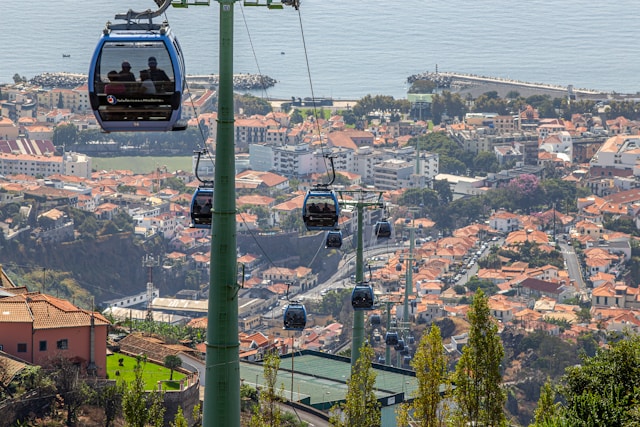
Down by the old town warehouses, gondolas lift away from sea level and slide over gardens, rooftops, and church towers toward cooler air. The ride takes about 15 minutes, enough time to watch the harbor reorganize into a model and the bay trace a clean curve. Built in the 2000s to connect the center with Monte, the system replaced rattling buses on the steepest stretch and turned arrival into part of the day out. From the upper station, paths lead to the Botanical Garden or further viewpoints where gulls glide at eye line. During festival weeks, evening fireworks sketch arcs over the bay, and cabins become moving balconies. Through the windows you glimpse washing lines and lemon trees that explain more about the city than any brochure. The glide is quiet, the map becomes obvious, and the descent carries the day back to sea level without erasing its altitude.
Ads place
Ads place
Ads place
Ads place
Ads place
Madeira Botanical Garden in Funchal, Portugal

Madeira Botanical Garden

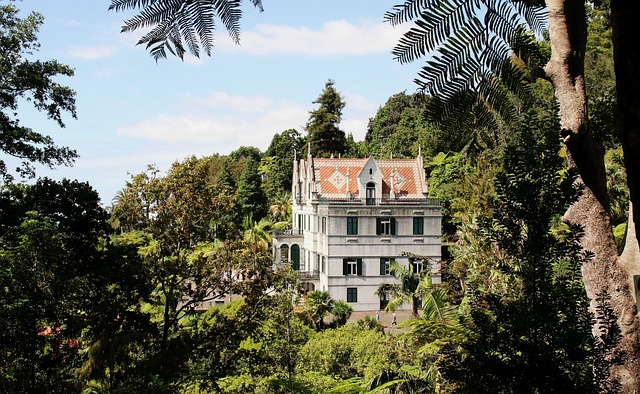
Terraces cut into the hillside create a living chart where plant families, colors, and textures arrange themselves for easy reading. Established in 1960, the garden leans into the mild climate to showcase succulents, orchids, and rare trees without forcing the point. Paths step between geometric beds that look designed with a ruler, then soften into slopes lined with dragon trees and palms. A small herbarium and labs support research, while an aviary gives injured birds a polite halfway house. Visitors often arrive by the second cable car from Monte, a glide that turns the bay into a backdrop for botanizing. Curators credit Rui Vieira for shaping the collection, and the labels are clear enough for the casually curious. From the top terrace, the city lies open, and the garden does its quiet work: reminding you that design, climate, and botany can collaborate without drama.
Ads place
Ads place
Ads place
Ads place
Ads place
Mercado dos Lavradores in Funchal, Portugal

Mercado dos Lavradores

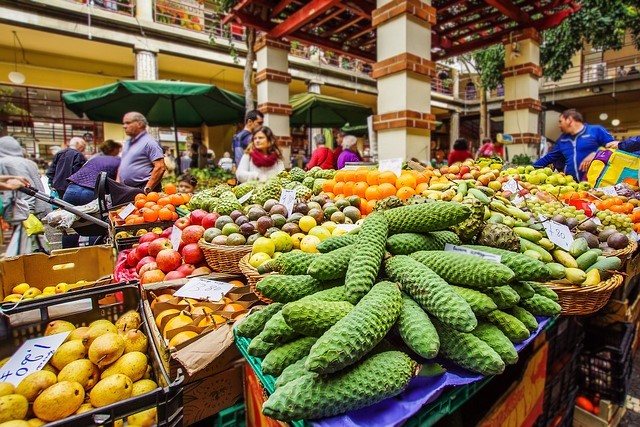
Morning is the best teacher here, when baskets arrive and voices bounce off tiled walls like percussion. Built in 1940 with clean lines and an Art Deco sense of order, the market still feels civic rather than staged. The fish hall introduces the island with rows of black scabbardfish and tunas dressed in chrome, while vendors explain recipes with brisk confidence. Upstairs, fruit stalls pyramid exotic passion fruit and custard apples beside bananas that actually taste of banana. Tile panels depict farming scenes, and the courtyard collects florists, gossip, and coffee foam under a mild draft. Yes, prices rise with cameras, but haggling is part of the choreography and the smiles are rarely expensive. A small gallery of tile panels at the entrance honors growers who hauled produce in wicker, and the design still funnels breezes through arcades to keep stalls cool.
Ads place
Ads place
Ads place
Ads place
Ads place
Monte Palace Tropical Garden in Funchal, Portugal

Monte Palace Tropical Garden

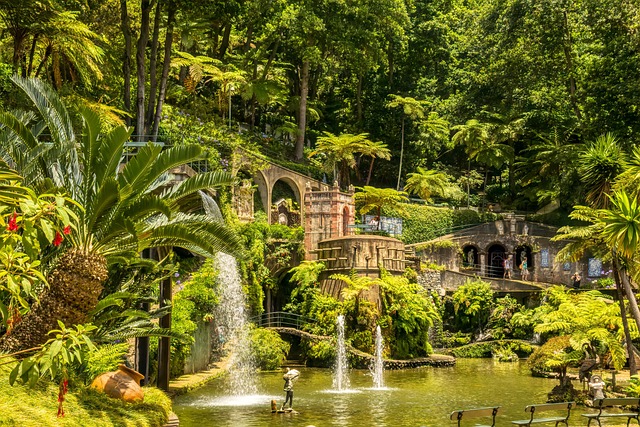
High above Funchal, a hillside estate turns botany into theater with ponds, koi, and broad staircases that make even slow walks feel ceremonial. Paths weave through cycads, tree ferns, and orchids, then detour into a gorge dressed with tile panels that narrate voyages and myths. The property evolved from an 18th century retreat into a modern foundation, collecting sculpture and minerals in galleries that hide behind shrubs. An oriental garden section bends bridges into red arcs, while stone lanterns borrow shadows from the camellias. From terraces you can read the city to the harbor, and the cable car line looks like a silver pencil drawn across the slope. On misty afternoons, the garden edits its colors to softer notes, and the koi suddenly own the stage. Visitors leave with the sense that landscape can be scholarship and play at once, and that patience remains the garden's quietest exhibit.
Ads place
Ads place
Ads place
Ads place
Ads place
Monte Toboggan Ride in Funchal, Portugal

Monte Toboggan Ride

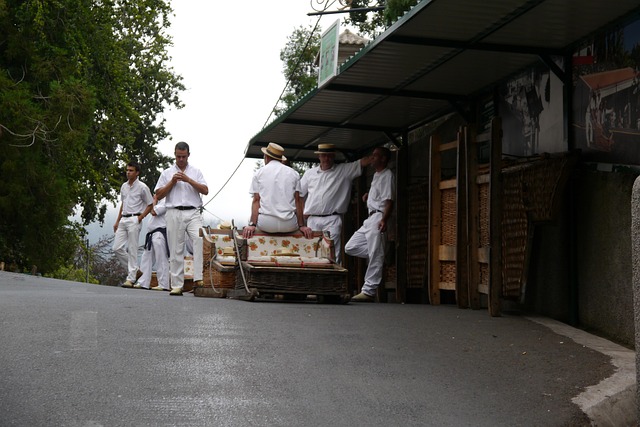
White hatted drivers in linen plant their boots and launch wicker sledges onto polished lanes, guiding baskets as if choreographing a street ballet. The tradition dates to the 19th century, when residents found a fast way to descend from Monte to the lower suburbs without waiting for horses. Today the route runs about 2 kilometers, and the carreiros brake with rubber soles and a casual banter that hides serious control. Corner by corner, the city rearranges into flashes of tile and bougainvillea, then the sledges slide to a halt near busy avenues. The craft endures because it works: wicker sledges are light, strong, and surprisingly comfortable, and the drivers' felt soled boots modulate friction like instruments. Ask about lane maintenance and you will get a crisp lecture on gradient, drainage, and the best months for smooth runs. It is part transport, part theater, and entirely local logic.
Ads place
Ads place
Ads place
Ads place
Ads place
Rua de Santa Maria Painted Doors in Funchal, Portugal

Rua de Santa Maria Painted Doors

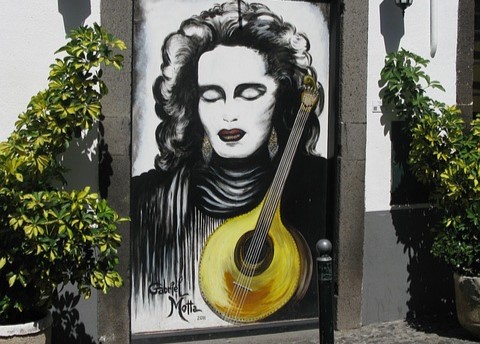
A once quiet lane in the Old Town became a gallery when artists began painting the doors, turning each threshold into a small manifesto. The project gathered pace in the early 2010s, and today the route mixes cafes with street art so the walk stays lively without losing its neighborly scale. Styles swing from portraits to abstractions, and new murals replace weathered ones at a tempo set by sea air. The point is less selfie than conversation: restaurateurs talk varnish and humidity with painters, and visitors learn that restoration is part of the rhythm. By evening, music slides down from balconies and every doorway seems to argue kindly for color, humor, and patience.
Ads place
Ads place
Ads place
Ads place
Ads place
Sao Tiago Fortress in Funchal, Portugal

Sao Tiago Fortress

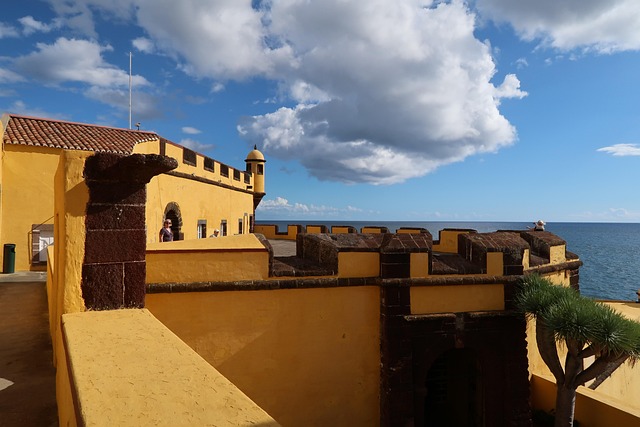
At the edge of the old town, a squat fort with walls of yellow ochre faces the surf with a veteran's patience. Raised in the 17th century to steady nerves against coastal piracy, it later housed a shifting garrison, stores, and for a spell an artists' hub where studios shared walls with cannon embrasures. The bastions are compact, the views generous, and inner courtyards have learned exactly how to catch breeze. Walk the ramparts and the Atlantic plays percussion on the stones, a soundtrack that refuses to age. Exhibitions come and go inside, but the building itself delivers the lesson with greatest clarity: a city that looks outward also knows how to defend a harbor and welcome it back when danger passes. Seek out the small stair to the parapet for the quietest view in town.
Ads place
Ads place
Ads place
Ads place
Ads place