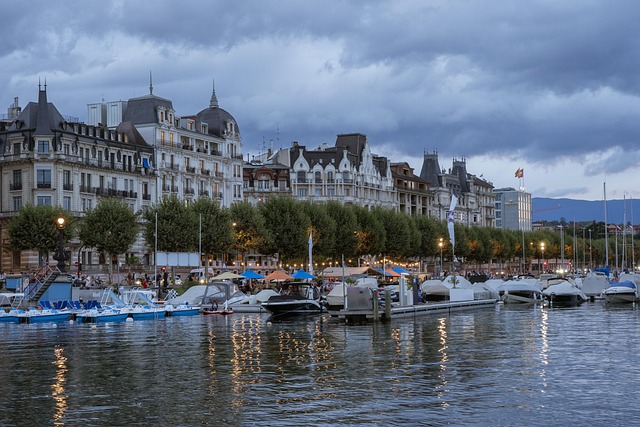
City view of Geneva, Switzerland

Geneva

Geneva stretches along the lake where the Rhone flows out, noted as a trading point in Roman times and later a center of the Reformation in the sixteenth century. A lakeside walk leads past the Jet d Eau plume to the flower clock in the English Garden and onward into the old town around St Pierre Cathedral. International districts near the Palais des Nations mix diplomats, students, and conference badges in dozens of languages. Menus offer fondue, lake perch with lemon, and neat rows of pralines in chocolate boutiques. Many residents favour the Carouge quarter, once Sardinian territory, where courtyards hide small theaters and late night cafes. Summer evenings draw swimmers and paddleboarders to the Bains des Paquis for soup, coffee, and sunset views. In winter, a knitted scarf often appears on the narrow lion of the Brunswick Monument, though nobody admits to starting this yearly fashion.

Top attractions & things to do in Geneva

If you’re searching for the best things to do in Geneva, this guide brings together the top attractions and must-see places to visit in Geneva. The top picks below highlight the most visited sights for first-time visitors, plus a few local favorites worth adding.

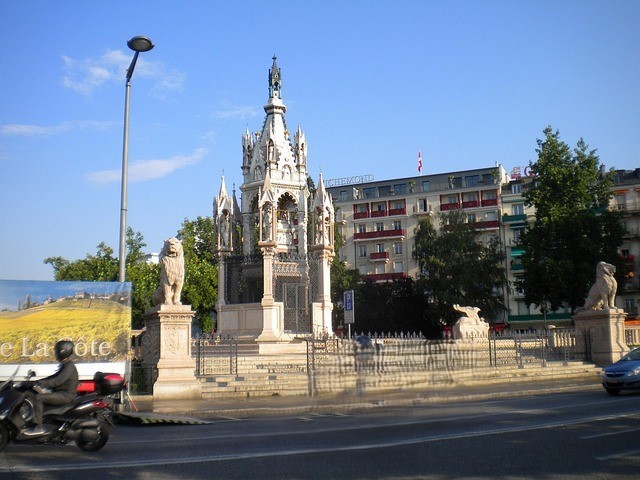
Brunswick Monument and Lakeside Promenade in Geneva, Switzerland

Brunswick Monument and Lakeside Promenade

This neo-Gothic mausoleum, built in 1879 for the exiled Duke of Brunswick, is a curious lakeside jewel: a marble replica of Verona’s Scaligero tombs transplanted to a small garden. Look closely at winged lions, cusped arches and the duke’s heraldic shields; then read how his fortune funded theatres and the grand opera house. Steps away, the promenade offers long benches for people-watching and a clear angle toward the Jet d'Eau. In the early 1900s, lake steamers moored nearby to unload hotel guests under rows of gas lamps; archival photos on discreet plaques help you visualize the scene. Today joggers, violin students and suited conference-goers share the same strip of pavement. Detour inland for pastry at a Belle Epoque café before looping back to the water. It is an easy, history-rich pause that rewards anyone who appreciates architectural oddities and the way philanthropy still shapes public spaces.
Ads place
Ads place
Ads place
Ads place
Ads place
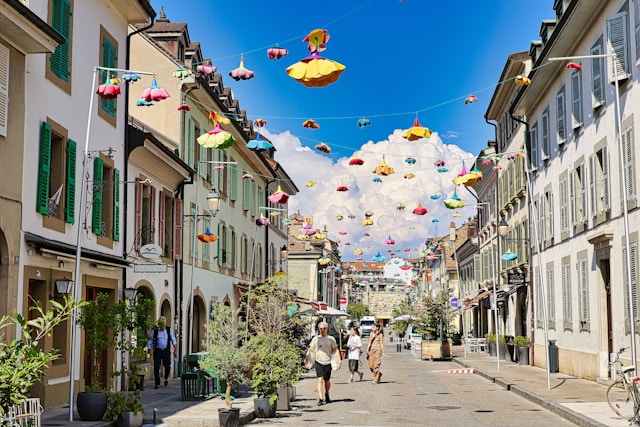
Carouge Quarter in Geneva, Switzerland

Carouge Quarter

Planned in the 18th century by Sardinian rulers, Carouge wears its origins on every facade: Mediterranean courtyards, low tiled roofs, and streets aligned for light rather than fortification. Today the grid shelters artisan workshops (ceramics, letterpress, violin repair), small theatres and cafes whose chairs spill into miniature squares. Saturday brings stalls of produce and local cheeses; evenings shift to wine bars and chocolate shops where you can try pralines filled with vermouth or citrus. Peek through doors into arcaded passages that connect homes to workshops, a living reminder that work and life once shared the same plot. It is walkable, photogenic and genuinely useful for shopping beyond souvenirs. Ride the tram down, browse slowly, and carry a small bag—you are likely to bring something back, even if it is only a loaf and a postcard printed on antique type.
Ads place
Ads place
Ads place
Ads place
Ads place
Conservatory and Botanical Garden in Geneva, Switzerland

Conservatory and Botanical Garden

Founded in 1904, the garden doubles as a research hub and a gentle urban escape. Wander past labelled alpine rockeries, the medicinal herbarium plots and an arboretum where conifers, ginkgos and beeches map global climates. Small lakes attract moorhens and dragonflies; glasshouses shelter tropical collections that fog your lenses in seconds. Benches are placed with intent—near scent, near shade, near a framed view of the water. Seasonal displays highlight seed saving and pollinator habitats, while a compact museum explains plant trade routes and the science behind acclimatisation. Entry is free or modest, making it easy to fold into a half day. Bring a book, move slowly, and photograph labels with plants so you can identify them later along mountain trails. It is not botany as spectacle; it is botany as companionship, and it may subtly change how you look at the city’s trees on your tram ride back.
Ads place
Ads place
Ads place
Ads place
Ads place
Ile Rousseau and Rhone Quays in Geneva, Switzerland

Ile Rousseau and Rhone Quays

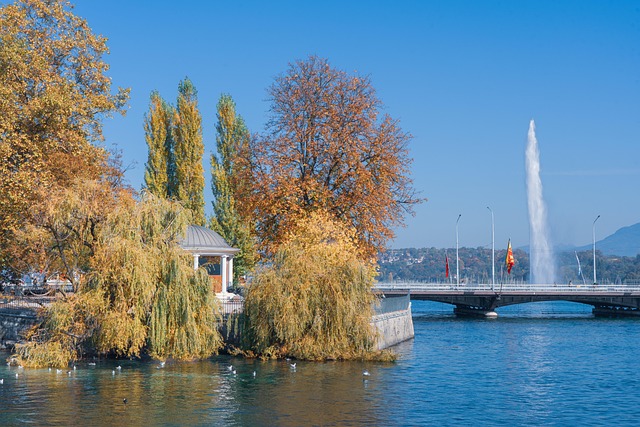
A small island at the point where the lake becomes river, Ile Rousseau honours Jean-Jacques Rousseau with a statue amid willows and ducks gliding through surprisingly clear water. From its edges you can study the shift from broad harbor to swift Rhone current, bridges arching low between quays once lined with warehouses. Informational plaques recount how the quays evolved from timber and grain trade to promenades and bookstalls. Bring a takeaway sandwich and sit under the trees as trams cross the Mont Blanc Bridge; late afternoon brings soft reflections and an easy calm. Nearby kiosks sell newspapers and local chocolate, small tokens that fit the island's pocket size. It is a five-minute stop that easily becomes thirty as you watch swans preen and commuters slip past, a miniature classroom in how geography shapes urban life—and how a philosopher's name still keeps a patch of ground gently set apart.
Ads place
Ads place
Ads place
Ads place
Ads place
Jardin Anglais and Flower Clock in Geneva, Switzerland

Jardin Anglais and Flower Clock

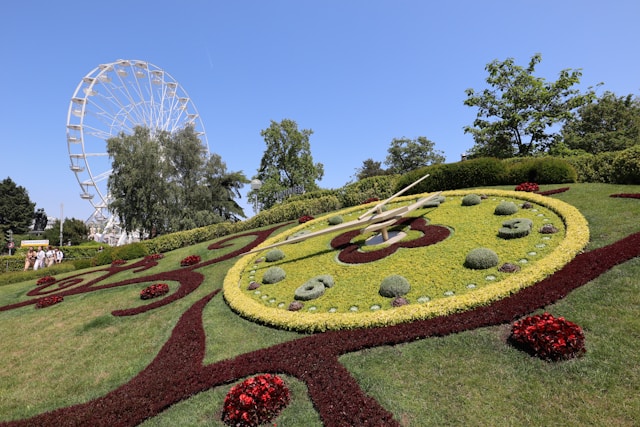
Created in 1955, the Flower Clock turns horticulture into timekeeping, with layered plantings that change design through the year while a quartz movement drives the hands. The surrounding English-style park curves along the quay under plane trees and past a bandstand used for municipal concerts since the Belle Epoque. Watch gardeners replant the dial in spring, then return at dusk to photograph second-hand blur against illuminated petals. From here, a few steps lead to boat piers and the stone Mont Blanc Bridge, useful markers in an otherwise leisurely stroll. Street vendors serve crêpes; children run the fountain edges; office workers cross diagonally at speed. It is not a long visit, but it is emblematic—a pocket where design, punctuality and play coexist. Tip: shoot from the upper corner path to include the lake and flags, and come back after rain when colours saturate and drops cling to leaves like tiny lenses.
Ads place
Ads place
Ads place
Ads place
Ads place
Jet d'Eau Fountain in Geneva, Switzerland

Jet d'Eau Fountain

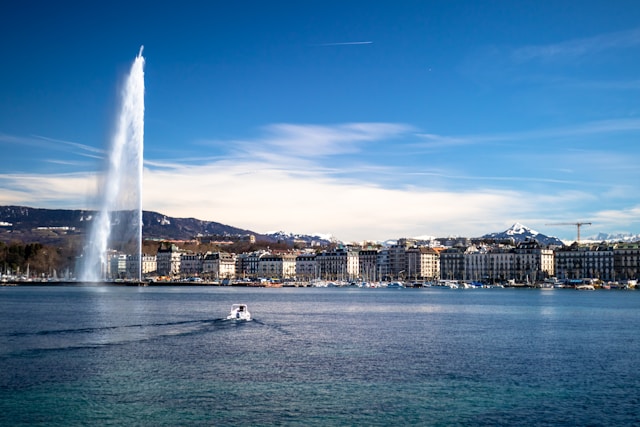
The city's signature fountain began as a practical pressure release in 1886 for a hydraulic plant and grew into today's 140-metre plume. Walk the breakwater when calm winds let the spray drift aside, and you will hear a steady thunder as the pump engines drive millions of litres upward. From the pier, frame yachts crossing the harbor basin with the jet as a vertical axis; after dusk, discreet lights turn the spray into a luminous column. History lovers will enjoy panels describing the switch from industrial valve to civic emblem and how engineers designed the nozzle assembly to keep the column stable. Photographers should come at golden hour, when the plume backlights into a soft veil and gulls pass through the mist halo. Pair the walk with a lakeside espresso, then trace older quay stones cut for paddle steamers that once powered regional trade. It is a simple idea with a remarkably rich backstory that still sets the daily rhythm of the waterfront.
Ads place
Ads place
Ads place
Ads place
Ads place
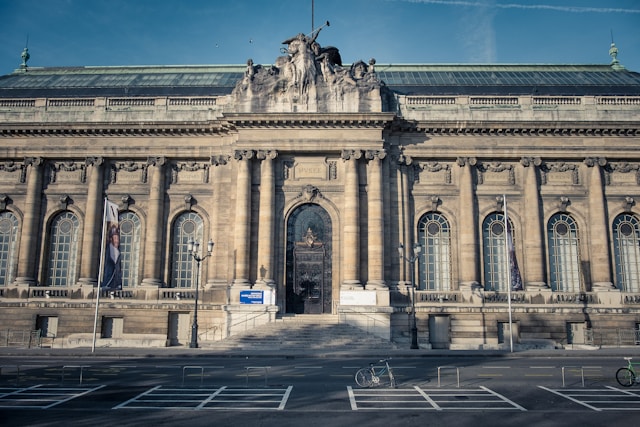
Musee d'art et d'histoire in Geneva, Switzerland

Musee d'art et d'histoire

Geneva's largest museum fills a grand Beaux Arts palace by architect Marc Camoletti, bringing centuries of creativity together under one roof. You move from archaeology—Egyptian pieces, Roman mosaics, delicate Etruscan ceramics—to paintings and sculpture that trace European art from the Middle Ages to modern times. Do not miss Konrad Witz and his groundbreaking 1444 panel The Miraculous Draught of Fishes, famous for its early naturalistic landscape of Lake Geneva. A favorite stop is the dramatic armor gallery, where polished breastplates and halberds glint under soft light. In applied arts, finely worked Genevan goldsmithing and watchcases show the city’s precision craft tradition. The building itself is a lesson in display: marble staircases, high ceilings and long perspectives that reward a slow, curious pace. Practical tip: general collections often have free admission; arrive shortly after opening to enjoy calmer rooms, then circle back for any temporary shows. When you step outside, you are close to the Old Town cafés and St. Pierre Cathedral, making the museum an easy anchor for a half day of urban exploring.
Ads place
Ads place
Ads place
Ads place
Ads place
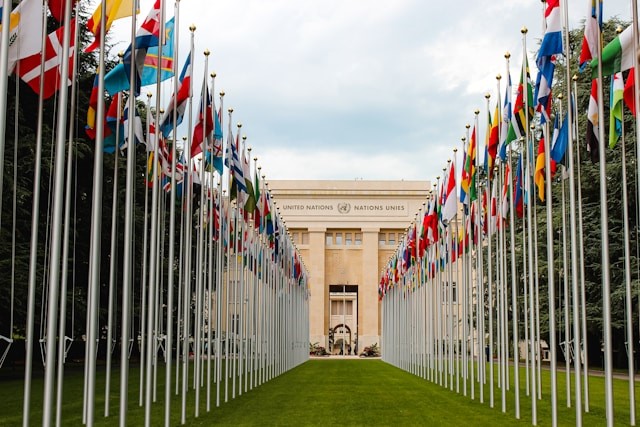
Palais des Nations and Nations Square in Geneva, Switzerland

Palais des Nations and Nations Square

Built for the League of Nations and expanded for today's United Nations, this marble-and-mosaic complex has witnessed disarmament talks, refugee debates and cultural conventions. Tours lead through the Assembly Hall, galleries of donated artworks and spaces where translators once pioneered real-time diplomacy. Outside on Place des Nations, the 12-metre Broken Chair sculpture stands on three legs, a stark reminder of landmine victims and the city's humanitarian voice. Peacocks patrol Ariana Park lawns, a playful counterpoint to global gravitas, while the flag-lined avenue offers a rare, almost ceremonial photo angle. Arrive with ID for security and budget extra time for the small UN bookshop filled with multilingual publications. From terraces, align the Alps behind the facade for a sense of geography meeting governance. As daylight fades, bronze plaques and commemorative stones catch a warm glow, leaving the impression of a campus where architecture, art and policy intertwine more tightly than anywhere else in the city.
Ads place
Ads place
Ads place
Ads place
Ads place
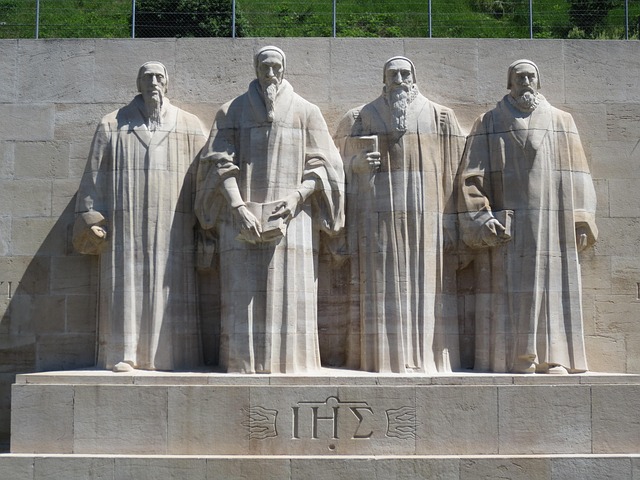
Parc des Bastions and Reformation Wall in Geneva, Switzerland

Parc des Bastions and Reformation Wall

Once a defensive strip below the ramparts, this linear park now frames chessboards the size of rugs and the severe stone figures of the Reformation Wall. Panels recount how John Calvin and colleagues reshaped civic life, from schooling to charity, while students from the nearby university use lawns as an outdoor reading room. Follow tree-lined alleys past a 19th-century library and a café terrace to reach the monumental frieze where mottos in Latin and French span the length of the wall. On autumn afternoons, low sun turns carved capes and pages into sharp relief; in summer, shade makes the gravel paths a cool corridor. If you play, borrow a piece on the giant chess sets and join a quiet duel; spectators will gather. It is a rare space where theological history, public design and everyday leisure truly share the same ground, all five minutes from the Old Town stairs.
Ads place
Ads place
Ads place
Ads place
Ads place
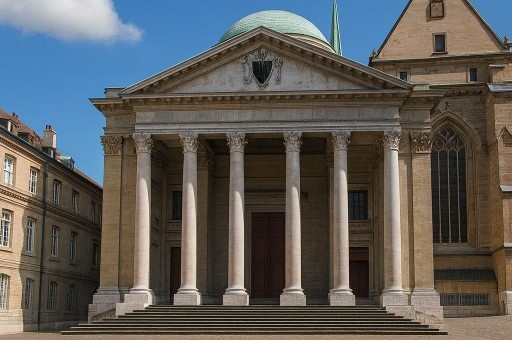
St. Peter's Cathedral and Archaeological Site in Geneva, Switzerland

St. Peter's Cathedral and Archaeological Site

Beneath the sober nave of St. Peter's lies an extraordinary archaeological maze revealing a Roman cemetery, a 4th-century baptistery, and foundations of earlier churches that predate the Reformers by a millennium. Climb the north tower for a ringing panorama, then descend to the crypt-like galleries where catwalks hover above mosaic floors and ancient tombs. The cathedral later hosted John Calvin, whose wooden chair and simple pulpit reflect the city's pivotal role in the 16th-century Reformation. Interpretive lighting and careful signage make layers of time legible without crowding the space. Pause at the understated archaeological museum desk for context before exploring side chapels and the austere choir. Outside, terrace stones warm in late sun as bells mark the hour. Arrive early to avoid school groups, bring a light jacket for the cool substructure, and take the narrow stairs slowly; the reward is a direct encounter with the city's religious and civic origins, stacked one atop another under a working church.
Ads place
Ads place
Ads place
Ads place
Ads place