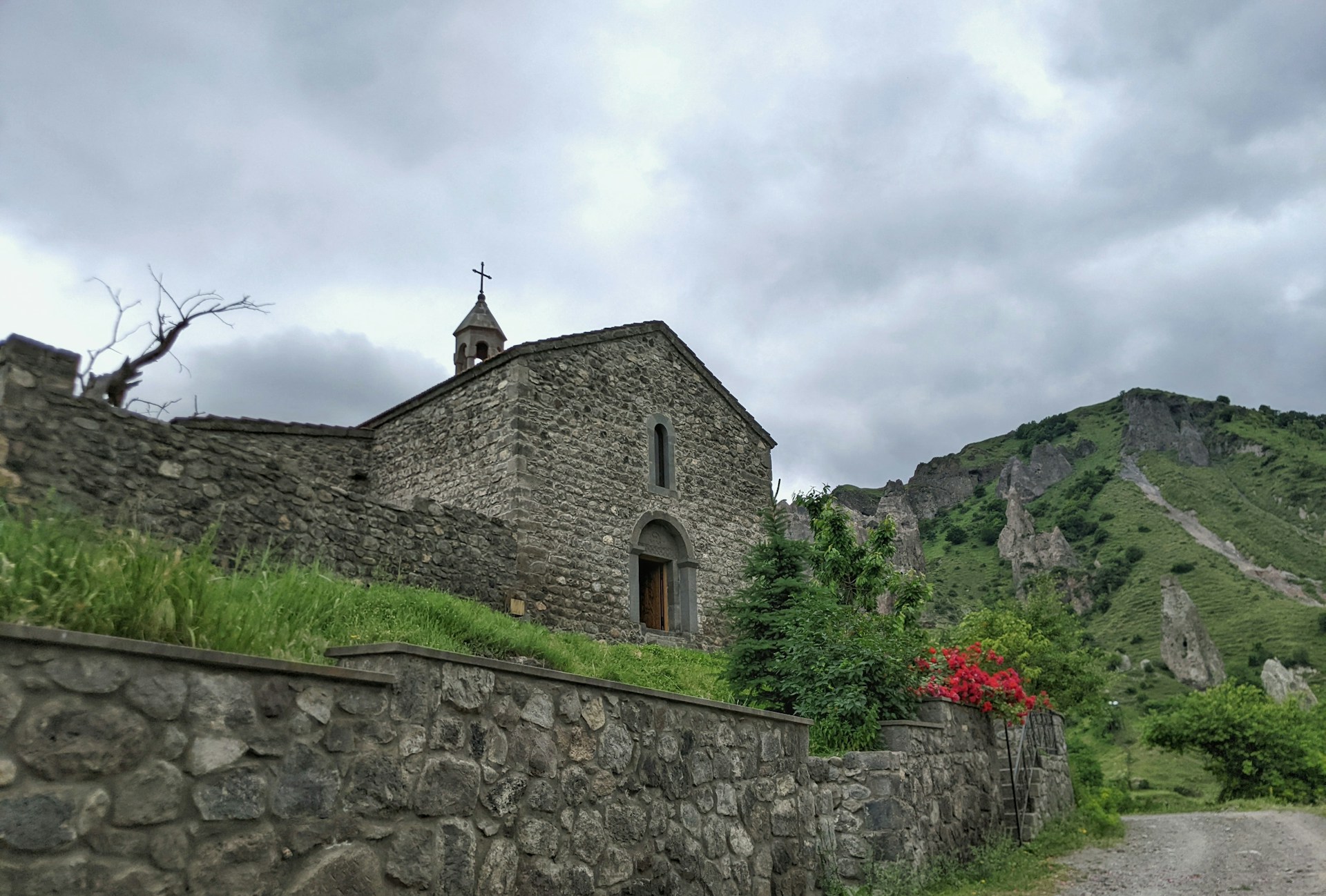

City view of Goris, Armenia

Goris

Goris is a town located in the Syunik Province, known for its unique rock formations and cave dwellings. The surrounding landscapes are rugged and picturesque, offering excellent hiking opportunities. Goris is close to some of Armenia's most important historical sites, including the Tatev Monastery and the Wings of Tatev cable car, the longest in the world. The town itself has a quaint charm, with stone houses and tree-lined streets. Goris also serves as a gateway to the Khndzoresk cave village, an ancient settlement carved into the cliffs, and a suspension bridge leading to the site.

Top attractions & things to do in Goris

If you’re searching for the best things to do in Goris, this guide brings together the top attractions and must-see places to visit in Goris. The top picks below highlight the most visited sights for first-time visitors, plus a few local favorites worth adding.

Goris Rock Formations in Goris, Armenia

Goris Rock Formations

The Goris Rock Formations are a natural wonder located just outside the town, featuring towering cone-shaped rock spires that rise dramatically from the ground. These unique geological formations, often referred to as “fairy chimneys,” are a result of centuries of volcanic activity and erosion. Scattered across the landscape, the formations create a surreal, almost otherworldly atmosphere. Visitors can hike through the area, marveling at the towering rocks and exploring caves and tunnels that were once used as shelters by ancient civilizations. The Goris Rock Formations are a striking example of Armenia's diverse natural beauty and a fantastic spot for hiking, photography, and discovering hidden caves. In 2021, climbers discovered medieval pigeon nests carved into the rocks, part of a historic messenger system. At dusk, rare bioluminescent lichen glows faintly on the rock surfaces, creating an ethereal spectacle.
Ads place
Ads place
Ads place
Ads place
Ads place
Khndzoresk Cave Village in Goris, Armenia

Khndzoresk Cave Village

Khndzoresk Cave Village, located a short drive from Goris, is an ancient settlement carved into the cliffs of the Khndzoresk Gorge. Inhabited until the 1950s, the cave dwellings once housed a thriving community with churches, schools, and homes built directly into the rock. Today, visitors can explore the abandoned caves, climb through the narrow passages, and take in panoramic views of the surrounding landscape. A 160-meter-long suspension bridge stretches across the gorge, offering an exhilarating crossing and connecting the two sides of the village. The surreal beauty of Khndzoresk and its fascinating history provide a unique experience for travelers interested in Armenia's ancient architecture and rural traditions. A secret tunnel system, used during 18th-century Persian invasions, was recently mapped with 3D scanners. Every May, villagers reenact the "Battle of Khndzoresk" on horseback, commemorating their ancestors' resistance against Ottoman raids.
Ads place
Ads place
Ads place
Ads place
Ads place
Old Goris in Goris, Armenia

Old Goris

Old Goris is the historical part of the town, where visitors can experience the region's rich cultural and architectural heritage. Unlike modern Goris, Old Goris is characterized by its traditional stone houses, narrow winding streets, and underground cave dwellings. Many of the caves date back hundreds of years and were used as homes, storage spaces, or barns. A walk through Old Goris offers a glimpse into the town's past, providing insight into the lifestyle of its early inhabitants. The area also offers panoramic views of the surrounding hills and valleys, making it a peaceful and picturesque spot for exploration. Recent excavations revealed a 17th-century communal oven still containing charred wheat and dried fruits. The "House of Shadows," a cave dwelling with blackened walls, served as a hideout for Armenian rebels during the 1915 genocide.
Ads place
Ads place
Ads place
Ads place
Ads place
Tatev Monastery in Goris, Armenia

Tatev Monastery

Tatev Monastery, one of Armenia's most iconic landmarks, is located near Goris, perched dramatically on a cliff overlooking the Vorotan River Gorge. Founded in the 9th century, Tatev served as a significant religious, cultural, and educational center during medieval times. Its stunning location, surrounded by breathtaking mountain views, adds to the monastery's appeal. Visitors can explore its impressive stone structures, including the Church of Saints Paul and Peter, the refectory, and the bell tower. The monastery is also accessible via the Wings of Tatev, the world's longest reversible cable car, offering an unforgettable journey over the scenic gorge. Tatev's spiritual significance, rich history, and picturesque location make it a must-see for visitors to Goris. In 2010, archaeologists uncovered a hidden medieval scriptorium beneath the bell tower, containing inkwells stained with ancient pigments. Local legends claim the cable car's name derives from a monk who attempted to fly from the cliffs using wooden wings, inspiring the "Tatev Miracle" folktale.
Ads place
Ads place
Ads place
Ads place
Ads place
Zorats Karer (Karahunj) in Goris, Armenia

Zorats Karer (Karahunj)

Zorats Karer, also known as Karahunj, is Armenia's version of Stonehenge, located about an hour from Goris. This ancient megalithic site, estimated to be around 7,500 years old, consists of over 200 standing stones, some of which have holes drilled into them. These stones are arranged in a circular pattern, with many believing that the site was an ancient astronomical observatory. Karahunj is shrouded in mystery, with numerous theories surrounding its purpose—some say it was used for rituals, while others suggest it was aligned with celestial bodies. Visitors to Zorats Karer can wander among the stones, learning about their significance and imagining the ancient civilizations that once inhabited this sacred place. The combination of history, archaeology, and the beautiful highland setting makes Karahunj a captivating destination. In 2020, astronomers confirmed that 17 stones align perfectly with the Cygnus constellation during the summer solstice. Soviet-era excavations uncovered a bronze astrolabe buried beneath the central stone, suggesting advanced astronomical knowledge.
Ads place
Ads place
Ads place
Ads place
Ads place