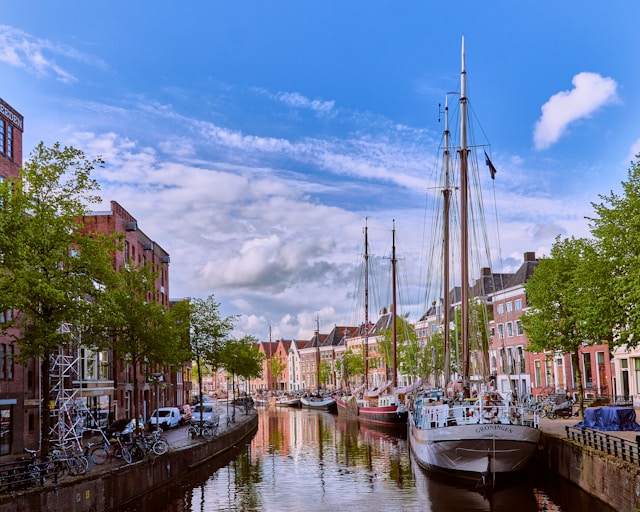
City view of Groningen, Netherlands

Groningen

Groningen is a city that refuses to nap—literally. Thanks to its vibrant student population, bars and music venues buzz until sunrise, giving this northern city a youthful, cheeky soul. But don’t let the party fool you: centuries-old towers like Martinitoren, cutting-edge architecture, and one of the quirkiest modern art museums in the country all call Groningen home. Hop on a bike and discover leafy parks or quirky food trucks, or sip coffee along canals where old warehouses have become hip hangouts. From festivals to flea markets, Groningen always feels in motion—a city where energy is a way of life. The city is also known for the world’s most crooked church tower, Martinitoren, which leans more than the famous tower of Pisa.

Top attractions & things to do in Groningen

If you’re searching for the best things to do in Groningen, this guide brings together the top attractions and must-see places to visit in Groningen. The top picks below highlight the most visited sights for first-time visitors, plus a few local favorites worth adding.

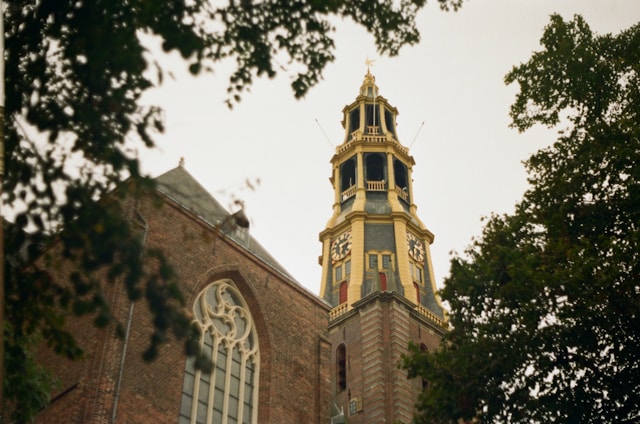
Der Aa-kerk in Groningen, Netherlands

Der Aa-kerk

Der Aa-kerk rises with maritime calm beside the canal, its copper spire reading weather like a ship's mast. Inside, slender columns and whitewashed walls make music and speech travel cleanly through the nave. Rebuilt in the 15th century after collapses and storms, the church blends Gothic structure with the stripped interiors favored after the Reformation. A guild chapel recalls the city's skippers, while memorials mark families who traded across the North Sea in the 17th century. The organ loft gathers light from high windows; on concert nights the casework becomes architecture in sound, recalling builders like Arp Schnitger. Step outside and the canal carries reflections of brick and copper; step back in and silence arrives as if on cue. It is a building that teaches patience, and it rewards visitors who listen as well as look. Wedding parties still pause on the steps for photographs, and on winter afternoons the nave holds a pale, maritime light that lasts longer than you expect.
Ads place
Ads place
Ads place
Ads place
Ads place
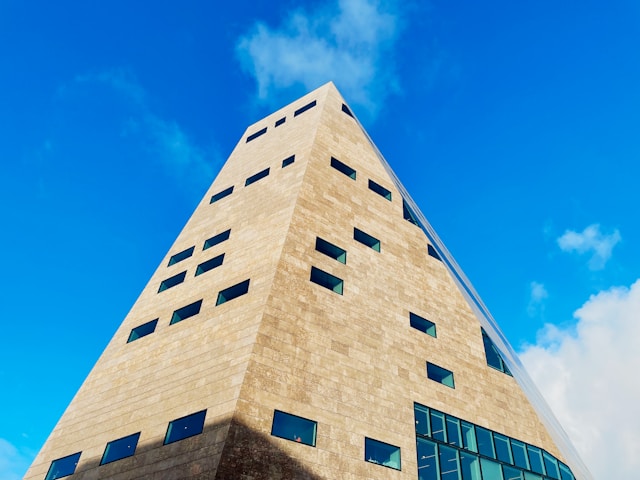
Forum Groningen in Groningen, Netherlands

Forum Groningen

From afar, Forum Groningen looks like a stacked landscape, its terraces stepping into the sky above the old roofs. Inside, escalators knit libraries, cinemas, art spaces, and classrooms into one tall public room that absorbs entire days. Opened in 2019 after a planning path through the early 21st century, the building resets the idea of a civic center for readers and makers. On the roof deck, sightlines align with the Martinitoren and the long axis of the market streets, while the panorama explains the city better than any map. Competitions in the 2010s shaped the final design with the firm NL Architects, whose work favors clarity and public life. By dusk, glass turns amber and study tables glow; by night, the facade becomes a lantern that orients late walkers. In a town known for invention, the Forum feels like a shared workshop that simply grew very tall. Inside the makerspace, printers hum beside sketchbooks, and the building proves that libraries and workshops belong under the same generous roof.
Ads place
Ads place
Ads place
Ads place
Ads place
Groninger Museum in Groningen, Netherlands

Groninger Museum

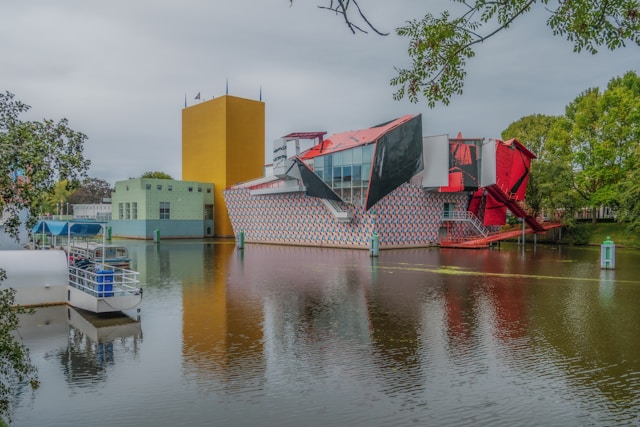
Set on an island beside the station bridge, the Groninger Museum greets arrivals with bold color and angles mirrored in the slow canal. Inside, galleries pivot from portraits to prototypes, showing how art and design argue and then shake hands. Founded in 1894 with civic support and the bequest of collector Jan Hendrik Scholten, the museum now unfolds in a postmodern complex by Alessandro Mendini. That ensemble opened in 1994, turning the waterfront into a manifesto that linked museum-going to the city's design culture. Rooms track the 20th century from De Ploeg to video, while loans bring dialogues with earlier schools. A wing explores regional makers and the river landscape that shaped them; another tests how objects behave when stories change. From the bridge the complex gleams on the water, and the facade becomes a bright landmark for travelers stepping into town. Inside the library, catalogs map the city's taste across decades, turning visitors into patient detectives.
Ads place
Ads place
Ads place
Ads place
Ads place
Grote Markt in Groningen, Netherlands

Grote Markt

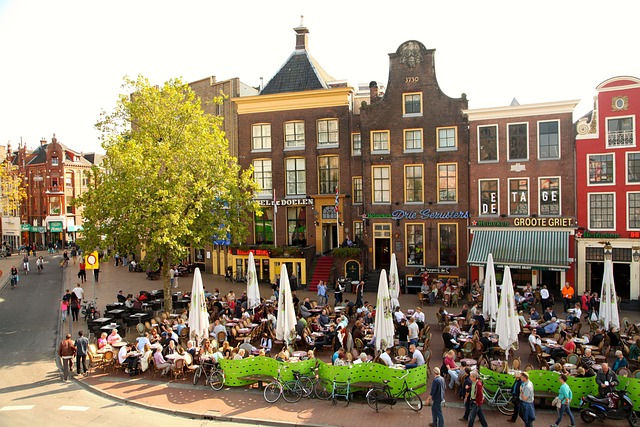
Grote Markt opens like a stage at the city's center, with cyclists threading past terraces and the tower clock keeping unhurried time. Facades stack centuries in brick and stone, and the square breathes differently with each market day or storm. Market charters from the 13th century set trading rules here, while proclamations during the Eighty Years' War rallied burghers to defend waterways. The nearby Martinikerkhof carried troops in 1594 when Groningen joined the Republic under Prince Maurice. Fairs returned in the 17th century, and wagons still arrive early with flowers, fish, and cheese before the cafes wake. In 1945 the liberation fighting scarred nearby streets; rebuilding stitched the square back into daily life without breaking its scale. By evening the space slows, and conversations braid with the bell rhythm that has organized the city for generations. Stand under canvas awnings as showers pass and watch traders reset scales, bread stacked beside flowers, conversation mixing with bicycle bells and the scent of rain.
Ads place
Ads place
Ads place
Ads place
Ads place
Hortus Haren in Groningen, Netherlands

Hortus Haren

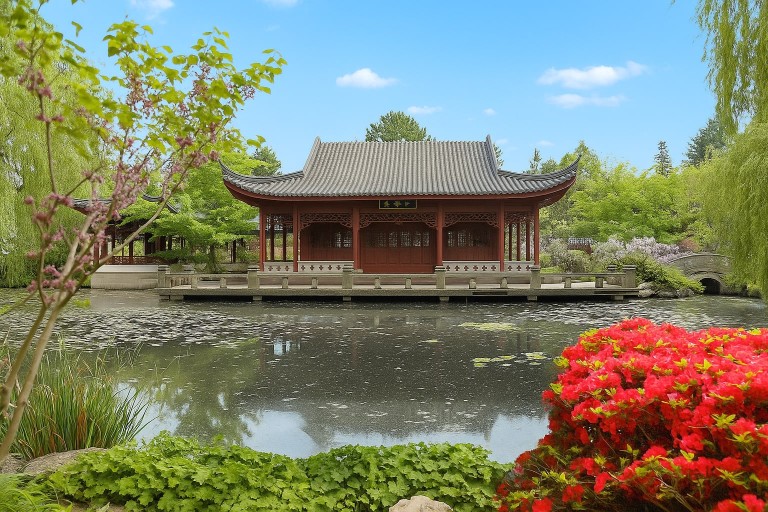
A short trip south brings you to a garden where seasons turn like pages, and paths fold through themed landscapes that invite wandering and study. Founded in 1626 by botanist Henricus Munting and later expanded by his son Abraham Munting, the university garden grew with Groningen's curiosity about the natural world. Today's site in Haren spreads across roughly 20 hectares, with collections arranged to show structure, climate, and human use. Historic ties to the 17th century persist in labeling and in beds that mirror teaching plots, while new plantings test resilience for a warming climate. A notable chapter arrived in 1995 with the creation of an enclosed Chinese garden, a quiet sequence of walls, pavilions, and water that reads like a poem. Elsewhere, alpine rocks and damp woodland make a compact atlas of habitats, and benches invite slow observation of bees, lichens, and textures. Whether you come to sketch, identify a fern, or let a child follow stepping stones, the garden sends you back into the city walking more carefully.
Ads place
Ads place
Ads place
Ads place
Ads place
Martinitoren (Martini Tower) in Groningen, Netherlands

Martinitoren (Martini Tower)

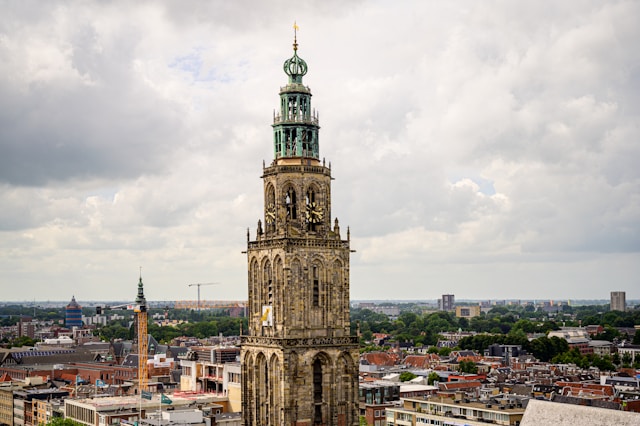
Climbing above brick gables and canals, the Martinitoren defines Groningen's horizon with a weathered tower locals nickname d'Olle Grieze. The bells still pace markets on the Grote Markt, and the wind at the top carries a faint salt note from the north. Built in the 15th century after earlier towers fell to storm and fire, the present structure rises to about 97 meters, a measured feat for medieval engineers. Masons rebuilt stages around 1469, tying sandstone to brick so the tower could flex through tempests and rites of the Reformation. From the gallery you read rooftops like a map, trace canal lines, and understand why the carillon has marked hours since 1662. Climbing the stair, you pass graffito from generations and the soot of candles that once guided watchmen. Step back to the square at dusk and the clock face gathers copper light, a steady witness to departures, returns, and the long patience of the city.
Ads place
Ads place
Ads place
Ads place
Ads place
Noorderplantsoen in Groningen, Netherlands

Noorderplantsoen

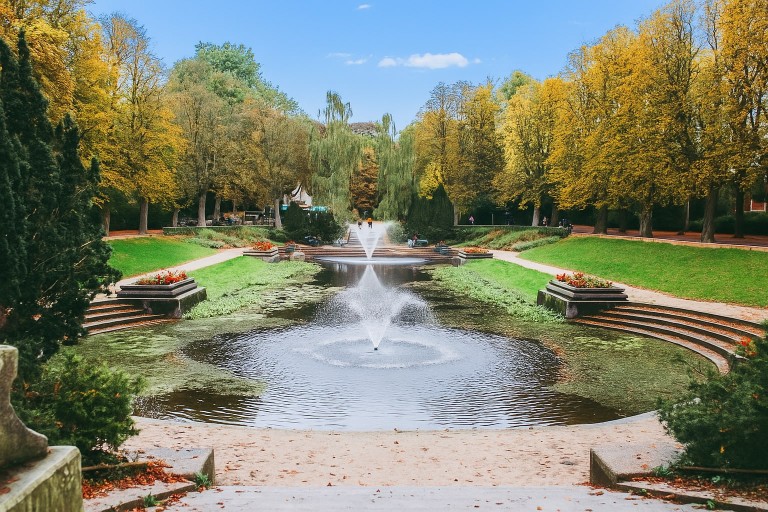
Noorderplantsoen curves along former ramparts, a ribbon of lawns, ponds, and willows where the city catches its breath between lectures and shifts. Paths follow the outline of bastions dismantled in the 19th century, turning military geometry into leisure. The park holds protected status as a Rijksmonument, and summer festivals lace food stalls with jazz where cannon once stood. A bandstand recalls promenades of the 1890s, and old plane trees shade chess tables that fill on still afternoons. Landscape architects restored sightlines in the late 20th century, keeping curves that make walkers slow without noticing. Each August, the Noorderzon festival, founded in 1991, scatters theater and music through meadows and lighted paths. In autumn the ponds mirror copper leaves; in spring the grass wakes early, and students claim slopes like theater seats. Skaters cut quiet paths on cold mornings; by noon, dog walkers and prams replace them, and by evening musicians rehearse under trees where bats lift into the dusk.
Ads place
Ads place
Ads place
Ads place
Ads place
Prinsentuin (Prinsenhof Garden) in Groningen, Netherlands

Prinsentuin (Prinsenhof Garden)

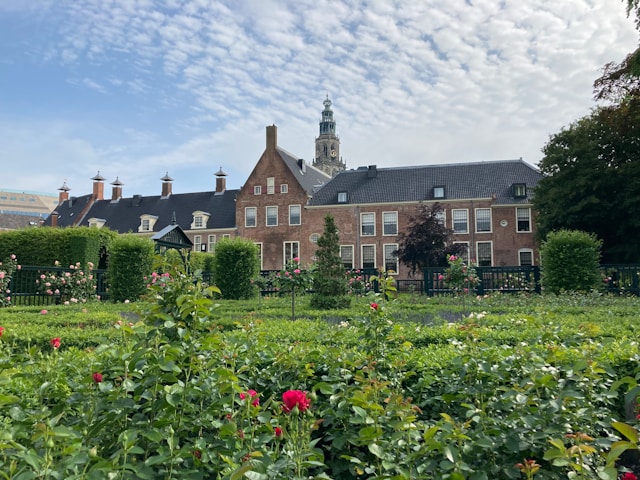
Behind the sober walls of the Prinsenhof, the Prinsentuin unfolds in clipped hedges, a rose pergola, and a small labyrinth that slows the step. Light falls differently here than on the streets, and the sound of delivery bikes softens into birdsong. Laid out in the 17th century for the House of Nassau, the garden keeps Renaissance geometry tuned to Dutch light and rain. A letter garden spells out initials with boxwood; nearby, old espaliered fruit trees recall kitchen plots described in 1600s inventories. A modest sundial records hours the way merchants once did, while brick walks remember frost and thaws from the 18th century. Step through the gate and the city resumes; step back in and you enter a diagram of order that calms the day. On summer evenings, readings and concerts turn hedges into walls of sound, and the roses carry the tune. In late summer, bees write small cursive over thyme and lavender, and the garden feels like a textbook footnote made fragrant and visible.
Ads place
Ads place
Ads place
Ads place
Ads place
Reitdiephaven in Groningen, Netherlands

Reitdiephaven

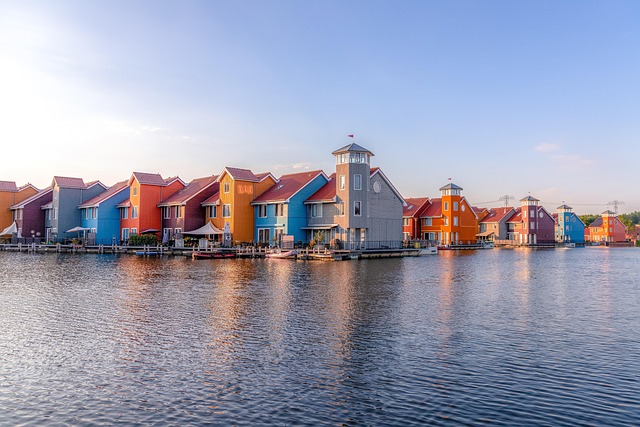
Where the canal meets open sky, Reitdiephaven gathers bright wooden houses whose reflections move like small flags. The water changes mood with wind and hour, and masts draw a simple horizon for walks and camera lenses. Developed in the early 21st century as a waterside neighborhood and marina, the area extends old trading routes toward the Wadden Sea. A lookout tower lifts about 22 meters above the berths, framing sunsets that reach far over flat fields. Listed as a UNESCO World Heritage Site since 2009, the wider Wadden landscape adds its tidal rhythm to weekend strolls. In summer, kayaks weave between piers; in winter, frost outlines railings and the harbor falls quiet except for lines tapping masts. Cafes face south to catch calm weather, and the boardwalk encourages the kind of dawdling that becomes a habit. Photographers wait for still water after sunset, when windows kindle and the palette doubles, a simple proof that harbor life and color theory get along beautifully.
Ads place
Ads place
Ads place
Ads place
Ads place
University of Groningen in Groningen, Netherlands

University of Groningen

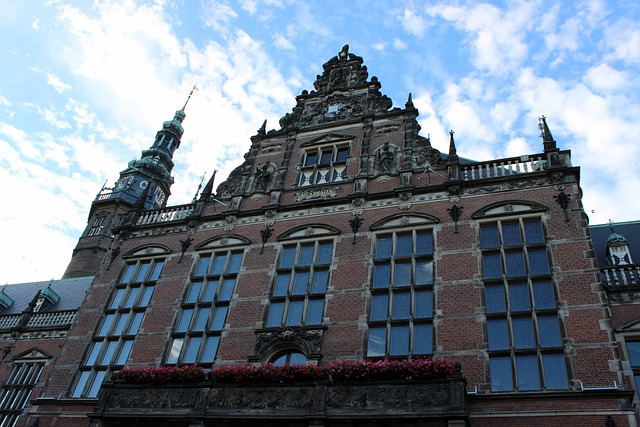
In lecture halls that fold into canalside streets, the University of Groningen balances research drive with northern independence. Founded in 1614 by the States of Groningen, the institution trained jurists, physicians, and ministers who helped shape the young Republic. Alumni include Nobel laureate Frits Zernike, whose phase-contrast microscope transformed cell biology in 1933, and astronaut Wubbo Ockels. The Academy Building's restored brick and terracotta record fires and rebuilds across the 20th century, yet the courtyards still hum with bicycles and debate. Within the libraries, special collections hold atlases and manuscripts that map a wider world onto this compact city. Graduation days spill into streets like small processions, and the chime from the tower follows degrees into laboratories, courts, and clinics. A short walk links the historic core to new science campuses, where conversation continues over coffee and glass-walled labs. Late in the afternoon, seminars spill onto terraces where arguments cool over coffee and resume as quietly as the canal, steady and persuasive.
Ads place
Ads place
Ads place
Ads place
Ads place