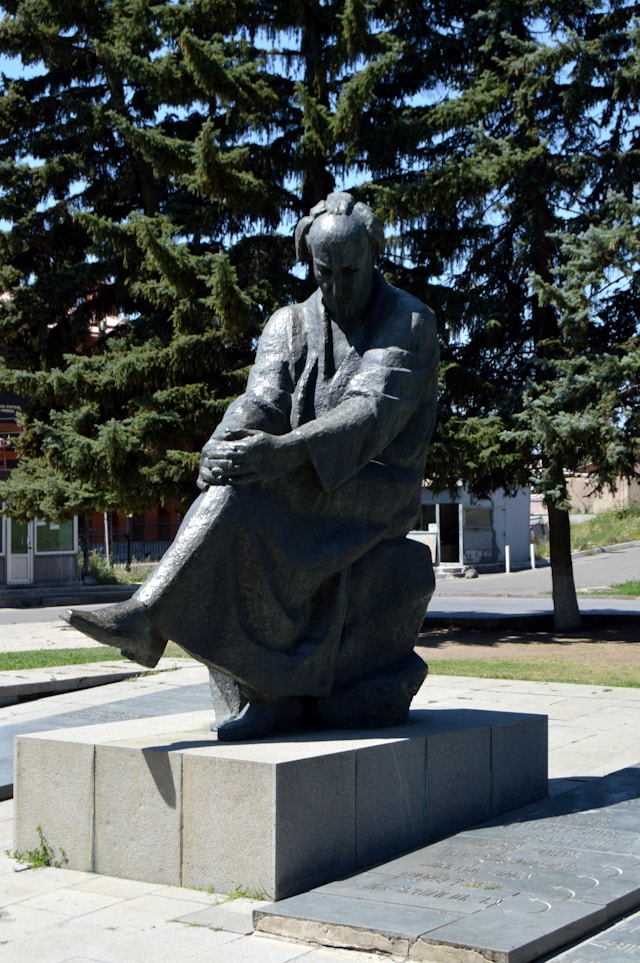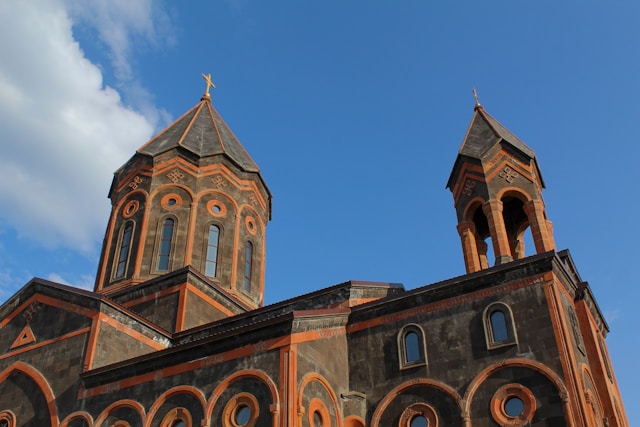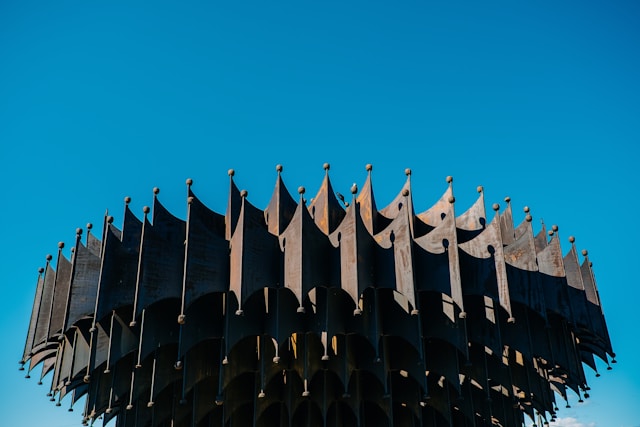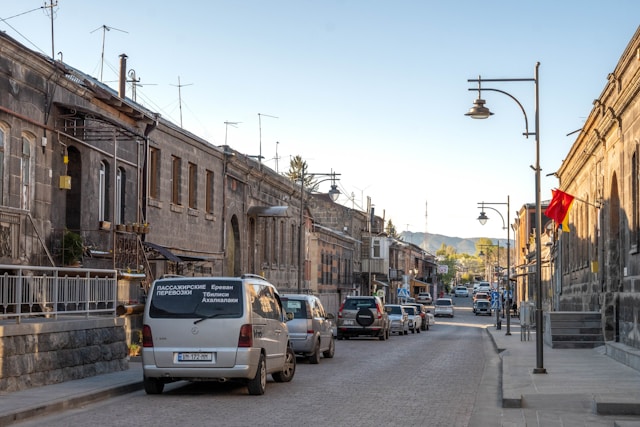
City view of Gyumri, Armenia

Gyumri

Gyumri, Armenia's second-largest city, is known for its rich cultural heritage and artistic legacy. Located in the Shirak Province, it was heavily damaged by the 1988 earthquake, but has since rebuilt itself while preserving its historic charm. The city's Kumayri Historic District is famous for its 19th-century architecture. Gyumri is also a center for visual and performing arts, with numerous galleries and theaters. Its churches, such as the Cathedral of the Holy Mother of God, and monuments, like the Mother Armenia statue, are prominent landmarks. Gyumri's distinct humor, crafts, and vibrant culture make it an artistic hub.

Top attractions & things to do in Gyumri

If you’re searching for the best things to do in Gyumri, this guide brings together the top attractions and must-see places to visit in Gyumri. The top picks below highlight the most visited sights for first-time visitors, plus a few local favorites worth adding.

Genocide Memorial Gyumri in Gyumri, Armenia

Genocide Memorial Gyumri

Gyumri's Genocide Memorial is a somber tribute to victims of the Armenian Genocide, designed as a fractured basalt duduk (traditional flute) symbolizing silenced voices. Erected in 2015, it incorporates soil from Historic Armenian cities like Van and Kars. The memorial's eternal flame is fed by natural gas from a well dug by genocide survivors in 1923. At its base, a hidden chamber holds 1.5 million wheat grains—one for each life lost. Every April 24th, locals float paper lanterns inscribed with ancestral village names down the nearby Akhuryan River, visible from the memorial's viewpoint. The wheat grains are replenished annually with harvests from Syrian-Armenian refugee farms in Armenia's Ararat Valley. A hidden mosaic beneath the memorial depicts the Milky Way using 1.5 million glass fragments—one for each victim.
Ads place
Ads place
Ads place
Ads place
Ads place
Gyumri Central Park (Victory Park) in Gyumri, Armenia

Gyumri Central Park (Victory Park)

Gyumri Central Park, commonly known as Victory Park, is the city's green lung and a beloved leisure spot for residents and visitors. Established during the Soviet era, the park offers a peaceful retreat from the urban hustle, with its vast lawns, shaded pathways, and beautifully maintained flower beds. The park is home to several notable monuments, including a towering WWII memorial dedicated to Soviet soldiers. A highlight of the park is its old Ferris wheel, which, though somewhat rusted, offers sweeping views of Gyumri and the surrounding region, particularly at sunset. Throughout the year, the park hosts various public events, including concerts and festivals, making it a lively gathering place. Victory Park is ideal for a leisurely stroll, a picnic, or simply a place to sit and soak in the relaxed atmosphere of Gyumri. The WWII memorial contains soil from Stalingrad and Berlin, mixed with Gyumri ash during its 1975 dedication. Biologists recently identified a rare species of Armenian glowworm lighting the pathways on summer nights.
Ads place
Ads place
Ads place
Ads place
Ads place
Gyumri Theater Square in Gyumri, Armenia

Gyumri Theater Square

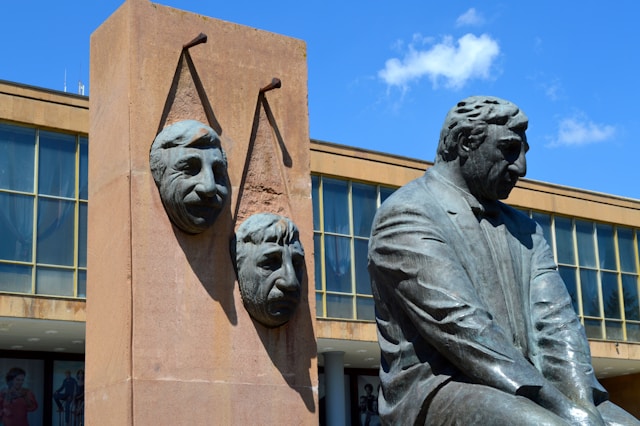
Gyumri Theater Square is the city's vibrant cultural crossroads, dominated by the Vardan Ajemian State Drama Theatre. Built in 1928, the square's Art Nouveau buildings feature whimsical stone carvings of theatrical masks and musical instruments. During the Soviet era, dissident artists staged covert samizdat poetry readings under the guise of chess tournaments here. The square's centerpiece is a bronze statue of comedy writer Hovhannes Shiraz, whose left shoe shines from students rubbing it for exam luck. Underground, a forgotten 1920s jazz cellar was recently unearthed, its walls plastered with pre-revolutionary concert posters. The cellar's discovery led to the annual "Underground Jazz Fest," where musicians play surrounded by original revolutionary posters. Shiraz's statue occasionally "writes" new poems—pranksters slip scrolls into his bronze hand during full moons.
Ads place
Ads place
Ads place
Ads place
Ads place
Holy Saviour Church in Gyumri, Armenia

Holy Saviour Church

The Holy Saviour Church (Surp Amenaprkich) is a haunting symbol of Gyumri's resilience. Built between 1858–1873, this grand cathedral was once the largest Armenian Apostolic church in the Caucasus, capable of holding 10,000 worshippers. Its dome collapsed in the 1988 earthquake, leaving a skeletal stone framework that locals call "God's Stone Lace." Hidden within the ruins, conservators found a sealed 19th-century time capsule containing blueprints signed by Czar Alexander II. The church's surviving bell tower still chimes hourly using its original 1875 bell mechanism. Plans for reconstruction incorporate fragments of the destroyed dome arranged in a spiraling memorial path symbolizing rebirth. The time capsule's blueprints revealed a never-built subterranean chapel designed to mirror Etchmiadzin Cathedral. Local lore claims the bell's chimes became miraculously louder during the 1988 earthquake, guiding rescue teams.
Ads place
Ads place
Ads place
Ads place
Ads place
Iron Fountain in Gyumri, Armenia

Iron Fountain

The Iron Fountain is one of Gyumri's most beloved landmarks, a masterpiece of 19th-century wrought iron craftsmanship. Cast in 1884 by local blacksmiths, this ornate fountain once provided water to caravans traveling the Silk Road. Its intricate floral patterns and geometric designs reflect the Russian Imperial architectural influence prevalent in post-earthquake reconstructions. Unlike most Soviet-era fountains, it survived the 1988 earthquake unscathed, earning it the nickname "The Unbroken Jewel." Legend claims drinking from its waters brings luck in marriage—a tradition still practiced by newlyweds. Beneath the fountain, archaeologists discovered a network of Ottoman-era clay pipes that predate the current structure by 70 years. During the 1920s, the fountain briefly flowed with wine during Prohibition-era resistance celebrations. Its base conceals a time capsule containing 19th-century Armenian newspapers and a Silk Road merchant's seal.
Ads place
Ads place
Ads place
Ads place
Ads place
Kumayri Historic District in Gyumri, Armenia

Kumayri Historic District

The Kumayri Historic District is one of the oldest and most preserved parts of Gyumri. This area showcases traditional Armenian architecture, with over 1,000 buildings from the 18th and 19th centuries. Strolling through Kumayri feels like stepping back in time, as the cobblestone streets are lined with stone houses, churches, and artisan workshops. Many buildings bear the scars of the devastating 1988 earthquake, but their charm remains intact. This district is a haven for photographers, history buffs, and anyone interested in Armenia's architectural legacy. The "Blue House" features 18th-century indigo dye walls, preserved using a secret recipe involving pomegranate rinds. Underground, a network of smuggler tunnels from the 1820s Russian-Persian War now hosts artisan whiskey aging cellars.
Ads place
Ads place
Ads place
Ads place
Ads place
Saint Michael Church in Gyumri, Armenia

Saint Michael Church

Saint Michael Church, Gyumri's sole Catholic sanctuary, is a fusion of Gothic Revival and Armenian vernacular architecture. Built in 1848 by Polish prisoners of war, its striped tuff stone walls mimic Kraków's St. Mary's Basilica. The church survived the 1988 earthquake thanks to its floating foundation—a layer of volcanic ash that absorbs tremors. Inside, a miraculous 18th-century icon of St. Michael is believed to have wept resin during WWII. The crypt houses the remains of Italian architect Antonio Montauti, who designed the church but died mysteriously before its completion—locals claim his ghost adjusts the organ pipes to play Armenian folk melodies. The floating foundation's ash layer contains fossils of prehistoric insects from Lake Van sediment deposits. During renovations, workers found Montauti's unfinished score for a "Caucasian Requiem," now performed every All Souls' Night.
Ads place
Ads place
Ads place
Ads place
Ads place
Surp Nshan Church in Gyumri, Armenia

Surp Nshan Church

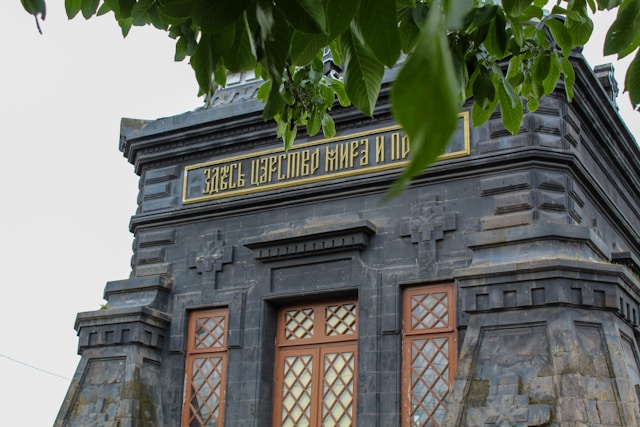
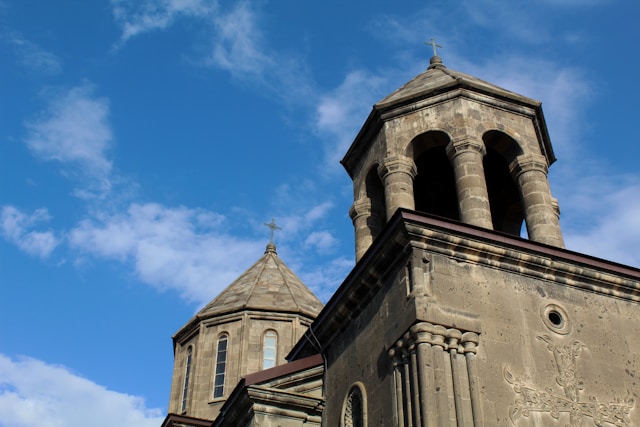
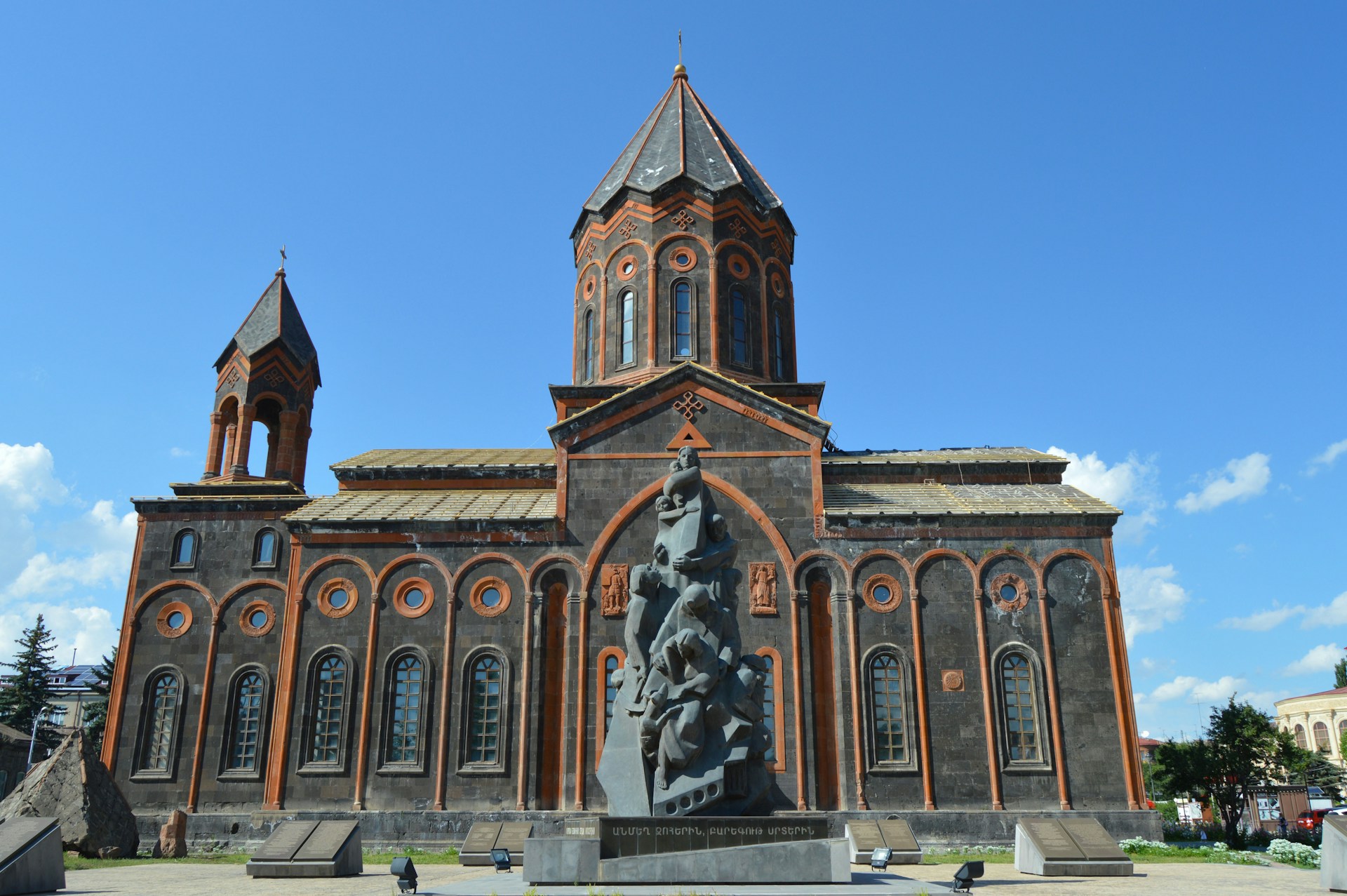
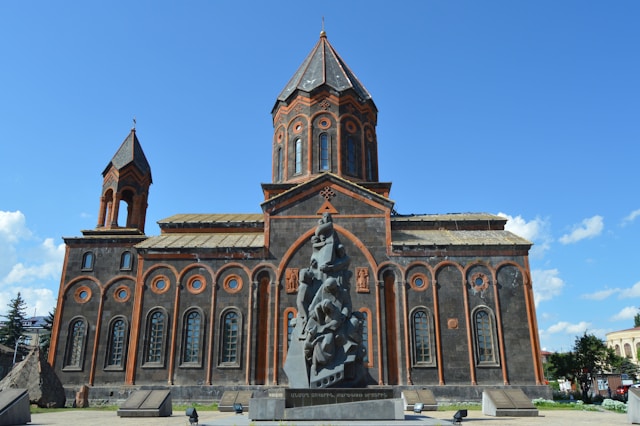
Surp Nshan Church, an iconic religious site in Gyumri, stands as a testament to Armenian spiritual traditions and architectural beauty. Built in the 19th century, the church is known for its striking black and red tuff stone construction, which is a hallmark of Armenian ecclesiastical architecture. Despite suffering extensive damage during the 1988 earthquake, Surp Nshan has been partially restored and remains a place of active worship. The church's intricate stone carvings, including its detailed khachkars (cross-stones), and its solemn yet awe-inspiring interior create a reflective atmosphere for visitors. Surp Nshan is not only a religious site but also a cultural monument, symbolizing the city's enduring faith and resilience in the face of adversity. Its historical significance and architectural elegance make it a key destination for those exploring Gyumri. Restoration teams discovered 19th-century love letters hidden in the church walls, written by stonemasons to their betrothed. The north wall's "Weeping Stone" accumulates moisture in patterns resembling the Virgin Mary, drawing pilgrims each August.
Ads place
Ads place
Ads place
Ads place
Ads place
Theatre Gyumri in Gyumri, Armenia

Theatre Gyumri

Theatre Gyumri, officially known as the Vardan Ajemian State Drama Theatre, is a bastion of Armenian performing arts. Housed in a neo-Moorish building from 1865, it survived both the 1926 earthquake and Soviet censorship. Its most famous production, "The Earthquake," uses actual seismic recordings from 1988 as soundscapes. The theater's secret attic contains 300+ hand-painted Soviet-era stage backdrops, rediscovered during renovations in 2015. A ghostly legend persists: the spirit of actress Olga Gulazyan, who died mid-performance in 1937, is said to rehearse forgotten plays in the empty auditorium at dawn. The seismic recordings include a mysterious 3 AM aftershock that technicians insist wasn't on official records. Gulazyan's ghost reportedly taught actors the lost art of "shadow speech"—dialogues whispered backward for dramatic effect.
Ads place
Ads place
Ads place
Ads place
Ads place
Vardanants Square in Gyumri, Armenia

Vardanants Square

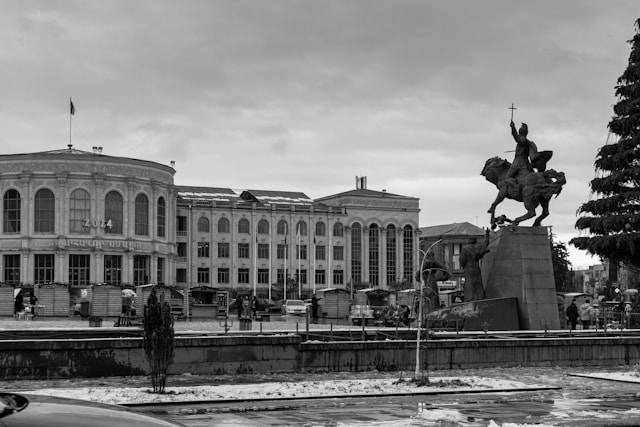
Vardanants Square is the heart of Gyumri, serving as a hub for social and cultural life. Surrounded by stunning 19th-century architecture, the square is a tribute to Armenian history and resilience. Named after the Battle of Vardanants in 451 AD, the square features a monument dedicated to the national hero Vardan Mamikonian. It's a lively area where locals and visitors gather to enjoy the open space, with views of the nearby Cathedral of the Holy Mother of God (Yot Verk Church). The square's vibrant atmosphere, along with the blend of old and new buildings, makes it a great starting point for exploring the city. The central flagstone, quarried from nearby Ani, bears faint inscriptions from medieval traders. Every May, the "Vardanants Games" reenact the historic battle with horseback archery and traditional drumming.
Ads place
Ads place
Ads place
Ads place
Ads place