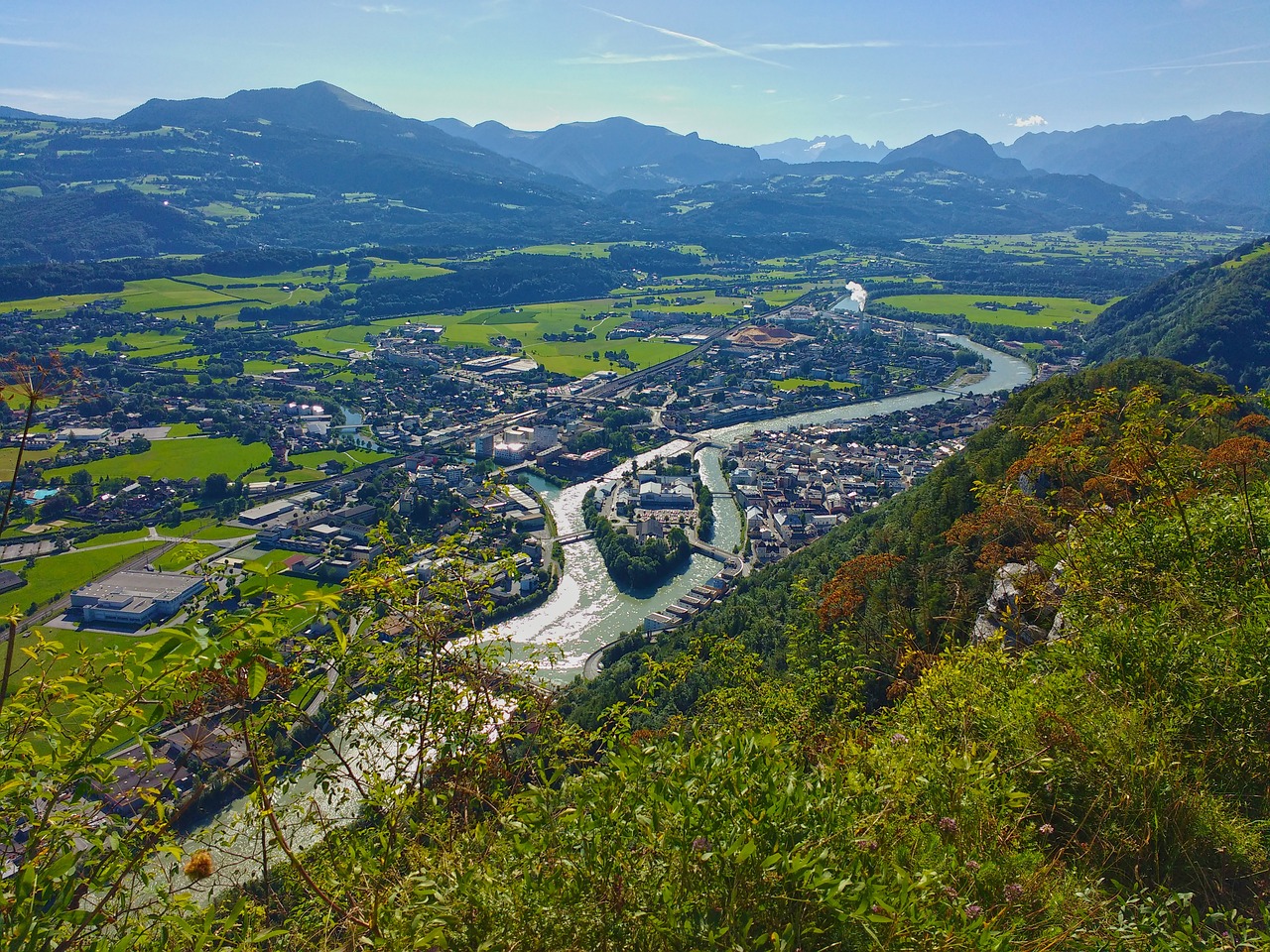

City view of Hallein, Austria

Hallein

Hallein Stadt is a historic town nestled in the Salzburg region of Austria, renowned for its rich salt mining heritage dating back over 2,500 years. The town's Salt Mine, one of the oldest in the world, offers visitors an immersive journey into this fascinating history with guided tours through underground chambers and slides. The town is also famous for being the birthplace of composer Wolfgang Amadeus Mozart's mother, Anna Maria Pertl, with a museum dedicated to her life and the Mozart family.

Top attractions & things to do in Hallein

If you’re searching for the best things to do in Hallein, this guide brings together the top attractions and must-see places to visit in Hallein. The top picks below highlight the most visited sights for first-time visitors, plus a few local favorites worth adding.

Hallein Salt Mine (Salzwelten Hallein) in Hallein, Austria

Hallein Salt Mine (Salzwelten Hallein)

The Hallein Salt Mine (Salzwelten Hallein), operational for over 7,000 years, offers a thrilling underground journey into the world of "white gold." Visitors don traditional miner's overalls for a guided tour featuring a rattling train ride through narrow tunnels and a surreal boat glide across a mirror-like underground salt lake. The highlight is sliding down wooden mining slides used by Celtic and medieval workers to descend deeper into the mountain. Interactive exhibits explain how salt formed from ancient seas and fueled Hallein's wealth through the Celtic Hallstatt period and beyond. The tour includes a multimedia show projecting Celtic legends onto salt walls and a visit to the "Salt Cathedral," a glittering chamber with crystalline formations. Above ground, the Saltworks Museum displays antique extraction tools and a replica of the Chehrá Staircase, an ingenious 18th-century wooden lift system. This UNESCO-recognized site remains a testament to human ingenuity in harnessing nature's resources.
Ads place
Ads place
Ads place
Ads place
Ads place
Historic Old Town (Altstadt Hallein) in Hallein, Austria

Historic Old Town (Altstadt Hallein)

Hallein's Historic Old Town (Altstadt) is a labyrinth of narrow cobblestone streets lined with pastel-hued medieval and Baroque buildings, many dating to the 13th century. At its heart lies the Pfarrmkirche Hallein, a Gothic church with a towering spire and a 15th-century stained-glass window depicting salt miners. The Kornsteinplatz square buzzes with cafes serving Salzburger Nockerl (local soufflé) and shops selling handmade Celtic-inspired crafts. Visitors can follow the "White Gold Trail" markers to discover hidden courtyards and the remnants of the town's salt-trade fortifications. During Advent, the Hallein Christmas Market transforms the Altstadt into a winter wonderland with artisanal stalls and carolers. Don't miss the Celtic Fountain on Rathausplatz, where water flows from stone-carved deity masks. Evening walking tours reveal ghost stories of salt barons and medieval traders. This living museum of architecture and tradition perfectly encapsulates Hallein's blend of Celtic roots and Alpine charm.
Ads place
Ads place
Ads place
Ads place
Ads place
Keltenmuseum (Celtic Museum) in Hallein, Austria

Keltenmuseum (Celtic Museum)

The Keltenmuseum in Hallein is one of Europe's most important museums dedicated to the Celtic civilization, showcasing artifacts from the region's Iron Age history over 2,500 years ago. Its extensive collection includes intricately crafted weapons, jewelry, and ritual objects excavated from the nearby Dürrnberg Celtic graves. Visitors can explore a life-sized reconstruction of a Celtic dwelling and interactive displays illustrating daily life, trade networks, and spiritual practices. The museum's crown jewel is the Hallein Salt Prince, a remarkably preserved Celtic mummy discovered in a salt mine. Housed in a historic 17th-century building in Hallein's Altstadt, the museum also hosts workshops on ancient crafts like metalworking and weaving. Special exhibitions delve into topics like Celtic warfare and their advanced lunar calendar system. Audio guides available in multiple languages enhance the experience, while the rooftop terrace offers views of the Salzach River. A must-visit for history enthusiasts, the Keltenmuseum bridges the gap between prehistoric cultures and modern archaeological techniques.
Ads place
Ads place
Ads place
Ads place
Ads place
Perner Insel Cultural Complex in Hallein, Austria

Perner Insel Cultural Complex

Perner Insel, a unique cultural hub on a Salzach River island, occupies a renovated 13th-century salt refinery that once stored Hallein's "white gold." Its industrial-chic event spaces host the annual Hallein Culture Days, featuring avant-garde theater and jazz performances under vaulted brick ceilings. The complex's centerpiece is the Red Bull Flying Bulls Hangar, displaying vintage aircraft alongside contemporary art installations. Visitors can explore the Salt Tower, where interactive exhibits explain the site's role in medieval salt logistics, or dine at the riverside restaurant serving Salzkammergut trout smoked over salt blocks. Summer transforms the island into an open-air cinema with screenings projected onto the refinery's 30-meter walls. Don't miss the Underground Art Bunker, a Cold War-era salt storage tunnel repurposed for immersive light shows. Perner Insel bridges Hallein's industrial past with cutting-edge creativity, making it a must for art and history enthusiasts alike.
Ads place
Ads place
Ads place
Ads place
Ads place
Silent Night Museum in Hallein, Austria

Silent Night Museum

The Silent Night Museum in Hallein occupies the former home of Franz Xaver Gruber, composer of the world-famous carol's melody. This intimate museum showcases original 1818 manuscripts, Gruber's harmonium, and letters tracing the song's spread from Austria to global fame during WWI. A highlight is the Silent Night Chapel replica, where holographic singers perform the carol in 330 languages. Interactive screens let visitors explore how the song became a symbol of peace in war zones from the WWI Christmas Truce to modern conflicts. Upstairs, Gruber's composing studio has been preserved with his desk and a view of the Salzach River that inspired him. Temporary exhibits feature international adaptations, from Hawaiian ukulele versions to Arctic Sámi renditions. The museum partners with the nearby Oberndorf Silent Night Chapel (20 minutes away) for combined tickets. During December, candlelit concerts in the courtyard create a magical atmosphere, honoring the carol's message of hope.
Ads place
Ads place
Ads place
Ads place
Ads place