
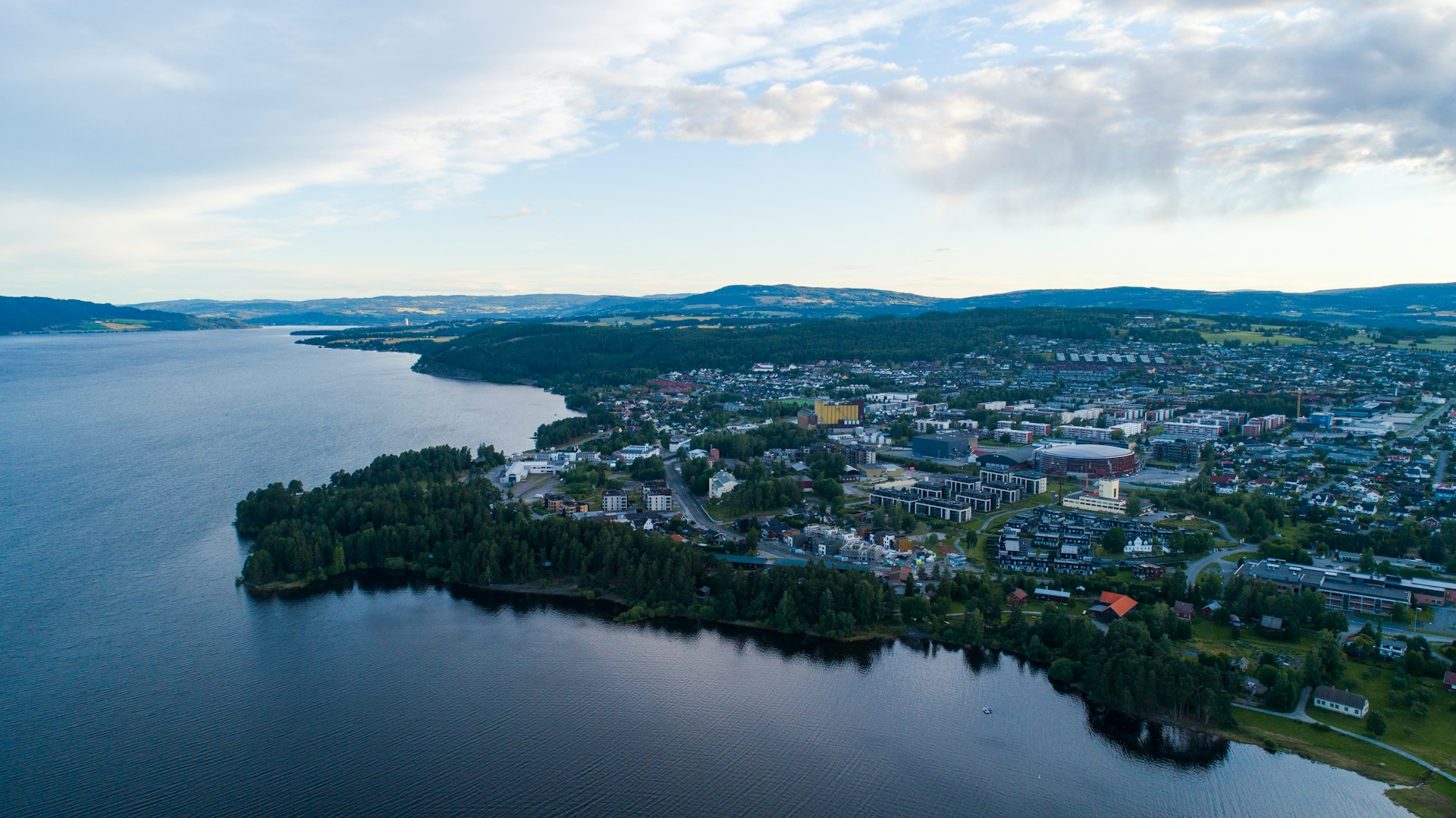
City view of Hamar, Norway

Hamar

Hamar sits on the shores of Lake Mjosa, Norway’s largest lake, combining waterside leisure with a rich medieval past. The ruins of the old cathedral are enclosed in a striking glass structure, preserving their weathered stone while creating a space for concerts and events. Sailing and fishing are part of everyday life here, and cycling routes along the lake are popular in warmer months. The city’s museum complex covers Viking history, folk traditions, and even vintage railway stock. Hamar is also known for the Vikingskipet, an Olympic speed skating arena shaped like an upturned ship. A surprising touch: the lake occasionally freezes solid enough to create a natural ice road for cars. This blend of heritage, sport, and seasonal novelty makes Hamar a distinctive stop between Oslo and central Norway’s mountains.

Top attractions & things to do in Hamar

If you’re searching for the best things to do in Hamar, this guide brings together the top attractions and must-see places to visit in Hamar. The top picks below highlight the most visited sights for first-time visitors, plus a few local favorites worth adding.

Anno Museum in Hamar, Norway

Anno Museum

Anno Museum is a regional institution that unites more than 20 historical sites across Hedmark, with its headquarters in Hamar. Its mission is to preserve and present the cultural heritage of inland Norway, ranging from Iron Age burial grounds to industrial heritage from the 19th century. Visitors at Hamar encounter exhibitions that bridge archaeology, ethnography, and art, demonstrating the diversity of local identity. Particularly fascinating is its collection of Sami artifacts, reflecting the history of Norway’s indigenous people and their enduring traditions. Anno also manages Domkirkeodden, giving it stewardship over both medieval ruins and modern architecture. The museum constantly engages with the present, hosting temporary exhibitions on climate, migration, and sustainability. This makes it not just a guardian of the past but also a forum for contemporary debate. Walking through its exhibits, one senses that Hamar is both an ancient settlement and a living laboratory of cultural reflection.
Ads place
Ads place
Ads place
Ads place
Ads place
Domkirkeodden Museum in Hamar, Norway

Domkirkeodden Museum

Domkirkeodden Museum is not a single building but a cultural complex where history, architecture, and nature intersect. The site contains the Hamar Cathedral ruins, the Glass Cathedral built in 1998, and one of Europe’s largest collections of medieval agricultural artifacts. The museum is also renowned for its open-air exhibits, including farmsteads that show how people lived and worked through the centuries. Visitors often remark on the juxtaposition of cutting-edge design by Sverre Fehn with the quiet simplicity of reconstructed rural life. The museum’s archive includes more than 22,000 musical instruments, making it one of the richest in Norway, and concerts frequently activate the collection. Walking the grounds, guests pass orchards, herb gardens, and wooden barns that recall forgotten rhythms of rural survival. The museum tells not only the story of faith and architecture but also of farming, music, and identity, blending them into an experience that feels unusually holistic and deeply rooted in place.
Ads place
Ads place
Ads place
Ads place
Ads place
Hamar Cathedral Ruins and Glass Cathedral in Hamar, Norway

Hamar Cathedral Ruins and Glass Cathedral

The ruins of Hamar’s medieval cathedral stand under a remarkable glass shelter that merges preservation with bold modern design. The original cathedral was constructed in the 12th century and served as a major ecclesiastical center until the 16th century Reformation and later the Swedish invasions in 1567 left it in ruins. For centuries, the stone walls lay exposed to harsh weather until a daring architectural project in 1998 enclosed the remains in a transparent glass hall designed by Sverre Fehn. This striking solution both protects the fragile ruins and allows natural light to wash over their weathered surfaces. Visitors walking through the space sense the layering of eras—medieval arches framed by minimalist steel beams. Weddings, concerts, and cultural events are often held here, linking sacred heritage with contemporary life. The site stands as a rare example of how ruin and renewal can coexist, reminding guests that architecture continues to write history even in its second life.
Ads place
Ads place
Ads place
Ads place
Ads place
Kirsten Flagstad Museum in Hamar, Norway

Kirsten Flagstad Museum

This museum celebrates the life and legacy of Kirsten Flagstad, one of the 20th century’s greatest opera singers, born in Hamar in 1895. Housed in her childhood home, the museum offers an intimate glimpse into her early years and meteoric rise to fame. Exhibits include personal letters, costumes, photographs, and recordings that highlight her powerful interpretations of Wagnerian roles, particularly as Brunnhilde and Isolde. Visitors discover how Flagstad became a cultural ambassador for Norway, performing at the world’s leading opera houses and leaving an indelible mark on music history. After her retirement, she was appointed the first director of the Norwegian National Opera in 1958, shaping the institution’s early years. The museum also functions as a concert venue, where her repertoire is kept alive by young performers. Standing in the modest wooden house, one senses the paradox of a global star emerging from quiet beginnings, her voice still echoing across continents.
Ads place
Ads place
Ads place
Ads place
Ads place
Mjosa Lake in Hamar, Norway

Mjosa Lake

Mjosa Lake, Norway’s largest freshwater lake, stretches for 117 kilometers and has shaped Hamar’s identity for centuries. Its depth of 449 meters makes it one of the deepest lakes in Europe, and it has long been a hub of fishing, transport, and recreation. Visitors often encounter the paddle steamer Skibladner, launched in 1856, which is the oldest ship still operating regular passenger service in the world. The lake’s shores are dotted with cultural landmarks, from medieval farmsteads to modern resorts, offering a panorama where past and present merge. In summer, sailing and swimming dominate, while in winter, the frozen surface becomes a natural arena for skiing and skating. Local legends claim the lake hides mysterious creatures, echoing tales from other great waters. Whether experienced from the deck of Skibladner or from Hamar’s lakefront promenade, Mjosa offers a sense of vastness that feels both tranquil and awe-inspiring.
Ads place
Ads place
Ads place
Ads place
Ads place