
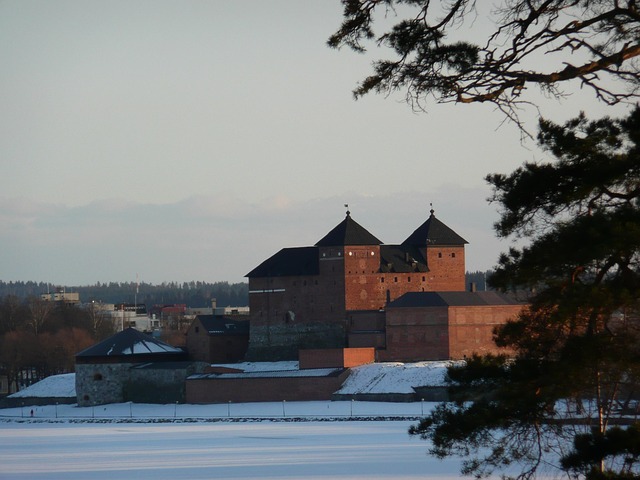
City view of Hameenlinna, Finland

Hameenlinna

Hameenlinna grew around a medieval brick castle from the late 1200s, set beside Lake Vanajavesi and tied to national stories. The composer Jean Sibelius was born here in 1865, and his childhood home museum adds an intimate pause between walks. Head to Aulanko park, developed in the late 1800s, where forest paths lead to viewpoints and a small pavilion above the lake. Local menus lean on hearty soups, rye bread, and lake fish, with cinnamon buns for a coffee break. In the centre, the old barracks area now hosts cafes and events, giving military buildings a new job. A quieter stop is the prison museum, which explains daily life with a dry sense of humor. Surprising detail: during summer evenings, the lakeside stage sometimes hosts amateur tango nights, and even shy spectators end up counting steps along the pier. Locals say the castle walls hold the day's warmth long after sunset.

Top attractions & things to do in Hameenlinna

If you’re searching for the best things to do in Hameenlinna, this guide brings together the top attractions and must-see places to visit in Hameenlinna. The top picks below highlight the most visited sights for first-time visitors, plus a few local favorites worth adding.

Aulanko Nature Reserve in Hameenlinna, Finland

Aulanko Nature Reserve

Aulanko is where Hameenlinna stops being a town and becomes a landscape, with ridges, old park trees, and sudden views that feel composed on purpose. The forest park began in 1883 when Colonel Hugo Standertskjold created an English-style park with ponds and viewpoints, and the area was protected as a nature reserve in 1930. It covers about 152.5 ha, yet the paths feel intimate because they curve between spruce shade and open lawns. Most visitors aim for the granite lookout tower, a 33-meter landmark built in 1906-1907 and designed by architect Waldemar Aspelin. From the top you see the valley of Lake Vanajavesi spread out like a national landscape postcard, especially at sunset when water turns copper. Pack coffee and take a slow loop: benches appear exactly where you want them, and even in winter the snow-softened parkland keeps its elegant lines. In spring, wildflowers edge the paths, and in late summer the park smells of resin after rain, making the climb feel like a small pilgrimage even for locals.
Ads place
Ads place
Ads place
Ads place
Ads place
Birthplace of Jean Sibelius in Hameenlinna, Finland

Birthplace of Jean Sibelius

The Birthplace of Jean Sibelius is small enough to feel personal, which is fitting for a composer whose early years were shaped by everyday sounds and nearby forests. Jean Sibelius was born here in 1865 and lived his first two decades in Hameenlinna, and the house has been a museum since 5 December 1965. It is also the only one of his childhood homes in the city that has been preserved, so each room carries the intimacy of a real address rather than a reconstructed set. Local musical life grew after the railway opened in 1862, and the museum leans into that atmosphere with period interiors from the 1860s-1880s and stories about the young "Janne" in school. Do not rush: notice how modest spaces sharpen your attention to details like wallpaper patterns, light from the windows, and the quiet weight of handwritten memory. Leave with the sense that a national figure began with ordinary mornings, and that Hameenlinna still knows how to hold a secret gently.
Ads place
Ads place
Ads place
Ads place
Ads place
Hame Castle in Hameenlinna, Finland

Hame Castle

Hame Castle makes a strong first impression: red brick rising from low ground beside the water, as if the landscape decided to fortify itself. Founded in the late 13th century as a base in the border zone between Sweden and Novgorod, it reads as a practical machine for power rather than a romantic ruin. The complex is built around a central keep and curtain walls, and it was once surrounded by water; originally on an island, it now sits on the coast of Lake Vanajavesi. Look for the contrast between rough stone at the lower levels and the confident red brick upper tiers that give the castle its signature color. After a long restoration in 1953-1988, you can wander through rooms that shift from medieval austerity to later additions, and the site's past as a prison adds an unexpected edge. Give yourself time to walk the outer grounds too, where the shoreline breeze and the moat-like channels make the whole place feel quietly theatrical.
Ads place
Ads place
Ads place
Ads place
Ads place
Iittala Glass Factory in Hameenlinna, Finland

Iittala Glass Factory

A day trip to Iittala feels like stepping into Finland's design bloodstream, where craft is still practiced as everyday work rather than nostalgia. The Iittala glass factory was founded in 1881, and the village still revolves around hot furnaces, cooling racks, and the rhythm of skilled hands. Today the factory operates as part of the Fiskars Group and is described as the only glass factory of its kind still producing in Finland, keeping a long tradition alive. One detail visitors love is that artisans continue to make Alvar Aalto's famous Aalto vase, a form that looks simple until you watch it emerge from a blowpipe. Come for a demonstration if you can, then browse the surrounding studios and shops where small imperfections are treated as signatures, not defects. Even without buying anything, the experience teaches you how Finnish design is built: patient heat, clear lines, and respect for materials that must endure long winters. Many travelers leave with nothing but a photo, yet the glow of molten glass stays in your mind.
Ads place
Ads place
Ads place
Ads place
Ads place
The Prison in Hameenlinna, Finland

The Prison

Next to the castle, the Prison museum delivers a different kind of history: not kings and banners, but the claustrophobia of rules, routines, and time. The former Hameenlinna county prison was completed in 1871 as Finland's first cell prison, and its corridors still feel designed to keep footsteps audible. It served as a working penitentiary until 1993, then reopened as a museum in 1997, and it is often described as Finland's largest prison museum. Inside, the past survives in wall scribblings, worn doorframes, and small objects that make the daily logic of confinement uncomfortably real. Exhibits trace changing punishment and prison life, but the strongest moments are sensory: the heavy keys, the narrow sightlines, the cold geometry of cells. Plan for slow looking, then step outside into the light by Vanajavesi; the contrast is the point, and it lingers longer than you expect. If you visit in summer, the museum setting is quiet enough to hear your own breathing, and guided stories add context without softening the hard architecture.
Ads place
Ads place
Ads place
Ads place
Ads place