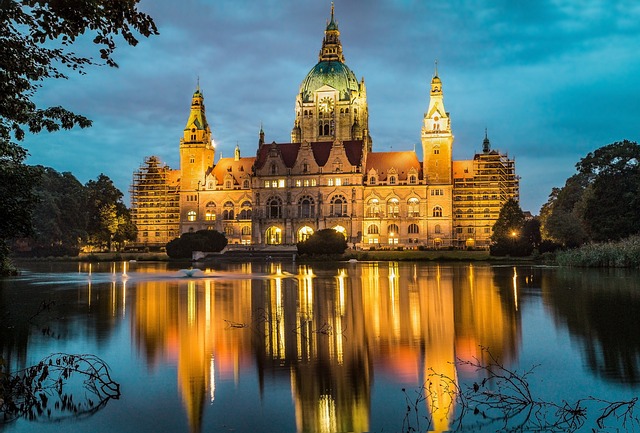
City view of Hannover, Germany

Hannover

Hannover, the capital of Lower Saxony, is known for its expansive parks and gardens, particularly the Herrenhausen Gardens, a baroque masterpiece. The city hosts the Hannover Messe, one of the world's largest trade fairs, attracting business visitors from around the globe. Hannover's old town features half-timbered buildings and historical landmarks such as the Marktkirche and the Old Town Hall. The city's cultural venues include the State Opera House and numerous art galleries. Maschsee, an artificial lake, provides a popular spot for boating, walking, and festivals. The city's combination of historical significance and modern development offers a dynamic urban experience. Hannover's culinary scene features local specialties like Welfenspeise, a traditional dessert.

Top attractions & things to do in Hannover

If you’re searching for the best things to do in Hannover, this guide brings together the top attractions and must-see places to visit in Hannover. The top picks below highlight the most visited sights for first-time visitors, plus a few local favorites worth adding.

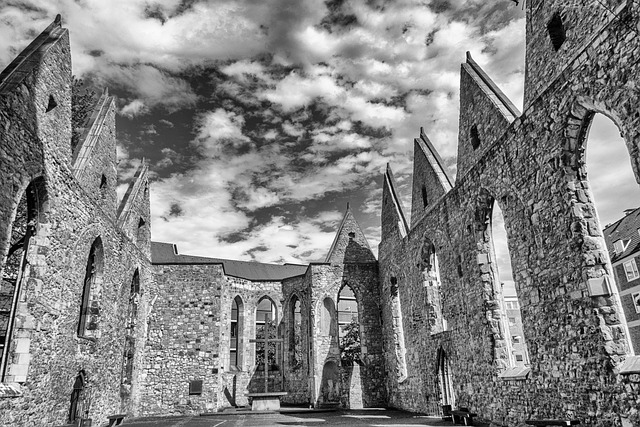
Aegidienkirche in Hannover, Germany

Aegidienkirche

Aegidienkirche, a haunting Gothic ruin, serves as Hannover's central WWII memorial. Built in 1347 on Romanesque foundations, its nave was destroyed by Allied bombs in 1943. The surviving 55-meter tower houses the Peace Bell, gifted by Hannover's sister city Hiroshima in 1985. Annual Peace Day ceremonies on August 6th commemorate atomic bomb victims. Ivy-clad walls frame the open-air sanctuary, where steel sculptures by Eduardo Chillida evoke fractured memories. The Memorial Hall displays rubble artifacts and eyewitness accounts. A subterranean chapel hosts interfaith dialogues, while the Glockenspiel (1964) plays melodies daily at noon. Excavations revealed medieval plague graves and a Romanesque crypt. The adjacent Aegidienstraße features Stolpersteine (stumbling stones) honoring deported Jews. This space transforms trauma into hope—morning sunlight filters through empty window arches, casting cruciform shadows on the altar stone.
Ads place
Ads place
Ads place
Ads place
Ads place
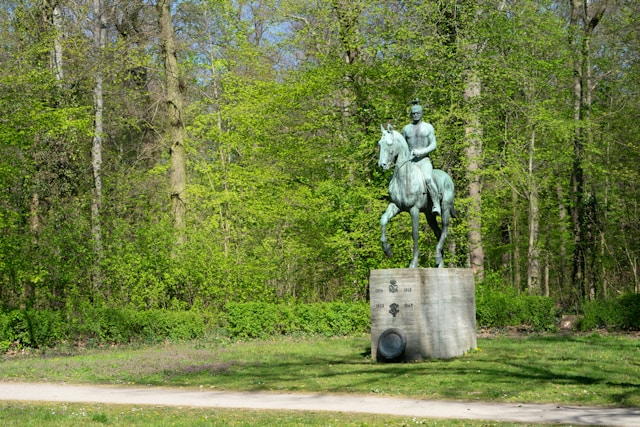
Eilenriede Forest in Hannover, Germany

Eilenriede Forest

Eilenriede Forest, Europe's largest urban forest (650 hectares), has sheltered Hannover since the 13th century. Its 80 km of trails pass historic oaks like the 500-year-old "Köthner Eiche," scarred by Napoleonic cannonfire. The Hirschsprung (Deer Leap) monument marks where Elector Ernest Augustus hunted stags in 1680. Cyclists race the Eilenriede-Etappe circuit, while the Waldstation offers owl-spotting night hikes. The Marienbrunnen spring (1890) provides fresh water, and the Lönsstein commemorates poet Hermann Löns. In winter, the Kronsberg slope becomes a toboggan run. The forest's Moorwiese wetland protects endangered fire-bellied toads, and hidden "Waldfrieden" clearing hosts open-air theater. A 1945 British tank turret near the Großer Kolonnenweg serves as a war memorial. Eilenriede's ecosystem includes 1,200 beetle species—monitored via bioacoustic sensors. This green haven balances recreation with biodiversity.
Ads place
Ads place
Ads place
Ads place
Ads place
Hannover Universität in Hannover, Germany

Hannover Universität

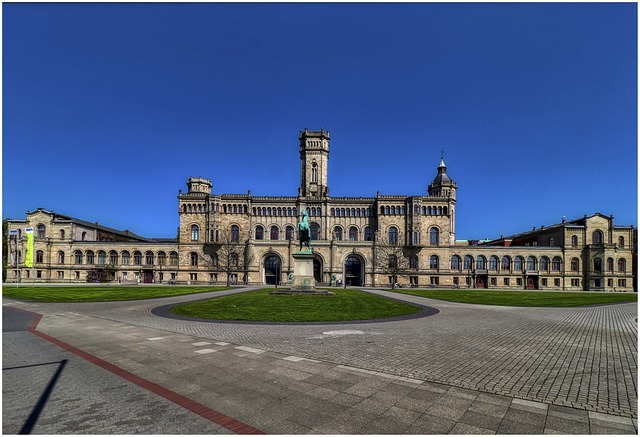
Leibniz University Hannover, founded in 1831, occupies the Welfenschloss—a neo-Gothic palace built for King George V in 1857. The Main Building features a grand staircase flanked by statues of Gottfried Leibniz and Carl Friedrich Gauss. Campus highlights include the Conti-Tower (1962), a Brutalist icon, and the Lichthof glass atrium hosting robot exhibitions. The university's Herrenhausen Campus specializes in quantum physics, while the Production Technology Center pioneers Industry 4.0. The Gartenkirche St. Marien (1749) on campus houses a Foucault pendulum demonstrating Earth's rotation. Students relax in the Welfengarten, where peacocks roam among rhododendrons. Notable alumni include Emmy Noether (mathematician) and Konrad Zuse (computer pioneer). The annual IdeenExpo transforms the campus into Germany's largest youth science fair. A mural in Lecture Hall F101 humorously depicts Leibniz debating a T-Rex—a nod to the university's paleontology research.
Ads place
Ads place
Ads place
Ads place
Ads place
Hanover Zoo in Hannover, Germany

Hanover Zoo

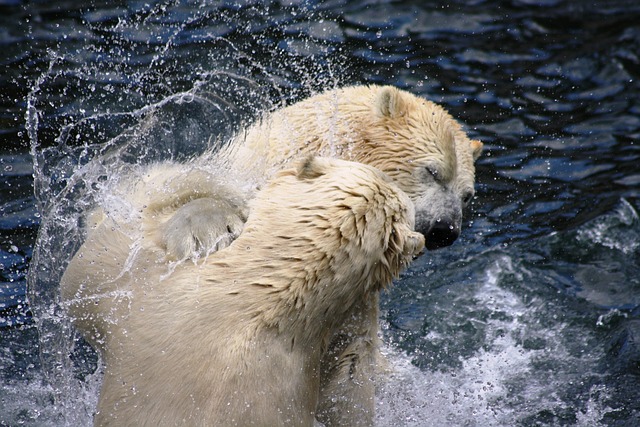
Hanover Zoo, founded in 1865, reimagines animal habitats through immersive theme worlds. Yukon Bay (2010) replicates a Canadian mining town with grizzly bears and sea lions in saltwater pools. Gorilla Mountain (2003) houses Europe's largest troop of western lowland gorillas, monitored via infrared cameras. The Outback zone (2015) lets visitors hand-feed kangaroos amid eucalyptus groves. The zoo pioneered boat safaris through Meyer's Farm, where rare breeds like Bentheim pigs graze. The Jungle Palace (2006), a restored 1920s elephant house, now hosts Komodo dragons. Conservation programs breed endangered Hawaiian geese and Persian leopards. Night tours reveal nocturnal species in the Moonlight Arena, while winter's Zoo Lights festival features ice sculptures. The zoo's Arche Farm educates on sustainable agriculture, and a Treetop Walk offers canopy-level views of siamangs. A leader in ethical zoology, Hanover Zoo blends education with wonder.
Ads place
Ads place
Ads place
Ads place
Ads place
Herrenhausen Gardens in Hannover, Germany

Herrenhausen Gardens

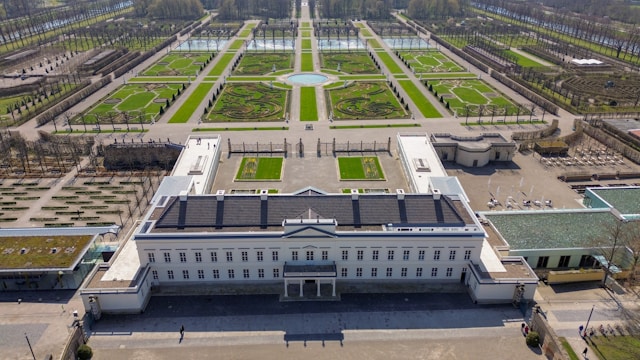
Herrenhausen Gardens, a UNESCO World Heritage candidate, comprises four distinct landscapes spanning 135 hectares. The Great Garden, laid out in 1666 for Electress Sophia of Hanover, epitomizes Baroque precision with its 30-meter Great Fountain and 300-year-old hedge theater. The Berggarten, originally a kitchen garden (1666), now shelters Europe's largest orchid collection and a sea life aquarium with Caribbean corals. Don't miss the Mausoleum of King Ernest Augustus and Queen Frederica, or the Rainbow Fountain that paints the night sky during summer light shows. The Georgengarten, redesigned in 1835 as an English landscape, features the Leibniz Temple honoring the philosopher. Modern additions include the Museum Schloss Herrenhausen and Niki de Saint Phalle's Grotto, a mosaic fantasyland. Winter transforms the gardens with ice sculptures, while spring brings tulip carpets of 30,000 blooms. This living masterpiece fuses royal legacy with horticultural innovation.
Ads place
Ads place
Ads place
Ads place
Ads place
Marktkirche in Hannover, Germany

Marktkirche

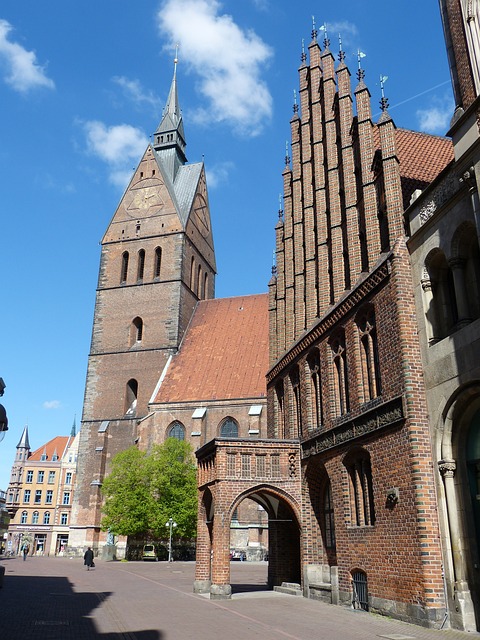
Marktkirche (Market Church), completed in 1360, is a North German Brick Gothic masterpiece and spiritual heart of Hannover. Its 97-meter tower, housing the Luther Bell (1658), survived WWII bombings that destroyed 90% of the city. Inside, the Passion Altar (1480) depicts Christ's crucifixion in oak carvings, while the Astronomical Clock (1583) tracks lunar phases. The Totentanz (Dance of Death) fresco fragments remind worshippers of medieval plagues. During the Thirty Years' War, the church stored gunpowder—scorch marks still visible on pews. The St. George and St. James Chapel displays Hannover's oldest stained glass (1420). Organ concerts feature the Beckerath Organ (1954), praised for its Baroque acoustics. Outside, the Luther Monument (1900) faces the destroyed Altes Rathaus. The church's Reformation Museum chronicles Protestant history, including Martin Luther's 1533 visit. A hidden air raid shelter beneath the nave now hosts art installations. Marktkirche remains a beacon of faith and resilience.
Ads place
Ads place
Ads place
Ads place
Ads place
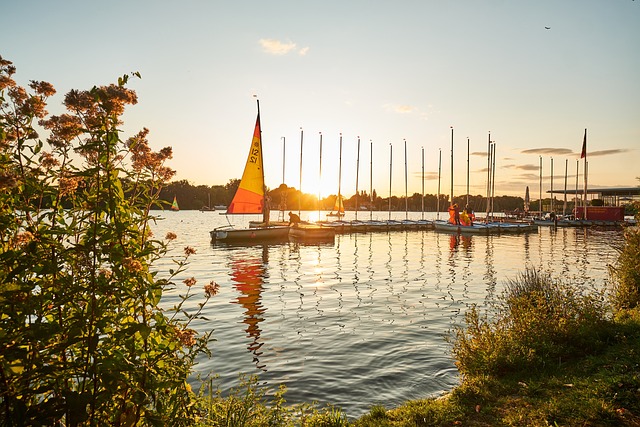
Maschsee in Hannover, Germany

Maschsee

Maschsee, Hannover's 2.4-kilometer artificial lake, was created in 1934–1936 to combat unemployment during the Great Depression. Designed by Otto Franzius, it covers 78 hectares with depths up to 5 meters. The lakeside promenade, lined with bronze animal sculptures, offers jogging trails and rental pedal swans. Every August, the Maschseefest attracts 2 million visitors for jazz, fireworks, and culinary delights like Aalsuppe (eel soup). Winter transforms the lake into an ice-skating wonderland. The Maschsee-Nordwehr lock system connects to the Leine River, while the Sprengel Museum shoreline showcases modernist architecture. Birdwatchers spot great crested grebes nesting in reed beds, and fishermen catch pike-perch using traditional Hegene rigs. At dusk, the Seenotrettungskreuzer (rescue cruiser) patrols illuminated waters. The lake's construction required relocating 1.2 million cubic meters of soil—now forming the nearby Kronsberg hill. A symbol of Hannover's engineering prowess, Maschsee balances recreation with ecological stewardship.
Ads place
Ads place
Ads place
Ads place
Ads place
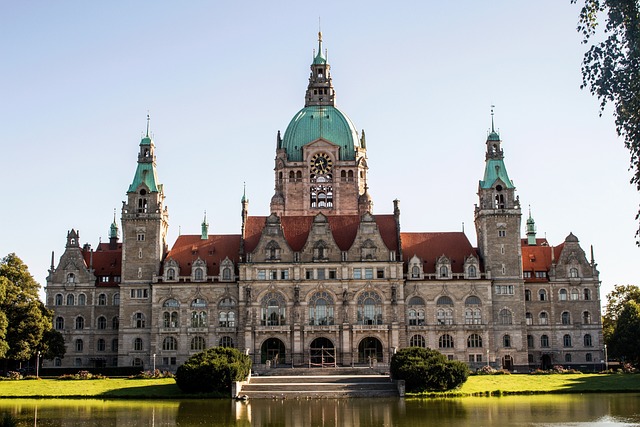
New Town Hall in Hannover, Germany

New Town Hall

The New Town Hall (Neues Rathaus), a symbol of Hannover's civic pride, is an architectural marvel blending neo-Renaissance and Wilhelmine eclecticism. Constructed between 1901–1913 under architects Hermann Eggert and Gustav Halmhuber, its dome—topped by a gilded lantern—reaches 97.7 meters. A unique inclined elevator ascends to the observation deck, offering panoramic views stretching to the Harz Mountains. Inside, four scale models depict Hannover in 1689, 1939, 1945, and today, illustrating the city's wartime destruction and rebirth. The Hodler Hall features Ferdinand Hodler's mural "Unity," while the vaulted Citizens' Hall hosts state receptions. The building sits within Maschpark, designed by Wilhelm Hentze in 1905, where swans glide across a lake framed by weeping willows. During summer, the Rathaus hosts open-air concerts, and its dome lights up for Hannover's Maschseefest. A hidden gem is the Whispering Gallery beneath the dome, where soft echoes carry across the chamber. This grand edifice embodies Hannover's resilience and architectural ambition.
Ads place
Ads place
Ads place
Ads place
Ads place
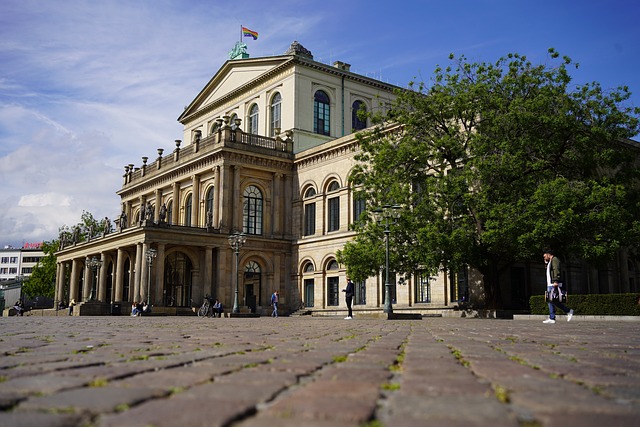
Opera Hannover in Hannover, Germany

Opera Hannover

Opera Hannover, housed in a neo-classical temple (1852), ranks among Germany's top lyric stages. Architect Georg Ludwig Friedrich Laves designed the auditorium with a 12-meter proscenium and gold-leaf ceiling. The Niedersächsisches Staatsorchester, founded in 1636, performs here—its oldest surviving score being Handel's Water Music (1717). The stage hosted Maria Callas' 1959 Norma and premiered Ligeti's Le Grand Macabre (1978). Backstage tours reveal the costume archive with 30,000 garments, including a dress worn by Richard Strauss. The Open Opera series streams performances to Maschsee screens, while the Junges Musiktheater mentors young composers. During WWII, the building stored art treasures; bullet pockmarks still visible on the facade. The Apollo Saal hosts jazz nights beneath crystal chandeliers. A bronze statue of George Frideric Handel, who premiered works in Hannover, graces the foyer. This temple of art marries tradition with avant-garde daring.
Ads place
Ads place
Ads place
Ads place
Ads place
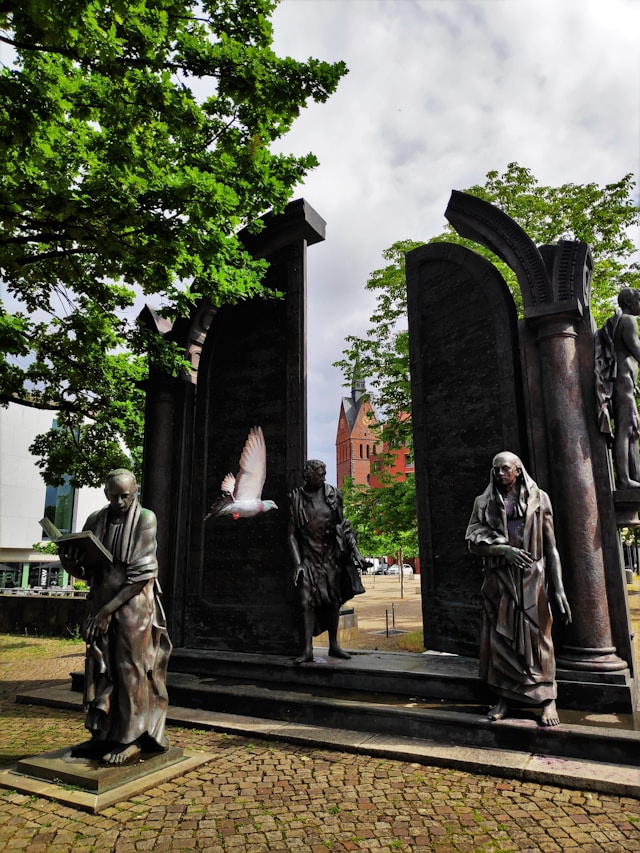
Platz der Göttinger Sieben in Hannover, Germany

Platz der Göttinger Sieben

Platz der Göttinger Sieben commemorates seven University of Göttingen professors who defied King Ernst August I's abolition of Hanover's constitution in 1837. The bronze monument by Giuseppe Spagnulo (1998) features fractured columns symbolizing fractured rights. The square lies on the Waterlooplatz axis, flanked by the Neues Rathaus and Kestner Museum. The protestors—including the Grimm brothers—were exiled but became icons of academic freedom. Annual Constitution Day ceremonies here feature readings from their manifesto. Beneath the square, archaeologists uncovered remnants of Hannover's 17th-century fortifications, now visible through glass panels. The adjacent Leibniz Fountain (1899) honors the polymath Gottfried Leibniz. At night, LED-lit benches project quotes about democracy in multiple languages. A nearby plaque marks where Winston Churchill addressed crowds in 1945. This space blends civic memory with urban vitality, hosting farmers' markets and the Fest der Kulturen multicultural festival.
Ads place
Ads place
Ads place
Ads place
Ads place