
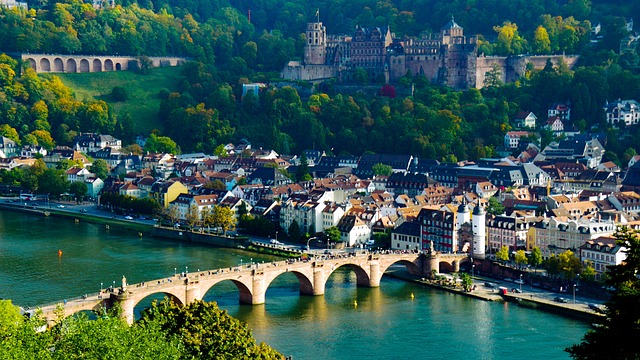
Old Bridge (Karl-Theodor-Brücke)
In Heidelberg, Germany .
More places to visit in Heidelberg
Discover more attractions and things to do in Heidelberg.
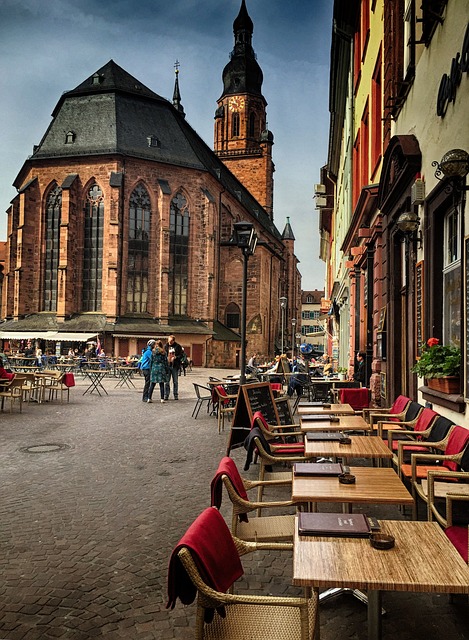
Church of the Holy Spirit
The Heiliggeistkirche , Heidelberg's Gothic landmark , took 150 years to build (1398–1544). Its tower , climbed via 208 steps, offers views reaching the Odenwald Forest . The church once housed the Bibliotheca Palatina , Europe's greatest Renaissance library, looted during the Thirty Years' War. Notice the bullet scars on pillars from 1693 French attacks. The baroque roof (1709) replaced the original Gothic spire. Today, concerts feature the Freiburg Baroque Orchestra on the 19th-century Sauer organ. The market stalls nestled against its walls sell books and crafts, continuing a 500-year tradition. A stone sundial on the south wall still keeps accurate time.
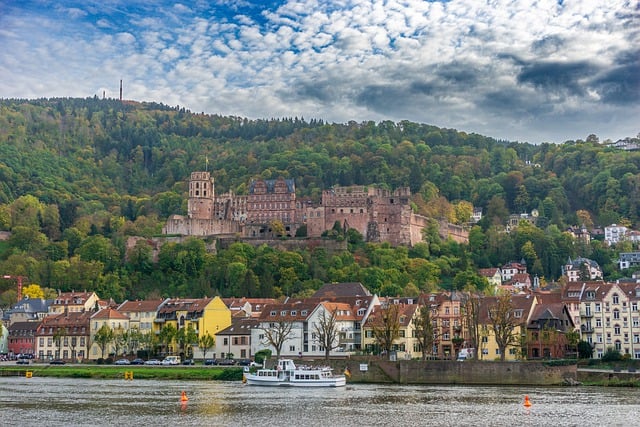
Heidelberg Castle
Heidelberg Castle, a UNESCO World Heritage Site candidate, is a Renaissance-Gothic masterpiece perched on Königstuhl hill . Built between the 13th and 17th centuries , it served as the residence of the Electors Palatine until lightning and wars left it in romantic ruins. The Great Barrel (Großes Fass), built in 1751, held 220,000 liters of wine for royal festivities. Explore the German Pharmacy Museum tracing 2,000 years of medicinal history, and the Elizabeth Gate , erected overnight in 1615 as a birthday gift. The Hortus Palatinus terraced gardens, designed by Salomon de Caus, blend Renaissance symmetry with exotic flora. At sunset, the illuminated castle casts golden reflections on the Neckar River, embodying Heidelberg's fairy-tale allure.
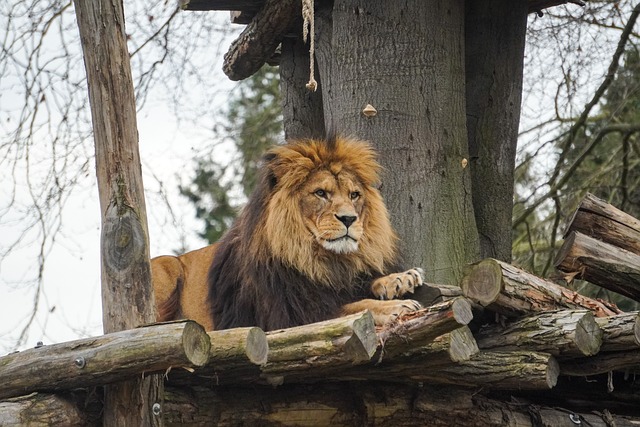
Heidelberg Zoo
Heidelberg Zoo , founded in 1933 , spans 10 hectares with a focus on European conservation . Its penguin pool , designed like a fjord, houses Humboldt penguins. The Afrikahaus features dwarf crocodiles and aardvarks, while the South America section showcases capybaras and giant anteaters. Don't miss the Borneo orangutan family or the nocturnal animal house with glowing aye-ayes. The zoo partners in breeding Przewalski's horses and European bison . Kids adore the petting barn with Pygmy goats and the play forest with timber climbing frames. Annual events include bat nights and owl feeding demonstrations. Sustainability shines through solar-powered exhibits and recycled rainwater systems.
Heiligenberg
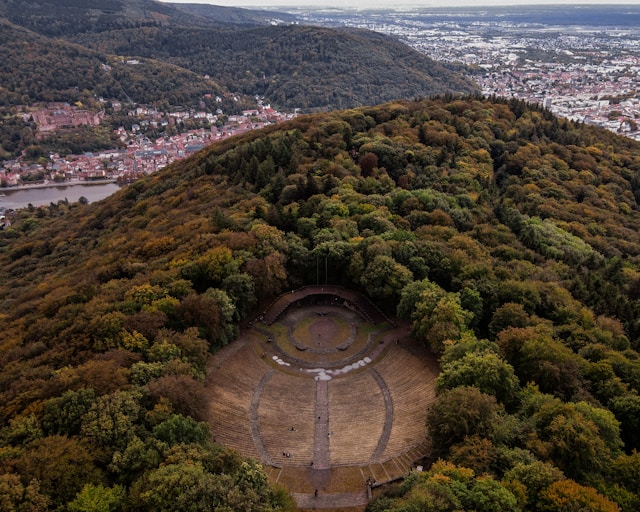
Heiligenberg (Holy Mountain), across the Neckar from Heidelberg, is a layered sacred site . A Celtic oppidum (400 BCE) lies beneath the Roman Mercury Temple (2nd century CE). The St. Michael's Abbey ruins (1023) include a crypt with 13th-century frescoes. Hike the Heidenloch , a 55-meter-deep mysterious well, and the Wolfsschlucht ravine linked to local werewolf legends. The Nazi Thingstätte amphitheater crowns the summit, while the Philosopher's Walk skirts its base. Spring wildflowers blanket the Heidelberg Löss (loess soil) slopes. At dusk, the mountain's silhouette mirrors the castle, completing Heidelberg's iconic "two-mountain" panorama.
Kornmarkt
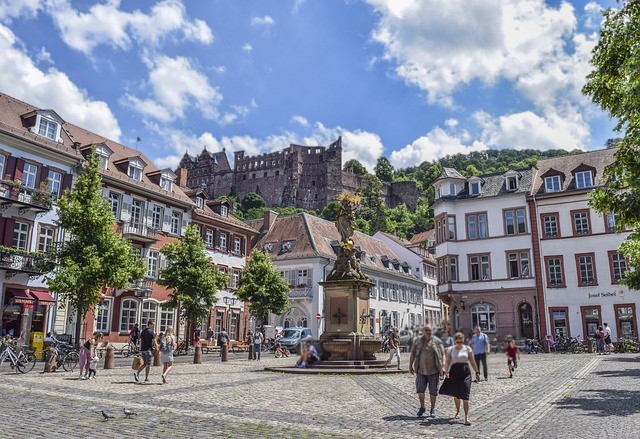
The Kornmarkt , once Heidelberg's 16th-century grain market , charms visitors with its Madonna Column (1718), designed to counter Reformation iconoclasm. The statue, dubbed "Patrona Civitatis," holds a crescent moon symbolizing victory over the Turks. Surrounding Baroque buildings house the Kurpfälzisches Museum branch and Café Knösel , inventor of the "Studentenkuss" (student kiss) chocolate. The square's funicular station (1890) whisks visitors to the castle via Germany's oldest rack railway . In winter, the ice rink mirrors the Madonna's golden halo, while summer jazz concerts echo off sandstone facades. The Kornmarkt's blend of sacred art and secular vitality epitomizes Heidelberg's layered identity.
Market Square (Marktplatz)
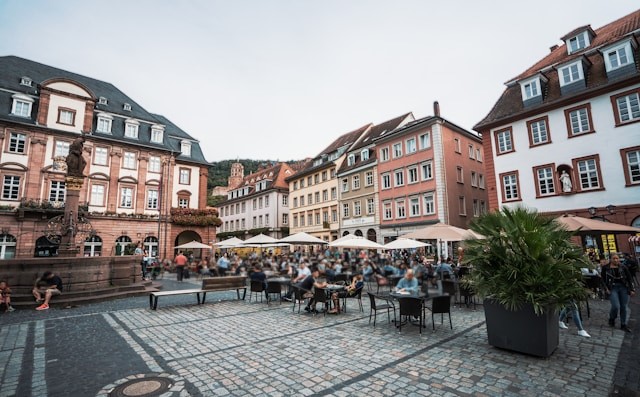
Heidelberg's Marktplatz , established in the 14th century , thrums with history beneath its cobblestones. The Hercules Fountain (1706) symbolizes the city's resilience after the Nine Years' War. The Church of the Holy Spirit dominates the square, where Luther once preached. On Saturdays, the farmer's market sells Pfälzer Saumagen (Palatine stuffed pork) and Federweisser wine. At Christmas, the Kristallmarkt glitters with hand-blown ornaments. The Rathaus (Town Hall), rebuilt in 1701 after French troops burned the original, features a glockenspiel chiming daily. Look for the "Heidelberg Madonna" fresco on Haus zum Ritter, the only Renaissance building to survive the 1693 fire. A stage for executions, markets, and festivals, the square pulses with civic memory.
Philosopher's Walk
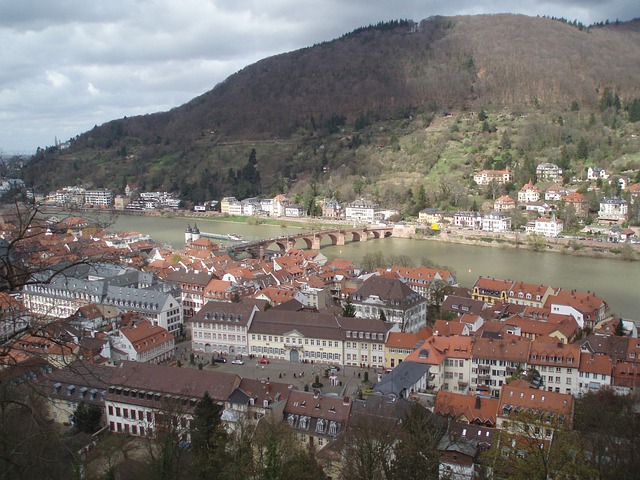
The Philosophenweg , winding up Heiligenberg 's sun-drenched slopes, inspired thinkers like Hegel and Hölderlin. This 2-km pathway , lined with Japanese cherry trees and Mediterranean gardens , offers vistas of the castle and Neckar Valley. The Meriankanzel viewpoint honors 17th-century cartographer Matthäus Merian. Discover the Nazi-era Thingstätte amphitheater hidden in the woods and the Eichendorff Bench , where Romantic poets penned verses. Spring brings almond blossoms , while autumn cloaks the trail in fiery hues. The Studentenliebe vineyard below produces crisp Riesling. A stone labyrinth near the summit invites contemplation. This trail embodies Heidelberg's fusion of nature, intellect, and timeless beauty.
Student Prison (Studentenkarzer)
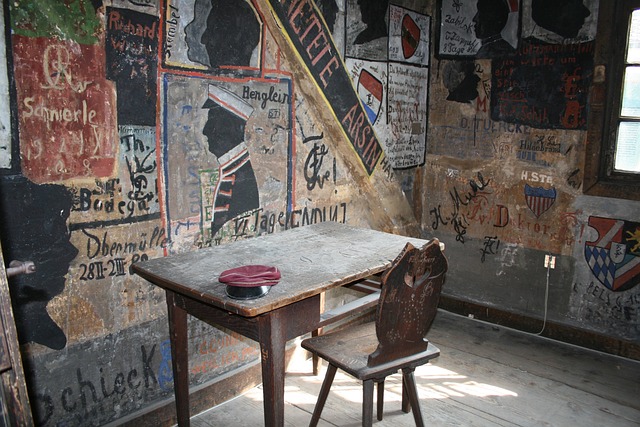
The Studentenkarzer , active from 1712–1914 , jailed rowdy scholars of Heidelberg University (est. 1386). Students were confined for dueling, serenading at night, or insulting professors—but attended lectures by day! Walls are plastered with 19th-century graffiti : fraternity crests, self-portraits, and Latin mottoes like "Vivant sequentes" ("Long live those who follow"). Inmates paid for meals and decorated cells with soot paintings . The Kneipzimmer (tavern room) hosted secret beer parties. A 1909 poem reads: "Here I sit, locked away, writing verses about hay." This quirky museum, part of the university's Old Assembly Hall , preserves the rebellious spirit of Europe's oldest student jail.
Thingstätte
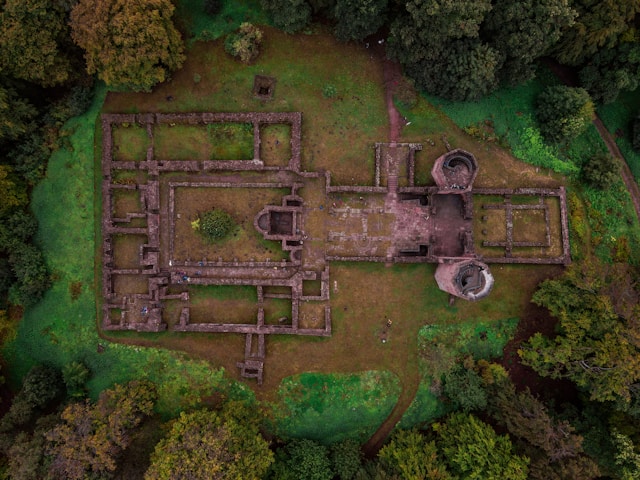
The Heidelberg Thingstätte , a Nazi-era open-air theater built in 1934–35 , was part of Hitler's propaganda network. Modeled on ancient Greek amphitheaters, its 8,000 stone seats hosted nationalist rallies. Post-war, it became a venue for Walpurgis Night celebrations and avant-garde plays. The Heiligenberg site overlays older ruins: a Celtic fort (4th century BCE) and a Roman Mercury temple . Hikers pass the SS Ehrenmal (memorial destroyed in 1945) and a medieval monastery 's foundations. At dawn, fog often shrouds the stage, creating an eerie ambiance. Today, the space hosts yoga retreats and silent discos, repurposing history for peace.