
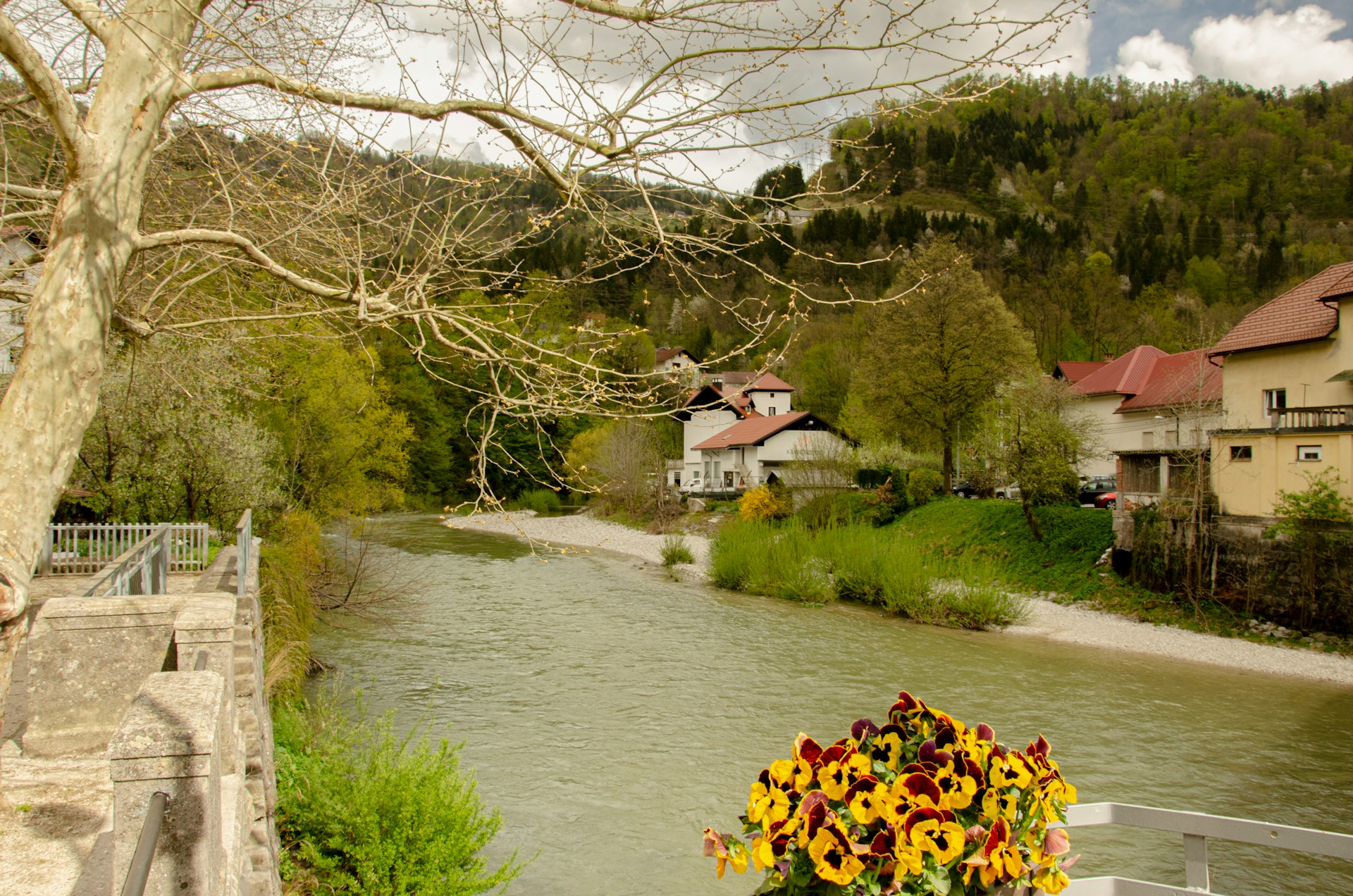
City view of Idrija, Slovenia

Idrija

Idrija hides a masterpiece in the ground: a mercury mine that paid for lace in the windows and books on the shelves. Anthony's Shaft introduces the underground with timber sets and a temperature that never argues or changes with fashion. Above, the Gewerkenegg castle explains accounting, water wheels, and the famous zlikrofi dumplings shaped like small hats and sealed with a pinch. Records from 1493 mark the discovery; engineers later carved canals and pumps that students still study and sketch. A quirky local rule once required lace makers to rest their eyes at noon, enforced by a bell and gossip with surprising accuracy. Order zlikrofi with meat and onion sauce, then hunt for a cafe that still brews coffee in a copper pot and tells stories about shifts. Evening brings quiet streets that reward listening, especially if you enjoy the sound of tools cooling down after a long day.

Top attractions & things to do in Idrija

If you’re searching for the best things to do in Idrija, this guide brings together the top attractions and must-see places to visit in Idrija. The top picks below highlight the most visited sights for first-time visitors, plus a few local favorites worth adding.

Anthony's Shaft in Idrija, Slovenia

Anthony's Shaft

Anthony's Shaft serves as the ceremonial door into Idrija's underworld, a visitors' route that follows miners' footsteps with lamps and hard hats. Records place the opening around 1500, and the tunnel's name honors St Anthony, whose feast once marked work rotations and pay. Today the descent uses sturdy stairs and a short ride on a low train, with headroom narrowing to about 1.6 meters in places. Guides demonstrate a hand drill and the step-by-step rhythm of black powder blasting adopted in the 19th century. Water channels line the footway, a reminder of the endless dewatering that kept galleries safe, and a crosscut reveals a vein striped with cinnabar. Interpretive panels map levels like a stack of streets. The air sits at roughly 12 degrees Celsius; breath smokes in winter and cools faces in summer. Back outside, the miners' changing room—benches, baskets, pegboard—feels instantly human, and the drill hall smells faintly of oil. If you carry the helmet out into daylight, it takes a moment to realize that Idrija is both surface town and the memory of one below.
Ads place
Ads place
Ads place
Ads place
Ads place
Gewerkenegg Castle in Idrija, Slovenia

Gewerkenegg Castle

Gewerkenegg Castle rises above the town with the confidence of an accountant's fortress, built by mine administrators in the 16th century to guard stores, books, and privileges. Today it houses the Idrija Municipal Museum, whose galleries move from glittering cinnabar to lace, and from geological cross sections to portraits of directors. The arcaded courtyard reveals Renaissance proportions, while timber galleries added in the 18th century suggest practical circulation during wet winters. A ledger on display lists deliveries in the old mercury flask unit of 34.5 kilograms, and a wall map shows trade routes toward Trieste and beyond. Look for the model of water-driven pumps that once lifted drainage along successive levels, a machine logic as elegant as it was necessary. From the ramparts you can see Wild Lake's valley and the clean line of the miners' settlement, a lesson in planning by gradient. Even the gift shop tells a story: pencils red as ore, lace bobbins, and a booklet that takes the castle's name—Gewerkenegg—out of the mouth and into memory.
Ads place
Ads place
Ads place
Ads place
Ads place
Idrija Lace School in Idrija, Slovenia

Idrija Lace School

The Idrija Lace School threads patience into a curriculum, turning rhythm and touch into patterns that carry the town's signature abroad. Formal teaching began in 1876, and showcases explain how bobbins, pillows, and pricking cards collaborate to build motifs. Beginners start with 12 pairs of bobbins; advanced pieces can exceed 100. A display cabinet isolates knots beside magnified photos so visitors can see why tension matters by fractions of a millimeter. Historic pieces include altar cloths commissioned in the 19th century and collars shipped to Vienna in the 1900s. Teachers still use the classic Idrija tape technique, its turns and joins documented in workbooks marked with tidy pencil grids. During festivals, students demonstrate in the courtyard, the click of wood a kind of music. One panel traces patronymics of local makers and the informal guild rules that governed fair pay and timely delivery. Before you leave, compare modern designs to archive samples: the continuity is not in pattern alone but in posture—upright, precise, and deliberately slow, proof that heritage survives best when it is practiced rather than displayed.
Ads place
Ads place
Ads place
Ads place
Ads place
Idrija Mercury Mine in Idrija, Slovenia

Idrija Mercury Mine

Idrija's mercury story begins with a barrel-maker noticing liquid metal in a ditch in the 1490s, a discovery that tied this valley to science, trade, and hazard for centuries. The mine, paired with Spain's Almadén, forms a UNESCO listing from 2012 that recognizes engineering and social history as much as ore. Exhibits explain retort furnaces and the aludel system used to condense vapor, while ledgers show the standard mercury “flask” of 34.5 kilograms as the unit of account. Guides point out timbering techniques and water pumps adapted across the 18th century, and they note ventilation shafts drilled during modernization in the 20th century. Temperature holds near 12 degrees Celsius underground, so jackets are sensible even in July. A memorial names men lost to accidents and to slow poisoning, a sober counterpoint to the beauty of cinnabar crystals in cases. Outside, administrative buildings reveal a paternalistic economy—company gardens, infirmary, and classrooms—that shaped daily rhythms far beyond shift bells. The mine's legacy today is careful: preserved tunnels, measured interpretation, and a community that turned extraction into memory without denying its cost.
Ads place
Ads place
Ads place
Ads place
Ads place
Wild Lake in Idrija, Slovenia

Wild Lake

Wild Lake sits at the mouth of a collapsed doline, a circular mirror that is in fact a karst siphon feeding the newborn Jezernica. The basin spans about 60 meters across and drops steeply from the very edge. Divers report exploration to at least 160 meters, with the passage narrowing into darkness well before any true bottom. The outflow forms what guides call Slovenia's shortest river—about 55 meters to the Idrijca—a figure that makes schoolchildren grin and mapmakers nod. A path loops the shore on wooden footboards rebuilt in the 20th century, and warning signs politely remind visitors that water levels can surge after storms. Geologists sample the limestone here for fossils and note the cold discharge, often near 9 degrees Celsius even in summer. On still mornings the cliff and trees draw themselves twice, and a tossed leaf circles, then vanishes under the draw. Bring quiet shoes and time: the lake rewards unhurried looking, and the soundscape—water over stones, wind in hornbeam—places Idrija's industrial story inside a larger, older system of rock and rain.
Ads place
Ads place
Ads place
Ads place
Ads place