
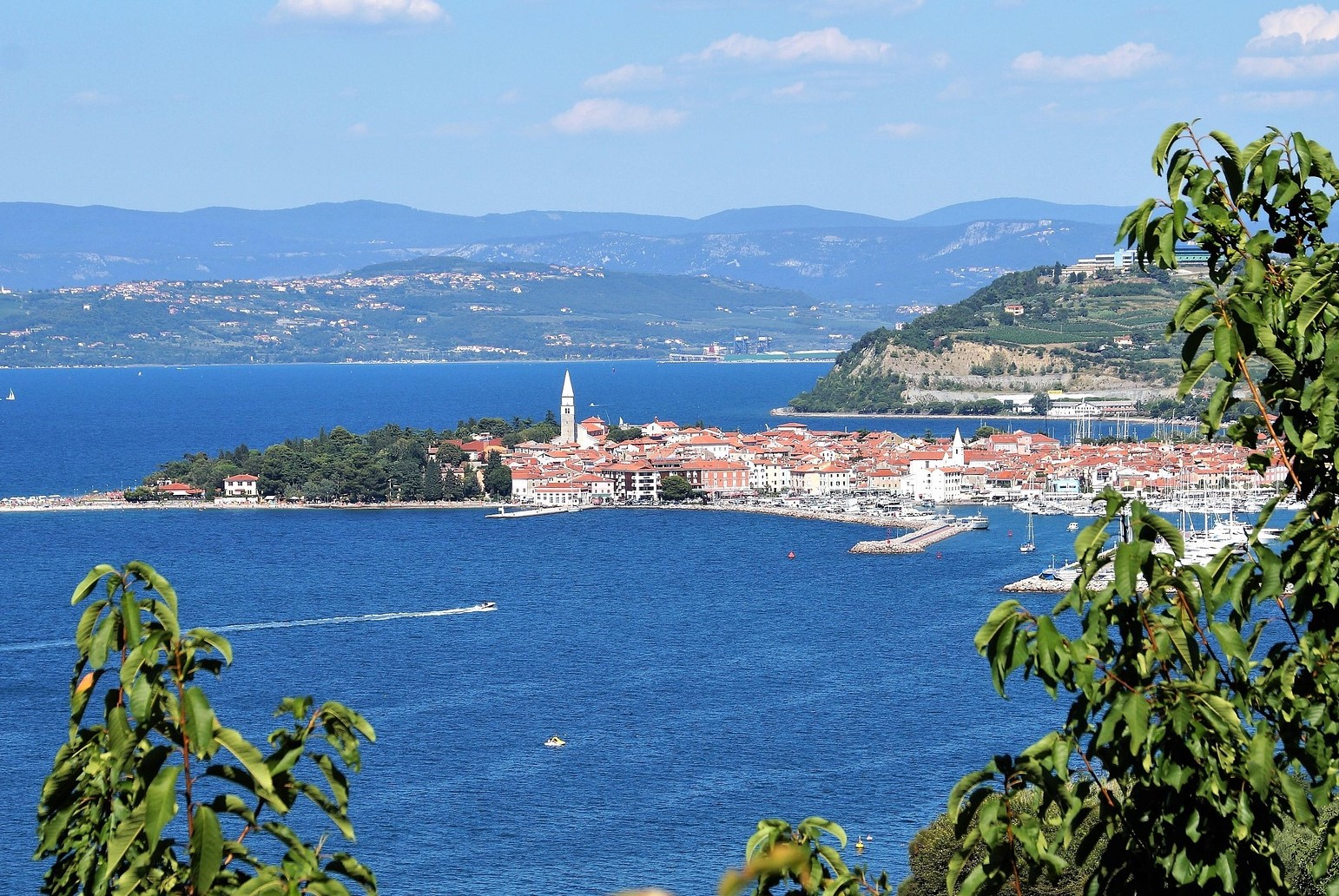
City view of Izola, Slovenia

Izola

Izola keeps its feet in the water and its appetite ready. Fishing boats set the schedule; the morning market trades jokes with anchovies and squid that look like punctuation in ice. Order cuttlefish risotto or barbecued branzino, then a scoop of fig gelato that improves memory by association and invites a second scoop. Streets recall Venetian plots, but 19th century shipyards also left a useful stubbornness and a talent for fixing things with rope. A small museum explains how factory sardines were packed at speed with a technique workers taught each other by song and gesture. Quirky sight: a summer cinema on the pier where gulls occasionally review the film with loud opinions and perfect timing. Walk the Parenzana trail toward Koper for sea views and olive groves, and return at sunset when the harbor learns gold from the sky and the cafes slow to conversation.

Top attractions & things to do in Izola

If you’re searching for the best things to do in Izola, this guide brings together the top attractions and must-see places to visit in Izola. The top picks below highlight the most visited sights for first-time visitors, plus a few local favorites worth adding.

Izola Old Town in Izola, Slovenia

Izola Old Town

Woven from alleys that smell of salt and citrus, Izola’s Old Town sits on what was once a true island, joined to the mainland in the 19th century. Venetian rule shaped its coral-colored facades and narrow passages aligned for shade. Foundations date to Izola’s founding under Aquileia in the 7th century, though the current street grid reflects late Medieval planning. The Parenzana railway station, now a cafe, recalls trade links operating until 1935. Along Manzioli Square, the Gothic Manzioli Palace hosts art events where fresco fragments peek behind modern walls. Laundry lines and fishing nets hang side by side, daily theater in the Adriatic light. By dusk, the stones radiate heat stored through the day, and the faint sound of gulls returns the island’s echo. Few coastal quarters compress history so tightly into such a compact, sunburned maze still inhabited rather than preserved.
Ads place
Ads place
Ads place
Ads place
Ads place
Lighthouse Beach in Izola, Slovenia

Lighthouse Beach

At the town’s western edge, Lighthouse Beach draws swimmers and strollers to a semicircle of gravel and shallow turquoise water. A small lighthouse built in 1872 stands watch, once guiding Austro-Hungarian cargo toward Trieste. The beach’s length—roughly 300 meters—lets families spread towels between tamarisk trees planted during coastal renewal in the 1980s. Offshore, concrete blocks recall wartime defenses later adapted for mooring small boats. Sunsets here are vivid; locals time their swims to coincide with the horizon’s orange fall. Facilities remain modest—one cafe, outdoor showers, and lifeguards during the summer season. Visitors note the mix of languages: Slovenian, Italian, and German, a cultural tide echoing older maritime routes. Evenings bring music from nearby terraces and the rhythmic swing of fishing lamps beyond the breakwater, quiet proof that the Adriatic’s work and leisure still share the same gentle pulse.
Ads place
Ads place
Ads place
Ads place
Ads place
Manzioli Palace in Izola, Slovenia

Manzioli Palace

Facing the small square that bears its name, Manzioli Palace stands as Izola’s finest example of Gothic residential architecture from the 15th century. Built for the Manzioli family, wealthy shipowners and traders, the building’s arched loggia still shelters conversations from sea winds. Inside, traces of frescoes emerge through careful restoration work begun in the 1990s, while wooden ceilings display carved Venetian patterns rarely seen outside major cities. The palace today houses cultural offices and a wine bar that uses the basement cistern for cooling. Balconies of Istrian stone overlook the square where children play, and their laughter softens the ornate tracery. Evening light strikes the windows in amber tones, recalling the glow of oil lamps once used before electricity arrived. Visiting here feels like opening a chapter of civic memory that continues to breathe, refined yet unpretentious, with salt still in the mortar and history folded into daily rhythm.
Ads place
Ads place
Ads place
Ads place
Ads place
Marina Izola in Izola, Slovenia

Marina Izola

Marina Izola combines a working harbor’s grit with a holiday postcard’s calm. Completed in 1986, it accommodates around 700 berths and remains one of Slovenia’s key recreational ports. The basin was carved into former shipyard grounds whose cranes once built trawlers for the Adriatic fleet in the 20th century. Engineers designed breakwaters to absorb waves exceeding 2 meters, ensuring calm mooring even during bora winds. Today, sailing schools and charter agencies share space with seafood taverns and repair sheds that retain their smell of resin and rope. Night lighting runs on solar arrays installed in 2015, reflecting a pragmatic shift toward sustainability. From the promenade, mast lines sketch slow arcs against the setting sun, while gulls circle lazily above refitted hulls. Marina Izola proves that maritime heritage and modern tourism can moor in the same harbor without either losing authenticity or direction.
Ads place
Ads place
Ads place
Ads place
Ads place
Parenzana Trail in Izola, Slovenia

Parenzana Trail

Following the trace of a former narrow-gauge railway, the Parenzana Trail carries cyclists and walkers through olive groves, tunnels, and sea views linking Izola to neighboring towns. The original line, opened in 1902, once ran 123 kilometers between Trieste and Porec, hauling salt, wine, and passengers. After closure in 1935, the embankments grew wild until conversion into a recreational route around the 21st century. Along Izola’s section, interpretive panels display maps and photos of steam locomotives that once whistled past fishermen’s cottages. The restored tunnel near Belvedere—about 550 meters long—now glows with LED safety lights, cool even on summer days. Each curve alternates between coastal panoramas and vineyards heavy with Malvazija grapes. The route ends near Portoroz, where cafes await the pleasantly tired. Part history lesson, part outdoor therapy, the Parenzana connects generations through movement and the rhythmic echo of wheels over ballast reborn as memory.
Ads place
Ads place
Ads place
Ads place
Ads place