
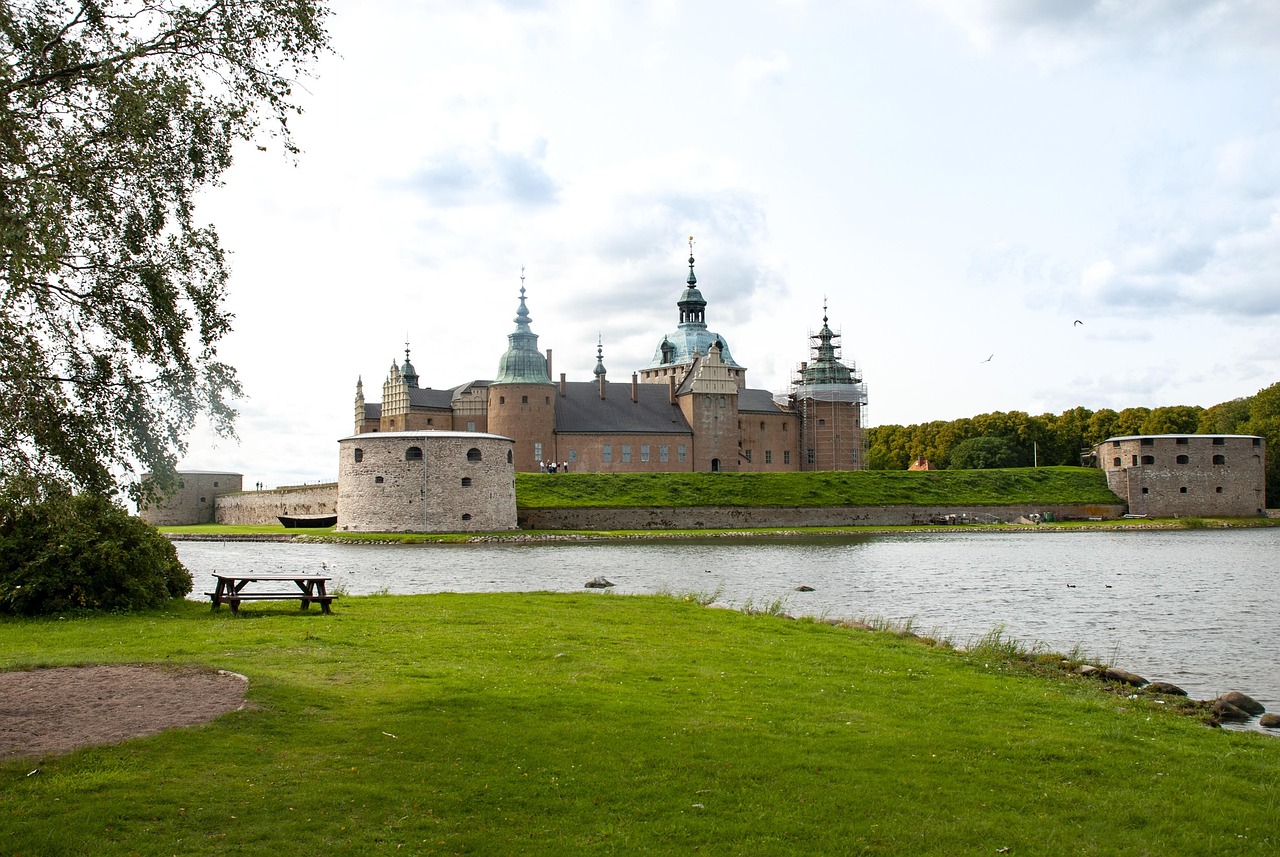
City view of Kalmar, Sweden

Kalmar

Kalmar Castle, with turrets mirrored in a moat, guards memories of the Kalmar Union of 1397 when Nordic crowns attempted cooperation under one monarch. The old town offers cobbles and wooden facades, then stretches toward seaside paths and the bridge to Oland opened in 1972. Museums cover shipbuilding and the days when customs officers were neighborhood legends. Lunch could be smoked salmon with new potatoes, or herring in mustard sauce; bakeries handle dessert with cardamom twists. Locals stroll the castle park at dusk to count bats among the trees. Kattrumpan beach hides near the center, and guides point to a cannonball wedged in a facade as a playful souvenir. Summer nights drift along the marina where food trucks trade tacos for soft serve under gulls. Fishermen tell of an eel that 'refused to migrate,' with 1890s notes suggesting it lived for decades in a pub well.

Top attractions & things to do in Kalmar

If you’re searching for the best things to do in Kalmar, this guide brings together the top attractions and must-see places to visit in Kalmar. The top picks below highlight the most visited sights for first-time visitors, plus a few local favorites worth adding.

Kalmar Castle in Kalmar, Sweden

Kalmar Castle

From the edge of the old town, a low peninsula carries Kalmar Castle out into the water, so the walls seem to float when the wind is still. The fortress began as a simple tower in the late 12th century and grew into a royal residence under Gustav Vasa, who turned it into a symbol of the new Swedish kingdom. In the 1500s the Vasa sons added Renaissance interiors, giving state rooms painted ceilings, carved doorways, and an unexpectedly refined banqueting hall above the gun decks. Exhibitions explain the Kalmar Union, when Scandinavia briefly shared a monarch, and later wars that left cannonballs buried in the outer walls. The moat, drawbridge, and angled bastions follow contemporary Italian military thinking, yet inside the courtyard geese wander between wells and herb beds. On stormy days the castle feels compact and defensive. In evening light it turns almost theatrical, a stage set where you can still read power politics in every arrow slit and corridor.
Ads place
Ads place
Ads place
Ads place
Ads place
Kalmar Cathedral in Kalmar, Sweden

Kalmar Cathedral

At Stortorget the pale bulk of Kalmar Cathedral stands almost like a theatre backdrop, its pilasters and high windows framing the main square. The church was designed by Nikodemus Tessin the Younger, the same architect behind parts of Stockholm's royal palace, and begun in the late 1660s as Kalmar shifted from medieval island fortress to planned mainland town. The style is confidently Baroque, with a tall lantern tower and facades that play with shadow rather than decoration. Inside, a light color palette, clear sightlines to the altar and a generous organ gallery reflect Lutheran priorities of word and music. Marble epitaphs remember local commanders who once guarded the strait against Danish fleets, while a ship model hangs quietly from the ceiling as a reminder of seafarers who never returned. In summer the cathedral doors often stand open during market days so snippets of choir rehearsal drift out among vegetable stalls and conversation. The building anchors daily life without dominating it, a calm vertical pause between trade, festivals and political speeches.
Ads place
Ads place
Ads place
Ads place
Ads place
Kalmar County Museum and Kronan Exhibition in Kalmar, Sweden

Kalmar County Museum and Kronan Exhibition

Down by the modern harbor, Kalmar County Museum looks modest from the outside yet holds one of Sweden's most dramatic maritime stories. Inside, galleries devoted to the warship Kronan display cannons, navigational tools and personal belongings raised from the seabed after the wreck was found in 1980 just off the coast. The great flagship exploded and sank in 1676 during a battle in the Scanian War, and divers working with archaeologist Anders Franzen have recovered thousands of objects. A reconstructed gun deck lets you imagine the cramped routines of sailors and soldiers, while cases of coins and jewelry hint at the ship's role as a floating treasury. Alongside Kronan, the museum covers local history from medieval trade to the era when Kalmar County sent many emigrants to America. Films, models and well chosen excerpts from letters keep the human scale clear. Step out again and the view across Kalmarsund helps you picture battle smoke blowing over the same waters you now watch from a quiet quay.
Ads place
Ads place
Ads place
Ads place
Ads place
Oland Bridge Viewpoints and Kalmarsund Promenade in Kalmar, Sweden

Oland Bridge Viewpoints and Kalmarsund Promenade

West of the castle, paths and piers along the Kalmarsund waterfront give some of the best views of the long sweep of the Oland Bridge and the low island beyond. The concrete ribbon of Olandsbron opened in 1972, stretching around 6 kilometers to link mainland Smaland with the farming landscapes and beaches of Oland. From the promenade you can watch trucks and cars move in a steady line above the water while small boats and ferries pass underneath. Locals use the Kalmarsundsparken area for swimming, evening runs and barbecues on the rocks, and simple windbreaks make it possible to sit outside long into the shoulder seasons. Information boards explain how strong currents and ice once made these waters difficult to cross and how the bridge changed trade, tourism and daily commutes. Sunset paints the spans in muted gold and turns the underbelly of the deck into a thin glowing band. It is a surprisingly calm spot, even though half of southeast Sweden seems to drive silently overhead.
Ads place
Ads place
Ads place
Ads place
Ads place
Old Town Kalmar and Stortorget in Kalmar, Sweden

Old Town Kalmar and Stortorget

Walking away from the waterfront, you soon find yourself in the streets around Stortorget where old Kalmar shows a quieter, more domestic face than the castle. The grid dates back to a 17th century town plan, yet many facades carry 19th century details such as bay windows, cast iron balconies and carefully painted shutters. Along Larmgatan and nearby lanes, wooden houses lean toward cobbled pavements while small courtyards hide behind gates. Stortorget itself hosts the town hall, Kalmar Cathedral and a mix of cafes that spill chairs into the sun whenever the wind drops. Plaques on corners note where the medieval city once stood on Kvarnholmen island and how fire and shifting trade shaped the new alignment. In the evening light, street lamps pull warm color out of the plaster and you can trace rooflines all the way to the harbor cranes. It is a good area to wander without a map, letting bakery smells, bell chimes and the glimpse of water at cross streets guide your route.
Ads place
Ads place
Ads place
Ads place
Ads place