
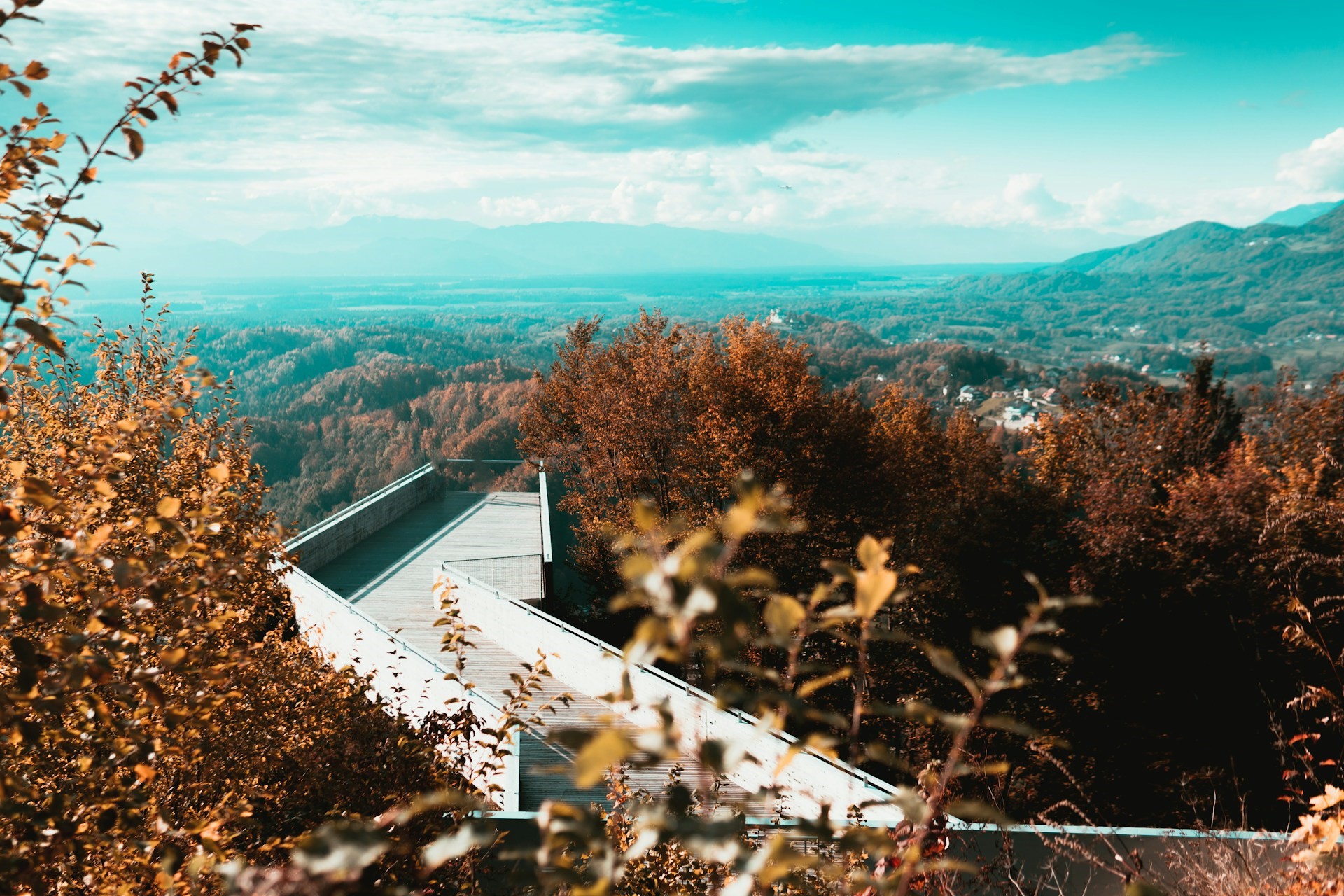
City view of Kamnik, Slovenia

Kamnik

Kamnik stands with a foot in the mountains and the other in studio windows. Two castle ruins keep watch over a main street that still respects craftsmen; the small museum turns guild papers into practical stories with dates. Velika Planina above town is summer pasture and architecture lesson, with shingled huts that arc into the wind like careful commas and welcome herders with bells. Order trnic cheese, shaped and patterned by hand, then a bowl of mushroom soup that smells like the forest five minutes away and lingers. Rail stations once brought spa guests and parcels; now hikers arrive with lighter packs and better shoes and leave with calmer shoulders. Unexpected footnote: a festival once staged a choir on a chairlift, and the harmonies traveled farther than anyone planned in the clear air. Evening light folds neatly down the valley, and the old bridges offer a polite pause between errands and conversations.

Top attractions & things to do in Kamnik

If you’re searching for the best things to do in Kamnik, this guide brings together the top attractions and must-see places to visit in Kamnik. The top picks below highlight the most visited sights for first-time visitors, plus a few local favorites worth adding.

Arboretum Volcji Potok in Kamnik, Slovenia

Arboretum Volcji Potok

South of town, Arboretum Volcji Potok spreads a calm grid of lawns, water, and collections that turn a former manor park into Slovenia's best-known garden. Established as a public arboretum in 1952, the grounds extend across roughly 85 hectares with lakes, allees, and themed plantings. Spring brings a tulip display counted in the hundreds of thousands, while summer shifts attention to roses and mature conifers from Asia and North America. Paths are wide and mostly level, with loops of 3-5 kilometers that suit strollers and families; benches carry small plaques to donors. Remnants of the old estate—stone walls and a gate traced to the 18th century—anchor newer beds planned for year-round interest. Information boards give Latin names and origin ranges, and a compact greenhouse keeps tender species steady through cold spells. On show days, temporary sculptures and play installations occupy the lawns without bullying the trees. Arrive early to watch mist lift off the ponds; stay late and the last light pulls color from leaves you did not notice at noon.
Ads place
Ads place
Ads place
Ads place
Ads place
Kamniska Bistrica Spring and Predaselj Gorge in Kamnik, Slovenia

Kamniska Bistrica Spring and Predaselj Gorge

At the head of the valley, the Kamniska Bistrica Spring bubbles from under limestone ledges into a clear pool that sends the river on its fast course. Water temperature holds near 7-9 degrees and the source sits around 600 meters above sea level, the color reading like glass under spruce shade. A short walk upstream reaches the Predaselj Gorge, where the river cuts a tight slot; footbridges cross at heights of about 10-15 meters. Engineers added railings and anchors during safety works in the 20th century, and signs ask for caution after storms. On hot days, families picnic near the lodge built in the 1930s, and hikers push on toward Kokrsko sedlo as the valley narrows. Look for quarry faces that supplied blocks for farm buildings and for ice houses when winters kept meat without electricity. The source pool reflects cliffs twice when the air sits still, and leaf drift traces eddies before disappearing under the outflow arch. Come early and the soundtrack is water over stone; come late and the shadows climb the walls into a blue hallway.
Ads place
Ads place
Ads place
Ads place
Ads place
Mali Grad and Romanesque Chapel in Kamnik, Slovenia

Mali Grad and Romanesque Chapel

At the edge of the old town rises Mali Grad, a two-peaked hill crowned by a small castle remnant and one of Slovenia's most remarkable chapels. The lower, two-story sanctuary preserves a rare Romanesque program: a ground-level space for the faithful and an upper chapel reserved for lords, linked since the 12th century. Carved capitals survive with simple leaves and beasts; fragments of wall painting reappeared during careful work in the 20th century. A short stair up the rock brings you to views over red roofs and the ribbon of the Kamniska Bistrica. Panels note 13th century mentions of a keep above the chapel and explain why the double plan signaled rank. On quiet afternoons, the place feels proportioned for voices; even a reading sounds like ceremony. Stand in the upper room and notice how narrow windows force attention to the altar, an optical discipline typical of 12th-13th-century design. Outside, the hill's ramparts read as earthworks more than walls, a sober sketch left when later politics shifted power to streets below.
Ads place
Ads place
Ads place
Ads place
Ads place
Velika Planina Alpine Pasture in Kamnik, Slovenia

Velika Planina Alpine Pasture

High above Kamnik, Velika Planina spreads a wide pasture where wooden herdsmen's huts curve low against wind, their shingles silvered by weather. A cable car and chairlift, opened in the 1950s, carry walkers to about 1,400 meters, with trails rising gently toward the central plateau. The settlement's oval roofs follow a practical geometry: long rafters, stone-weighted eaves, and doors kept under the lee. In summer, dairy huts serve fresh sour milk and cheese; in winter, the snow smooths fences into lines. Chapel Mary of the Snows, rebuilt after the World War II burning, rings a small bell that carries further than you expect in dry air. Waymarks suggest loops of 2-3 hours, and a modest museum hut explains how seasonal rights set the rhythm of milking and moving stock. Weather changes quickly at this height; forecasts and layers matter, and evening temperatures can fall below 10 degrees even in July. Find a hummock, sit, and the plateau turns into a dial: cows advance, clouds drift, and the huts mark time in slow, exact increments.
Ads place
Ads place
Ads place
Ads place
Ads place
Zaprice Castle and Kamnik Museum in Kamnik, Slovenia

Zaprice Castle and Kamnik Museum

A short rise south of the center brings you to Zaprice Castle, a Baroque country house reworked for light that now shelters the Kamnik Museum. Its present outline settled in the 18th century, with later farm wings framing a courtyard where workshops once hummed. Exhibitions move from medieval charters to printing presses and tools; outside, wooden granaries and double hayracks—kozolec—were relocated here in the 20th century to save them from rot. The castle's stair carries a handrail worn smooth by generations, and a window on the landing looks toward the Alps. Look for the display of locks and keys that explain local craft, and a room of photographs showing uniforms and festivals from the 19th century. In summer, the lawn hosts small concerts; in winter, the building shows its bones. From the terrace, Kamnik's steeples line up over tiled roofs, and the river reads as a gray thread. Zaprice feels domestic rather than grand, a place that turns archives into conversations at a scale suited to memory.
Ads place
Ads place
Ads place
Ads place
Ads place